

Why the controversy with mail-in ballots? | Cronin & Loevy

Most Coloradans enjoy the right to vote “by mail” at election time. Most Americans favor this process. But U.S. President Donald Trump is trying to federalize (nationalize) this practice and shift the supervision of voting from county clerks to the Department of Homeland Security and the U.S. Postal Service. He issued an executive order to this effect this past week.
The federal courts will reject this move and uphold the Constitution’s mandate elections are the responsibility of the individual 50 states to run.
Oregon was the first state to adopt statewide voting by-mail. Colorado adopted it in 2013, when it was approved by the state legislature and then signed into law in May 2013 by then-Gov. John Hickenlooper.
The measure was crafted in part by the Colorado Association of County Clerks, a group mostly composed of locally elected Republicans. Ironically, most Republican leaders in Colorado were initially opposed to the “mail-in” reform.
Most Republicans, however, were pleased with mail-in voting as it worked in the statewide elections of 2014, when several Republicans were elected to statewide office. They included Attorney General John Suthers; Secretary of State Wayne Williams; and U.S. Sen. Cory Gardner.
Today, voting by mail is widely embraced by both political parties in Colorado, and more than 90% of Coloradans actually vote that way. And, thanks to the hard work of municipal and county officials, the Colorado model for mail-in ballots is now touted as the gold standard in the United States.
Utah, Washington state, Hawaii, Alaska and Arizona use the mail-in system. Voting in person is still available in these states, but voting by mail is now almost universal throughout the American west.
Every state allows military and citizens who work or live overseas to vote by mail. That program is regulated by federal law rather than state law.
Some states allow what is called “no excuse absentee voting,” where anyone can request a mail-in ballot be sent to them. These states include populist states like Florida and California and smaller states such as Montana and Vermont.
Mail-in voting is less widespread in the Midwest and in the south.
How does registering to vote in Colorado work?
You must be a U.S. citizen, 18 years old, having lived in Colorado at least three weeks, and not having served a prison sentence for a felony.
Most people register to vote when they apply for a driver’s license.
Colorado also allows you to register to vote online by computer. To do so, you need a Colorado driver’s license or Colorado state ID. You are likely to be asked for the last four digits of your Social Security number.
Prospective voters can also register in person at the local branch of the Department of Motor Vehicles or at their county clerk’s office. In Colorado, you can do this right up until Election Day.
Note any way you registered to vote requires you to signify, under penalty of perjury, you are a U.S. citizen. Research indicates very few non-citizens attempt to register and vote. In the rare instances where this has been attempted, it was almost always a case of confusion rather than intention or orchestrated political corruption.
For a non-citizen, falsely attempting to register to vote can automatically trigger immediate deportation, a pretty strong disincentive.
Colorado has several safeguards in place to make improper registration and voting hard to do.
A person’s driver’s license and Social Security information can be checked against federal and state databases. The voter signature on one’s ballot can be matched with the signature on file at the election office.
In Colorado, if your signature fails to match the one on file, voting officials may call you to explain and verify so your ballot can be “cured” and accepted.
Yet your ballot can also be rejected. Local officials have impressively made this precautionary system work, often using, if necessary, verification systems used by big banks, and a backup of a bipartisan scrutiny team.
Mail-in voting tends to increase voter turnout. It helps reduce election costs.It is especially helpful for older voters, people with disabilities, rural voters who live a considerable distance from regular voting locations, people who have two jobs, and students who are living away from home at college or university.
Democrats have favored mail-in voting more than Republicans. And blue states that vote Democratic have adopted mail-in friendly ballot opportunities more than red Republican states. But, as previously noted, red Republican states such as Utah, Montana, Alaska and Florida are “mail-in” states.
What is the case against allowing voters to vote from home?
Back in 2020, when incumbent President Donald Trump lost the presidential election by 7 million votes or more, he and some of his advisers claimed there was widespread voter fraud due to mail-in ballots and other rigging procedures.
Dozens of federal court decisions rejected these claims. And Trump’s own attorney general and several of his cabinet advisors disagreed strongly with his election fraud complaints.
Still, no election system is perfect. And those with a strong distrust of government are understandably at least somewhat distrustful of how governments conduct elections.
Trust in Colorado state and local officials is no doubt higher than it is in many other states. Colorado is also a state with one of the highest levels of education as well as a state with little history of state and local political corruption.
Opponents of mail-in voting believe partisan government officials mail multiple mail-in ballots to friendly voters and do not send them to opposing voters. President Trump claimed, in California, some Democrats were sent six ballots while Republicans had to beg and plead to be sent their one ballot.
Opponents of mail-in voting also fear what is called “ballot harvesting.” This refers to when someone collects multiple completed absentee or mail-in ballots from voters and “delivers” them to a polling location.
“Ballot collection” is a more neutral term for this. A case can be made for it in hospitals, retirement homes and rural areas. It encourages voter participation and turnout.
But it can also lead to manipulation and voting fraud. In 2018, a Republican operative in North Carolina was charged with using this process to discard Democratic ballots.
And there is the understandable concern a voter’s choice may no longer be completely private if some partisan volunteer or official is collecting and delivering their ballots to the polling place
President Trump is obsessed with the notion he was wrongly denied reelection in 2020 because of various election frauds. Few believe him. He is right, however, our election systems throughout the country vary considerably and are in some ways a patchwork of different registration and vote counting systems.
The Supreme Court is expected to rule, probably rightly, mail-in ballots must be received by Election Day.
But, contrary to President Trump, most Americans do not believe the 2020 election was stolen. And most Americans, contrary to President Trump, want the right to vote with mail-in ballots
What is needed is to make the Colorado-style mail-in voting system even stronger and to encourage the Colorado model to be adopted in more states. This will not happen quickly, yet it is preferable to Trump’s plan to federalize our registration and election process.
Tom Cronin and Bob Loevy are news analysts who regularly write about Colorado and national politics.

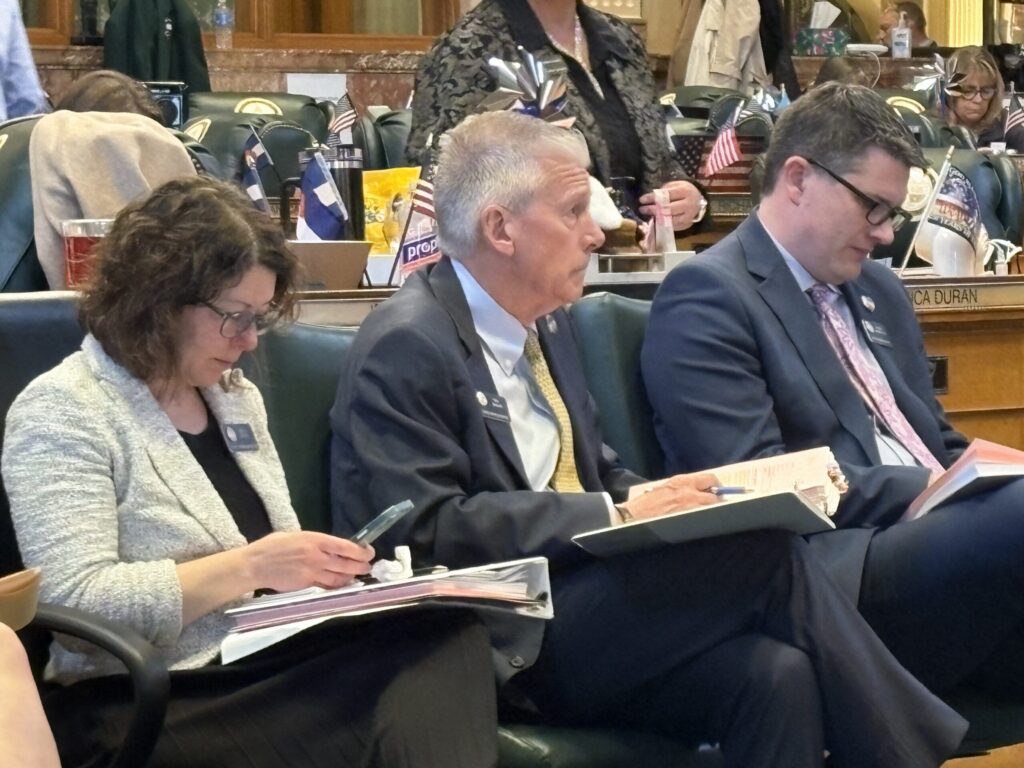
Colorado lawmakers grapple with spending cuts amid $1 billion-plus deficit
Marianne Goodland
marianne.goodland@coloradopolitics.com
Updated 57 minutes ago
The battle over Colorado’s budget for next year — which stalled in the House over a procedural maneuver — entered a more difficult phase on Thursday, when legislators grappled with hundreds of millions of dollars in proposed reductions to balance...
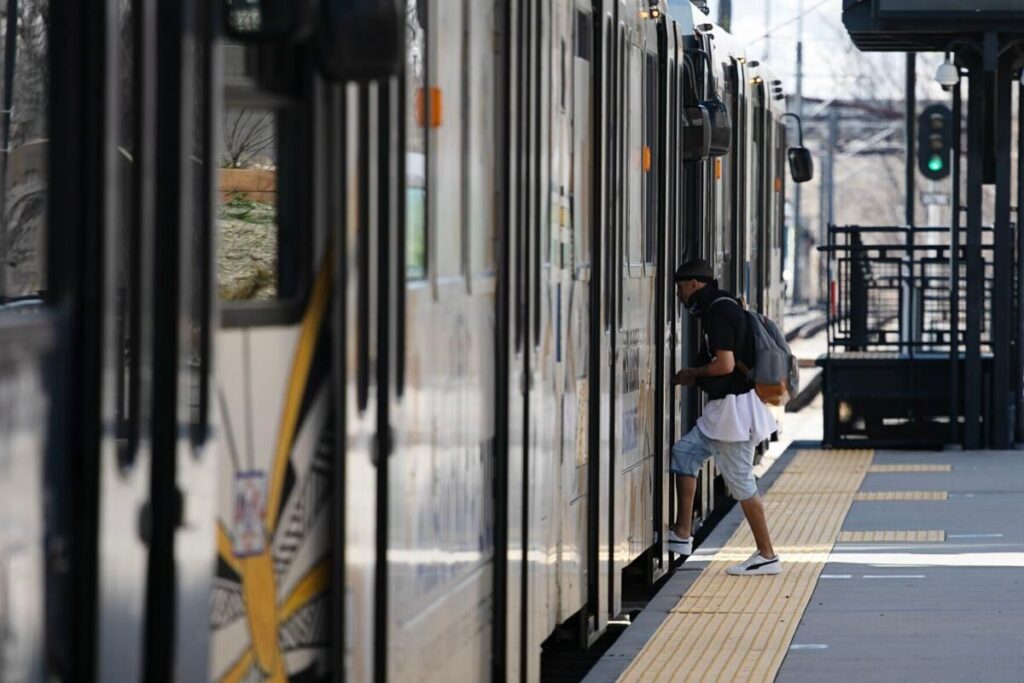
Colorado bill reshaping RTD board advances
Marissa Ventrelli
marissa.ventrelli@coloradopolitics.com
Updated 4 hours ago
A proposal to reshape the Regional Transportation District’s leadership easily cleared a committee vote Wednesday, advancing the bill sponsors say is needed to revive a transit system still struggling to regain riders and public trust. Critics have countered that, while...

Colorado Democrat John Hickenlooper pulls in nearly $1.4M in 1st quarter, heads into primary with $4M
Ernest Luning
ernest.luning@coloradopolitics.com
Updated 57 minutes ago
U.S. Sen. John Hickenlooper’s campaign raised nearly $1.4 million in the first quarter of 2026 and plans to report more than $4 million on hand heading into Colorado’s June primary, the first-term Democrat’s campaign said Thursday. That brings Hickenlooper’s total...
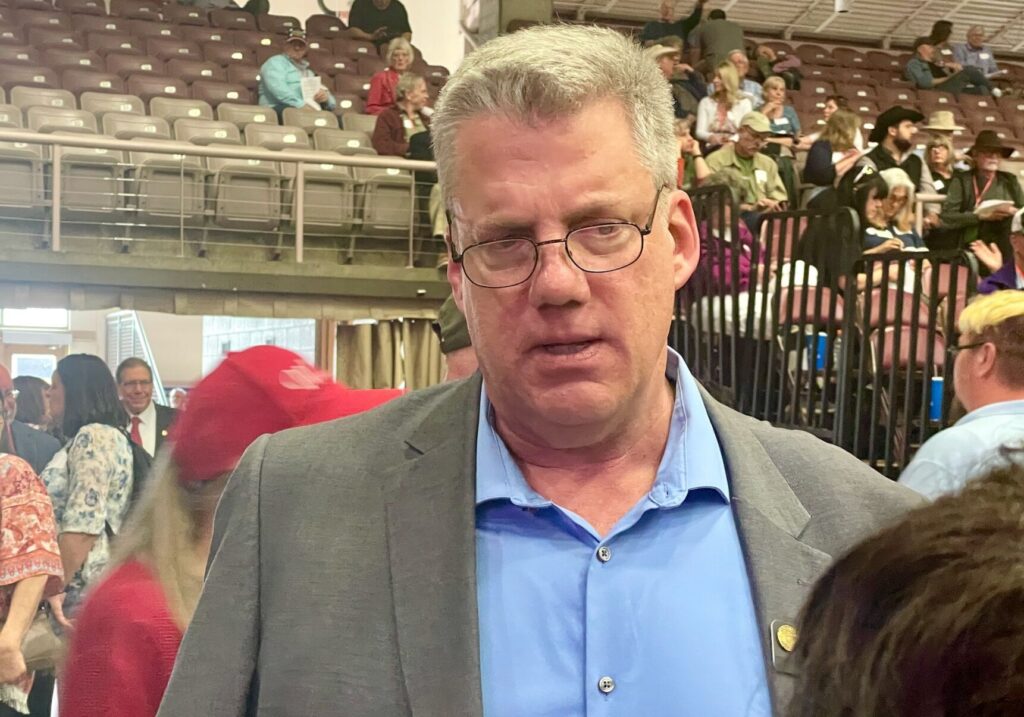
Republican Ron Hanks plans ‘grassroots’ primary challenge to US Rep. Jeff Hurd in Colorado’s 3rd CD
Ernest Luning
ernest.luning@coloradopolitics.com
Updated 4 hours ago
Colorado Republican Ron Hanks, a former state lawmaker, plans to challenge first-term U.S. Rep. Jeff Hurd in the 3rd Congressional District primary by seeking a spot on the June ballot at the GOP’s district assembly in Pueblo on Friday, Colorado...
House GOP stalls Colorado budget debate by forcing full reading of 661-page bill
Marianne Goodland
marianne.goodland@coloradopolitics.com
Updated 4 hours ago
A procedural battle at the Colorado Capitol boiled over on Wednesday night, when a House Republican demanded the 661‑page state budget be read aloud in full — a move that delayed the advance of the proposed $46.8 billion spending plan....

Colorado lawmakers propose changes to family court procedures | Bills in Brief
Marissa Ventrelli
marissa.ventrelli@coloradopolitics.com
Updated 1 day ago
Colorado lawmakers introduce hundreds of bills each year. Bills in brief cuts through the noise by explaining which proposals matter, what’s at stake, and how decisions at the Capitol could affect everyday life across the state. Colorado lawmakers from both parties are...

The danger of when government goes rogue | Paula Noonan
Paula Noonan
paula-noonan@coloradopolitics.com
Updated 9 hours ago
It’s dangerous, even fatal, when government goes rogue whether in a democracy or autocracy. Government officials who ignore or taunt laws that constrain bad acts should be given the heave ho. We’re witnessing these egregious scenarios now at the federal...

The future of Colorado condo development | OPINION
Colorado Politics
colorado-politics@coloradopolitics.com
Updated 10 hours ago
By Peter LiFari For nearly two decades, the story of condominium construction in Colorado has been mistold, misunderstood and misrepresented. This outcome reflects the cumulative effect of more than two decades of Colorado policy, beginning with the Construction Defect Action Reform...
Colorado Democrats eye new fee on home insurance companies
Marissa Ventrelli
marissa.ventrelli@coloradopolitics.com
Updated 1 day ago
Colorado Democrats are reviving a proposal to levy a new fee on home insurance companies, with the aim of distributing grants to fund “resilient” roofing. Introduced by Sen. Kyle Mullica, D-Thornton, Senate Bill 155 creates a government “enterprise,” which would...

Poll: Colorado Gov. Jared Polis loses support among Democrats
Marissa Ventrelli
marissa.ventrelli@coloradopolitics.com
Updated 1 day ago
Gov. Jared Polis is losing steam among members of his party, particularly progressive Democrats, according to a recent poll. Other statewide Democrats also saw their favorability ratings drop, though relatively stable compared to the governor’s numbers, the poll conducted by...
PREV
PREVIOUS

Who are the kings being crowned here in Colorado? | Jon Caldara
Though most of us celebrate “No Kings Day” on July 4, the Trump-deranged got a head start last weekend with rallies around the state. Attendees bravely fought oppression by blocking traffic for people with jobs. Rally-goers demanded freedom from tyranny, many right after voting to ban all but beige house paint at their HOA meetings. […]

Recognizing the value of generational work | Rachel Gabel
The Lesser Prairie Chicken habitat in southeastern Colorado is a swath of prairie that begins in Cheyenne and far-southeastern Lincoln counties and moves south and east into Kiowa, Prowers and Baca counties. This is cattle country where the short grass is nutrient dense, and a little bit of rain makes the prairie explode. A little […]