

Federal judge sides with Mesa County school district in ex-student’s First Amendment claims
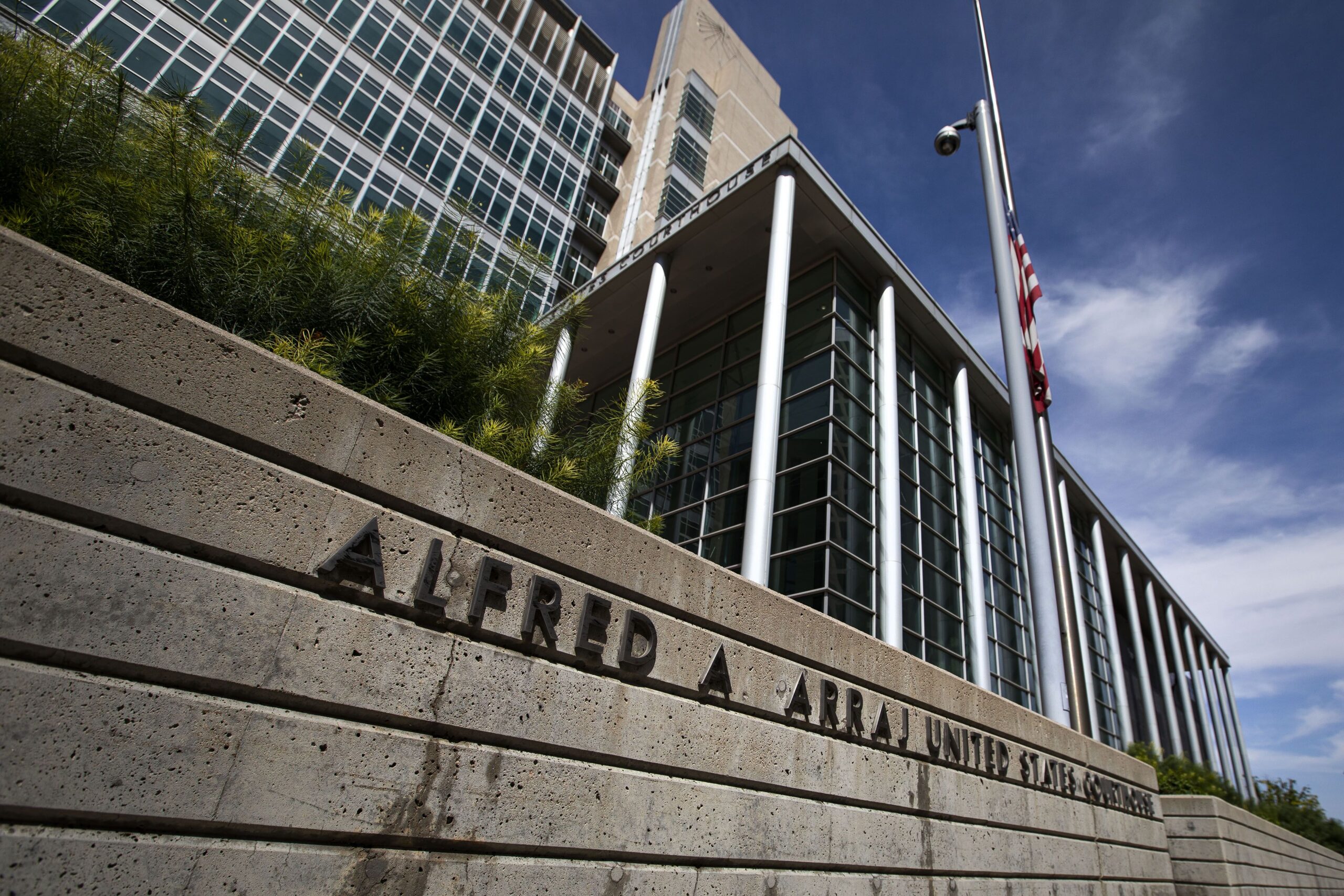
A federal judge concluded last week that Mesa County Valley School District 51 and three of its administrators did not violate the First Amendment rights of a former student when they imposed minor discipline in response to disruptive behavior.
In the landmark 1969 decision of Tinker v. Des Moines Independent Community School District, the U.S. Supreme Court held that students retain their free speech rights at school unless their conduct substantially interferes with school operations. Relying on that standard, U.S. District Court Chief Judge Daniel D. Domenico found that administrators lawfully reacted to the antagonistic emails and disturbance caused by plaintiff “John Doe.”
“Plaintiff does not dispute that he has a history of confronting teachers,” wrote Domenico in a March 25 order. “And I cannot ignore that Plaintiff does not dispute significant evidence that points toward a potential disruption. Because there is ‘ample undisputed evidence’ that Defendants reasonably forecast substantial disruption, any restrictions of speech were constitutionally permissible under Tinker.”
Doe was a special education student in the district from 2020-2022. He first attended Gateway K-12 School. The principal, Mark Allen, submitted a statement to the court describing the difficult relationship he had with Doe and his parents. Doe and his father “raised their voices,” made “accusations and threats,” and threatened to sue the district. Doe was also allegedly disruptive when he wore a hat with the Confederate flag and a teacher asked him to remove it.
On Feb. 3, he emailed Allen and other staff, saying his math teacher was “in a bad mood and has been giving me dirty looks.” He also complained of unequal treatment. The teacher sent Doe to the office, where he refused to meet with Allen and instead called his parents. The speakerphone conversation was audible throughout the office.
Doe’s parents came to the school and Doe’s father stood “toe-to-toe” with Allen until the principal called for law enforcement. Allen also alleged Doe’s father said he would “kick my ass.”
Eventually, Doe and Allen met about the email, which went without incident. Allen concluded Doe had been disrespectful that day, but his conduct did not warrant suspension.
The following school year, Doe was at Grand Junction High School and he sent an email to Principal Jared Burek and other administrators. Doe repeatedly wrote “shame on you” to individual staff. Burek gave Doe a “time out” as a de-escalation measure.
Doe’s father later filed a federal civil rights complaint encompassing the time out and other incidents. The U.S. Department of Education found that “nothing in the District’s actions or correspondence support the Complainant’s beliefs” of retaliation.
Finally, in May 2022, Doe sent an email to two staff members, again telling them “shame on you” and “I expect an apology.” He also demanded “copies of every report card from this year … by the end of the day.” Finally, he advised them to “respond wisely because you’re on video” and challenged his special education teacher to “prove me wrong.”
As a consequence, Burek and Dean of Students Tom LeFebre asked Doe to rewrite the email in a respectful way. Doe agreed to do so.
Doe then sued the district, Allen, Burek, and LeFebre, alleging they retaliated against him for his constitutionally protected speech.
“This lawsuit is a continuation of the Plaintiff and his parents harassing the Defendants through litigation,” wrote the defendants’ lawyers in seeking to resolve the case in their favor without a trial. “Defendants acted in a manner that sought to teach Plaintiff a method of communicating that was in line with school policy and his own growth as a student. Moreover, the requirement that he communicate appropriately and professionally was necessary to ensure order in the classroom.”
“Plaintiff’s claims are analyzed under the Tinker standard,” responded Doe’s lawyers, “and because Plaintiff’s emails posed no threat of disruption, they were protected by the First Amendment.”
Domenico concluded that, under the Supreme Court’s standard, the defendants acted reasonably to prevent substantial disruption to school operations. For that reason, Doe’s speech was not constitutionally protected.
The defendants also argued that the policy requiring students to communicate respectfully was “content-neutral” and was clearly reasonable even apart from the Tinker standard. Domenico declined to base his decision on that line of argument, but he did not believe content-neutral policies provided an exception to the Supreme Court’s test.
Regardless, he added, “a reasonable jury could find that the punishments in this case were not content neutral.”
While Doe’s case was pending, the Colorado Supreme Court censured one of his attorneys, Igor Raykin, for his conduct while representing Doe. In a meeting with district officials, Raykin repeatedly told a female employee to “shut up,” informed that employee that he wished she “would actually stop working here and go work where you really belong, which is in the gutter,” and cursed in front of Doe and his parents.
“No one — not even Raykin himself — would argue that his behavior met professional standards. He has admitted as much,” wrote then-Justice Melissa Hart.
The case is Doe v. Mesa County Valley School District 51 et al.

Colorado Supreme Court intervenes in 4 ongoing cases
Michael Karlik
michael.karlik@coloradopolitics.com
Updated 2 days ago
The Colorado Supreme Court recently moved to intervene in four ongoing cases, including two criminal prosecutions, a civil lawsuit, and a child welfare proceeding. At least four of the court’s seven members must agree to hear a case outside of...
Federal judge releases man immediately as consequence for immigration judge disobeying orders
Michael Karlik
michael.karlik@coloradopolitics.com
Updated 2 days ago
A federal judge ordered a man’s immediate release from immigration detention on Thursday after finding an immigration judge disregarded his prior orders requiring a bond hearing. For the past year, Colorado’s federal district court has faced a flood of “habeas corpus”...
Denver judge denies Gov. Polis request to dismiss ICE-related records case
Marianne Goodland
marianne.goodland@coloradopolitics.com
Updated 1 day ago
A year after blocking the release of state records to federal immigration agents, a Denver judge has now denied Gov. Jared Polis’ effort to end the lawsuit at the center of the dispute. The lawsuit filed against the governor in...
Colorado justices accept appeals on Netflix taxation, children pursuing neglect cases
Michael Karlik
michael.karlik@coloradopolitics.com
Updated 2 days ago
The Colorado Supreme Court announced on Monday that it will decide whether Netflix subscriptions are subject to the state’s sales tax as “tangible personal property.” At least three of the court’s seven members must agree to hear an appeal. The...
Letecia Stauch murder conviction in stepson Gannon’s death overturned by Colorado appeals court
Nick Smith
nick-smith@coloradopolitics.com
Updated 2 days ago
An El Paso County woman convicted of killing her stepson in 2020, shoving his body in a suitcase, then dumping it in Florida, is getting a new trial. The Colorado Court of Appeals published a 52-page ruling on Thursday, stating...

10th Circuit grants rare all-judges’ review of Colorado banking regulation
Michael Karlik
michael.karlik@coloradopolitics.com
Updated 2 days ago
The Denver-based federal appeals court announced on Thursday that it will hold a rare all-judges review of a recent decision that permits Colorado to require out-of-state banks to abide by the state’s maximum interest rates when they lend to in-state...
Colorado appeals court orders new sentencing for Tina Peters, upholds convictions
Michael Karlik
michael.karlik@coloradopolitics.com
Updated 3 days ago
Colorado’s second-highest court determined on Thursday that a trial judge improperly sentenced former Mesa County clerk Tina Peters based upon her exercise of protected speech, while at the same time upholding her convictions. The three-judge Court of Appeals panel also...
Judge rules that Colorado law makes it too hard for parties to bar unaffiliated voters from primaries
Ernest Luning
ernest.luning@coloradopolitics.com
Updated 3 days ago
A federal judge ruled in favor of the Colorado Republican Party late Tuesday, saying that a portion of the state law that allows unaffiliated voters to cast ballots in party primaries is unconstitutional because it imposes an unrealistic burden on...
10th Circuit upholds regulator’s methodology for Tri-State exit fees
Michael Karlik
michael.karlik@coloradopolitics.com
Updated 3 days ago
The Denver-based federal appeals court upheld a regulatory agency’s methodology for calculating the fee owed by entities seeking to withdraw from Tri-State Generation and Transmission Association last week. Tri-State is a Westminster-based cooperative that provides and transmits electricity to member...

Federal judge proposes sanctions against Mike Lindell’s lawyers for continued fake citations
Michael Karlik
michael.karlik@coloradopolitics.com
Updated 5 hours ago
A federal judge is once again pursuing sanctions against lawyers for MyPillow CEO Mike Lindell for continuing to cite to court cases that do not exist, likely based on the faulty output of artificial intelligence tools. Last year, a jury...
PREV
PREVIOUS

Colorado Supreme Court intervenes in 4 ongoing cases
The Colorado Supreme Court recently moved to intervene in four ongoing cases, including two criminal prosecutions, a civil lawsuit, and a child welfare proceeding. At least four of the court’s seven members must agree to hear a case outside of the normal appellate process. The issues raised before the justices include the ability of prosecutors […]

Colorado Politics Calendar Apr. 6-12
CoPo’s weekly political calendar will help you find political and public-policy events throughout Colorado. It includes candidate and issue campaign events, public policy meetings, court hearings, state and local party conventions, assemblies, debates, rallies, parades, speaking engagements, traveling dignitary appearances, water meetings, book signings, county commission hearings, city council meetings and more. As a subscriber, […]