

Newly formed PAC promises a stronger voice for southern Colorado businesses

A new political action committee has launched in southern Colorado, aiming to strengthen and elevate the voices of local businesses and their regional influence on state-level policy.
Over the last two years, the Colorado Legislature has enacted more than 1,000 new laws that have burdened businesses with added costs and excessive regulations, and several more are being proposed, officials with the Colorado Springs Chamber of Commerce & Economic Development Corporation and the Douglas County Economic Development Corporation said.
“…We think it’s important that we effect the change of who’s making those decisions,” said Johnna Reeder Kleymeyer, president and chief executive officer of the Colorado Springs Chamber & EDC. “And we truly hear from southern Colorado business owners that they don’t feel their voice is being heard or represented by these laws that are being passed by our elected officials at the state level.”
In response, the Colorado Springs Chamber and Douglas County EDC, alongside other regional partners, have launched the Southern Colorado Business Alliance.
It brings businesses and chambers together from across southern Colorado “to identify, train, endorse and support pro-business candidates and elected leaders at the state level; engage candidates through informed, community-driven dialogue; and coordinate political action that advances economic growth, workforce development, housing and competitiveness,” according to a news release from the Colorado Springs Chamber.
Other founding partners include Colexico Alliance, Greater Pueblo Chamber of Commerce and Royal Gorge Chamber Alliance. More organizations are expected to join as the effort grows.
The SCBA focuses only on state-level races and policy, representatives in Colorado Springs and Douglas County said.
“This is a new tool in our toolbox that sets us apart from other economic development organizations in the state and shows the business community that we have their backs,” said Ellie Reynolds, president and CEO of the Douglas County EDC. “… We want to be able to incentivize our businesses and make sure we’re a business-friendly environment.”
It’s important that businesses outside the Denver Metro and in more rural areas have a seat at the table, because their wants and needs might be different than those doing business in urban metropolitan areas, Reynolds and Reeder Kleymeyer said.
People and businesses are leaving the state and the Legislature is passing and proposing laws that, while they may be well-intentioned, can negatively impact businesses, Reeder Kleymeyer added.
Colorado’s population reached 6 million people in 2025, but for the first time in 20 years more residents left for other states than moved here from other places, the state demographer’s office reported in January. Colorado’s net migration, or the number of people coming to the state versus the number of people leaving, has dropped by more than 50% from 2015 to 2025.
High school graduation and dropout rates improved during the 2024-2025 school year, but significant gaps remain across racial, ethnic and specific student groups, the Colorado Department of Education said in January.
“We’re not bringing in the amount of talent that we were once bringing,” Reeder Kleymeyer said. “We hope to home grow that talent, but then we see the education numbers, the graduation rates, the attainment that are quite concerning for our businesses for their future workforce.”
The state’s largest public company, Palantir, a controversial artificial intelligence company with several government contracts including federal immigration forces and the U.S. military, announced in February it is moving its headquarters from Denver to Miami.
The Professional Rodeo Cowboys Association has taken steps to possibly leave Colorado Springs for Cheyenne, Wyo., and Colorado Springs in September lost its bid to bring USA Gymnastics to the city from Indianapolis.
Among other proposed bills, the alliance is concerned about the state Legislature’s consideration of House Bill 1005, for example. It proposes reviving a previously failed effort to amend a Colorado union law and would remove the current requirement for a second election to establish a union security agreement at a unionized workplace, which allows unions to collect dues or representation fees from all workers, including non-members. Proponents have argued the change would strengthen workers’ ability to organize and negotiate higher wages, while critics say eliminating the second vote would force employees to pay union representation fees without sufficient consent.
House Bill 1005 would remove worker protections because employees who didn’t vote to organize would have to join the union and pay dues, Reeder Kleymeyer said.
“It’s so overwhelming, what the state Legislature is doing to the business community. It’s hard for them to overcome,” Reynolds said. “Businesses located here are struggling to keep up with the constantly changing regulatory environment. When we try to attract new businesses, we’re not competitive due to the level of red tape that we have at the state level. That puts us at a disadvantage for maintaining and enticing people to come.”
As well as the PAC, the initiative includes an affiliated independent expenditure committee, Southern Colorado Action (SoCo Action). It’s a separate and independent pathway for individual businesses to participate in advocacy and voter outreach, while chambers participate through the SCBA.
“We want to be able to have, of course, strength in numbers, but also financial strength,” Reynolds said. “We want to be such a powerhouse and watchdog of money that the ideas the Legislature is hearing are coming from outside Denver.”
Each participating chamber holds a voting seat in the alliance and will actively shape its work, Reeder Kleymeyer said.
Its board will select and train business-friendly candidates, educating them on business issues and how to run for state offices. The alliance will formally interview candidates, endorse them, fund them and ensure they uphold pro-business tenets.
“For us to have a strong economy in Colorado, businesses must thrive. We want our kids to stay in Colorado. We must have jobs that (pay) a living wage to go to in our state. And we have to diversify our economy so that we have multiple industries that our economy is dependent on,” Reeder Kleymeyer said. “We only do that by getting pro-business legislation that has limited regulation, with safety first but not passing so many bills that put onerous costs on business, make it hard to hire, and, frankly, allow them to decide that it might be better to be in Wyoming or Utah or New Mexico or Arizona ….”
Southern Colorado chambers interested in partnering with the SCBA can contact Jeff Thormodsgaard, vice president of government affairs with the Colorado Springs Chamber & EDC, at JThormodsgaard@cscedc.com or 1-303-653-5563.


Bill to accelerate police access to online data clears Colorado committee
Marissa Ventrelli
marissa.ventrelli@coloradopolitics.com
Updated 11 hours ago
A proposal to speed up law enforcement’s access to social media data is advancing in the Colorado Legislature, drawing testimony from the residents of Evergreen, where a school shooting took place, and questions from opponents worried about privacy and constitutional...

Colorado ski resorts announce early closures amid historic snowpack lows, high temperatures
Kyla Pearce
kyla.pearce@gazette.com
Updated 3 days ago
Vail Resorts is the latest area to announce season closure Wednesday As Colorado’s historically low snowpack year comes to a close and spring conditions take over the mountains, the state’s major ski resorts are announcing closing dates — some of...

Douglas County task force targets development regulations
Nicholas Fogleman
nicholas.fogleman@denvergazette.com
Updated 4 days ago
Douglas County kicked off its first Red Tape Reduction Task Force Thursday aimed at speeding up commercial and industrial development timelines in the county, a move leaders said is necessary to keep the county competitive with other regions nationwide. The...

Hands-free law credited with preventing 600 crashes and 6 deaths in Colorado
Scott Weiser
scott.weiser@gazette.com
Updated 4 days ago
New data shows Colorado’s hands-free law is curbing distracted driving on the state’s highways and has helped prevent nearly 600 crashes, more than 400 injuries and six fatalities statewide. A one-year analysis by Cambridge Mobile Telematics found that distracted driving...

Colorado Springs, other front Range cities oppose proposal to permit lot‑splitting
Marianne Goodland
marianne.goodland@coloradopolitics.com
Updated 2 days ago
Colorado lawmakers are pressing ahead with a plan to let homeowners split their lots to make room for smaller, less expensive houses — a proposal that has drawn sharp opposition from Colorado Springs, Aurora, Denver and other Front Range cities...

Catalyst for Girls Award recipients to be honored at luncheon | NONPROFIT REGISTER
Joanne Davidson Special to Colorado Politics
joanne-davidson-special-to-colorado-politics@coloradopolitics.com
Updated 5 days ago
GIRLS, INC. OF METRO DENVER Denver News: Girls, Inc. of Metro Denver is in final preparations for its annual My Bold Future luncheon, a May 13 fundraiser honoring the 2026 Catalyst for Girls award recipients. They are: Corporate Catalyst, Crocs, Inc.; Community Catalyst,...

Gov. Polis declares April ‘dig safely month’ to mark 40th anniversary of Colorado 811
Scott Weiser
scott.weiser@gazette.com
Updated 6 days ago
Gov. Jared Polis declared April 2026 as “Dig Safely Month” in Colorado, an annual observance that this year highlights the 40th anniversary of Colorado 811, the state’s One-Call Notification System. “Before everyone starts their warm weather projects around the house,...

Denver proposes yearlong moratorium on new data centers
Deborah Grigsby
deborah.smith@denvergazette.com
Updated 7 days ago
As Denver Water calls for a 20% reduction in water use during Stage 1 drought conditions, City Council members advanced a bill to rein in one of the largest water users — data centers — by proposing a yearlong moratorium...
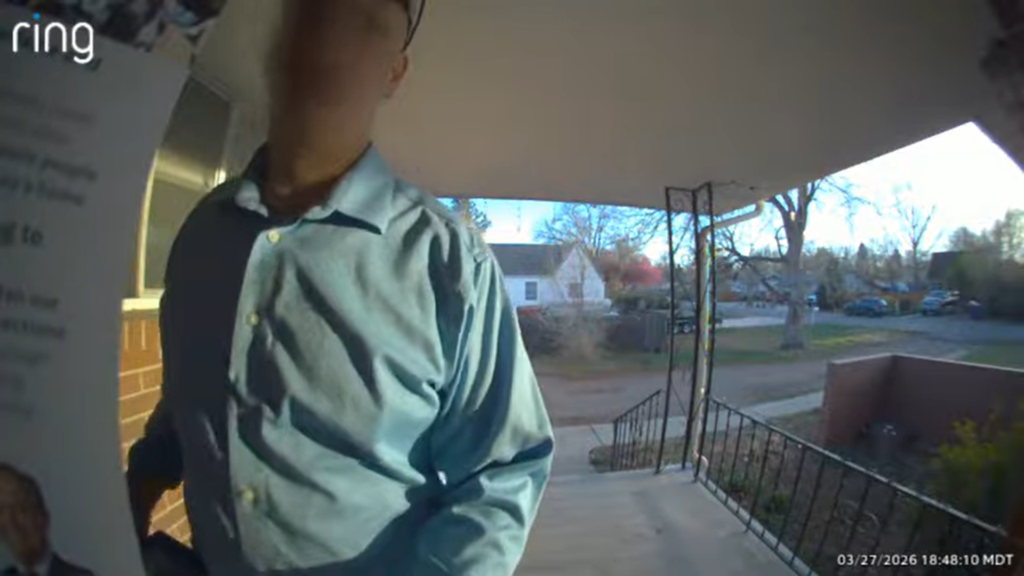
Lakewood zoning canvasser accused of stealing opposition material
Sage Kelley
sage.kelley@denvergazette.com
Updated 2 days ago
Allegations of sign stealing and electioneering have emerged in the Lakewood special election over zoning. A resident recently shared security camera footage online of a man appearing to steal an opposition door knocker. Meanwhile, the city also filed a complaint...

Unique nonprofit serving single moms selects new leader | NONPROFIT REGISTER
Joanne Davidson Special to Colorado Politics
joanne-davidson-special-to-colorado-politics@coloradopolitics.com
Updated 7 days ago
SPARKHOPE AUTOMOTIVE Denver News: Jason Spears has been named chief executive officer of SparkHope Automotive. While its name might lead one to believe it is a car dealership, SparkHope Automotive, formerly Hands of the Carpenter, is a faith-based nonprofit serving employed single mothers by addressing a critical and...
PREV
PREVIOUS

10th Circuit rules cognitively impaired man's risk of lobotomy, mistreatment in Mexico not 'torture'
The Denver-based federal appeals court concluded last month that a man’s risk of mistreatment or forced lobotomy in his native Mexico did not amount to “torture” that should shield him from deportation. A three-judge panel of the U.S. Court of Appeals for the 10th Circuit noted that Javier Garcia-Botello’s request for protection under the Convention […]

A perfect storm: Pine beetles thriving following warm, dry winter in Colorado
The warmest winter in Colorado history could lead to record-breaking proliferation of a tiny insect, about the size of a grain of rice, that has killed millions of acres of trees across the Centennial State and contributed to the rapid spread of some of its largest wildfires, according to state officials. Mountain pine and spruce […]