

Colorado justices side with news organizations for disclosure of high-level child abuse data
The Colorado Supreme Court ruled on Monday that the state must disclose the number of child abuse reports at individual group living facilities in response to an open records request, as the addresses are already in the public domain.
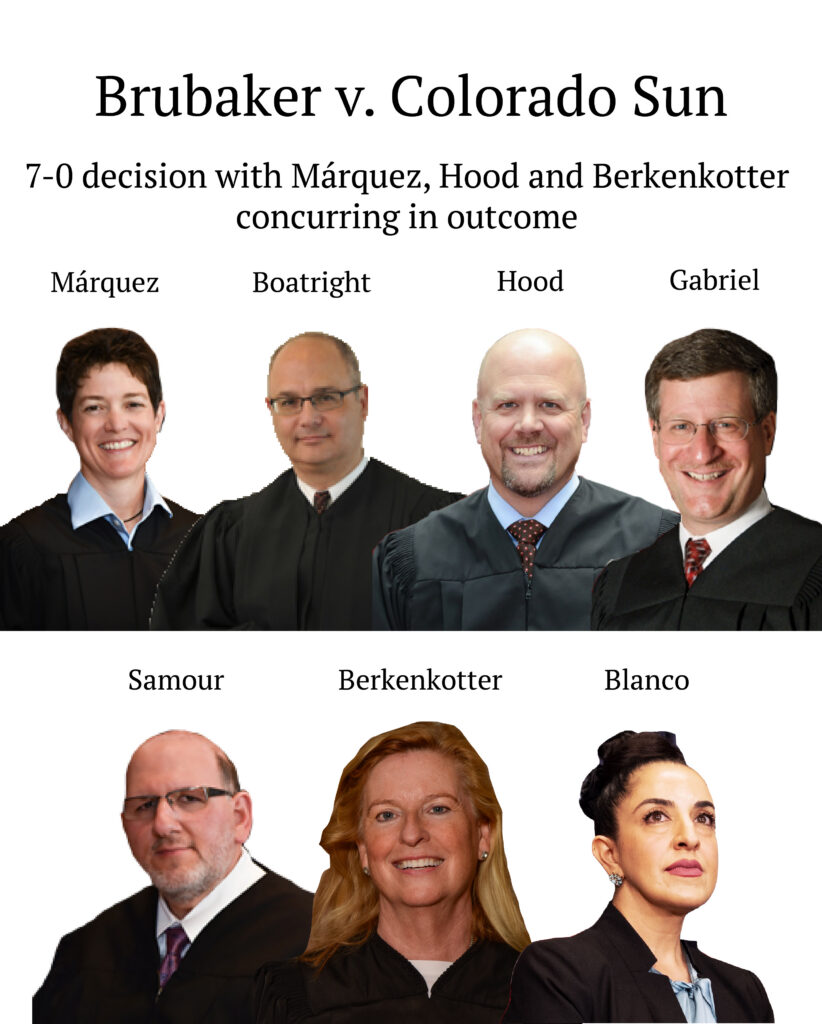
The justices agreed that the Court of Appeals erred in resolving the case. But beyond that, the Supreme Court split 4-3 on whether state law permitted the disclosure of high-level statistics broken down by facility.
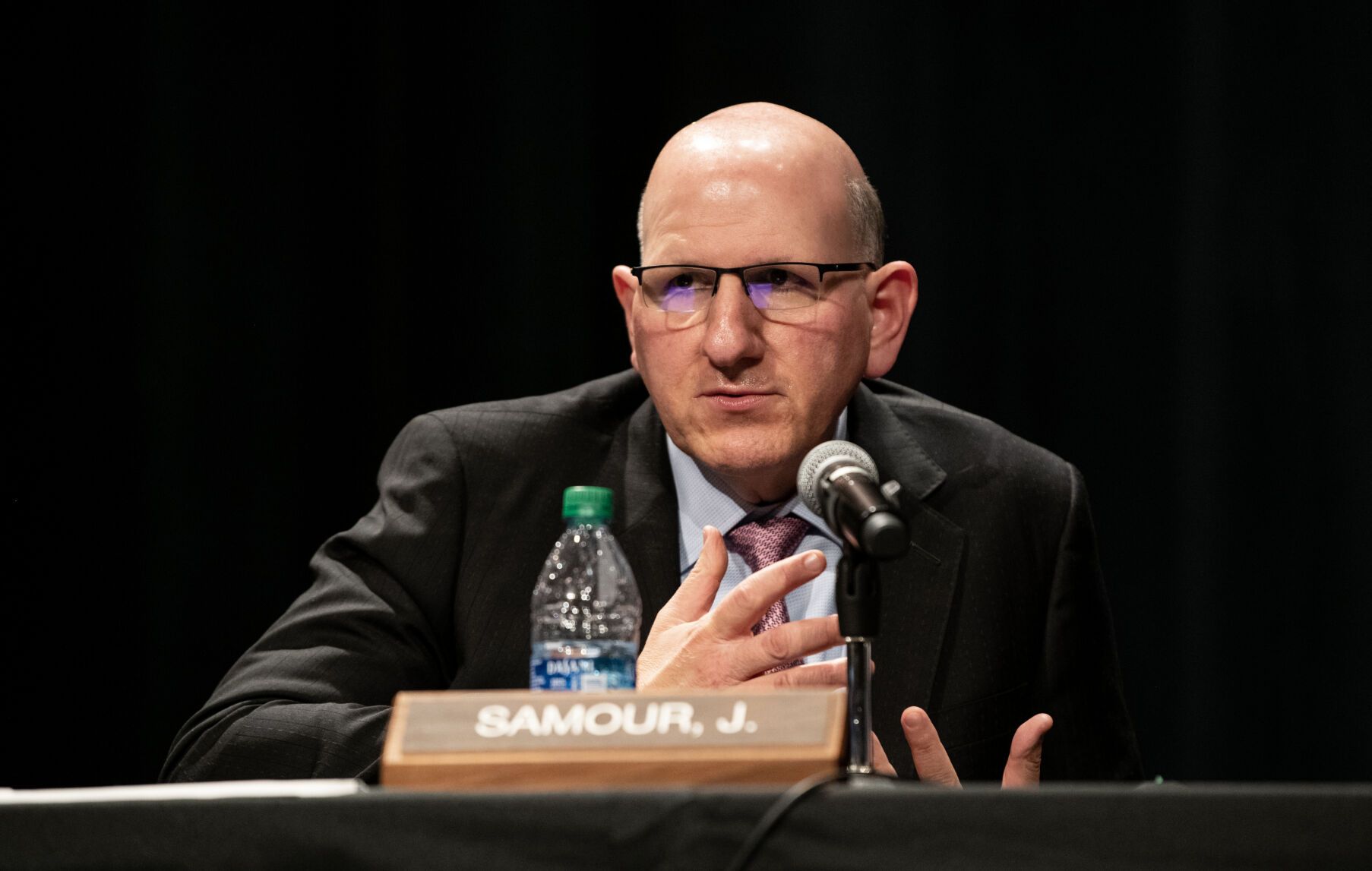
Justice Carlos A. Samour Jr., in the March 30 majority opinion, observed that the law’s prohibition on disclosing addresses did not apply when it was already clear where the residential child care facilities at issue are located.
“How can the requested disclosures make public what is already public? That’s no more possible than making public the information found in a book already sitting on a library shelf,” he wrote. “These are public facilities with publicly accessible addresses.”
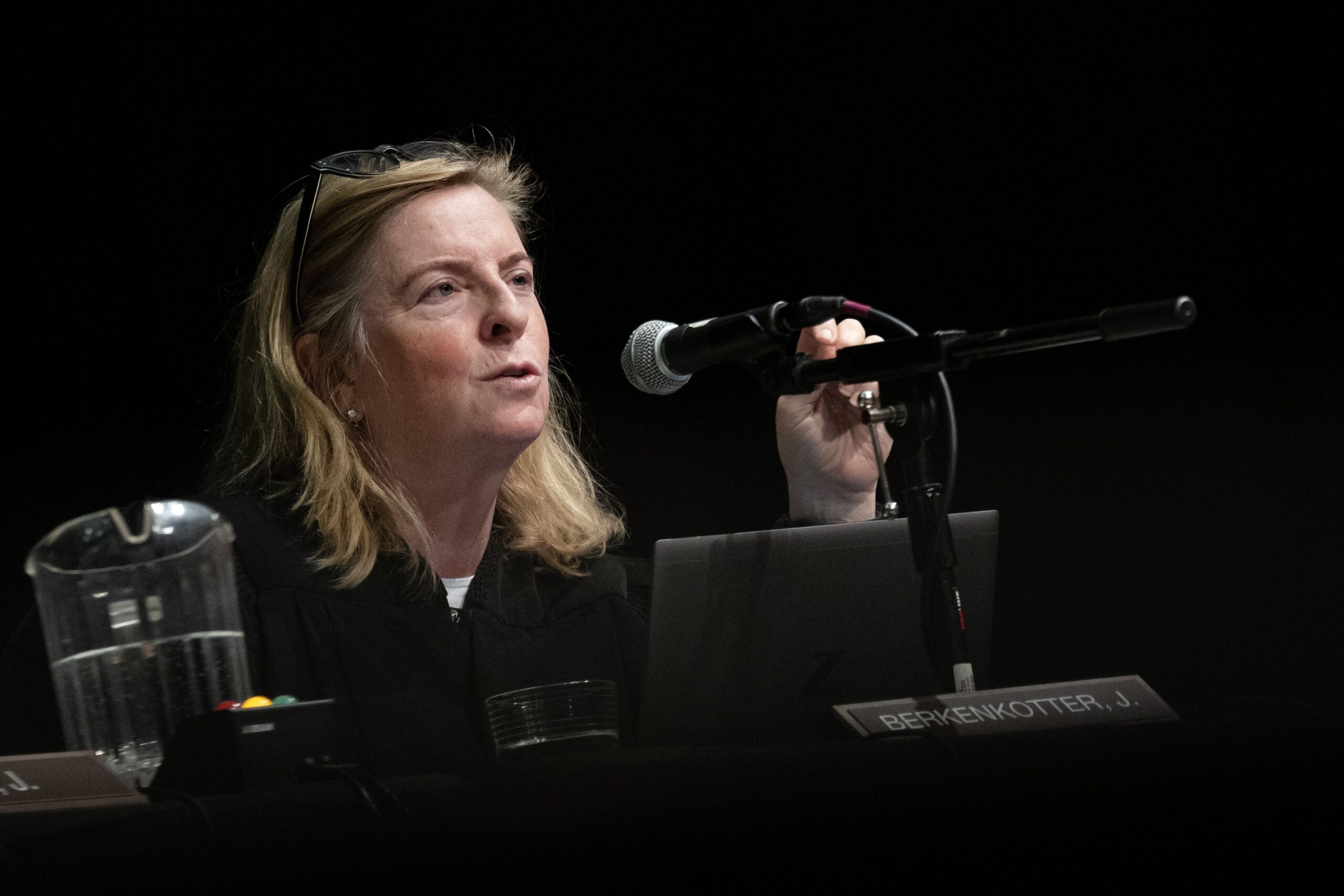
Justice Maria E. Berkenkotter argued the majority’s opinion will cause confusion about what information is disclosable under the law. She also agreed with an argument the state had made: A person filing an open records request may already have information that, when combined with government records, can be used to identify specific people.
A recordkeeper “has no way of knowing if they might be providing the first or the last puzzle piece that will allow a requester to identify a specific child, family, or informant. Requiring the disclosures that the majority does here risks making the custodian complicit,” Berkenkotter wrote for herself, Chief Justice Monica M. Márquez and Justice William W. Hood III.
The case focused on a provision of state law rendering child abuse reports confidential, along with the “name and address of any child, family, or informant or any other identifying information contained in such reports.”
In 2021, 9News and the Colorado Sun requested the number of calls made to the child abuse hotline over a three-year period for three group homes and treatment facilities: Tennyson Center, Mount Saint Vincent, and Cleo Wallace. Each residential facility housed between 24 and 112 children.
The Colorado Department of Human Services offered to provide the total number of reports and tips investigated, but alleged that breaking the data down by facility was “likely to identify the address of the child or informant” in violation of the law. Then-Denver District Court Judge Darryl F. Shockley agreed with the department’s justification, even as he acknowledged that it would be “difficult or even impossible” to identify specific people using the requested data.
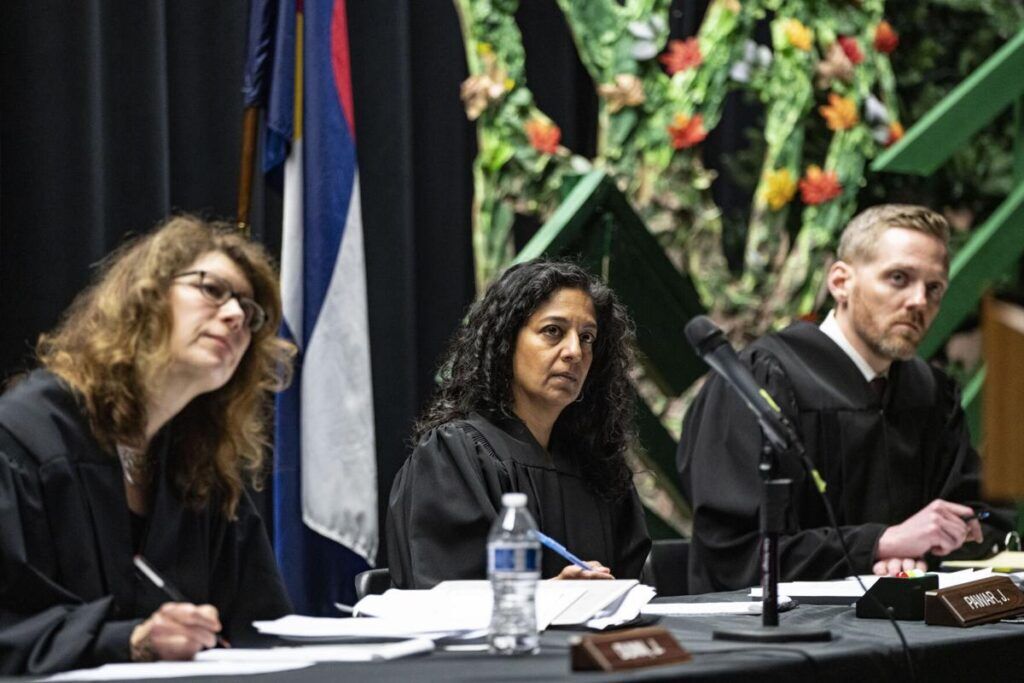
By a 2-1 vote, a panel of the Court of Appeals concluded that the law was ambiguous, but the most logical interpretation was that only information that can identify specific people must remain confidential.
Prohibiting the disclosure of even nonidentifying information “could be an unconstitutional restriction on free speech,” wrote Judge Elizabeth L. Harris for herself and Judge Christina F. Gomez. The majority moved to return the case to the trial court to analyze whether granting the plaintiffs’ request would necessarily disclose identifying information.
Judge Neeti V. Pawar dissented, believing that lawmakers intended to keep addresses confidential at all times.
The human services department appealed to the Supreme Court. It received support from Denver’s human services agency, which argued the media organizations demonstrated “no need” to know how many child abuse reports each of the three facilities generated. Further, publicizing child abuse has “only served to whet the voyeuristic appetites of the general public,” wrote Assistant City Attorney Amy J. Packer.
But multiple members of the Supreme Court were skeptical during oral arguments that asking for the total number of calls about a specific group home would lead to the identification of a child or other protected person.
“We already know the address here,” said Samour, who read off the addresses of the three residential facilities. “If they had just simply asked, ‘Have there been any reports of abuse or neglect at Cleo Wallace,’ would that still be confidential?”
The department could not release that information either, said Senior Assistant Attorney General Jennifer L. Carty.
The Supreme Court ultimately agreed with Pawar, the dissenting Court of Appeals judge, that addresses are identifying information not subject to disclosure. However, wrote Samour for the majority, the law prohibiting disclosure of addresses did not bar the “confirmation of an already public address” for a residential child care facility.
The department’s argument “would hinder, if not altogether eliminate, oversight of state-funded residential facilities for children. All information, including a cardinal number, in any way related to a report of child abuse or neglect originating from an RCCF would presumably be out of bounds,” he wrote.
As for whether future requests for raw numbers will ever violate the confidentiality prohibition, that is “a tomorrow problem that we have no occasion to pass judgment on today,” Samour added.
Berkenkotter disputed whether the records request was merely to confirm information already in the public domain. She also disagreed with the majority’s distinction between “disclosing” and “confirming” information.
“But if that’s the standard, what address isn’t already public?” Berkenkotter wrote. “The majority claims that questions about the reach of its holding regarding cardinal numbers are ‘a tomorrow problem.’ This might be accurate as it relates to our court, but not so for the public health departments, media outlets, and trial courts that will have to discern just what the majority opinion means.”
“Our clients are pleased that the majority of the Justices correctly construed Colorado’s Open Records Act and the information these news organizations had requested,” said the plaintiffs’ attorney, Michael Beylkin, in an email. “In other words, they asked for none of the pieces of information the Children’s Code precludes being released.”
Julie Popp, a communications manager for the human services department, said the entity is “reviewing any of the implications (the decision) has on the Department and our services to individuals and the community at large.”
The case is Brubaker v. Colorado Sun et al.

Colorado leaders weigh next steps after Supreme Court rejects state ban on ‘conversion therapy’
Marissa Ventrelli
marissa.ventrelli@coloradopolitics.com
Updated 15 hours ago
Colorado leaders said they are weighing next steps after the U.S. Supreme Court on Tuesday rejected the state’s ban on “conversion therapy” for children, as critics and supporters cheered or lambasted the ruling. The court’s near-unanimous decision called the Colorado...
Federal judge dismisses U.S. government lawsuit against Colorado, Denver’s ‘sanctuary’ laws
Michael Karlik
michael.karlik@coloradopolitics.com
Updated 14 hours ago
A federal judge dismissed the U.S. government’s lawsuit against Colorado and Denver on Tuesday, which alleged that various local policies impermissibly infringed on federal immigration enforcement. U.S. District Court Judge Gordon P. Gallagher followed the lead of judges in Illinois...
Federal judge finds DOJ adequately searched for, disclosed records related to Bidens
Michael Karlik
michael.karlik@coloradopolitics.com
Updated 19 hours ago
A federal judge determined on Friday that the U.S. Department of Justice adequately searched for and disclosed records to a Colorado attorney in response to his request for documents related to former President Joe Biden’s son and brother. In November...

10th Circuit warns lawyers after finding fake case in filing
Michael Karlik
michael.karlik@coloradopolitics.com
Updated 13 hours ago
The Denver-based federal appeals court warned attorneys to be more careful last month after discovering one lawyer cited a fake case in his arguments. In recent months, federal and state judges in Colorado have begun cautioning lawyers explicitly about the...

10th Circuit rules cognitively impaired man’s risk of lobotomy, mistreatment in Mexico not ‘torture’
Michael Karlik
michael.karlik@coloradopolitics.com
Updated 1 day ago
The Denver-based federal appeals court concluded last month that a man’s risk of mistreatment or forced lobotomy in his native Mexico did not amount to “torture” that should shield him from deportation. A three-judge panel of the U.S. Court of...
Divided Colorado Supreme Court finds Denver detective did not violate defendant’s Miranda rights
Michael Karlik
michael.karlik@coloradopolitics.com
Updated 1 day ago
The Colorado Supreme Court determined on Monday that a Denver detective did not improperly resume questioning of a defendant in custody after he invoked his right to counsel. By 4-3, the justices reversed a trial judge’s order that found a...

Out-of-state judges address ex-discipline director’s lawsuit, Colorado justices accept federal invitation | COURT CRAWL
Michael Karlik
michael.karlik@coloradopolitics.com
Updated 2 days ago
Welcome to Court Crawl, Colorado Politics’ roundup of news from the third branch of government. A pair of out-of-state judges got down to business in a lawsuit brought by Colorado’s former judicial discipline director, plus the state Supreme Court has...
Federal judge upholds constitutionality of Colorado campaign contribution limits
Michael Karlik
michael.karlik@coloradopolitics.com
Updated 5 days ago
A federal judge upheld Colorado’s individual campaign contribution limits as constitutional on Thursday, finding that three Republican plaintiffs failed to prove the campaign finance framework violates their First Amendment rights. U.S. District Court Senior Judge John L. Kane recognized that...
Appeals court rejects theory that existing tax revenue undermines need for new fees
Michael Karlik
michael.karlik@coloradopolitics.com
Updated 5 days ago
Colorado’s second-highest court rejected a plaintiff’s claim on Thursday that the tax revenue generated by an existing activity should prevent local governments from imposing new fees aimed at regulating the activity. The question stemmed from Colorado’s unique constraints on taxation...
Appeals court finds no illegal sentence when defendants forfeit time-served credit
Michael Karlik
michael.karlik@coloradopolitics.com
Updated 16 hours ago
Colorado’s second-highest court ruled on Thursday that criminal defendants may agree to relinquish the credits they earned while incarcerated pending trial, despite a state law guaranteeing that such time “shall be deducted” from a person’s sentence. Kerry Ellis Endsley pleaded...
PREV
PREVIOUS

Colorado auto thefts drop 56% from 2021 levels
Colorado once ranked as the worst state in the nation for motor vehicle thefts per capita in 2021. The state has since seen a dramatic improvement, with auto thefts dropping 56% from 2021 levels. The state reported 16,291 motor vehicle thefts in 2025 — a 34% decline from the previous year, according to the released […]

10th Circuit rules cognitively impaired man's risk of lobotomy, mistreatment in Mexico not 'torture'
The Denver-based federal appeals court concluded last month that a man’s risk of mistreatment or forced lobotomy in his native Mexico did not amount to “torture” that should shield him from deportation. A three-judge panel of the U.S. Court of Appeals for the 10th Circuit noted that Javier Garcia-Botello’s request for protection under the Convention […]