

Power grid shutdowns in Colorado bring protection — and problems
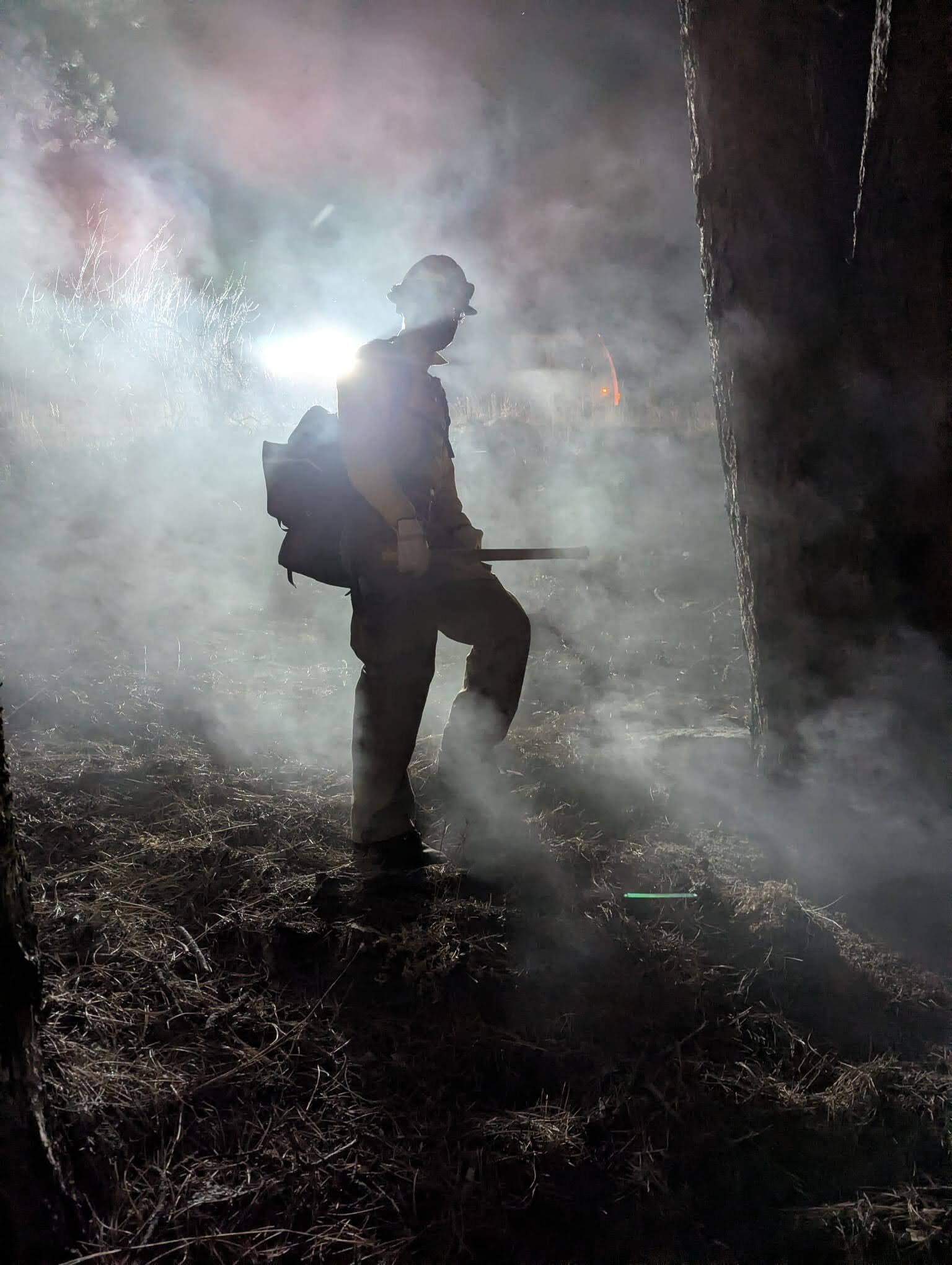
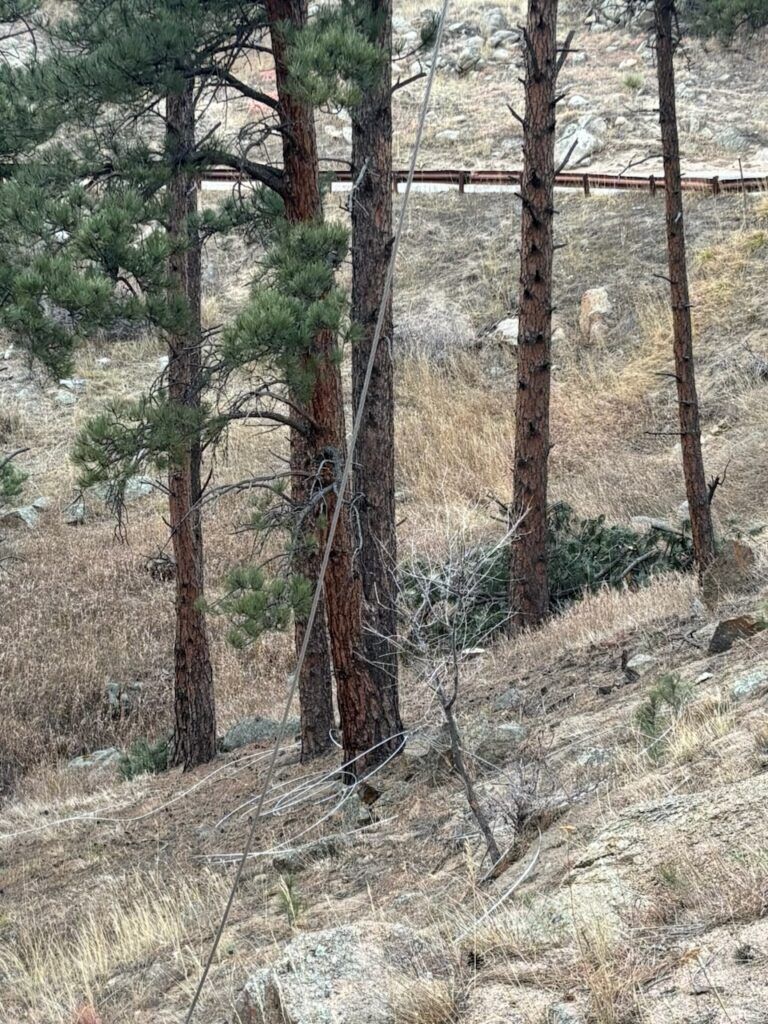
A downed power line in Sunshine Canyon in the mountains west of Boulder in December posed an electrocution risk to firefighters and bystanders after Xcel Energy re-energized it without repairing it, despite being notified of the break the day before.
Then, local officials added, it posed a wildfire risk by starting a small grass fire.
The line had gone down when Xcel Energy deliberately cut power to a wide swath of Front Range communities, citing extreme wildfire weather to prevent equipment from sparking a blaze that could become a destructive or even deadly conflagration.
“If the winds hadn’t calmed, that fire could have jumped the road,” Sunshine Fire Protection District Chief Michael Schmitt said. “Otherwise, that fire would’ve jumped the road and would’ve pushed up towards Pinebrook Hills.”
“A line should never, ever be energized when it’s been reported as damaged,” Schmitt told The Denver Gazette.
A Public Safety Power Shutoff, or PSPS, is a deliberate last-resort tool that is now being increasingly deployed along the Front Range, which perennially has high wind gusts.
The approach has been sanctioned by Colorado’s energy regulators, and power companies and their allies have argued that they are a necessary strategy, given dry conditions and high winds, which could turn a spark into a deadly event.
Critics have countered that utilities should instead focus on making their infrastructure resilient to extreme weather, instead of turning off people’s power, with its grave repercussions for residents and businesses.
At a recent legislative hearing, Xcel Energy Colorado President Robert Kenney said that, when extreme winds, low humidity and bone-dry fuels align, his utility must cut power to prevent equipment from sparking a fire that could quickly blow up into a major wildfire.
After the National Weather Service issued Colorado’s first “particularly dangerous situation” red-flag warning for the Front Range, Xcel Energy instituted two Public Safety Power Shutoffs on Dec. 17 and again on Dec. 19. The predicted winds mirrored those that preceded the deadly 2018 Camp Fire in California, which burned more than 153,000 acres and killed 85 people.
Restoration took days because crews must physically inspect every mile of line before re-energizing — a mandatory safety step that prevents the ignitions a PSPS is meant to avoid.
Schmitt, the fire chief, said his fire department has hardened its own infrastructure with reinforced buildings and backup generators to withstand the extraordinary winds in the canyon. He urged the power company to do similar upgrades by installing insulated wire to reduce sparking and higher-rated poles.
“Ironically, all or most of the poles in our district have been replaced in the last couple years,” Schmitt added. “They’re new, and even the new ones are not rated for more than 90 miles per hour.”
“We had what we think were close to 125 miles per hour winds,” said Schmitt.
In an interview with The Denver Gazette, he added that two days later, a downed powerline in Four Mile Canyon was also improperly reenergized, starting a larger fire. Fortunately, said Schmitt, it was in the evening and there were firefighters close by. The fire was stopped only five feet from a garage. Schmitt said if the garage had caught on fire, the community might have lost six homes in a densely vegetated canyon.
Communications in the mountainous rural area are unreliable, with cell service often not available. After backup batteries in the digital phone system that depends on electric power were exhausted, some residents had no way to communicate with the outside world, said Schmitt.
Public Safety Power Shutoffs are a last-resort measure, said Xcel Energy officials.
Kenney, the Xcel executive, defended his company’s actions during a legislative hearing in January.
“We made the right operational decision for public safety,” Kenney told lawmakers. “These were the exact same kinds of winds seen just prior to the Eaton and Palisades fires in Southern California.”
He acknowledged the hardship the decision brings, adding the company has expanded support for vulnerable customers, including rebates for battery backups and partnerships with the American Red Cross to open comfort centers during outages.
Company officials have said it is making upgrades to reduce the scope and duration of future shutoffs. Kenney said the company will install additional sectionalization devices across its system by the end of 2027, allowing crews to de-energize only small segments rather than large areas.
“We’re able to be more surgical in which parts of our system we de-energize,” Kenney said. “This will also ensure that our electric system will be broken into smaller segments.”
He said the ultimate goal is clear — make any future shutoffs smaller, shorter and less frequent while protecting public safety, adding the company is making investments to achieve that objective.
The practice of deliberately shutting off power was first used in California after the 2018 Camp fire, when PG&E began using the strategy to prevent equipment from sparking blazes during Santa Ana winds. The fire had killed 85 people.
Boulder has long been one of the windiest cities in America, where powerful Chinook winds roar down the Front Range canyons and routinely exceed 100 mph. Since 1967, at least 16 documented windstorms have produced higher gusts, including a 147-mph record at the National Center for Atmospheric Research Mesa Lab in 1971 and a 137-mph blast in January 1982 that damaged 40% of the city’s buildings and cost roughly $10 million.
In Colorado, Xcel Energy adopted a PSPS policy after the 115 mph wind-driven Marshall fire in December 2021, which tore through more than 1,000 homes and businesses. Xcel denied that its power line started the fire, but paid $640 million in compensation to victims without admitting guilt.
Those conditions arrived again on Dec. 17 and Dec. 19, 2025. Winds predicted to exceed 100 mph along the Front Range forced Xcel Energy to de-energize lines, rather than risk igniting a wildfire. During the windstorm, National Weather Service instruments hit 113 mph, while firefighters in Sunshine Canyon measured winds they estimated at 125 mph.
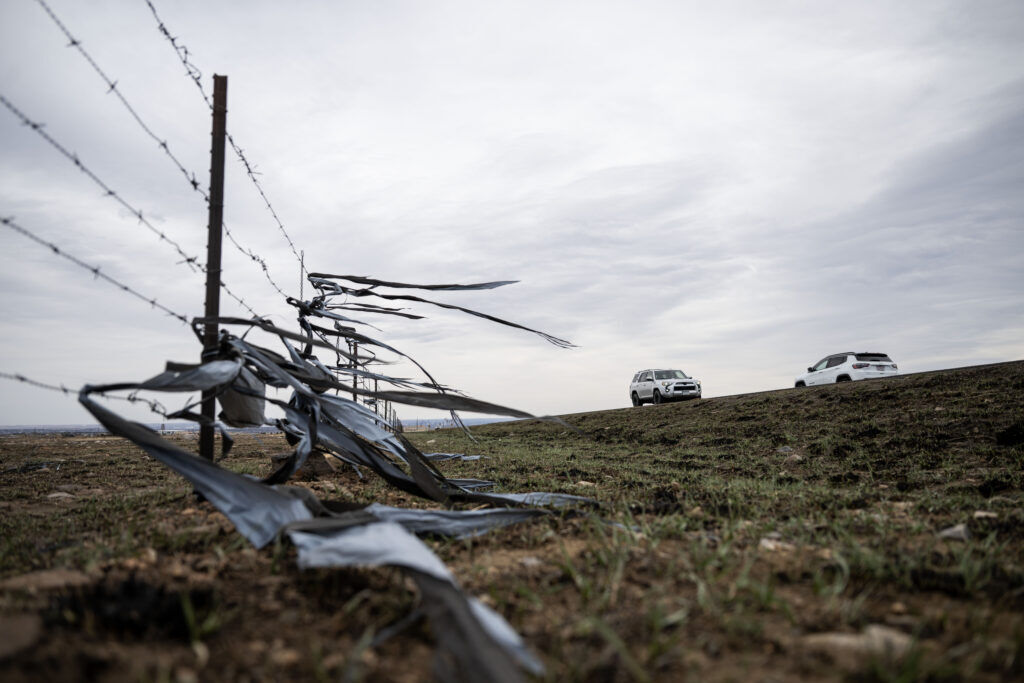
After the December events along the Front Range, a Boulder chamber survey of nearly 300 companies found average losses of about $25,000 per business. Nine companies reported hits exceeding $100,000. Roughly 20,000 workers were idled, half unable to work. The Golden Chamber of Commerce tallied nearly $2 million in damages among just 100 businesses.
Local businesses felt the pain acutely.
Brandon Bortles, owner of Nosu Ramen and Abejas Bistro in Golden, lost nearly $55,000 between the two restaurants over five days of outages. Insurance covered only about $14,000 for one location because it was not on Xcel’s initial PSPS map. The Golden chamber provided $3,000, which Bortles called “a drop in the bucket.”
“Honestly, I’m looking at exit plans,” Bortles said. “I don’t think restaurants are very sustainable in Colorado anymore, especially in the foothills.”
Tyler Butler, general manager of Evergreen Bread Lounge, said his restaurant lost $40,000 in food products and labor. The restaurant cannot use a generator in high winds, especially because of its second-floor location.
Bortles summed up the frustration this way: “It’s like living in a third-world country. We’re all behind the eight ball. I want to know: Are we going to do this 10 times a year? What are we going to do in the future? Just shut down the town every day?”
Denver Gazette reporter Sage Kelley contributed to this story.


Colorado Gov. Polis signs bill requiring social media scaled-back social media warrant bill after last year’s veto
Marissa Ventrelli
marissa.ventrelli@coloradopolitics.com
Updated 35 minutes ago
Colorado law enforcement will soon have faster access to digital evidence after Gov. Jared Polis signed a pared‑down bill requiring social media companies to acknowledge and respond to search warrants on a tight timeline, a shift from a broader proposal...
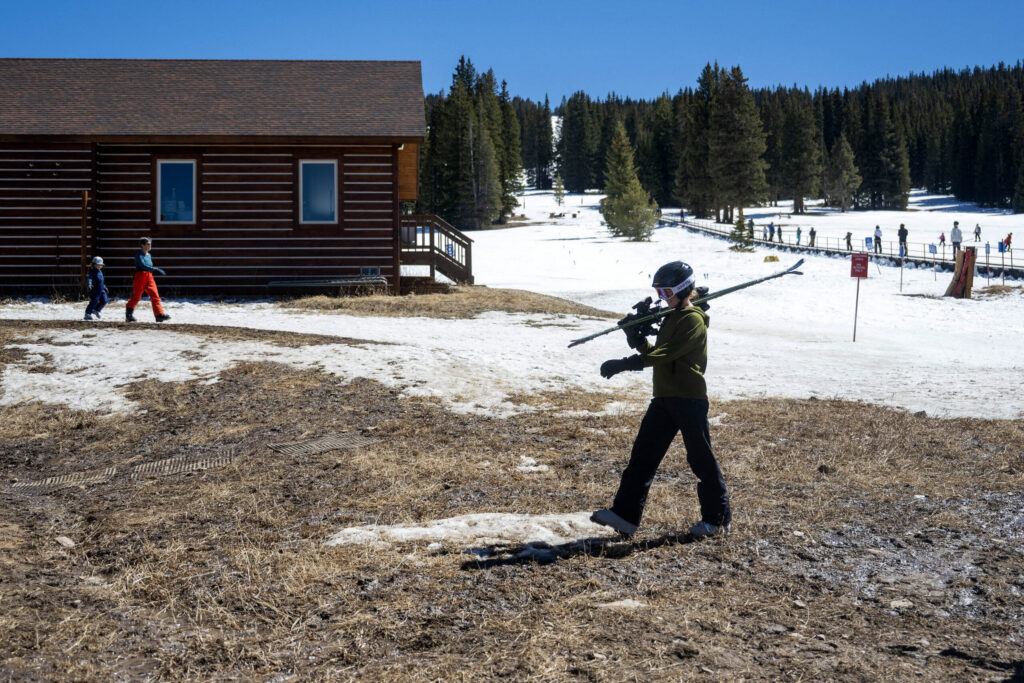
Colorado ski resorts announce early closures amid historic snowpack lows, high temperatures
Kyla Pearce
kyla.pearce@gazette.com
Updated 3 days ago
As Colorado’s historically low snowpack year comes to a close and spring conditions take over the mountains, the state’s major ski resorts are announcing closing dates — some of which are weeks before historic closing dates. Most of Colorado’s ski...

Longtime community leader Arlene Hirschfeld to be honored | NONPROFIT REGISTER
Joanne Davidson Special to Colorado Politics
joanne-davidson-special-to-colorado-politics@coloradopolitics.com
Updated 3 days ago
WOMEN UNITED, MILE HIGH UNITED WAY Denver News: Arlene Hirschfeld, a Denver native who has devoted her adult life to serving others, will receive the 2026 Frances Wisebart Jacobs Award when Mile High United Way hosts its Women United Luncheon on April 17. The award is named...

Major downtown Denver office conversion gets $63M from DDDA
Bernadette Berdychowski
bernadette.berdychowski@denvergazette.com
Updated 3 days ago
The Denver Downtown Development Authority approved $63 million on Wednesday for the ambitious plan from a developer to convert two office towers into what it calls a “vertical village.” The project, dubbed High Fidelity Plaza from The Luzzatto Co., would...
Pinnacol separation bill delayed as Colorado budget remains in flux due to $1.5B deficit
Marianne Goodland
marianne.goodland@coloradopolitics.com
Updated 4 days ago
A bill that would allow Pinnacol Assurance to formally sever its remaining ties with the state appears unlikely to emerge anytime soon, as House leaders juggle a massive budget shortfall, unresolved negotiations with key stakeholders, and growing doubts about whether...

Comedy showcase to feature new and established talent | NONPROFIT REGISTER
Joanne Davidson Special to Colorado Politics
joanne-davidson-special-to-colorado-politics@coloradopolitics.com
Updated 3 days ago
MIZEL ARTS AND CULTURE CENTER Denver News: A host of emerging comedians will perform along with Denver native and nationally recognized comic Noah Gardenswartz when the Mizel Arts and Culture Center hosts The Tight Five: Standup Comedy Showcase. The up-and-comers take the stage...

Gov. Jared Polis signs housing bills amid push for ‘affordability’
Marissa Ventrelli
marissa.ventrelli@coloradopolitics.com
Updated 2 days ago
Gov. Jared Polis held the first public bill signing of the 2026 legislative session on Wednesday on a pair of housing measures that, sponsors said, are aimed at affordability. Part of Democrats’ “affordable” housing package this year, the bills —...

Colorado farmers begin spring planting season with soaring fertilizer costs and price-gouging fears
Marianne Goodland
marianne.goodland@coloradopolitics.com
Updated 3 days ago
As Colorado farmers prepare their fields for spring planting, many are sounding the alarm over fertilizer prices that have surged far beyond what they say global supply disruptions can explain. With nitrogen costs up 30% in a matter of days,...
Colorado Democrats want large corporations to pay fee if employees are on Medicaid
Marianne Goodland
marianne.goodland@coloradopolitics.com
Updated 5 days ago
Democrats are seeking to require Colorado’s largest corporations to pay thousands of dollars for each employee that relies on the Medicaid program for health insurance. They don’t have to pay the fee if they can demonstrate offering an “affordable health...
CDOT pivots from snowplowing to wildfire mitigation along highways
Scott Weiser
scott.weiser@gazette.com
Updated 3 days ago
Colorado Department of Transportation maintenance crews have launched an early push to clear dry vegetation along highways to reduce the chance that sparks or cigarette butts from passing vehicles might ignite fast-moving fires this summer. With CDOT meteorologists forecasting above-normal...
PREV
PREVIOUS
Aurora wildland fire contained at Buckley Space Force Base
A wildland fire burned Sunday morning on the southwest end of Buckley Space Force Base in Aurora, authorities said. The fire no longer posed a threat and crews were clearing the scene as of 10:53 a.m., according to Aurora Fire Rescue. Aurora Fire Rescue and the Aurora Police Department first responded to the fire burning […]

Out-of-state judges address ex-discipline director's lawsuit, Colorado justices accept federal invitation | COURT CRAWL
Welcome to Court Crawl, Colorado Politics’ roundup of news from the third branch of government. A pair of out-of-state judges got down to business in a lawsuit brought by Colorado’s former judicial discipline director, plus the state Supreme Court has accepted a federal judge’s invitation to answer a question about Colorado law. Heard on appeal […]