

Appeals court finds no illegal sentence when defendants forfeit time-served credit
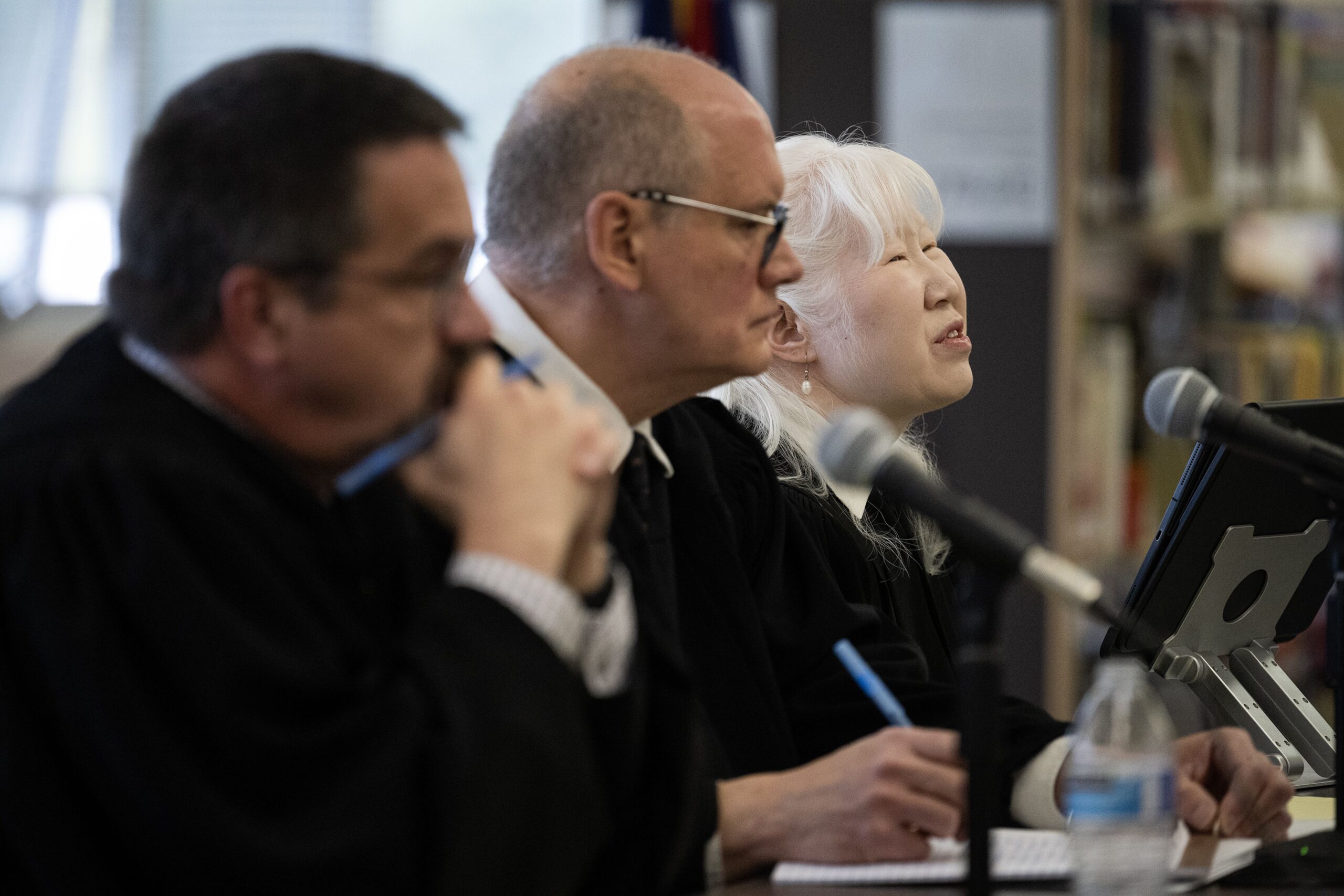
Colorado’s second-highest court ruled on Thursday that criminal defendants may agree to relinquish the credits they earned while incarcerated pending trial, despite a state law guaranteeing that such time “shall be deducted” from a person’s sentence.
Kerry Ellis Endsley pleaded guilty in Jefferson County to attempted murder and attempt to disarm a peace officer. His plea deal included a 35-year prison sentence, with “no credit for time served” in jail. He told a judge that he understood and accepted the terms of the plea.
At sentencing, however, Endsley’s public defender suggested a plea deal with no time-served credit was illegal.
Colorado law used to require judges to consider presentence confinement credit when formulating a defendant’s sentence, but there was no obligation for them to award it. As the law exists now, a defendant “is entitled to” credit on their sentence for their time in incarceration before conviction.
“At the time of sentencing, the court shall make a finding of the amount of presentence confinement to which the offender is entitled,” the law provides. After which, the amount “shall be deducted from the sentence by the department of corrections.”
District Court Judge Ryan P. Loewer rejected the defense’s concern, explaining that the plea was “contractual between the parties” and he was not going to overturn the agreement.
On appeal, Endsley argued his sentence was illegal because the law gives judges no discretion to exclude presentence confinement credit. He quoted from a 2017 Colorado Supreme Court opinion by now-Chief Justice Monica M. Márquez, who wrote that mandatory presentence confinement credit was important for leveling the playing field between indigent defendants who cannot post bail and their wealthier counterparts.
“Mandatory PSCC also effectuates the statutory penalties set by the General Assembly by ensuring that a defendant who is convicted of an offense is confined for the legislatively prescribed period of time — and no longer,” she wrote. “And mandatory PSCC guards against the added taxpayer expense of paying for superfluous confinement where a defendant serves a lengthy presentence confinement in addition to the legislature’s specified sentence of incarceration.”
Case: People v. Endsley
Decided: March 26, 2026
Jurisdiction: Jefferson County
Ruling: 3-0
Judges: Sueanna P. Johnson (author)
Neeti V. Pawar
Christina F. Gomez
A three-judge Court of Appeals panel disagreed with Endsley.
Judge Sueanna P. Johnson noted in the March 26 opinion that defendants may voluntarily relinquish certain rights, like the right to a speedy trial or to counsel. Similarly, they can waive the right to time-served credit in their plea agreement.
“Endsley argues that allowing a defendant to waive PSCC would defeat the legislative intent behind enacting the current version of the PSCC statute: to remove a court’s discretion in awarding PSCC and to require an award of PSCC to eliminate the disparate treatment of indigent individuals who are unable to secure their presentence release from custody. Although we agree that the PSCC statute was amended for this purpose,” she wrote, “Endsley fails to explain why this legislative intent would negate a defendant’s ability to waive the beneficial right to PSCC as part of a negotiation to secure other concessions in a plea agreement.”
The case is People v. Endsley.


10th Circuit rules cognitively impaired man’s risk of lobotomy, mistreatment in Mexico not ‘torture’
Michael Karlik
michael.karlik@coloradopolitics.com
Updated 8 hours ago
The Denver-based federal appeals court concluded last month that a man’s risk of mistreatment or forced lobotomy in his native Mexico did not amount to “torture” that should shield him from deportation. A three-judge panel of the U.S. Court of...
Colorado justices side with news organizations for disclosure of high-level child abuse data
Michael Karlik
michael.karlik@coloradopolitics.com
Updated 13 hours ago
The Colorado Supreme Court ruled on Monday that the state must disclose the number of child abuse reports at individual group living facilities in response to an open records request, as the addresses are already in the public domain. The...
Divided Colorado Supreme Court finds Denver detective did not violate defendant’s Miranda rights
Michael Karlik
michael.karlik@coloradopolitics.com
Updated 8 hours ago
The Colorado Supreme Court determined on Monday that a Denver detective did not improperly resume questioning of a defendant in custody after he invoked his right to counsel. By 4-3, the justices reversed a trial judge’s order that found a...

Out-of-state judges address ex-discipline director’s lawsuit, Colorado justices accept federal invitation | COURT CRAWL
Michael Karlik
michael.karlik@coloradopolitics.com
Updated 20 hours ago
Welcome to Court Crawl, Colorado Politics’ roundup of news from the third branch of government. A pair of out-of-state judges got down to business in a lawsuit brought by Colorado’s former judicial discipline director, plus the state Supreme Court has...
Federal judge upholds constitutionality of Colorado campaign contribution limits
Michael Karlik
michael.karlik@coloradopolitics.com
Updated 3 days ago
A federal judge upheld Colorado’s individual campaign contribution limits as constitutional on Thursday, finding that three Republican plaintiffs failed to prove the campaign finance framework violates their First Amendment rights. U.S. District Court Senior Judge John L. Kane recognized that...
Appeals court rejects theory that existing tax revenue undermines need for new fees
Michael Karlik
michael.karlik@coloradopolitics.com
Updated 4 days ago
Colorado’s second-highest court rejected a plaintiff’s claim on Thursday that the tax revenue generated by an existing activity should prevent local governments from imposing new fees aimed at regulating the activity. The question stemmed from Colorado’s unique constraints on taxation...
Appeals court reinstates Garfield County arson charge
Michael Karlik
michael.karlik@coloradopolitics.com
Updated 2 days ago
Colorado’s second-highest court reinstated a Garfield County defendant’s arson charge on Thursday, concluding a trial judge improperly credited a witness’s claim that she alone was responsible for starting the fire. A sheriff’s deputy responded to a brush fire near Parachute...
Federal judges rebuke ex-Colorado judicial discipline director for conduct in lawsuit
Michael Karlik
michael.karlik@coloradopolitics.com
Updated 5 days ago
A pair of federal judges expressed a desire on Thursday to break the logjam on a lawsuit by Colorado’s former judicial discipline director against the state Supreme Court and related entities, while simultaneously showing little tolerance for the plaintiff’s scorched-earth...

Democratic bill would let recipients of ‘conversion therapy’ sue Colorado providers with no statute of limitations
Marissa Ventrelli
marissa.ventrelli@coloradopolitics.com
Updated 5 days ago
Colorado lawmakers have advanced a proposal that would allow people who underwent conversion therapy to sue licensed providers for damages, moving the measure forward on a party-line vote in the House Judiciary Committee. House Bill 1322, proposed by Democratic Reps....
Federal judge refuses to authorize immediate appeal in World Cup trafficking lawsuit
Michael Karlik
michael.karlik@coloradopolitics.com
Updated 6 days ago
A federal judge declined to authorize an immediate appeal last week of a prior decision allowing companies operating out of Colorado to be sued for allegedly participating in a human trafficking venture involving Filipino laborers who constructed facilities for the...
PREV
PREVIOUS
Appeals court reinstates Garfield County arson charge
Colorado’s second-highest court reinstated a Garfield County defendant’s arson charge on Thursday, concluding a trial judge improperly credited a witness’s claim that she alone was responsible for starting the fire. A sheriff’s deputy responded to a brush fire near Parachute in May 2024, next to a residential neighborhood. Witness statements and video evidence suggested Tiana […]

Boulder police investigate sexual assault, ‘drugging’ at bar near CU
The Boulder Police Department is investigating reports of sexual assault and “suspected drugging” involving underage girls at a bar. There may be additional victims who have not yet come forward, the department said in a news release. The bar, Scrooge Sul, is temporarily closed as police investigate the allegations. It’s located near the University of […]