

Federal judges rebuke ex-Colorado judicial discipline director for conduct in lawsuit
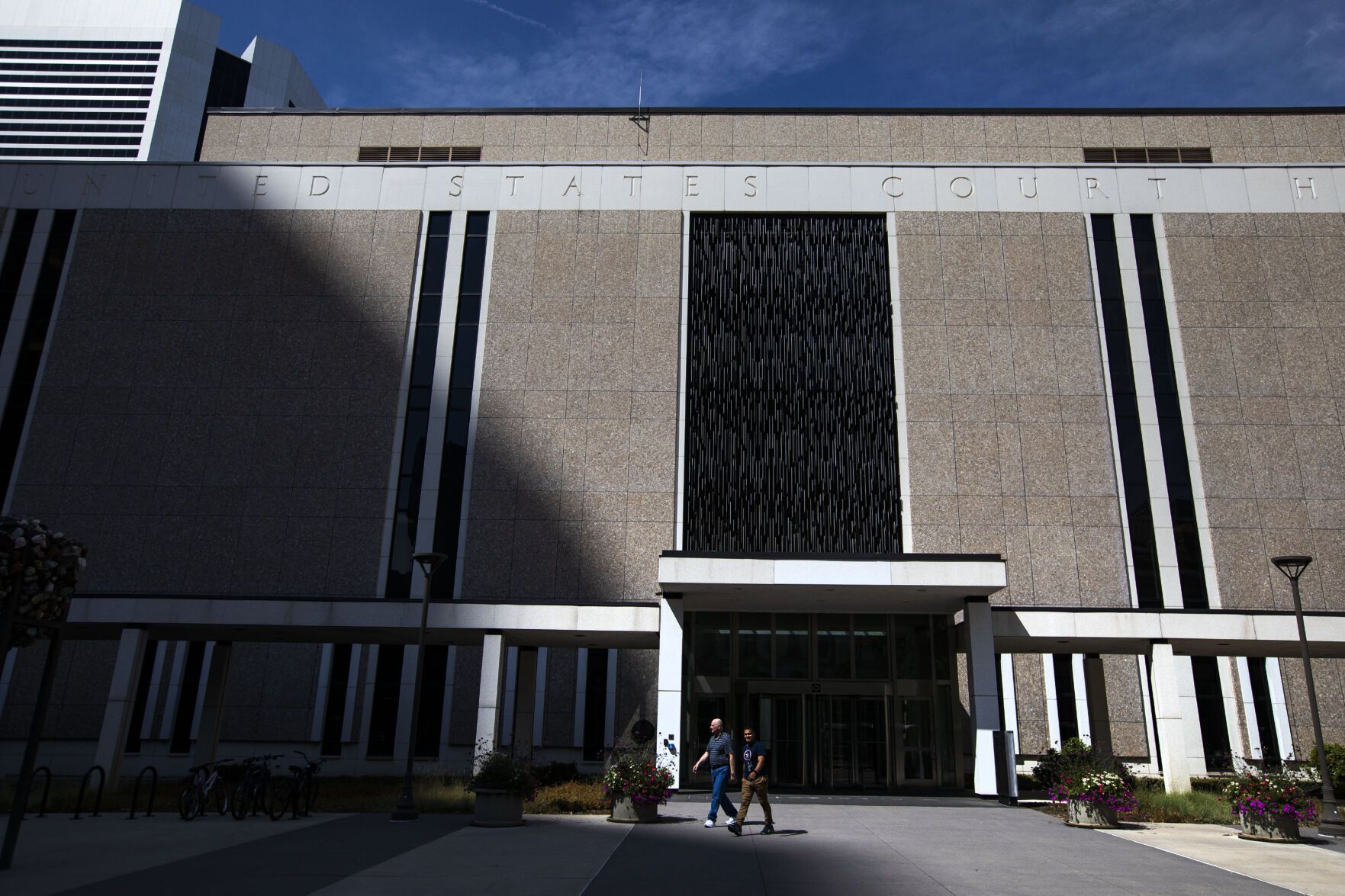
A pair of federal judges expressed a desire on Thursday to break the logjam on a lawsuit by Colorado’s former judicial discipline director against the state Supreme Court and related entities, while simultaneously showing little tolerance for the plaintiff’s scorched-earth tactics against the defendants and the judges themselves.
“I will not be impressed or influenced or dissuaded by name-calling, by hyperbole directed either to the court or opposing counsel or witnesses. I will not be dissuaded by threats of (higher-court intervention) against me or by ethical complaints,” U.S. District Court Senior Judge Kathryn H. Vratil said at a hearing.
Vratil addressed multiple preliminary issues in the civil lawsuit of Christopher S.P. Gregory, the former executive director of the Colorado Commission on Judicial Discipline. He is also the plaintiff in a related case that is sealed from public view.
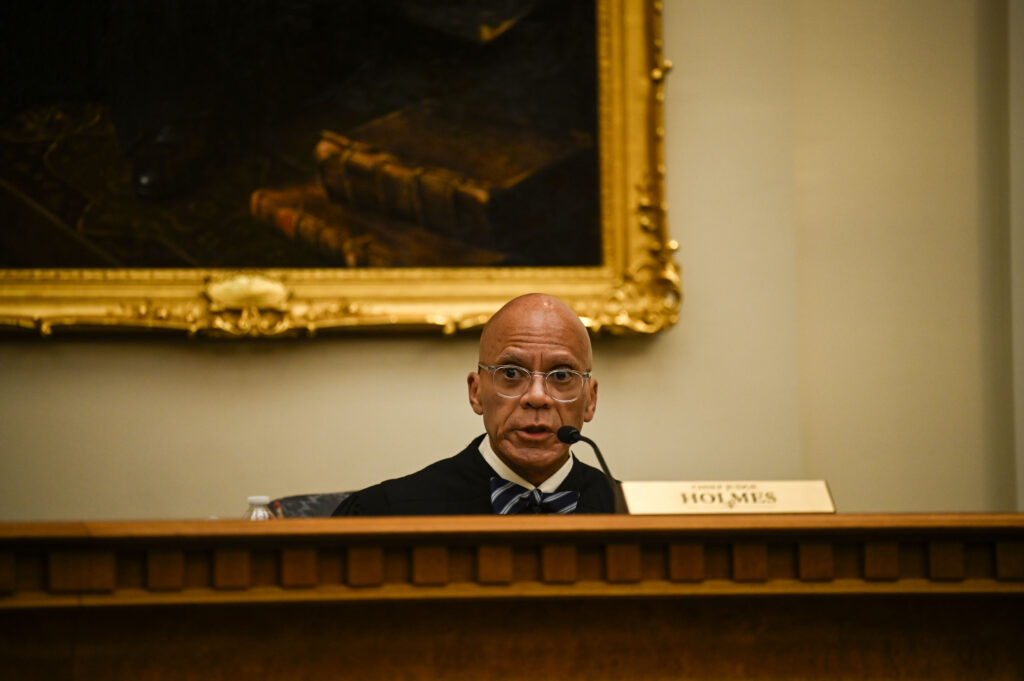
Vratil, of Kansas, was assigned to Gregory’s cases last month under the provision of law allowing the chief judge of the U.S. Court of Appeals for the 10th Circuit to enlist an out-of-state judge when it would be “in the public interest.” Four of Colorado’s U.S. District Court judges recused or otherwise declined to handle Gregory’s case, after which Chief Judge Jerome A. Holmes of the 10th Circuit designated Vratil to preside.
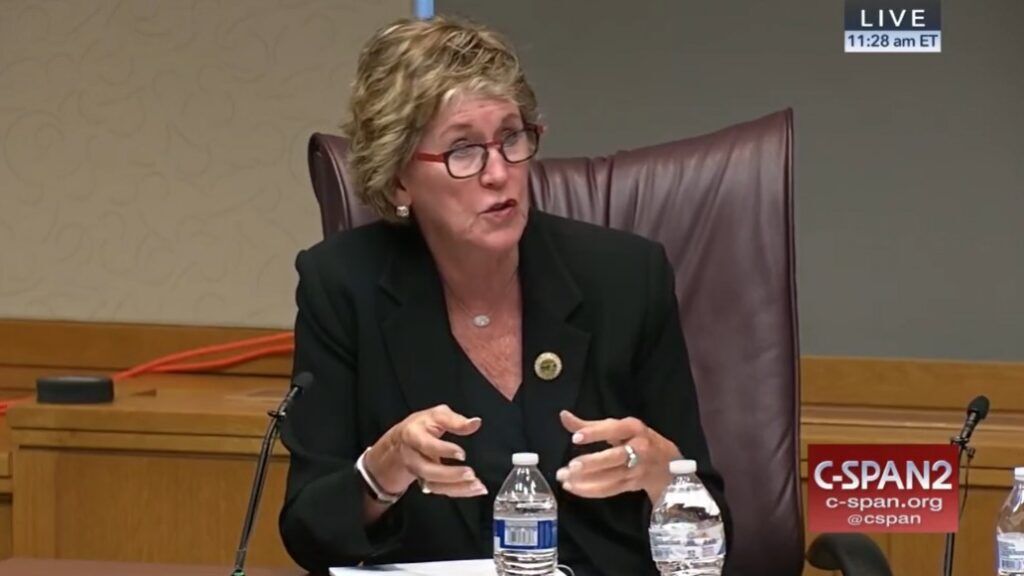
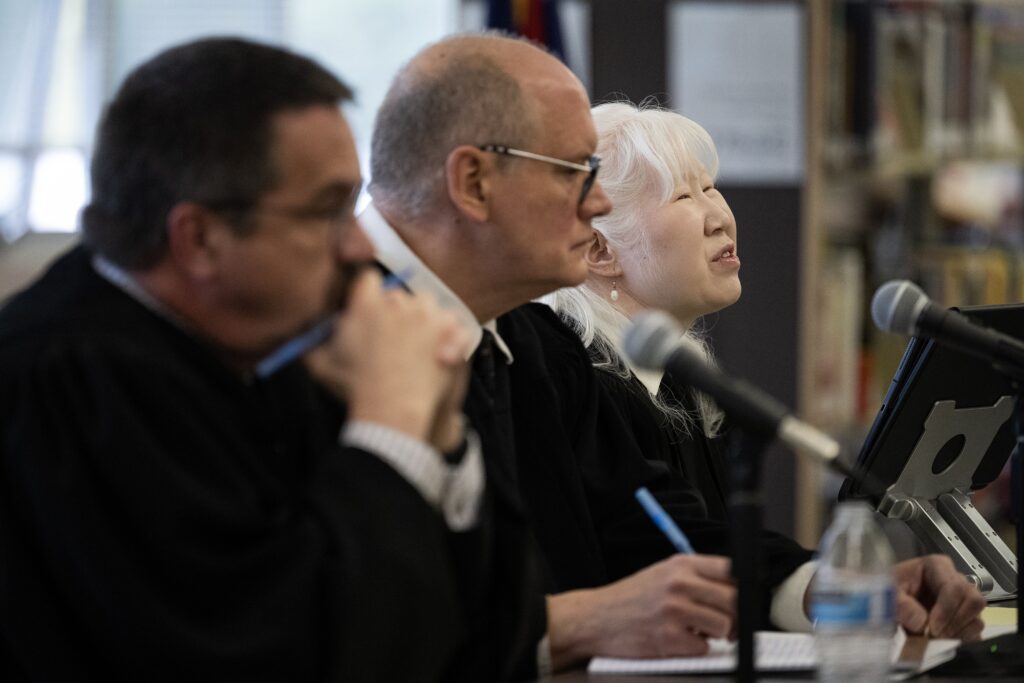
In an unusual move, Vratil appeared simultaneously on the bench alongside U.S. Magistrate Judge Gwynne E. Birzer of Kansas, whom the chief district judges of Colorado and Kansas approved to handle pretrial and administrative issues on Gregory’s cases. Both women told the parties they were experienced in handling complex cases.
“I do understand litigation that is truly complex,” said Birzer, “versus litigation that is made to be complex.”
In October, representing himself, Gregory filed a lawsuit against the state Supreme Court, the discipline commission, the disciplinary rule-making committee, and others. Generally, he alleged a conspiracy related to the 2019 decision to award a multimillion-dollar contract to a Colorado judicial employee who was herself facing misconduct allegations.
Later reporting revealed that the employee, Mindy Masias, had catalogued alleged instances of judicial misconduct that she was prepared to disclose.
Gregory’s public lawsuit seeks his reinstatement as the judicial discipline commission’s director and the removal of those appointed to the discipline, judicial performance, and judicial nominating roles. His related, sealed case pertains to alleged fraud in violation of federal and Colorado law.
“I don’t think I’ve ever seen two cases which have been on file for so long with so little being accomplished. And I don’t say that in a complimentary way,” Vratil said.
To date, several tangential issues have taken center stage. First, Gregory filed misconduct complaints against Vratil; Birzer; Holmes, the chief circuit judge; and others. Second, he unsuccessfully sought Vratil and Birzer’s recusals. Third, he threatened to seek the 10th Circuit’s intervention before the “sham” hearing.
Gregory also took aim at the Colorado Attorney General’s Office, which is representing the defendants. In February, he asked the court’s clerk to enter a default, meaning a defendant has legally admitted the allegations against them. Gregory claimed the defendants had failed to defend against his lawsuit, even though the frequent reassignments of his case among judges produced confusion about the deadlines.
He then sought to remove the attorney general’s office from the case due to an alleged conflict of interest.
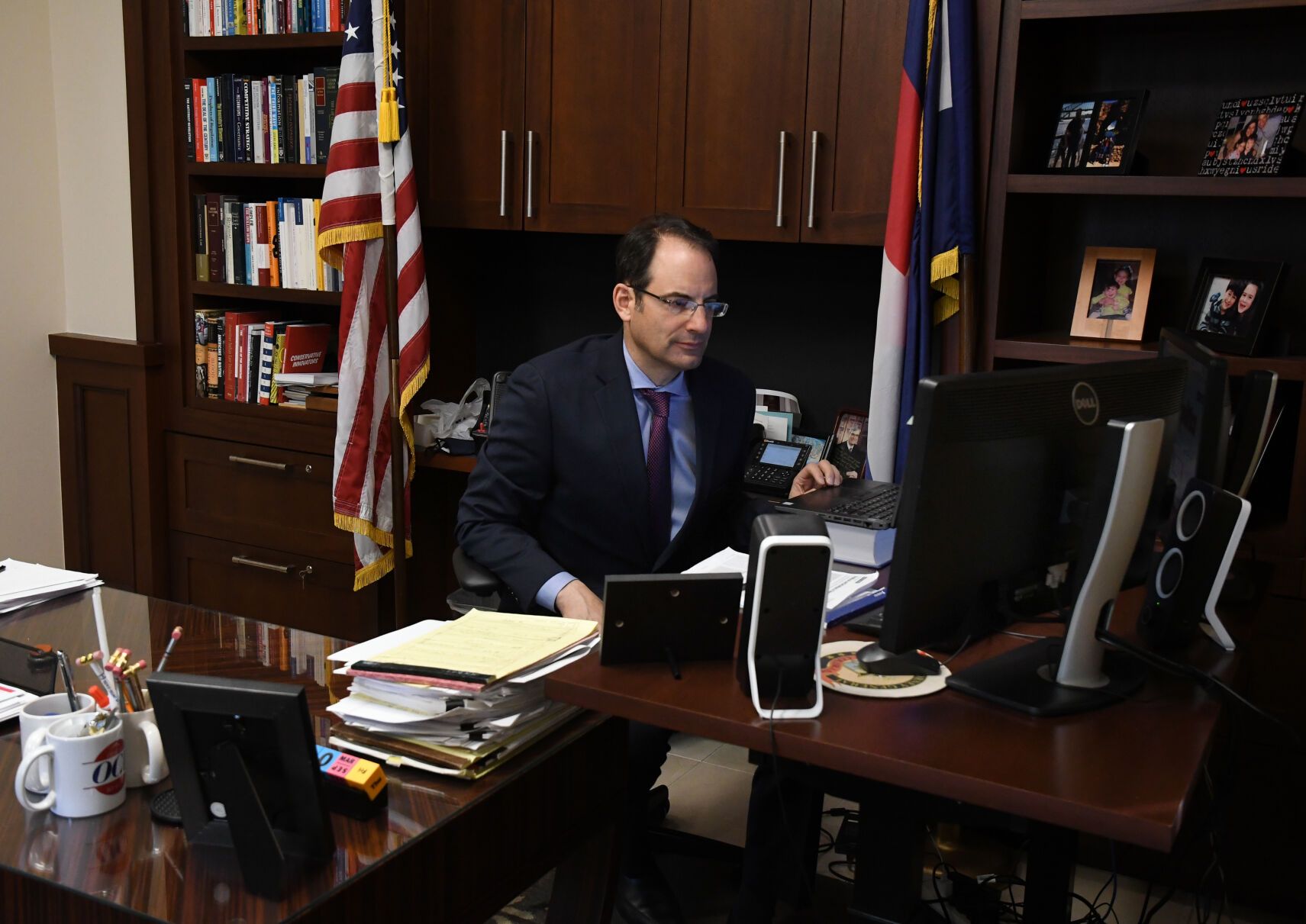
Birzer appeared troubled at the timing of Gregory’s actions. She questioned him about emails he sent to the attorney general’s office, in which he wrote that he was “receptive to recognizing the disqualification of your Office” as grounds to “set aside the default.”
“I can’t help but wonder that you have sought the default strategically, as leverage for the attorney general to not object to your demand that they withdraw as counsel,” said Birzer. “You know you can’t do that. But that’s the way it appears to me.”
“All I’m asking for is that we have conflict-free representation of the state of Colorado,” responded Gregory.
“I can’t help but feel that you’re in everyone else’s lane except your own,” Birzer said.
Senior Assistant Attorney General Nora Q.E. Passamaneck said that, to the extent Gregory’s allegation of a conflict involved his 2024 conversation with one of the state’s attorneys about arranging legal representation for him in an unrelated lawsuit, those circumstances were known months before Gregory’s motion to eject the attorney general’s office.
“If there is an issue, it should be dealt with immediately. This delay suggests there wasn’t an issue to begin with,” she said.
Birzer agreed and declined to disqualify the office.
“You can’t have ire because things didn’t go your way and you want to disqualify everybody. And then pick and choose who you want to have as defense counsel in this case,” she told Gregory. “This is improper.”
Vratil then overturned the default that Gregory obtained against the defendants.
“I can’t help but note that, to the extent there’s culpability, I think Mr. Gregory just told us that the reason he filed it is because defendants wouldn’t talk to him about recusing (the attorney general’s office),” she said. “That’s not a professional, ethical, acceptable use of pleadings.”
Finally, Vratil said that future filings in which Gregory mentions a state or federal judge will be restricted from public view until she or Birzer reviews them for relevance and potential disclosure of confidential information that Gregory gained from his work with the judicial discipline commission.
“If there are circumstances where it is necessary to disclose information,” said Gregory, “to protect the public from judicial misconduct and the like, if there was judicial misconduct as part of the disciplinary system itself, not only do I have a right to report that, publicly or otherwise, but I have a duty to do so.”
Vratil was unmoved, telling Gregory his arguments lacked legal citation.
“You make representations concerning the law as if they are self-evident. For example, that going ahead with today’s hearing would be a violation of your constitutional right to due process. Prohibiting you from publicizing this information would be a violation of your First Amendment rights,” she said. “You seem to live in kind of a make-believe world where your wishes come true by writing them down on paper and submitting them to the court.”
Vratil added that she will decide, in a written order, whether to sanction Gregory for his statements to the court in pursuing a default judgment against the defendants.
The case is Gregory v. The Colorado Judicial Discipline Rulemaking Committee et al.

Federal judge upholds constitutionality of Colorado campaign contribution limits
Michael Karlik
michael.karlik@coloradopolitics.com
Updated 2 days ago
A federal judge upheld Colorado’s individual campaign contribution limits as constitutional on Thursday, finding that three Republican plaintiffs failed to prove the campaign finance framework violates their First Amendment rights. U.S. District Court Senior Judge John L. Kane recognized that...

Appeals court rejects theory that existing tax revenue undermines need for new fees
Michael Karlik
michael.karlik@coloradopolitics.com
Updated 3 days ago
Colorado’s second-highest court rejected a plaintiff’s claim on Thursday that the tax revenue generated by an existing activity should prevent local governments from imposing new fees aimed at regulating the activity. The question stemmed from Colorado’s unique constraints on taxation...
Appeals court finds no illegal sentence when defendants forfeit time-served credit
Michael Karlik
michael.karlik@coloradopolitics.com
Updated 1 day ago
Colorado’s second-highest court ruled on Thursday that criminal defendants may agree to relinquish the credits they earned while incarcerated pending trial, despite a state law guaranteeing that such time “shall be deducted” from a person’s sentence. Kerry Ellis Endsley pleaded...
Appeals court reinstates Garfield County arson charge
Michael Karlik
michael.karlik@coloradopolitics.com
Updated 15 hours ago
Colorado’s second-highest court reinstated a Garfield County defendant’s arson charge on Thursday, concluding a trial judge improperly credited a witness’s claim that she alone was responsible for starting the fire. A sheriff’s deputy responded to a brush fire near Parachute...

Democratic bill would let recipients of ‘conversion therapy’ sue Colorado providers with no statute of limitations
Marissa Ventrelli
marissa.ventrelli@coloradopolitics.com
Updated 3 days ago
Colorado lawmakers have advanced a proposal that would allow people who underwent conversion therapy to sue licensed providers for damages, moving the measure forward on a party-line vote in the House Judiciary Committee. House Bill 1322, proposed by Democratic Reps....
Federal judge refuses to authorize immediate appeal in World Cup trafficking lawsuit
Michael Karlik
michael.karlik@coloradopolitics.com
Updated 5 days ago
A federal judge declined to authorize an immediate appeal last week of a prior decision allowing companies operating out of Colorado to be sued for allegedly participating in a human trafficking venture involving Filipino laborers who constructed facilities for the...
Federal judge considers second round of sanctions against ex-Colorado judicial discipline director
Michael Karlik
michael.karlik@coloradopolitics.com
Updated 5 days ago
A federal judge ordered Colorado’s former judicial discipline director on Tuesday to explain why she should not sanction him a second time for filing documents for improper purposes, such as harassment or delay. U.S. District Court Senior Judge Kathryn H....

Colorado justices agree to review insurance question that has divided federal judges
Michael Karlik
michael.karlik@coloradopolitics.com
Updated 5 days ago
The Colorado Supreme Court granted a federal judge’s request on Friday to address an issue that has produced conflicting answers in policyholders’ lawsuits against insurance companies over unpaid benefits. “Parties (and judges) regularly spend undue time and money fighting in...
Federal judge dismisses background screeners’ challenge to Colorado law
Michael Karlik
michael.karlik@coloradopolitics.com
Updated 2 days ago
A federal judge dismissed a challenge on Friday to a portion of Colorado law that prohibits certain information from being included in consumer reports, in what seemed to be a conflict with federal law. Congress originally enacted the Fair Credit...

10th Circuit rejects ‘penalty’ for children of naturalized citizens seeking visas
Michael Karlik
michael.karlik@coloradopolitics.com
Updated 5 days ago
The Denver-based federal appeals court joined three of its peers earlier this month and determined the child of a newly naturalized U.S. citizen is not moved to a longer visa line as a result of his parent gaining citizenship, and...
PREV
PREVIOUS

'Civility in the City' event with two national experts to be held Monday at UCCS
Two notables working on the front lines of civic and cultural repair will discuss “Civility in the City” on Monday at the University of Colorado’s Colorado Springs campus. The event will feature Maury Giles, CEO of Braver Angels, and Alexandra Hudson, best-selling author of “The Soul of Civility.” The doors open at 6:30 p.m. at […]

Democratic US Sen. John Hickenlooper qualifies for Colorado primary by petition, will skip assembly
U.S. Sen. John Hickenlooper has qualified for Colorado’s Democratic primary after the first-term incumbent submitted enough valid petition signatures to make the ballot, state officials said. Hickenlooper is facing primary challenges from state Sen. Julie Gonzales, D-Denver, and university professor Karen Breslin, who are both vying for spots in the June 30 primary at the […]