

Wildlife agency asks for $450,000 to bring more wolves to Colorado
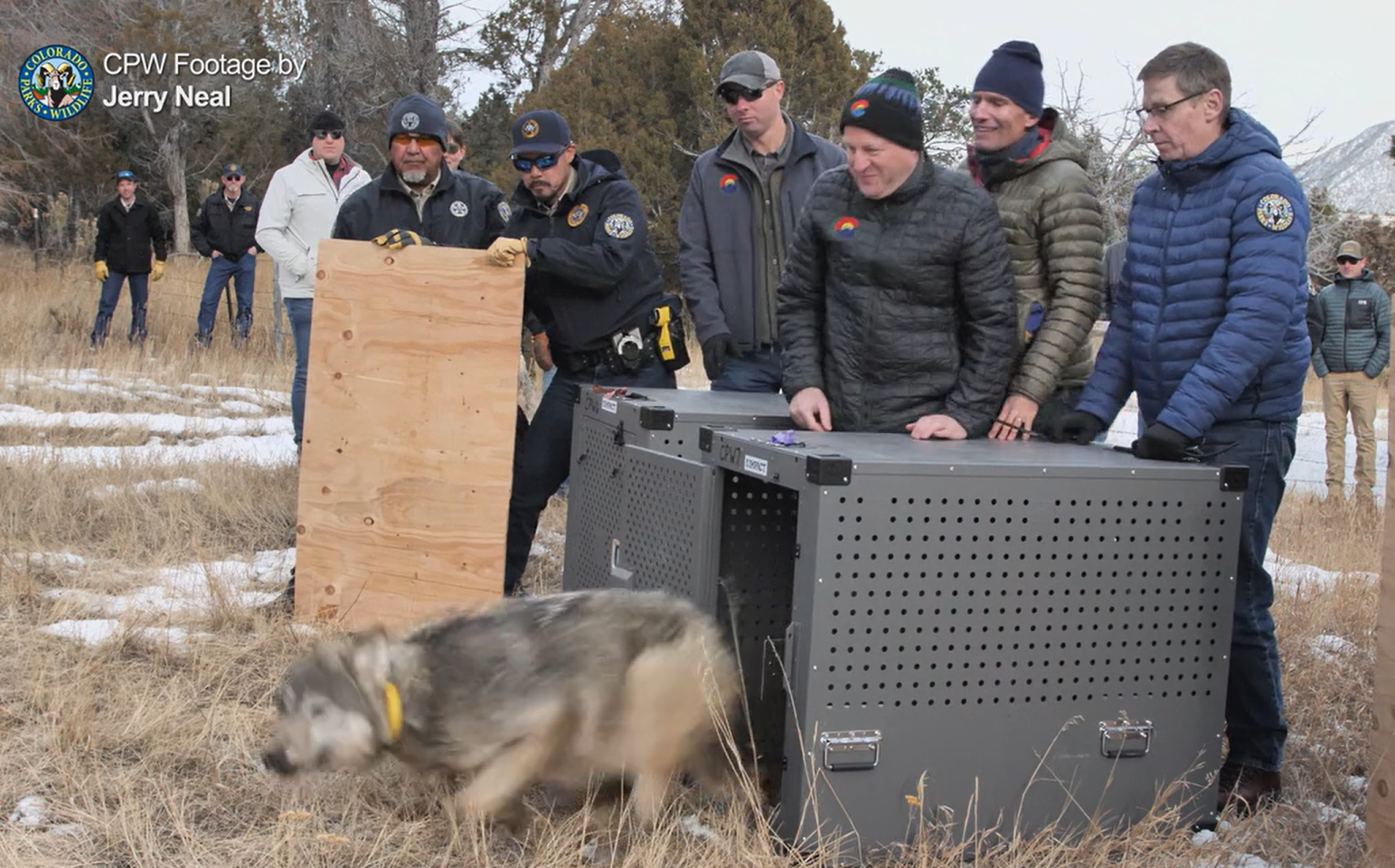
The panel of legislators charged with crafting the budget on Monday rejected a proposal that proponents said would increase transparency around how much Colorado Parks and Wildlife spends to bring additional wolves into the state.
At the same time, the wildlife agency is seeking $450,000 in general funds for fiscal year 2026–27 — twice what it spent in 2025 — to acquire more wolves, even though the agency has not identified where the animals would come from.
The request arrives as the state faces a projected $1.5 billion shortfall in the general fund budget in next year’s spending plan.
Joint Budget Committee staff had recommended creating a separate budget line beginning in 2026–27 to clearly show the state’s spending on wolf acquisitions. Currently, those costs are folded into a broader wildlife operations line item.
The state wildlife agency has maintained that its annual wolf report already provides sufficient transparency, though the most recent report did not disclose the cost of acquiring 15 wolves from British Columbia in January 2025.
“Separating wolf reintroduction expenses into its own line item could allow for increased transparency and clarity on the funds used for wolf reintroduction,” the staff said in its analysis.
The analysis said Colorado Parks and Wildlife disagreed, and “their strong preference is to not create a new line item, but instead to rely on reporting for transparency and clarity.”
The 2024-25 wolf report notably never reported how much the agency spent to acquire 15 wolves from British Columbia, Canada early last year.
Rep. Kyle Brown, D-Louisville, was skeptical of adding a new line item, stating he didn’t know what lawmakers would gain by doing so.
Meanwhile, Sen. Barbara Kirkmeyer, R-Brighton, questioned how — without the line item — lawmakers would know whether Colorado Parks and Wildlife had met all the management requirements or just spending more money on introduction efforts first.
Kirkmeyer added that another layer of transparency could also show whether the state has met the requirements set by the U.S. Fish and Wildlife Service last year.
The Joint Budget Committee (JBC) analyst presented two options: The line item for the 2026-27 budget or a new request for information on the agency’s efforts to complete preventive measures tied to wolves.
The JBC opted for the latter, although the agency has yet to report to the legislative committee on its progress on those preventive measures.
During a January hearing with the JBC, neither lawmakers nor the agency asked about or reported on the status of preventive measures.
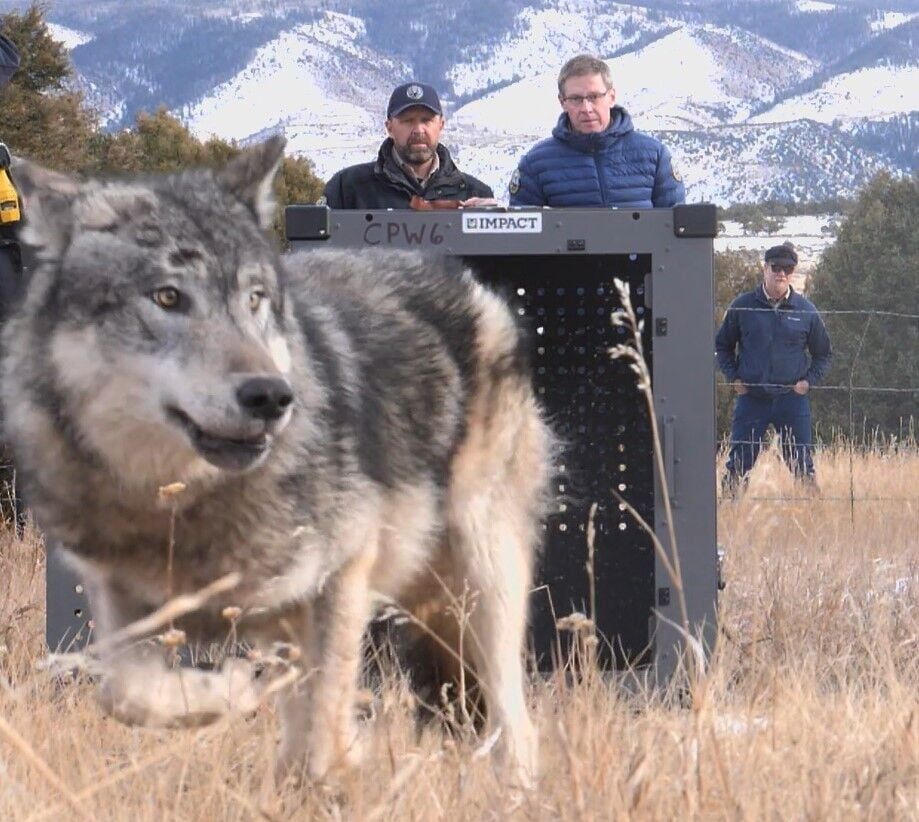
The information on preventive measures came from a special session in August last year, when lawmakers placed restrictions on Colorado Parks and Wildlife’s spending authority to acquire more wolves until all state-funded preventive measures have been implemented “to the highest degree possible.”
The legislation stripped the division of $264,268 set aside for wolf acquisition and diverted those funds to health insurance subsidies.
The amount came from an estimate provided by the agency, based on the expenses from the first capture operation in British Columbia, which the CPW told the JBC was a “best-case” capture scenario.
The agency was allowed to receive gifts, grants and donations to replenish those funds. As of January 2026, CPW had received $549.05 in donations and $15,000 from Great Outdoors Colorado for a grant tied to a research project. Another $6,433 came in from an unidentified federal grant.
For the 2026-27 budget, the division is seeking nearly double the amount for wolf relocation efforts that it spent in 2025 — a total of $450,000 in general funds — based on an expectation of “a less-than-ideal capture scenario,” with complications from weather or other factors.
Colorado Parks and Wildlife announced in January 2026 that it would not bring in more wolves during the winter season, effectively holding off until late 2026 or early 2027.
That’s likely because no other state will give Colorado more gray wolves. Washington state’s wildlife commission rejected a CPW request in November, and the U.S. Fish & Wildlife Service ordered Colorado in October to stop bringing in wolves from any place other than six western states. That effectively banned Colorado from bringing in more wolves from British Columbia.
Of the 25 wolves exported from Oregon and British Columbia in late 2023, 14 have died, a survival rate of 44%.
The state’s wolf plan estimated the population’s survival rate would be between 70% and 85% in the program’s early years.
A survival rate of less than 70% within six months of release would trigger a review of management protocols, including whether there were an unusually high number of wolf mortalities in the first few years.
The wolf program is budgeted for $2.1 million per year, nearly three times the amount the 2020 ballot measure estimated it would cost.
The costs of covering ranchers’ losses from dead and missing livestock and impacts on conception and market weights are expected to exceed $1 million in 2025. CPW has already paid out more than $724,000 in compensation claims through the first of March. The agency reported in January that it had received 26 claims for 2025.
The wolf compensation fund is budgeted at $350,000 per year, but claims in 2024, the first year with significant losses, surpassed that amount. Payments for 2024 losses, issued in 2025, totaled more than $600,000.
The 2024–25 wolf report showed only $393,000 in payments made through the end of the “wolf year” on March 31, nearly all of it tied to claims from two ranchers in Grand County.
The report did not mention any outstanding claims unpaid at that time, although the agency paid $197,712.86 in July 2025 for additional claims.
The claims that come before the Colorado Parks and Wildlife Commission exceed $20,000; the agency can pay out claims under that amount.
The CPW wolf depredation page showed the agency paid out another $15,892.66 between April 1, 2024, and March 31, 2025, for 10 claims on livestock killed by wolves.
The state is required by the ballot measure to pay those claims, even if the wolf compensation fund is insufficient, requiring the state to rely on other non-license fees and cash fund sources.
A July 2025 financial report showed that, through July 2, 2025, the state had paid nearly $8.1 million for the wolf reintroduction program in its first three fiscal years, nearly four times the program’s initial estimated cost.
That figure did not include the additional $197,000 compensation to ranchers for livestock losses paid out in late July, 2025.
The 2025-26 annual state budget identified, but only in a footnote in the Department of Natural Resources budget, spending authority of $2.1 million for the implementation of Proposition 114 for the reintroduction and management of gray wolves.

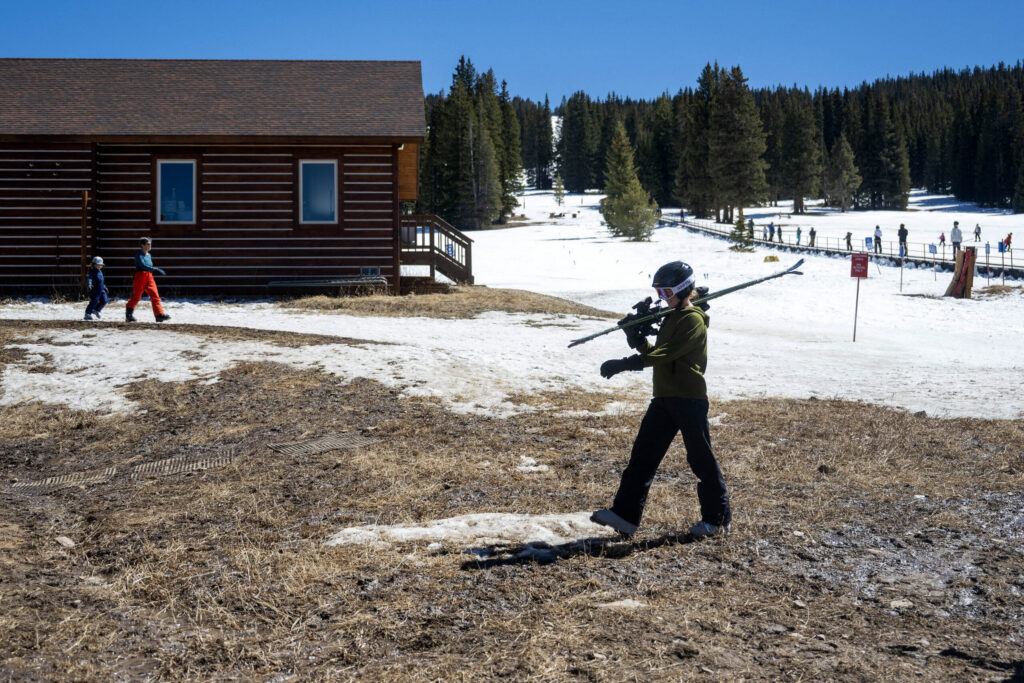
Colorado ski resorts announce early closures amid historic snowpack lows, high temperatures
Kyla Pearce
kyla.pearce@gazette.com
Updated 4 hours ago
As Colorado’s historically low snowpack year comes to a close and spring conditions take over the mountains, the state’s major ski resorts are announcing closing dates — some of which are weeks before historic closing dates. Most of Colorado’s ski...

Boulder police investigate sexual assault, ‘drugging’ at bar near CU
Matt Kyle
matt.kyle@denvergazette.com
Updated 7 hours ago
The Boulder Police Department is investigating reports of sexual assault and “suspected drugging” involving underage girls at a bar. There may be additional victims who have not yet come forward, the department said in a news release. The bar, Scrooge...

Democratic US Sen. John Hickenlooper qualifies for Colorado primary by petition, will skip assembly
Ernest Luning
ernest.luning@coloradopolitics.com
Updated 1 day ago
U.S. Sen. John Hickenlooper has qualified for Colorado’s Democratic primary after the first-term incumbent submitted enough valid petition signatures to make the ballot, state officials said. Hickenlooper is facing primary challenges from state Sen. Julie Gonzales, D-Denver, and university professor...
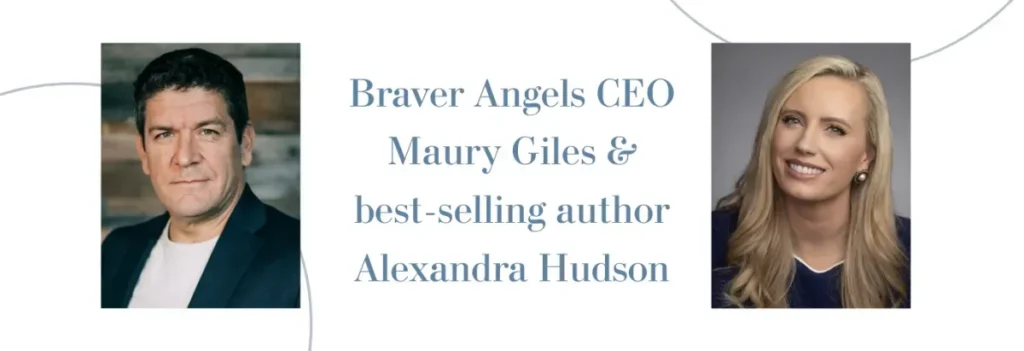
‘Civility in the City’ event with two national experts to be held Monday at UCCS
DEBBIE KELLEY
debbie-kelley@coloradopolitics.com
Updated 2 hours ago
Two notables working on the front lines of civic and cultural repair will discuss “Civility in the City” on Monday at the University of Colorado’s Colorado Springs campus. The event will feature Maury Giles, CEO of Braver Angels, and Alexandra...
Pinnacol separation bill delayed as Colorado budget remains in flux due to $1.5B deficit
Marianne Goodland
marianne.goodland@coloradopolitics.com
Updated 1 day ago
A bill that would allow Pinnacol Assurance to formally sever its remaining ties with the state appears unlikely to emerge anytime soon, as House leaders juggle a massive budget shortfall, unresolved negotiations with key stakeholders, and growing doubts about whether...
U.S. Sen. Michael Bennet qualifies by petition for Colorado’s Democratic gubernatorial primary
Ernest Luning
ernest.luning@coloradopolitics.com
Updated 1 day ago
U.S. Sen. Michael Bennet on Tuesday became the first gubernatorial candidate to qualify for Colorado’s June primary ballot after state election officials determined the three-term Democrat’s campaign submitted enough valid petition signatures. Bennet is running against Attorney General Phil Weiser...

Thornton police investigating homicide
Matt Kyle
matt.kyle@denvergazette.com
Updated 1 day ago
Police in Thornton are investigating a homicide that happened late Wednesday night. Thornton Police Department officers responded just before 11 p.m. near the intersection of East 88th Avenue and Grant Street after a 911 caller reported someone bleeding. Upon arrival,...
Colorado legislators consider $500 million in general fund cuts amid $1.5 billion deficit
Marianne Goodland
marianne.goodland@coloradopolitics.com
Updated 2 days ago
The legislature’s Joint Budget Committee is working through a list Wednesday of about 150 suggestions to cut as much as $1.5 billion in general fund dollars out of next year’s budget. The largest on the list prepared by JBC staff...
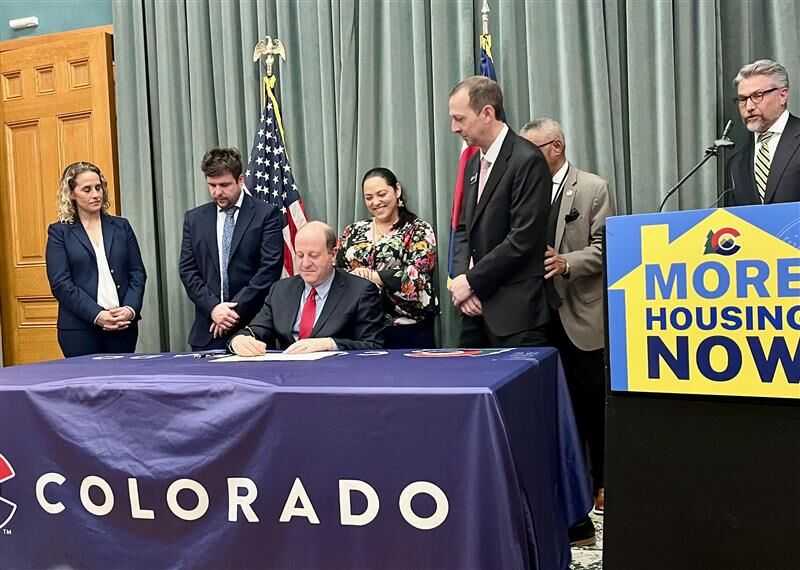
Gov. Jared Polis signs housing bills amid push for ‘affordability’
Marissa Ventrelli
marissa.ventrelli@coloradopolitics.com
Updated 1 day ago
Gov. Jared Polis held the first public bill signing of the 2026 legislative session on Wednesday on a pair of housing measures that, sponsors said, are aimed at affordability. Part of Democrats’ “affordable” housing package this year, the bills —...

Colorado farmers begin spring planting season with soaring fertilizer costs and price-gouging fears
Marianne Goodland
marianne.goodland@coloradopolitics.com
Updated 1 day ago
As Colorado farmers prepare their fields for spring planting, many are sounding the alarm over fertilizer prices that have surged far beyond what they say global supply disruptions can explain. With nitrogen costs up 30% in a matter of days,...
PREV
PREVIOUS

Hickenlooper primary challenger Julie Gonzales endorsed by national progressive group Indivisible
State Sen. Julie Gonzales’ bid to challenge U.S. Sen. John Hickenlooper in Colorado’s Democratic primary got a boost Tuesday from Indivisible when the national arm of the progressive grassroots group endorsed the Denver lawmaker. The national group’s endorsement comes less than a week before Gonzales is expected to land a top-line designation on the June […]

Federal judge dismisses background screeners' challenge to Colorado law
A federal judge dismissed a challenge on Friday to a portion of Colorado law that prohibits certain information from being included in consumer reports, in what seemed to be a conflict with federal law. Congress originally enacted the Fair Credit Reporting Act in 1970, with the goal of requiring consumer reporting agencies to adopt reasonable procedures […]