

Colorado revenue forecast worsens, pushing budget shortfall to nearly $1.5B

The latest revenue forecasts from economists at the state Capitol show that the state’s budget predicament has worsened — by hundreds of millions of dollars more.
That, in turn, means cuts programs and services in next year’s fiscal budget will go much deeper.
The state’s fiscal predicament also means no refunds for Colorado residents.
Economists with the Legislative Council downgraded the forecast for the 2026-27 fiscal year by another $643 million, bringing the total shortfall to nearly $1.5 billion.
What’s driving the downgrade? General fund revenues — dollars that come from tax collections for individual and corporate income tax, and sales and use taxes — came in lower for fiscal year 2025-26. The tax collection is $354 million less than was estimated in December.
The estimate for 2026-27 is also coming in lower than the December forecast by about $143 million, according to the latest numbers.
The March forecasts remain unpredictable, in part due to changes in tax law enacted by Congress and the Trump administration, according to budget analysts.
The Legislative Council forecast confirmed that Taxpayer’s Bill of Rights (TABOR) refunds won’t occur in 2026, since general fund revenue will not reach the cap in the 2025-26 fiscal year, with revenues nearly $1 billion below the threshold.
Meanwhile, the tax revenues for K-12 from Amendment 23 are expected to drop by 5.3%, which could mean a one-year timeout on the new school finance formula adopted in 2024. The law requires a timeout if Amendment 23 — the 2000 measure requires per-pupil funding to keep pace with the inflation rate, plus a 1% added between 2002 and 2011 — revenues drop by 5%, as projected by the March revenue forecast.
But that also depends on which forecast budget writers choose. If they get better numbers from the governor’s economists, for example, they could avoid that change.
That’s what’s happened in the last couple of budget cycles. Slightly better expectations led the JBC to use the Office of State Planning and Budgeting’s numbers for its budget work.
What the phase-in delay means for the budget — according to the Legislative Council forecast — is the state would pay $49 million less for schools, and total program funding (a combination of state and local dollars) would be reduced by $52 million in the 2026-27 budget cycle.
The $1.47 billion shortfall offers some wiggle room. It’s based on actions taken by the JBC for the 2026-27 budget and some assumptions on items that haven’t yet been finalized, such as corrections, school finance, and state employee compensation, as well as capital projects and across-the-board cuts to Medicaid providers. (The JBC has already made a number of decisions to cut Medicaid services).
Indeed, the governor’s office has maintained that its budget proposal for next year is balanced, given all the mechanisms it is proposing for the legislature to adopt, such as an infusion of cash from certain places, assuming lawmakers embraces those strategies.
Notably, it doesn’t include the potential for money coming into the state from the separation of Pinnacol Assurance from the state, which the governor is backing and which could bring in about $400 million to state coffers, according to the governor’s budget request. Half of that would be used to pay for the property tax exemptions for senior and disabled veterans.
Chief Economist Greg Sobetski noted that the difference between his agency’s forecast and the Office of State Planning and Budget’s is about $480 million, with OSPB estimating higher revenue.
The difference comes from how the two agencies view tax year 2025, which is already concluded, he explained. Legislative Council forecasts expect tax payments to be $420 million lower than the Office of State Planning and Budget’s numbers, based on filings through June 2026. That accounts for $420 million out of the $480 million difference.
“The good news is you’ll know who’s right in June,” Sobetski said. “The bad news is that you’re writing the budget now.”
He also pointed out that the biggest “magnitude” risk to the forecast is changes to the economic forecast.
The governor’s economists from the Office of State Planning and Budgeting (OSPB) are more optimistic.

They noted that economic growth exceeds prior expectations due to productivity increases, sustained consumption and investments. The downside is the war in Iran. OSPB also said it expects stagnation in the labor market and weaker consumer demand.
Similar to the legislative council forecast, OSPB noted higher credit card delinquency rates and tighter household finances, including a drop in family savings.
It estimated the chances of a recession at 40%, slightly below its December expectation. OSPB also pointed to elevated inflation due to oil price hikes because of the war, as well as in healthcare, which in Colorado (at 6.7%) is twice the national rate (3.2%).
In contrast to the Legislative Council forecast, the Office of State Planning and Budget revised its revenue forecast up by $431 million for 2026-27. That’s entirely occurring in the individual income tax area. Corporate income tax collections, which are a much smaller share of total tax revenue, are expected to decline sharply.
The Office of State Planning and Budget forecast for the state education fund showed a 2% decline in 2025-26, compared to the 5.3% decrease estimated by Legislative Council economists.
The biggest challenge to state spending is Medicaid caseload.
OSPB said expects that if, Medicaid caseload grew, at the 10-year historical average, the FY 2029-30 budget would see a $3.48 billion deficit.
Democrats on the Joint Budget Committee called the forecasts “devastating.”
“Between rising prices, federal cuts to essential programs, and global uncertainty, the state budget is getting squeezed from all sides,” said JBC Vice-chair Sen. Jeff Bridges, D-Arapahoe County. “The reality right now is that our budget constraints mean painful cuts. A dollar for one area is a dollar less for another, and under the TABOR cap, there simply isn’t enough room to do it all.”
JBC Chair Rep. Emily Sirota, D-Denver, echoed that sentiment and also blamed the “fiscal constraints of TABOR”: “Today’s economic forecast is a stark reminder that despite the cuts we’ve already made, we still need to close a staggering budget deficit of more than $1 billion. It’s impossible to balance our budget without touching some of the core services for Coloradans, especially programs and services that have been proven effective.”
Republicans, meanwhile, have long maintained that Colorado’s budget woes are self-inflicted — the result, they said, of overspending by the majority, explosive growth in government in the last several years, and the refusal to make the painful decision to right the state’s fiscal ship.


Healthcare Freefall: Longer drives, fewer options for maternity care in Colorado
Thelma Grimes
thelma.grimes@coloradopolitics.com
Updated 23 hours ago
Editor’s Note: Colorado’s healthcare system is entering a period of accelerating instability — a “tsunami,” as multiple leaders describe it — driven by collapsing hospital finances, shrinking Medicaid reimbursements, disappearing services and a political fight over who is responsible for...

Judge grants partial injunction to GEO in fight against state health inspection law
Kyla Pearce
kyla.pearce@gazette.com
Updated 14 hours ago
A judge ruled Thursday that The GEO Group does not have to follow parts of a new state law requiring more frequent health and safety inspections at the U.S. Immigration and Customs Enforcement processing center in Aurora. Under the order...

Parker man faces 20 years to life for serial sexual assaults
Nicholas Fogleman
nicholas.fogleman@denvergazette.com
Updated 17 hours ago
A 25-year-old Parker man who sexually assaulted three women in 2025 pleaded guilty Wednesday and will serve 20 years to life in prison. Javier Rodriguez-Andrade pleaded guilty to charges stemming from three sexual assaults involving women ages 19 to 24. ...

Douglas County moves to Stage 1 fire restrictions following recent rain
Nicholas Fogleman
nicholas.fogleman@denvergazette.com
Updated 16 hours ago
Douglas County has downgraded its fire restrictions from Stage 2 to Stage 1 on Thursday following recent rainfall and moderate fire conditions, according to the Douglas County Sheriff’s Office. The change applies to unincorporated Douglas County, as well as the...

Democratic gubernatorial candidate Phil Weiser promises to appoint rural outreach director, water adviser
Marianne Goodland
marianne.goodland@coloradopolitics.com
Updated 15 hours ago
Democratic gubernatorial candidate and current Attorney General Phil Weiser told the Colorado Water Congress Thursday he intends to appoint a rural outreach director and a water policy adviser should he win the election in November. Weiser’s speech at the Steamboat...
Man charged in Northglenn homicide of wife
Matt Kyle
matt.kyle@denvergazette.com
Updated 16 hours ago
A man has been formally charged with murder and burglary relating to a homicide last week in Northglenn. Alexei Munive-Rodriguez, 48, was arrested Sunday after he was at large following the homicide, which occurred Friday. Police were dispatched around 10:30...
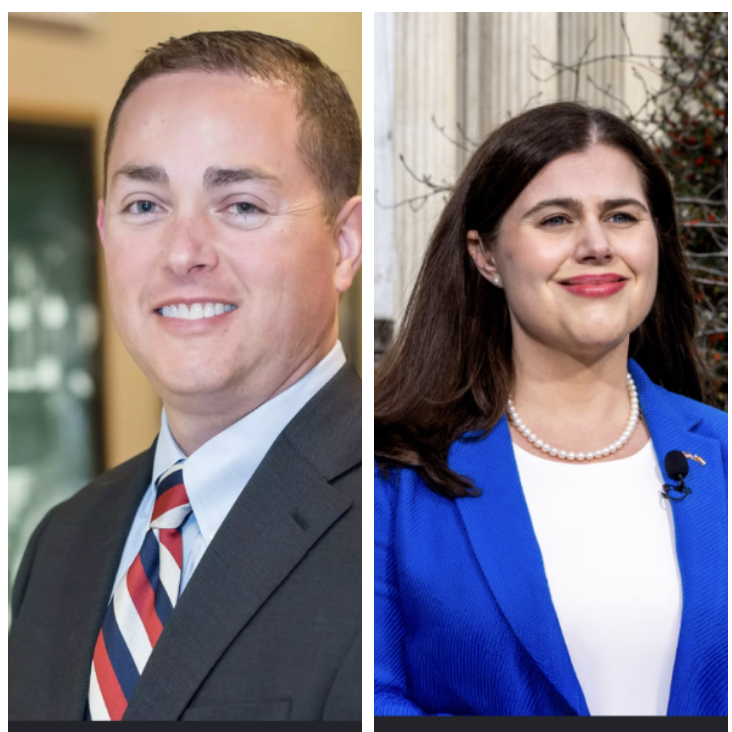
Attorney General candidates present priorities at Colorado Water Congress
Marianne Goodland
marianne.goodland@coloradopolitics.com
Updated 15 hours ago
The two major-party candidates for attorney general — Republican Michael Allen, the district attorney for Teller and El Paso counties, and Democratic Secretary of State Jena Griswold — on Thursday outlined their priorities at the Colorado Water Congress. Griswold attended...

Denver named finalist for 2028 Democratic Convention site
Thelma Grimes
thelma.grimes@coloradopolitics.com
Updated 14 hours ago
The Mile High City competes with Boston and Philadelphia The list of cities being considered to host the 2028 Democratic National Convention has narrowed even further, with Denver making the cut as one of the final three, along with Boston...
District 49 dissolves longtime provider of special services
Eric Young
eric.young@gazette.com
Updated 22 hours ago
A longtime education service provider that has been subject to recent public and government scrutiny is shutting down. School District 49’s Board of Education approved the dissolution of the Education ReEnvisioned Board of Cooperative Education Services (ERBOCES) during a special...
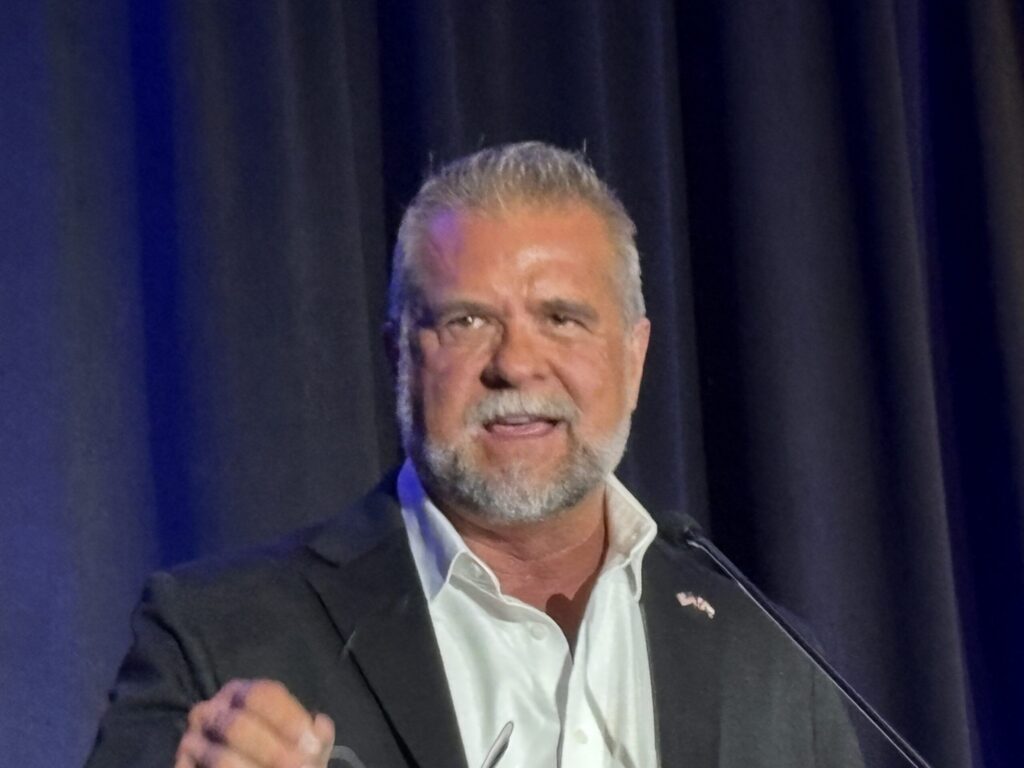
GOP gubernatorial candidate Victor Marx pushes aggressive water-storage expansion at Colorado Water Congress
Marianne Goodland
marianne.goodland@coloradopolitics.com
Updated 23 hours ago
Victor Marx, the Republican nominee for governor, took the spotlight Wednesday during the opening day of the Colorado Water Congress, laying out how he says the state should approach its water future. Marx told the standing-room-only audience in Steamboat Springs...
PREV
PREVIOUS
Federal judge to consider sanctioning ex-Colorado judicial discipline director
A federal judge ordered Colorado’s former head of judicial discipline on Wednesday to explain why she should not sanction him for making inaccurate statements about the defendants in his lawsuit against the Colorado Supreme Court and related entities. U.S. District Court Senior Judge Kathryn H. Vratil indicated she will hear arguments and evidence next Thursday […]

Conservation Colorado proposes measures aimed at oil and gas companies
A group has introduced four ballot measures it says are meant to counter an initiative that aims to enshrine Colorado businesses and consumers’ right to purchase and sell natural gas in the state’s constitution. Filed with the Secretary of State’s Office today, Conservation Colorado’s measures would do the following: The first initiative is a statutory […]