

Federal judge green-lights trial against Denver officer over race-based enforcement
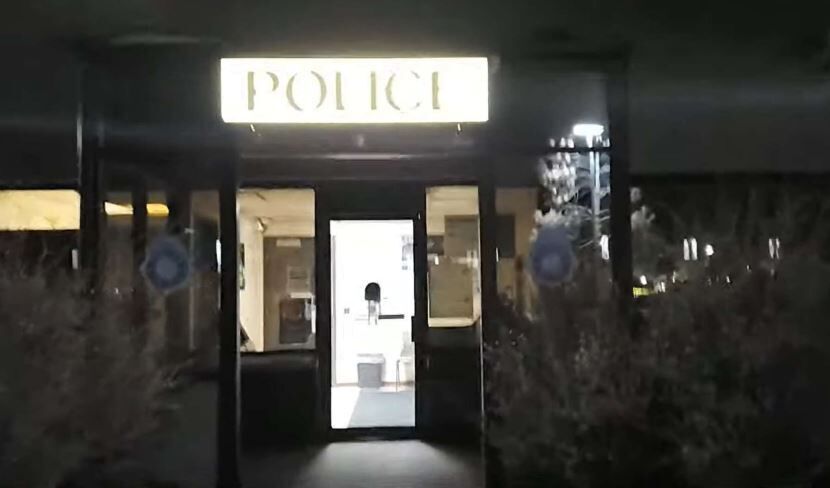
A federal judge green-lit a jury trial last week on a man’s claim that a Denver police officer engaged in racially selective enforcement of the law by arresting him for video recording at a police station, while not arresting a White man who filmed in the same spot.
U.S. District Court Judge Philip A. Brimmer concluded a single claim from plaintiff Kevin Detreville would proceed against Officer Sergey Gurevich, after the Denver-based federal appeals court found Brimmer had previously erred in sending a broader swath of Detreville’s claims to trial.
On the night of Nov. 10, 2019, as depicted on his cell phone footage, Detreville arrived at the District 5 station along Peoria Street in northeast Denver. After walking around, he said he was going to see if the police would respect his First Amendment right to record.
Detreville continued to a walkway leading up to the station. Outside of the reception area was an enclosure, described by the parties as an awning, vestibule, or entryway. As Detreville entered the vestibule and stood outside the station door, Officer Julie Weinheimer stepped out and started speaking with Detreville.
“What’s your name and badge number?” Detreville asked. Weinheimer handed him her card. She asked if she could help Detreville with anything, and he repeated his demand for her name and badge number.
“Yes, I literally just handed you my card,” Weinheimer responded. “I walked out the door, you put a camera in my face, I’m asking how I can help you.”
Gurevich then arrived, informing Detreville that recording was not allowed “on our property. If you don’t stop recording, we’ll have to arrest you.” Weinheimer pointed to a sign in the vestibule, affixed to the reception area’s window, that read, “No video recording allowed in the Denver District 5 Station without prior permission from the Chief of Police.”
Gurevich gave Detreville a “second warning” to stop recording, to which Detreville replied that recording was his First Amendment right.
“It’s not, actually,” Weinheimer said, placing him in handcuffs. The officers took him inside to be booked. Detreville stayed in jail for three days. Prosecutors subsequently dismissed the charges.
Detreville sued both officers, alleging unlawful arrest, malicious prosecution, retaliation for exercising his First Amendment rights, and a violation of his right to equal protection under the law. His equal protection claim hinged on allegations that Gurevich arrested Detreville, who is Black, but did not arrest a White man who recorded video at the station days after Detreville did.
Both parties moved to end the lawsuit in their favor, in whole or in part, without a trial. Most of Detreville’s claims hinged on whether he was, in fact, doing something prohibited by the sign when recording in the entryway outside the front door.
Brimmer believed the officers lacked probable cause to arrest Detreville for his conduct, but he also found that an officer “could have made a reasonable mistake” in believing the sign applied to the vestibule. Therefore, there was “arguable” probable cause to arrest him.

On Detreville’s claim of unlawful arrest, Brimmer granted the officers qualified immunity, a judicial doctrine that shields government officials from civil lawsuits unless they violate a person’s clear legal rights. In Brimmer’s view, however, the defendants neglected to invoke qualified immunity on Detreville’s remaining claims. He allowed them to proceed.
But last July, the U.S. Court of Appeals for the 10th Circuit believed the officers had, in fact, argued they were immune from every claim. The court decided outright that Gurevich and Weinheimer could not be liable on Detreville’s claim that he was arrested in retaliation for exercising his free speech rights. It returned the remaining two claims against Gurevich to Brimmer, so he could fully analyze qualified immunity.
In a March 13 order, Brimmer denied qualified immunity to Gurevich on Detreville’s equal protection claim, citing several prior court decisions prohibiting selective enforcement of the law based on race.
“Therefore, the Court finds that, at the time of Mr. Detreville’s arrest, Mr. Detreville’s right against racially selective law enforcement was clearly established,” he wrote.
However, Brimmer found Gurevich was immune to Detreville’s malicious prosecution claim. The statement Gurevich wrote in support of Detreville’s arrest indicated that Detreville was recording in the entryway, and Brimmer already determined that Gurevich’s interpretation of the sign gave him arguable probable cause for an arrest.
A trial has not yet been scheduled.
The case is Detreville v. Gurevich et al.

Federal judge considers second round of sanctions against ex-Colorado judicial discipline director
Michael Karlik
michael.karlik@coloradopolitics.com
Updated 10 minutes ago
A federal judge ordered Colorado’s former judicial discipline director on Tuesday to explain why she should not sanction him a second time for filing documents for improper purposes, such as harassment or delay. U.S. District Court Senior Judge Kathryn H....
Colorado justices agree to review insurance question that has divided federal judges
Michael Karlik
michael.karlik@coloradopolitics.com
Updated 5 hours ago
The Colorado Supreme Court granted a federal judge’s request on Friday to address an issue that has produced conflicting answers in policyholders’ lawsuits against insurance companies over unpaid benefits. “Parties (and judges) regularly spend undue time and money fighting in...
Federal judge dismisses background screeners’ challenge to Colorado law
Michael Karlik
michael.karlik@coloradopolitics.com
Updated 1 day ago
A federal judge dismissed a challenge on Friday to a portion of Colorado law that prohibits certain information from being included in consumer reports, in what seemed to be a conflict with federal law. Congress originally enacted the Fair Credit...
10th Circuit rejects ‘penalty’ for children of naturalized citizens seeking visas
Michael Karlik
michael.karlik@coloradopolitics.com
Updated 19 hours ago
The Denver-based federal appeals court joined three of its peers earlier this month and determined the child of a newly naturalized U.S. citizen is not moved to a longer visa line as a result of his parent gaining citizenship, and...
Appeals court recognizes longer window to sue insurers for withholding policy details
Michael Karlik
michael.karlik@coloradopolitics.com
Updated 2 days ago
Colorado’s second-highest court split with its own prior decision earlier this month and concluded injured motorists have two years, not one, to sue insurance companies for withholding relevant information about an at-fault driver’s policy. In 2019, Colorado lawmakers enacted a measure to...

Appeals court decides free speech cases, error-prone judge reversed again | COURT CRAWL
Michael Karlik
michael.karlik@coloradopolitics.com
Updated 2 days ago
Welcome to Court Crawl, Colorado Politics’ roundup of news from the third branch of government. The state’s Court of Appeals decided multiple cases implicating free speech rights, plus Colorado’s most error-prone judge was reversed on appeal yet again. Heard on...
Federal judge dismisses claims against medical contractor for Eagle County jail suicide
Michael Karlik
michael.karlik@coloradopolitics.com
Updated 5 days ago
A federal judge dismissed the claims against a medical contractor for the Eagle County jail and its employees earlier this month, concluding there were insufficient allegations that they violated the constitutional rights of a man who died by suicide in...
Federal judge advances lawsuit seeking overtime compensation for Aurora firefighter trainees
Michael Karlik
michael.karlik@coloradopolitics.com
Updated 2 days ago
A federal judge gave preliminary approval earlier this month to a class of Aurora firefighter trainees who may sue the city over allegations that they were denied overtime pay in violation of federal law. Joseph Elias, who attended Aurora’s fire...
Appeals court says jury not obligated to apply discounts to determine value of stolen merch
Michael Karlik
michael.karlik@coloradopolitics.com
Updated 2 days ago
Colorado’s second-highest court concluded on Thursday that it was up to a Douglas County jury to determine the value of stolen merchandise at a defendant’s theft trial, after both sides presented different estimates of the items’ value. Under state law,...
Public figures have limited path to sue over accusations of criminality, says appeals court
Michael Karlik
michael.karlik@coloradopolitics.com
Updated 5 days ago
Colorado’s second-highest court ruled last week that a public figure cannot sue for defamation solely because a person publicly accuses them of committing a crime, as the statement may be constitutionally protected opinion. A three-judge Court of Appeals panel narrowed...
PREV
PREVIOUS
Federal judge says 8 years in solitary confinement not grounds to reduce man's sentence
A federal judge concluded earlier this month that a man’s eight years allegedly spent in solitary confinement did not justify granting his request for a sentence reduction. However, U.S. District Court Senior Judge William J. Martínez signaled his willingness to re-evaluate Randy Platt’s request if Platt details why his experience in prolonged isolation amounts to […]

Senate panel advances bill to tighten Colorado sports betting rules amid youth addiction concerns
A divided panel of lawmakers on Tuesday narrowly advanced a bill to impose new restrictions on Colorado’s booming sports betting industry, as lawmakers cited worries about youth gambling and addiction, while online operators warned the changes could drive bettors to unregulated markets and slash state revenue. Senate Bill 131 would limit customers to five deposits […]