

Colorado voters to decide whether to ban gender surgeries for minors
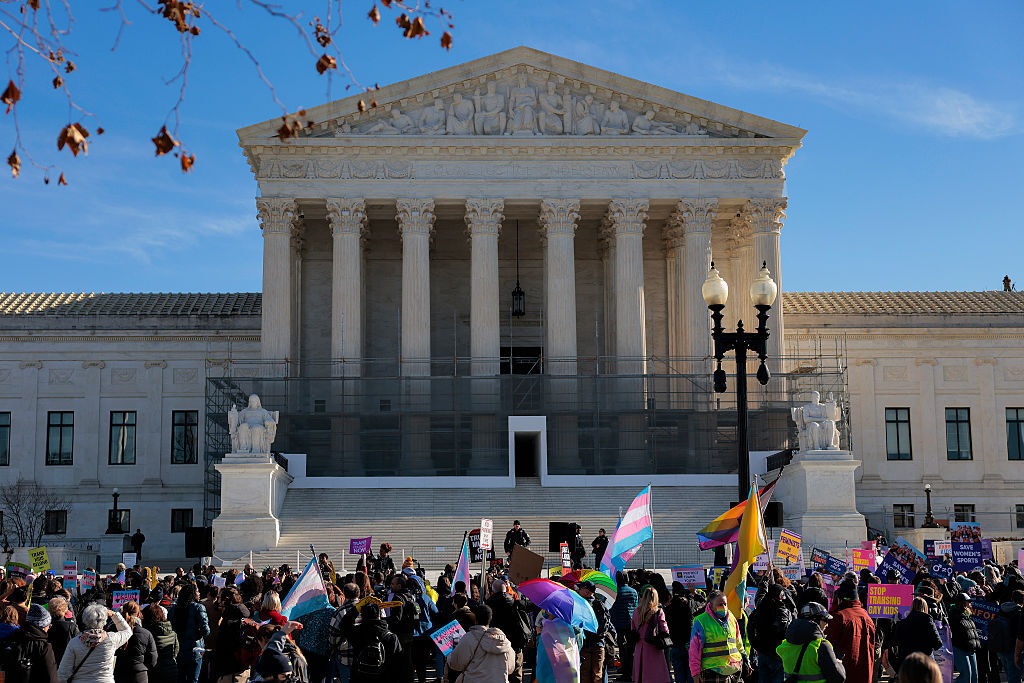
Colorado voters will decide this November whether to prohibit gender surgeries for minors and bar public funding or insurance coverage for procedures that alter children’s biological sex characteristics.
The measure qualified for the ballot amid a push by the federal government to halt such surgical procedures and hormonal treatment, a move that has begun to modify how hospitals across America approach gender services. Indeed, at least one hospital in Colorado has paused gender services— in particular, puberty blockers and hormone-based treatment — for children, saying it would wait for “federal court rulings and assess the rapidly evolving legal landscape.”
State election officials said proponents of Initiative No. 110 submitted nearly 165,000 signatures and a review of a sample confirmed they turned in a sufficient number to make it to the November ballot. Initiatives need about 124,000 to qualify.
The measure would bar health care professionals from prescribing, administering, or providing surgery to a child “for the purpose of altering biological sex characteristics.”
Additionally, it would prohibit the use of federal funds, Medicaid dollars or insurance coverage to pay for the medical interventions.
It defines “altering biological characteristics” as treatment “in response to a minor’s perception of sex or gender.” The prohibitions do not apply to children born with “medically verifiable disorder of sex development” or to treatments “for acquired physical or chemical abnormalities.”
It also excludes male circumcision.
The proposals is backed by Erin Lee, who is also behind another measure, which recently qualified for the ballot, that seeks to prohibit transgender girls from competing in girls’ sports.
The proponents have argued that children lack the maturity to decide “life-altering medical decisions” and noted that European countries have also halted gender surgeries for minors.
Several European countries, after embracing “gender affirming care,” have since emphasized psychological care over the transition of young people. In particular, the United Kingdom’s National Health Service said it will no longer prescribe “puberty blockers” — drugs that suppress sex hormones during puberty — to children and other young people seeking gender transitions, saying there is “not enough evidence of safety and clinical effectiveness.”
Meanwhile, supporters of affirming transgender identity have often pointed to an Education Week report, citing research that said “affirming transgender students can improve their mental health and academic outcomes.”
“Colorado sets age limits for voting, drinking, and smoking because we recognize that children are not ready to make life-altering decisions,” said Lori Gimelshteyn of the Colorado Parent Advocacy Network. “When it comes to irreversible medical procedures on healthy bodies, children deserve the same protection. Initiative 110 ensures these decisions are delayed until adulthood.”
Rocky Mountain Equality, an LGBTQ+ advocacy organization based in Boulder, called the measure an attempt by outside interests to tell Colorado parents how to raise their children.
“In the coming months, we are going to hear intentional lies from anti-trans extremists about this ballot measure,” said the organization’s director, Bruce Parker. “They aren’t being honest about their agenda to erode privacy and access to credible medical care they don’t agree with. Their next targets are care for trans adults and abortion services if we let them get away with this.”
The White House’s position on gender services, which carries the threat of losing funding, has begun to alter the operations of hospitals in Colorado and elsewhere in the country.
Last year, several Colorado hospitals said they would halt transgender services, some of which cited the risk of losing federal dollars for its decision, after the Trump administration issued an order that mandates agencies to “defund chemical and surgical mutilation.”
In Colorado, many of the hospitals distinguished between providing gender surgeries and offering hormonal or chemical treatments.
The decision of one of those hospitals, Children’s Hospital Colorado, is now being litigated in court. This month, the Colorado Supreme Court ordered Children’s to explain why it should not direct the organization to resume providing certain types of services to transgender children in compliance with the state’s non-discrimination law.
Last month, a Denver judge had declined to require Children’s to continue providing hormone therapy and puberty blockers to the proposed class of transgender patients, reasoning that the potential consequences from the federal government could endanger patient care more broadly. Children’s Colorado earlier said it had never provided gender transition surgical services for patients under 18.
Children’s Colorado had announced in January that it is “pausing medical gender affirming care for patients under the age of 18 as we wait for any federal court rulings and assess the rapidly evolving legal landscape.”
A few days later, four transgender children, through their parents, sued Children’s Colorado, alleging the hospital was violating the Colorado Anti-Discrimination Act.
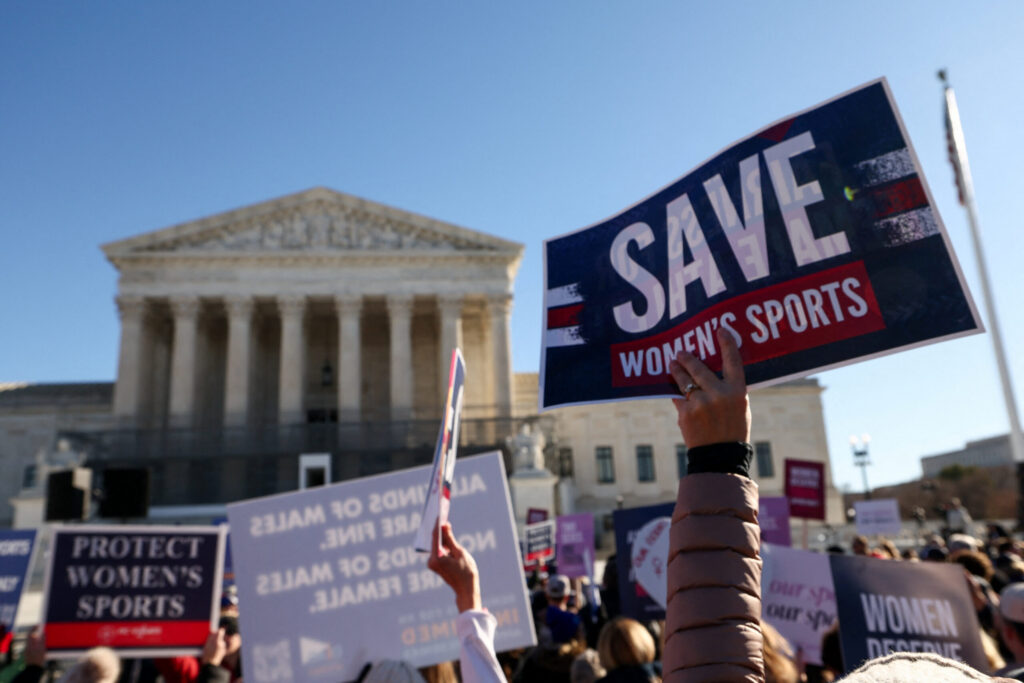
Besides voting on the surgery ban, Colorado voters will also decide whether transgender students can join girls’ sports after an initiative that would require student athletes to only join sports teams that correspond to their biological sex qualified for the November ballot.
At its core, Initiative No. 109 restricts participation in K-12 and collegiate school sports based on a student’s biological sex and requires schools and athletic associations to designate teams and sports as girls, boys or coed. It creates an exception that allows a female student to participate on a male team if no female team is available.
Rocky Mountain Equality called the ballot measure an attack on Colorado families, while supporters, such as Christian Home Educators of Colorado, argued that allowing transgender athletes to participate in girls’ sports is a mockery of federal laws meant to protect women.
Michael Karlik of Colorado Politics contributed to this article.

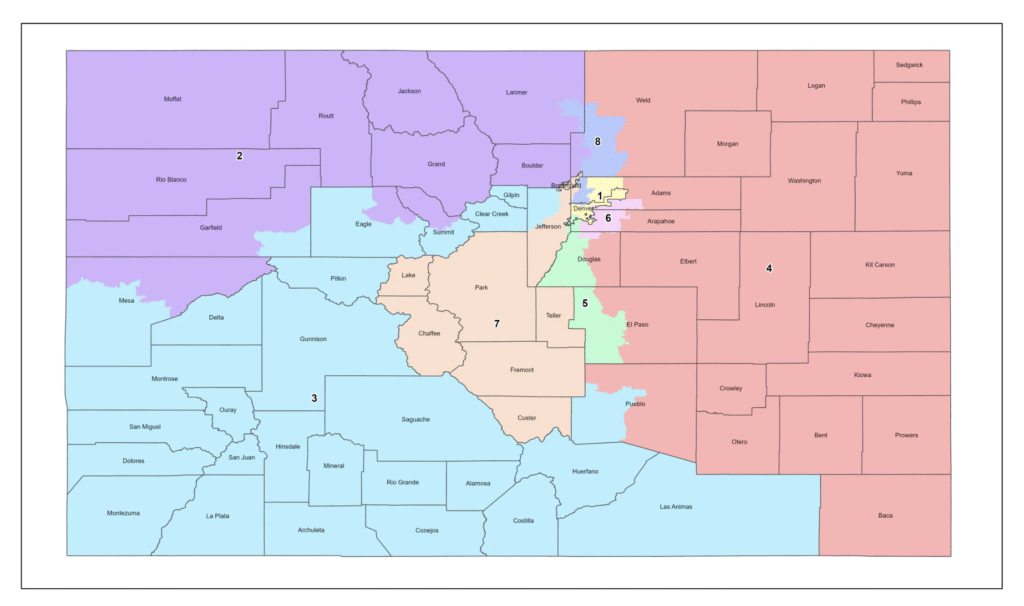
Colorado Title Board advances competing redistricting proposals and revised Pinnacol measure as April ballot deadline nears
Marianne Goodland
marianne.goodland@coloradopolitics.com
Updated 8 hours ago
With just two meetings left before an April 15 deadline, the state’s Title Board on Wednesday pushed through a slate of ballot measures — including a revised proposal to privatize Pinnacol Assurance and dueling plans to redraw Colorado’s congressional map...

Senate panel advances bill to tighten Colorado sports betting rules amid youth addiction concerns
Marissa Ventrelli
marissa.ventrelli@coloradopolitics.com
Updated 8 hours ago
A divided Senate Finance Committee on Tuesday narrowly advanced a bill to impose new restrictions on Colorado’s booming sports betting industry, as lawmakers cited rising concerns about youth gambling and addiction while operators warned the changes could drive bettors to...

Democrat Matt Cavanaugh ends campaign in Colorado’s 5th CD, says petition firm came up short
Ernest Luning
ernest.luning@coloradopolitics.com
Updated 7 hours ago
Democratic congressional candidate Matt Cavanaugh said Wednesday that he was ending his bid to challenge Republican U.S. Rep. Jeff Crank in Colorado’s 5th District because the firm his campaign hired to gather petition signatures failed to deliver. Cavanaugh, an Army...

Democrats want to bar use of consumer data to set Colorado prices, employee wages
Marissa Ventrelli
marissa.ventrelli@coloradopolitics.com
Updated 8 hours ago
A closely divided House committee advanced a bill aimed at curbing the use of personal data to set individualized prices and wages, reviving a proposal that failed last year and setting up a broader debate over how far the state...

Artificial intelligence working group agrees on framework to replace Colorado law
Marianne Goodland
marianne.goodland@coloradopolitics.com
Updated 1 day ago
A group that has been working on artificial intelligence policy has reached an agreement on a framework that would replace the regulations adopted by Colorado legislators two years ago. The agreement has the backing of Gov. Jared Polis, who reluctantly...
After ‘winter of defeat,’ Colorado hopes for wetter summer
Marianne Goodland
marianne.goodland@coloradopolitics.com
Updated 15 hours ago
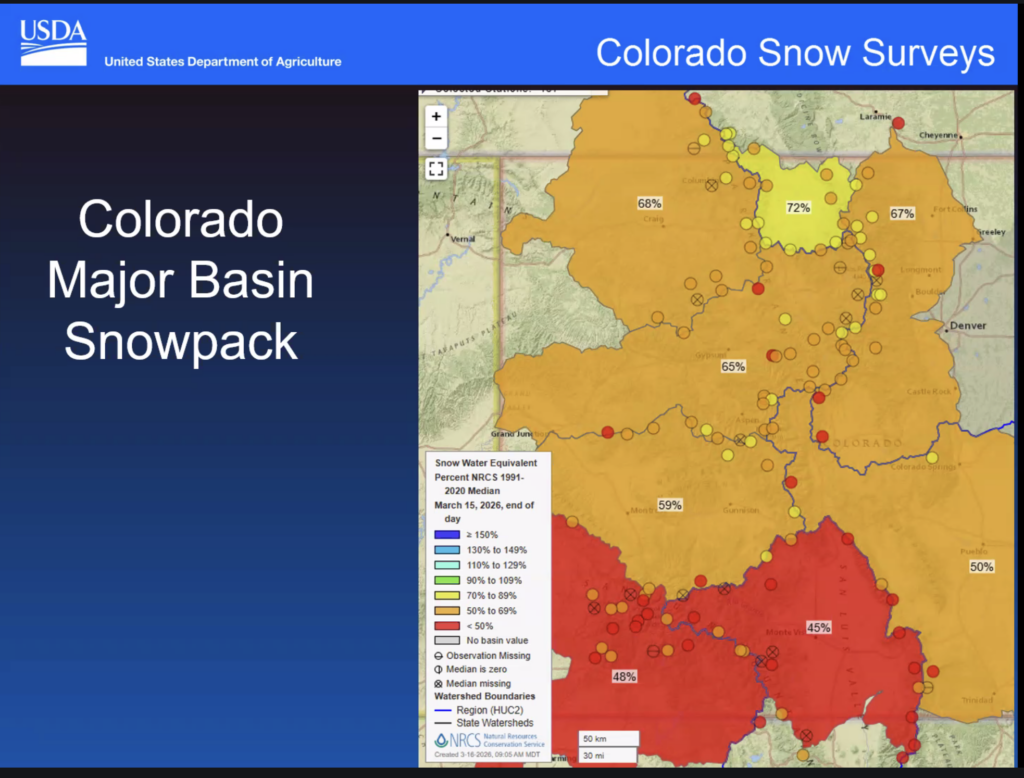
With snowpack melt already peaking in some parts of the state and drought conditions worsening compared to last year, Colorado’s water watchers are hoping for a wetter summer, though they anticipate the situation deteriorating before getting better. Meanwhile, the governor...

Colorado, Democrat states oppose proposal to require EV chargers be made with 100% domestic components
Scott Weiser
scott.weiser@gazette.com
Updated 1 day ago
Colorado has joined a coalition of about 20 states in opposing a federal proposal that would require electric vehicle chargers funded with federal dollars to be made with 100% domestic components. The Federal Highway Administration is considering raising the domestic...
Colorado ethics panel tells legislator to attend sexual harassment training
Marianne Goodland
marianne.goodland@coloradopolitics.com
Updated 1 day ago
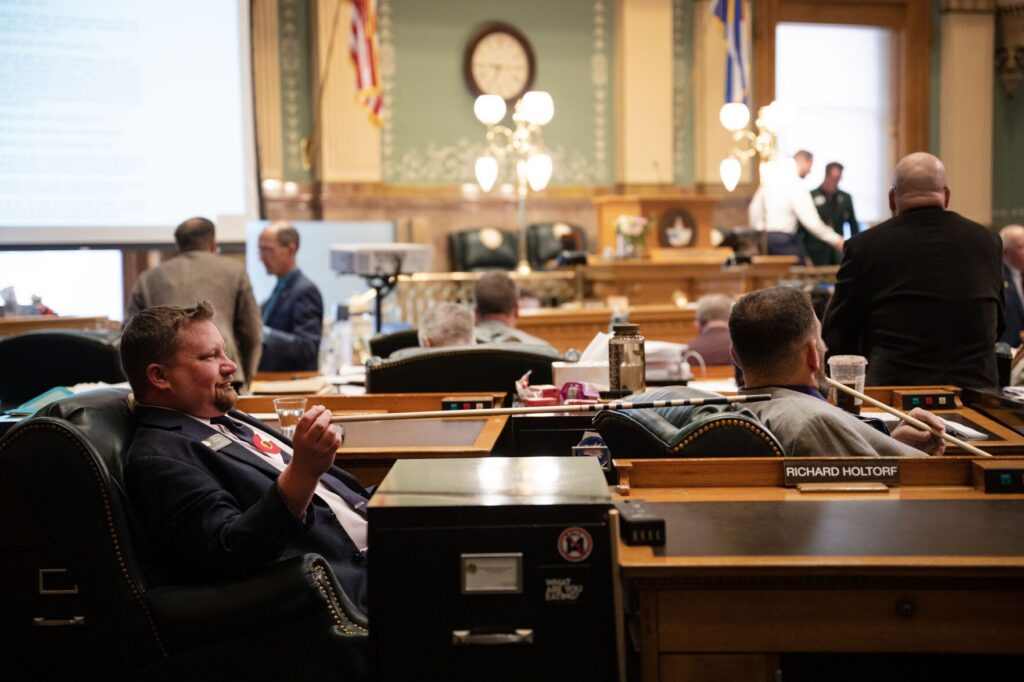
Colorado’s House ethics panel admonished a Republican legislator over allegations he used a master key to access areas of the Capitol that he was not permitted to enter and that he had made sexually harassing comments to several female lawmakers....

Overdose deaths from opioids dip in America — but not in Colorado, study says
Jacob Mauk
jacob.mauk@denvergazette.com
Updated 2 days ago
Overdose deaths from opioids rose in Colorado, diverging from the national trend, which has been decreasing, according to a new study from a think tank. In its new report, the Common Sense Institute said synthetic opioid overdose deaths in Colorado...
Colorado voters will decide whether transgender students can join girls’ sports
Marissa Ventrelli
marissa.ventrelli@coloradopolitics.com
Updated 2 days ago
A ballot initiative that would require student athletes to only join sports teams that correspond to their biological sex has qualified for the November ballot, the latest development in the culture war being waged in school districts, in the courts...
PREV
PREVIOUS

Democrats want to bar use of consumer data to set Colorado prices, employee wages
A closely divided House committee advanced a bill aimed at curbing the use of personal data to set individualized prices and wages, reviving a proposal that failed last year and setting up a broader debate over how far the state should go in regulating algorithm-driven business practices. Proponents argued that the proposed new regulations are […]

Democrat Matt Cavanaugh ends campaign in Colorado’s 5th CD, says petition firm came up short
Democratic congressional candidate Matt Cavanaugh said Wednesday that he was ending his bid to challenge Republican U.S. Rep. Jeff Crank in Colorado’s 5th District because the firm his campaign hired to gather petition signatures failed to deliver. Cavanaugh, an Army combat veteran and author, registered as a Democrat in late December after launching an independent […]