

Error-prone Douglas County judge triggers another reversal of criminal convictions
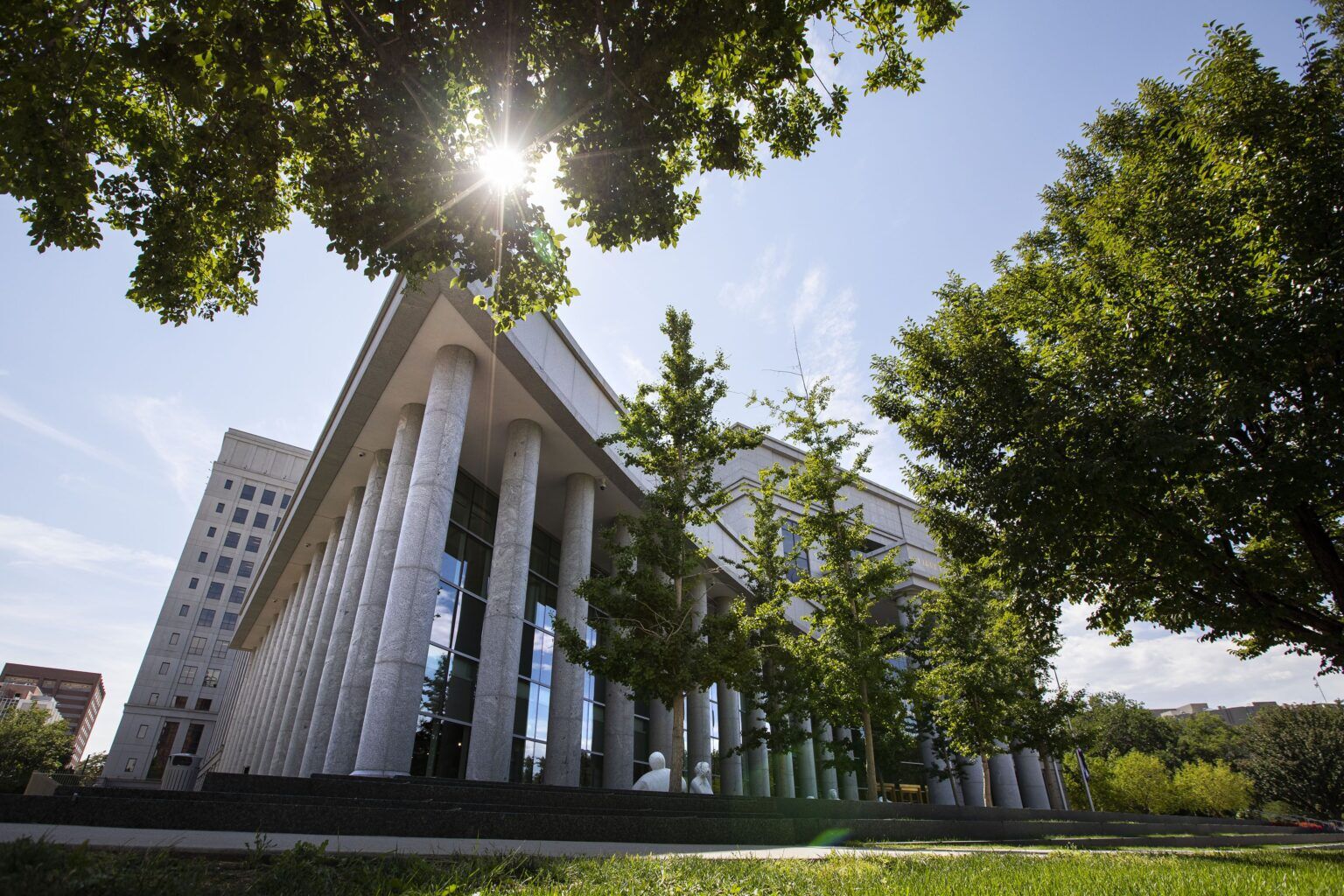
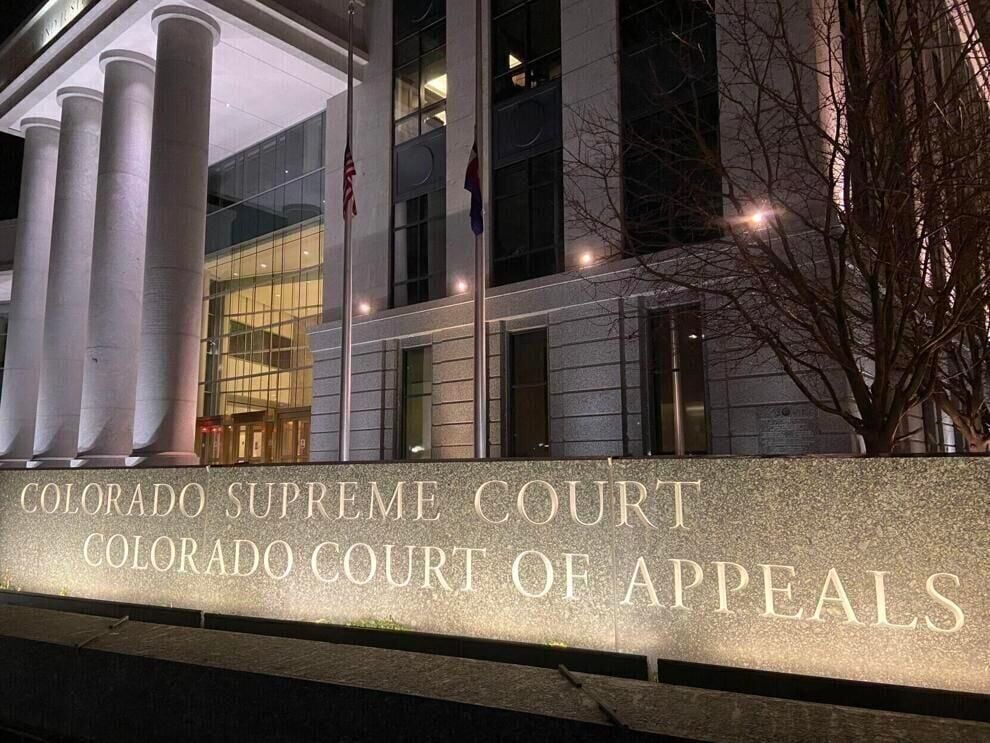
Colorado’s second-highest court overturned a defendant’s Douglas County convictions on Thursday due to the error of a judge whose actions have triggered a disproportionate number of reversals to convictions and sentences in recent years.
Since 2021, the Court of Appeals has found problems in multiple criminal cases handled by former District Court Judge Patricia Herron. Among other things, she:
• Allowed prosecutors to give a false impression to jurors about the DNA evidence in a sex assault case
• Blocked a defendant from telling the jury his alibi
• Allowed a defendant’s lawyer to withdraw without informing the defendant of her rights
• Subjected a defendant to lifetime sex offender registration without explaining why
• Allowed a biased juror to serve in a drunk driving trial
• Ordered a defendant to pay crime victim restitution in violation of Colorado Supreme Court precedent and then “recharacterized history” in her decision
• Declined to correct a prosecutor who misstated the law to jurors
Since December, two more Court of Appeals panels found errors related to Herron violating a defendant’s right to counsel and allowing a biased juror to serve.
Herron retired from the bench at the end of 2023, but Chief Justice Monica M. Márquez subsequently hired her as a part-time senior judge in spite of her record of mistakes. Herron remains on the bench, according to the Judicial Department’s current roster of senior judges.
In the Court of Appeals’ most recent decision, finding an error for the third time in three months, defendant John Allen appealed his convictions and four-year jail sentence for violating a restraining order, harassment, and violating bail bond conditions.
Castle Rock police investigated allegations that Allen had violated a restraining order and committed other offenses by being present at the victim’s home. Police arrested Allen on June 22, 2021.
Officer James Dinges told Allen in the jail that he intended to search Allen’s cell phone. While Allen could decline to consent, Dinges would just get a warrant in that scenario. Allen expressed concerns, but, if he consented, the phone “can be back here tomorrow,” said Dinges.
Allen consented and Dinges took the phone.
The next day, the forensic lab began an extraction of his phone. Around that time, Allen appeared at the police department to ask for his cell phone back.
According to a report authored by Detective Dan DeGennaro, DeGennaro “reminded him that we were operating under his verbal consent to search the phone, and if he wished to revoke that consent, he could do so.”
Allen confirmed he needed his phone back so pretrial supervision could monitor him.
“I told John that we were operating based on his knowing, voluntary consent. If he felt pressured into giving consent, I did not feel comfortable with that. John stated that he did feel pressure,” DeGennaro continued.
DeGennaro further told Allen he could “revoke consent at any time. … If he was not good with it, tell us now and we will stop the process.”
Allen ultimately left and the download concluded. There was incriminating evidence placing the phone near the victim’s home.
The defense moved to exclude the cell phone evidence from trial, arguing that Allen revoked his consent to search the phone.
“He made an effective revocation of consent that was not recognized,” Allen’s lawyer told Herron.
She denied the defense’s motion, relying on the document that police submitted later in support of a search warrant, without addressing the details of Allen’s interaction with DeGennaro. The defense again asked Herron to hold a hearing to address the specific details around consent, but she refused.
Case: People v. Allen
Decided: March 12, 2026
Jurisdiction: Douglas County
Ruling: 3-0
Judges: Rebecca R. Freyre (author)
Karl L. Schock
Grant T. Sullivan
Upon appeal of Allen’s convictions, a three-judge appellate panel agreed Herron’s handling of the issue was faulty.
“The trial court erred by refusing to hold an evidentiary hearing on the motion to suppress to determine whether Allen gave police consent to search his phone and whether he revoked consent before the police were able to complete the data extraction of his phone,” Judges Rebecca R. Freyre, Karl L. Schock, and Grant T. Sullivan wrote in an unsigned Feb. 21, 2025 order. “Whether Allen voluntarily consented to the search of his phone initially and whether he revoked that consent before the police were able to complete the data extraction are factual disputes that the trial court did not resolve.”
Because the cell phone evidence featured prominently in Allen’s trial, the panel ordered a new judge to hold a hearing and address whether Allen gave voluntary consent to search the phone after all.
After a two-day hearing, District Court Judge Victoria Klingensmith agreed the evidence had to be excluded because Allen never gave voluntary consent to the search.
“The Court finds the representations made by Officer Dinges while Mr. Allen was confined in the Douglas County jail, unduly influenced his decision-making ability, resulting in an involuntary consent to search the cell phone,” she wrote on Jan. 8.
Finally, in a brief opinion on March 12, the appellate panel found Klingensmith’s order resolved the key issue and Allen should receive a new trial.
The case is People v. Allen.
Editor’s note: This article has been updated to confirm that Herron remains a senior judge.

Federal judge dismisses claims against medical contractor for Eagle County jail suicide
Michael Karlik
michael.karlik@coloradopolitics.com
Updated 3 hours ago
A federal judge dismissed the claims against a medical contractor for the Eagle County jail and its employees earlier this month, concluding there were insufficient allegations that they violated the constitutional rights of a man who died by suicide in...
Federal judge advances lawsuit seeking overtime compensation for Aurora firefighter trainees
Michael Karlik
michael.karlik@coloradopolitics.com
Updated 9 hours ago
A federal judge gave preliminary approval earlier this month to a class of Aurora firefighter trainees who may sue the city over allegations that they were denied overtime pay in violation of federal law. Joseph Elias, who attended Aurora’s fire...
Appeals court says jury not obligated to apply discounts to determine value of stolen merch
Michael Karlik
michael.karlik@coloradopolitics.com
Updated 9 hours ago
Colorado’s second-highest court concluded on Thursday that it was up to a Douglas County jury to determine the value of stolen merchandise at a defendant’s theft trial, after both sides presented different estimates of the items’ value. Under state law,...
Public figures have limited path to sue over accusations of criminality, says appeals court
Michael Karlik
michael.karlik@coloradopolitics.com
Updated 12 hours ago
Colorado’s second-highest court ruled last week that a public figure cannot sue for defamation solely because a person publicly accuses them of committing a crime, as the statement may be constitutionally protected opinion. A three-judge Court of Appeals panel narrowed...
Federal judge to consider sanctioning ex-Colorado judicial discipline director
Michael Karlik
michael.karlik@coloradopolitics.com
Updated 1 day ago
A federal judge ordered Colorado’s former head of judicial discipline on Wednesday to explain why she should not sanction him for making inaccurate statements about the defendants in his lawsuit against the Colorado Supreme Court and related entities. U.S. District...
Federal judge green-lights trial against Denver officer over race-based enforcement
Michael Karlik
michael.karlik@coloradopolitics.com
Updated 3 hours ago
A federal judge green-lit a jury trial last week on a man’s claim that a Denver police officer engaged in racially selective enforcement of the law by arresting him for video recording at a police station, while not arresting a...
Federal judge says 8 years in solitary confinement not grounds to reduce man’s sentence
Michael Karlik
michael.karlik@coloradopolitics.com
Updated 2 days ago
A federal judge concluded earlier this month that a man’s eight years allegedly spent in solitary confinement did not justify granting his request for a sentence reduction. However, U.S. District Court Senior Judge William J. Martínez signaled his willingness to...

10th Circuit rejects ‘potential for violence’ when police arrest vehicle occupant’s romantic partner
Michael Karlik
michael.karlik@coloradopolitics.com
Updated 1 day ago
The Denver-based federal appeals court rejected the idea on Tuesday that a vehicle occupant poses a danger to police solely because they are romantically involved with another occupant who officers are arresting. By 2-1, a three-judge panel of the U.S....

Colorado justices grill debt collector about compliance with law
Michael Karlik
michael.karlik@coloradopolitics.com
Updated 2 days ago
The Colorado Supreme Court repeatedly pressed a debt collection company last week to explain how its lawsuit against a Boulder woman for an unpaid credit card balance complied with the specific requirements that state lawmakers have created. Portfolio Recovery Associates,...
Appeals court agrees defendant’s speech constitutionally protected against El Paso County judge
Michael Karlik
michael.karlik@coloradopolitics.com
Updated 3 days ago
Colorado’s second-highest court agreed last week that a defendant’s critical statements toward an El Paso County judge were constitutionally protected and could not form the basis of a retaliation charge. A three-judge Court of Appeals panel concluded that, in context,...
PREV
PREVIOUS

Hacked crosswalks in Denver sound anti-Trump messages
Denver pedestrians got a surprise this weekend when the audio messages from push-button speakers on some crosswalks were mysteriously replaced with anti-President Donald Trump messages. “The walk signal is on, Trump … (reference to the Iran school that was bombed),” a robotic voice said, according to a video on the social media platforms TikTok and […]

Colorado voters will decide whether transgender students can join girls' sports
A ballot initiative that would require student athletes to only join sports teams that correspond to their biological sex has qualified for the November ballot, the latest development in the culture war being waged in school districts, in the courts and at the state Capitol in Colorado. The Colorado Secretary of State’s Office said proponents […]