

Latest death brings down wolves’ survival rate to 44% in Colorado
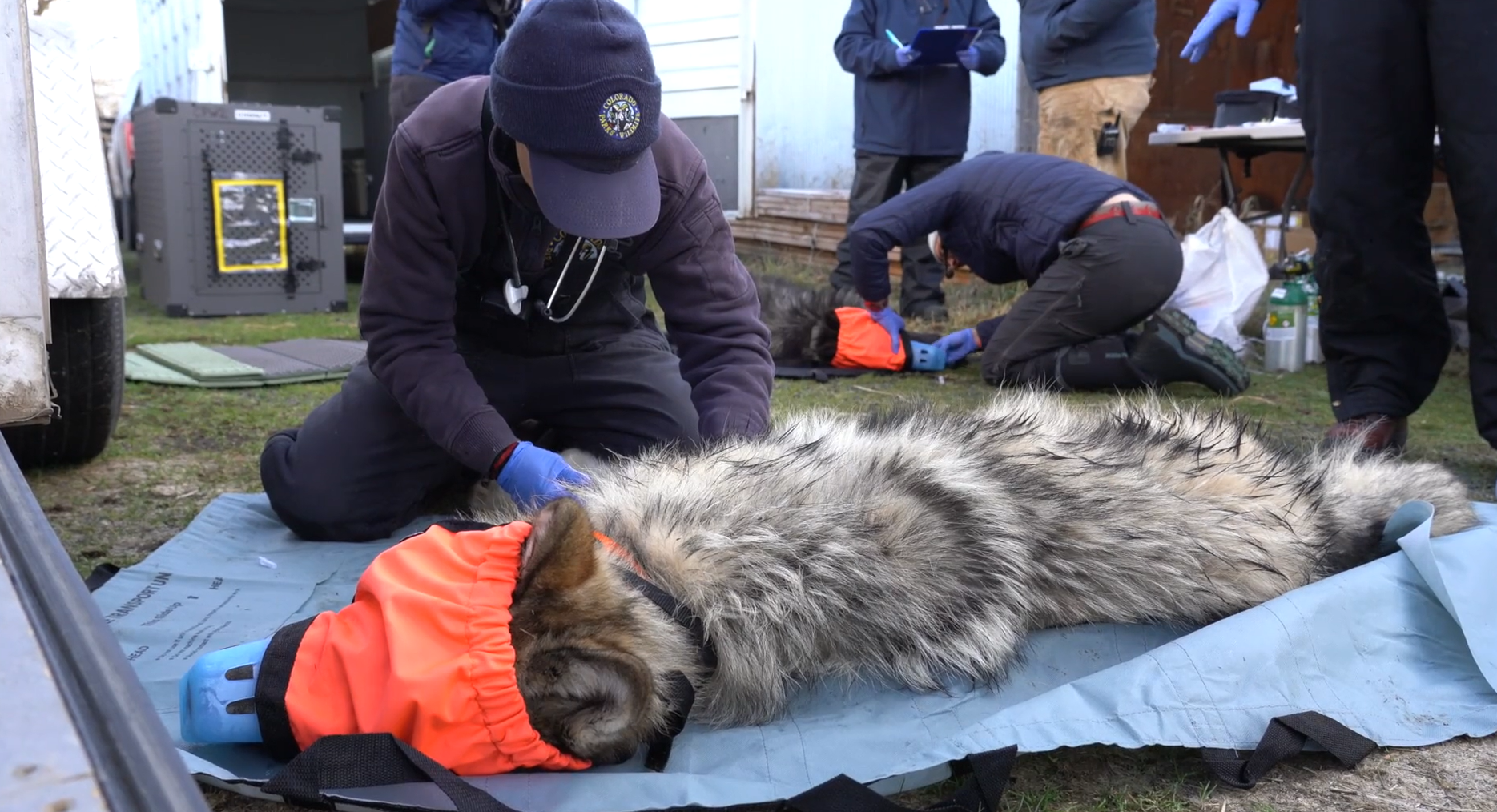
The female wolf of the mating pair for the King Mountain pack has died, bringing total fatalities to 14 out of the 25 animals reintroduced in Colorado.
The wolf, identified as No. 2310, was among the 10 wolves brought to Colorado from Oregon in December 2023.
The male of the King Mountain pack mating pair had died in January in Routt County following a botched collaring operation conducted by a Colorado Parks and Wildllife contractor. That operation drew criticism from wolf advocates at the March 5 parks and wildlife commission meeting. Advocates claimed the effort was reckless and that the contractor hired was a “bargain basement contractor who had a history of deaths” in similar efforts.
State wildlife authorities did not mention the male’s death in the announcement Friday. The wildlife agency had announced the birth of pups to the mating pair — the group became the King Mountain pack — last July. It’s unknown how many pups are in the pack.
Authorities did not identify either the cause of the female’s death nor where it took place. Colorado Parks and Wildlife will conduct an investigation, along with the U.S. Fish & Wildlife Service, the announcement said.
Of the 25 wolves relocated to Colorado — 10 from Oregon in December 2023 and 15 from British Columbia in January 2025 — 14 have now died, a survival rate of 44%. Another wolf, a yearling from the Copper Creek pack, was killed by wildlife staff after it preyed on multiple sheep in Rio Blanco County.
Colorado Parks and Wildlife’s wolf management plan directs the agency to examine the relocation efforts if survival rates dropped below 70%. The technical working group that helped develop the plan said “wolf populations can sustain 25-30% annual mortality while maintaining a stable or increasing population.”
The agency also announced this week it was suspending a recent month-long effort to track down and kill another of the Copper Creek yearlings that had been repeatedly killing livestock, also in Rio Blanco County.
The wolf killed five lambs and a ewe in late July and early August. According to the Grand Junction Daily Sentinel, citing state reports, the same wolf was believed to be responsible for more livestock attacks in October and November, as well as an attack on 11 sheep in January.
The wolf was shot last July by wildlife staff but the body was never found. The agency has been trying to find the wolf since then and, between Jan.24 and Feb. 22, used drones and thermal imaging to find the wolf, which was unsuccessful.
“With no snow on the ground in the area and challenging terrain, we are choosing to suspend this effort,” said CPW Director Laura Clellan on Thursday. The agency didn’t say whether it would restart efforts anytime soon.
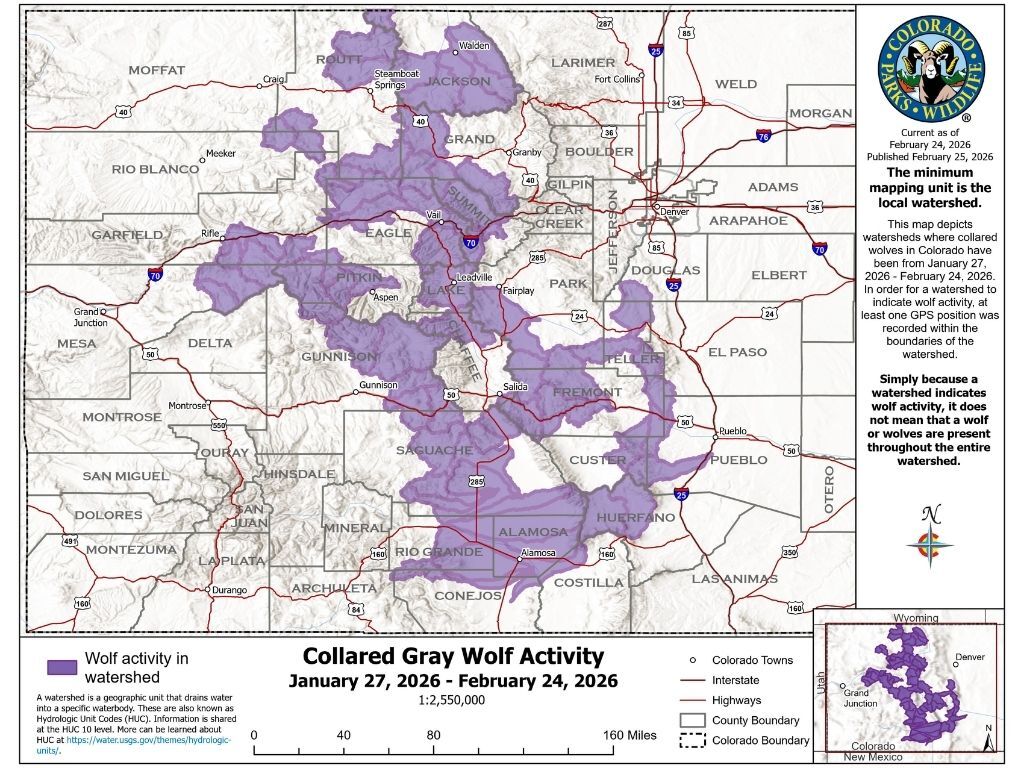
The state’s most recent wolf map shows the remaining 11 collared wolves are becoming more active in southern Colorado, along the Continental Divide and as far east as Pueblo County and as far south as the San Luis Valley. The map shows where wolves are in a watershed area and not specific locations.
Meanwhile, the state has now paid more than $724,000 in compensation to ranchers who lost livestock to wolves or saw lower reproduction and market weights in 2025. That’s more than double the amount of money available in the state’s general fund-supported wolf compensation fund, which means the agency will have to tap other pots, such as non-license fees or federal dollars, to cover the rest. Compensating ranchers is required by law.
The CPW commission approved $706,000 in compensation during its March meetings; the agency told Colorado Politics that there was another $18,000 in claims approved prior to the meeting.
Agency officials told a joint meeting of the House and Senate agriculture committees it received more than $1 million in claims for producer losses due to wolves for 2025.
Wolf advocates had filed a petition last month with the CPW Commission to ask for rulemaking that would restrict or eliminate the compensation for reproduction and market weight losses.
Erin Karney Spaur, executive vice president of the Colorado Cattlemen’s Association, told Colorado Politics this week when wolves were relocated, “we knew there would be direct losses but there’s also indirect losses that aren’t even accounted for. (The compensation) is not making any rancher whole,” she said.
That’s primarily for calves that just disappear when wolves are in the area, which, Spaur said, was what happened in Pitkin and Eagle counties last year.
Cows are now so stressed by wolves that their breeding cycles are a month late, she said, adding that’s a problem that will be compounded over the next two to three years.
As to the efforts by wolf advocates to prevent compensation for indirect losses, Spaur said they’re trying to take back what they promised.
“Our biggest frustration is that the goalposts just keep moving. As soon as we meet one, it gets changed,” she said.


Proposed data center regulation in Colorado draws critics, backers
Scott Weiser
scott.weiser@gazette.com
Updated 2 hours ago
A packed marathon hearing at the state Capitol in Colorado highlighted the sharp divide between two competing approaches to the effects of data centers, one of America’s fastest-growing technology sectors. Data centers are the physical facilities that host the servers,...
Evacuations partially lifted as officials give updates on 3 wildfires burning in southern Colorado
Nick Smith
nick-smith@coloradopolitics.com
Updated 3 hours ago
As containment for a Custer County wildfire reaches 75%, county officials are saying Saturday is expected to be “much worse” fire weather. The wildfire prompted several evacuations near Westcliffe on Wednesday, covering a two-mile radius that included around 98 structures....

Colorado revenue forecast worsens, pushing 2026-27 budget shortfall to nearly $1.5B, economists say
Marianne Goodland
marianne.goodland@coloradopolitics.com
Updated 56 minutes ago
The March revenue forecasts from economists in both the governor’s office and the Colorado legislature show that cuts to the 2026-27 budget are far from over. Economists with the Legislative Council downgraded the forecast for the 2026-27 budget year by...
With jails overcrowding, Gov. Jared Polis asks for new prisons as state faces $1.5 billion shortfall
Marianne Goodland
marianne.goodland@coloradopolitics.com
Updated 2 hours ago
The Polis administration is asking for hundreds of millions of dollars to expand the state’s prison system, just as Colorado’s legislators are bracing for a worsening fiscal outlook. The request sets up a clash over priorities at a time when...
Costs explode for Colorado program covering pregnant women and children living in the U.S. illegally
Marianne Goodland
marianne.goodland@coloradopolitics.com
Updated 8 hours ago
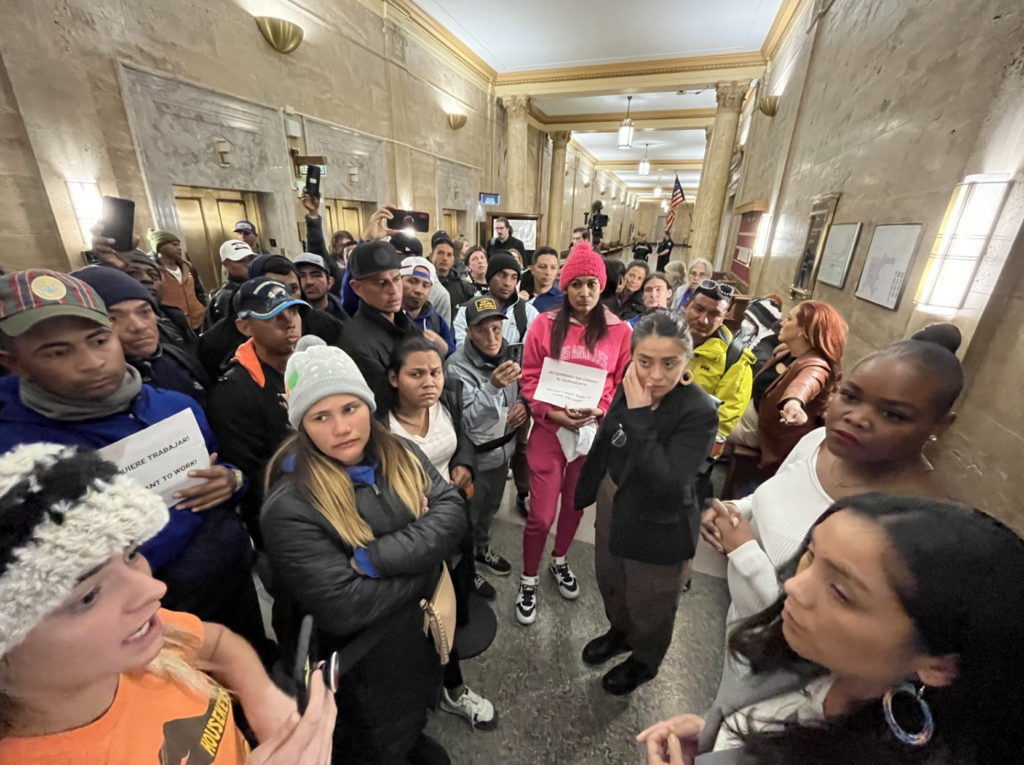
A state program providing health care to pregnant women and children living in the country illegally is costing far more than lawmakers expected, with expenses nearly tripling in just a year and threatening to squeeze Colorado’s budget amid a nearly...

Costs explode for Colorado program covering pregnant women and children living in the U.S. illegally
Marianne Goodland
marianne.goodland@coloradopolitics.com
Updated 1 day ago
A state program providing health care to pregnant women and children living in the country illegally is costing far more than lawmakers expected, with expenses nearly tripling in just a year and threatening to squeeze Colorado’s budget amid a $1...
Universities sue to block dismantling of Boulder’s NCAR
Scott Weiser
scott.weiser@gazette.com
Updated 4 hours ago
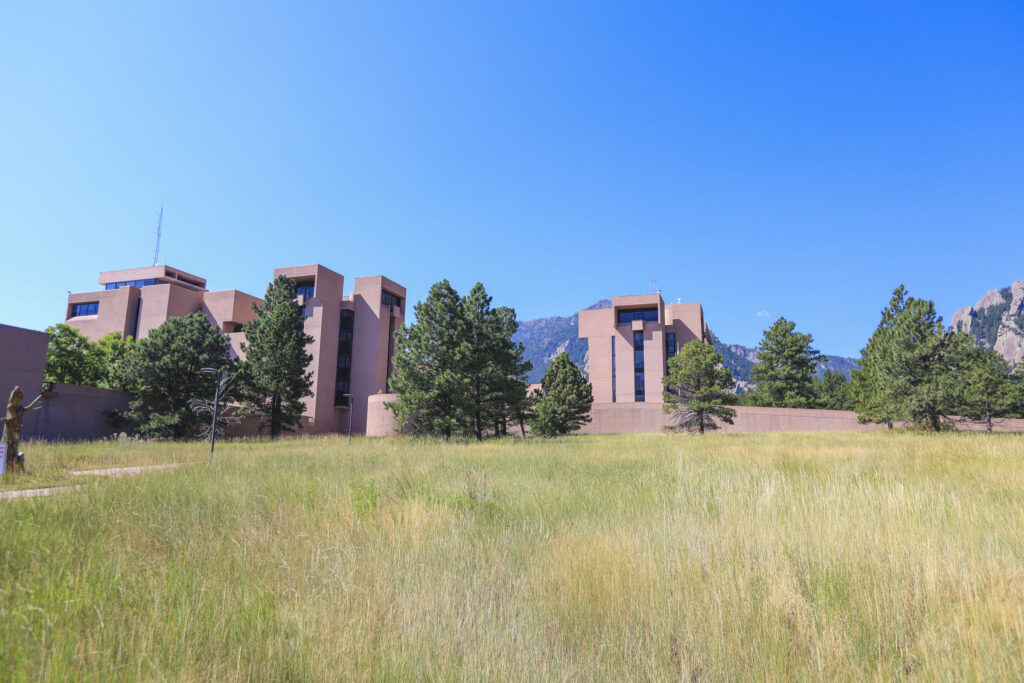
A consortium of universities filed a federal lawsuit Monday, alleging the Trump administration’s plan to dismantle the National Center for Atmospheric Research is unlawful retaliation against Colorado. The group also argued that the move violates federal law. The University Corporation...
Colorado Title Board advances competing redistricting proposals, revised Pinnacol measure
Marianne Goodland
marianne.goodland@coloradopolitics.com
Updated 8 hours ago
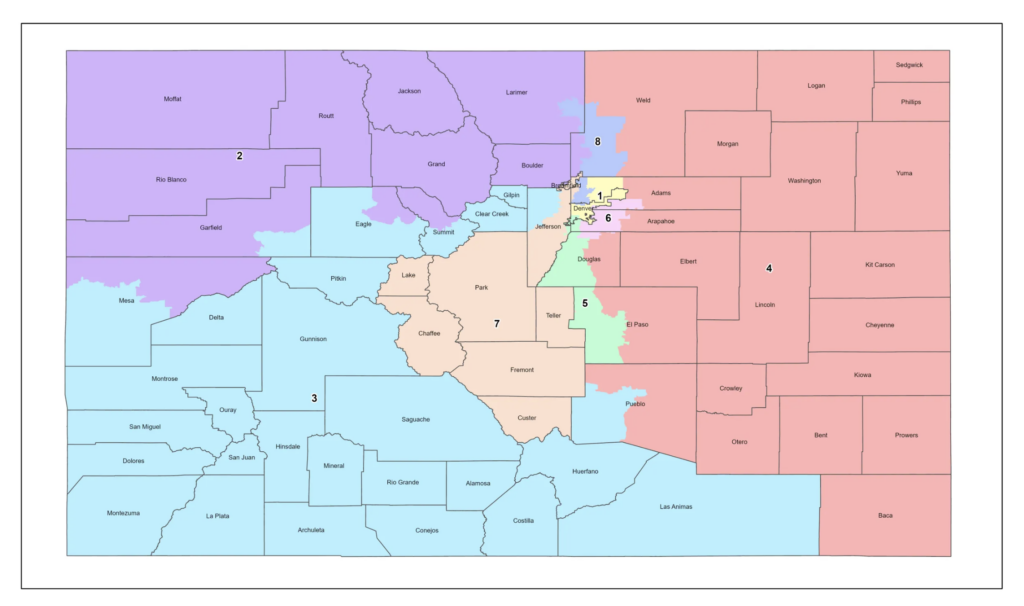
With just two meetings left before an April 15 deadline, the state’s Title Board on Wednesday pushed through a slate of ballot measures, including a revised proposal to privatize Pinnacol Assurance and dueling plans to redraw Colorado’s congressional map. The...

Senate panel advances bill to tighten Colorado sports betting rules amid youth addiction concerns
Marissa Ventrelli
marissa.ventrelli@coloradopolitics.com
Updated 7 hours ago
A divided panel of lawmakers on Tuesday narrowly advanced a bill to impose new restrictions on Colorado’s booming sports betting industry, as lawmakers cited worries about youth gambling and addiction, while online operators warned the changes could drive bettors to...

Democrat Matt Cavanaugh ends campaign in Colorado’s 5th CD, says petition firm came up short
Ernest Luning
ernest.luning@coloradopolitics.com
Updated 6 hours ago
Democratic congressional candidate Matt Cavanaugh said Wednesday that he was ending his bid to challenge Republican U.S. Rep. Jeff Crank in Colorado’s 5th District because the firm his campaign hired to gather petition signatures failed to deliver. Cavanaugh, an Army...
PREV
PREVIOUS

The delicate, ever-changing dance between politics and religion | SONDERMANN
The dance, really a marathon that brings to mind the classic movie “They Shoot Horses, Don’t They?”, has been going on as long as there have been governments and organized religion. That is to say that this delicate tango has been with us since time immemorial. In ancient times, the state and the state religion […]

Who has the power to declare war? | Cronin and Loevy
Our constitutional framers boldly and ambitiously granted Congress the power to declare war yet granted the executive the responsibility, after war is declared, to supervise war as the commander-in-chief. That worked well until the Cold War began. The U.S. has been involved in dozens of wars, antiterrorist operations and other military interventions over the past 80 […]