

Colorado’s election audits are built on math, not politics | IN RESPONSE
By Amanda Gonzalez
You don’t build a secure election system overnight. You build it over years — layer by layer — reinforcing it with stronger safeguards, better technology and more transparency.
In Colorado, one of those safeguards is a little-known but critically important process called a Risk-Limiting Audit (RLA). It’s math-driven, public and one of the most powerful tools we have to verify election outcomes. Election security experts across the country view it as a best practice.
But if you read Jon Caldara’s recent column, you might think otherwise.
Caldara says he doesn’t want to relitigate 2020 and that he’s just concerned about public confidence, that it’s not about whether or not the system works, but about whether voters believe it works.
I will certainly agree that trust is essential to democracy.
Where his column goes wrong is in both misunderstanding how Colorado’s election audits actually work and identifying the wrong root cause of voters’ mistrust.
Let’s start with the facts. Colorado implemented the first statewide Risk-Limiting Audit in the nation in 2017, under Republican Secretary of State Wayne Williams. Election officials, security researchers, and good-government organizations from across the country came to observe because it was a groundbreaking step in election integrity.
The system had broad bipartisan support. It had the backing of election administrators. And it had the enthusiastic support of leading election security experts, who have consistently described RLAs as the most scientifically reliable way to verify election outcomes.
That first audit worked exactly as designed. And we’ve been using that model ever since.
Here’s how it works:
Risk-limiting audits rely on statistics, not guesswork. Bipartisan teams compare voter-marked paper ballots against the machine-counted results to confirm the tabulation of votes is correct.
Transparency requires openness, which is why RLAs are completed in public. Private audits by a third-party are not.
Some critics point to the selection of races as too subjective, and they want us to choose the closest races for auditing. But here’s where the RLA really shines:
Races with large margins require fewer ballots to audit to confirm statistical certainty on the outcomes; races with smaller margins require more ballots to audit. But whether you audit the close race or the not-so-close race, the math is the same. You’ve reached the same risk threshold. That’s how math works.
That isn’t bureaucrats avoiding work. It’s the math doing exactly what it’s supposed to do. It’s also your election officials being good stewards of taxpayer dollars. In 2024, I returned $2 million to my county’s general fund by spending responsibly, which isn’t possible if we’re spending all those savings to draw out the audit.
And here’s another RLA fact that’s often missed by those who aren’t deep in the weeds on this stuff — or those who are committed to their own political narrative — every ballot selected for the audit includes votes for every contest on the ballot. We’re not just checking the selected contests. The ballots to be audited are chosen through a randomized selection process conducted in a public meeting, and the audit is independently verifiable using the open-source software.
That’s a level of transparency most financial audits would envy.
The reason corporations need outside auditors is because they created the records being audited. In an RLA, you — the voters — created the audited records. They’re already independent evidence.
None of this means election officials should stop improving the system. Good administrators are always looking for ways to strengthen transparency and accountability, and election officials across Colorado regularly collaborate with security experts and policymakers to do exactly that.
We also have to be honest about something Caldara’s column ignores: the RLA was never the reason some voters distrust elections.
We could design the most airtight audit imaginable tomorrow and it would not persuade people who are invested in The Big Lie, those who have been told — repeatedly and falsely — the system is rigged.
That mistrust didn’t grow organically. It was cultivated through years of deliberate disinformation about elections that have been proven secure over and over again.
When the problem is people are being told not to believe evidence, simply producing more evidence isn’t enough.
What actually builds trust is leaders with platforms taking the time to understand the systems they criticize. Leaders who talk to election administrators, statisticians and security experts before declaring something is broken. Leaders who explain how elections actually work instead of amplifying misconceptions.
Election officials are doing their part. Across Colorado, counties regularly invite the public inside election facilities, answer questions and welcome observers from all political backgrounds to watch the process firsthand.
That openness is something we should celebrate.
Colorado’s election system didn’t become one of the most trusted and accessible in the nation by accident. It was built through decades of bipartisan work by legislators, election officials, researchers, advocates and tens of thousands of election workers from every political party.
And we’re still improving it.
But meaningful reform has to start from an honest understanding of the system we already have — and from a commitment to facts instead of political theater.
Anything less isn’t about strengthening elections. It’s just noise.
Amanda Gonzalez serves as the Jefferson County clerk and recorder.

Latest death brings down wolves’ survival rate to 44% in Colorado
Marianne Goodland
marianne.goodland@coloradopolitics.com
Updated 3 hours ago
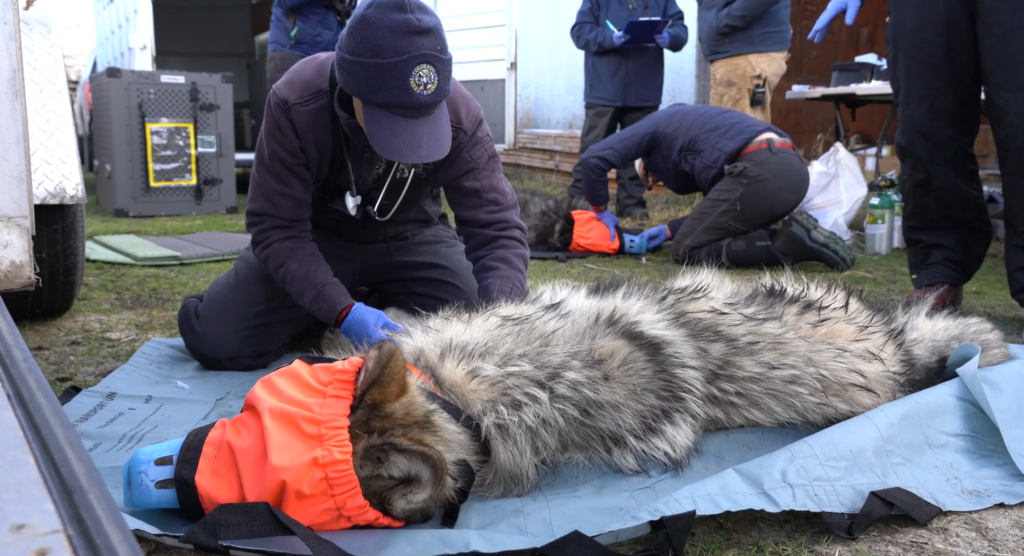
The female wolf of the mating pair for the King Mountain pack has died, bringing total fatalities to 14 out of the 25 animals reintroduced in Colorado. The wolf, identified as No. 2310, was among the 10 wolves brought to...
Roasts, get yer roasts, here: Capitol M | Week of March 14, 2026
Marianne Goodland
marianne.goodland@coloradopolitics.com
Updated 3 days ago
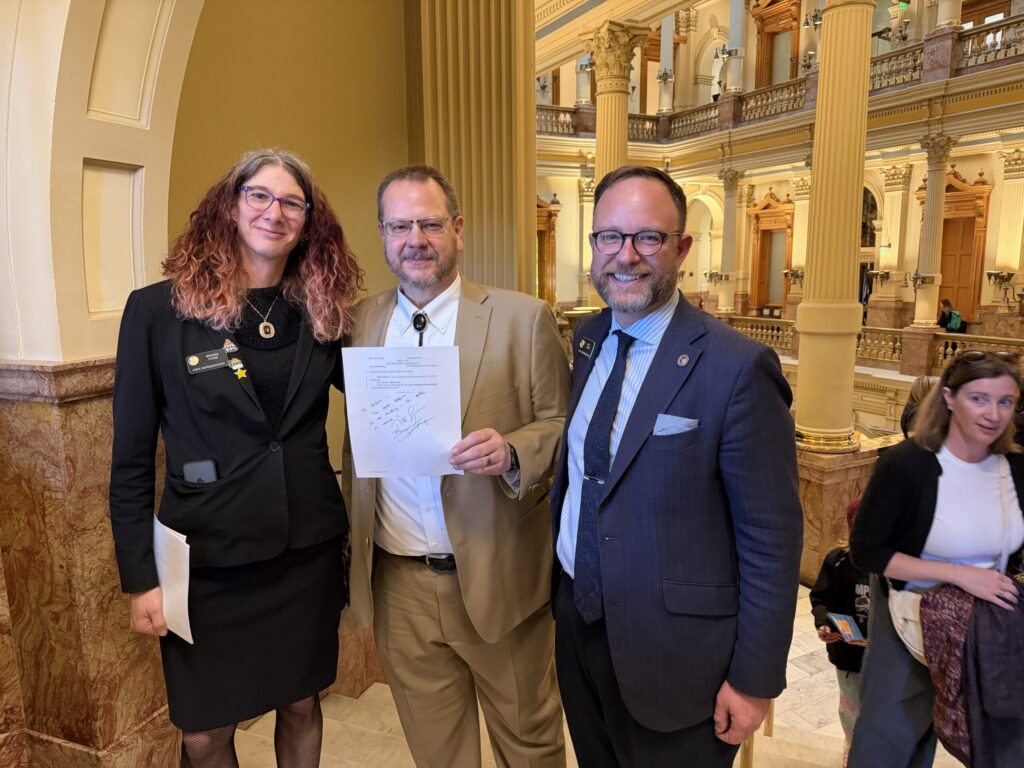
The lighter side of the Capitol, especially in the past week Apparently, the pending and eventual switch to daylight stupid time has put people in some pretty funny moods. And thank goodness! On March 4, the Senate approved the appointments...

Boebert challenger Eileen Laubacher joins lawsuit aimed at blocking her from Democratic assembly
Ernest Luning
ernest.luning@coloradopolitics.com
Updated 18 hours ago
A Denver District Court judge on Thursday permitted Democratic congressional candidate Eileen Laubacher to join a lawsuit filed by one of her primary opponents seeking to prevent Laubacher from participating in the party’s assembly process in a bid to qualify...
House Ethics Committee to begin hearing on Weinberg complaint
Marianne Goodland
marianne.goodland@coloradopolitics.com
Updated 1 day ago
The House Ethics Committee on Tuesday will begin a hearing requested by Rep. Ron Weinberg, R-Loveland, tied to an ethics complaint filed against him by Rep. Brandi Bradley, R-Roxborough Park. The ethics committee had found probable cause on two issues...
Colorado plans to slash interim committee work amid budget woes
Marianne Goodland
marianne.goodland@coloradopolitics.com
Updated 31 minutes ago
In a tight-budget year, the work of interim committees — those off-session groups that look at transportation, agriculture, water, healthcare, wildfires, pensions, and anything else lawmakers want to look at — is on the chopping block. And this year, no...

Colorado GOP chair Brita Horn says she’ll resign next month, points to ‘divide within our party’
Ernest Luning
ernest.luning@coloradopolitics.com
Updated 2 days ago
Colorado Republican Party Chair Brita Horn said Thursday that she will resign her position next month following the GOP’s state assembly, citing what she described as an “enduring divide” within the party “marked by vitriol and hostility.” Horn’s announcement came...
Senate committee moves forward with Colorado ballot measure to redirect TABOR refunds to schools
Marianne Goodland
marianne.goodland@coloradopolitics.com
Updated 21 hours ago
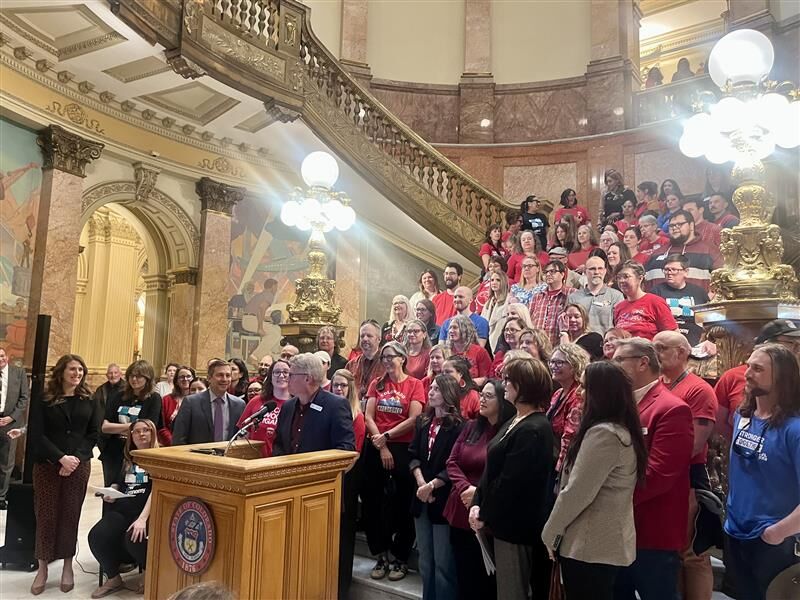
A Senate panel on Thursday voted along party lines to move forward with a bill that would ask voters for permission to eliminate Taxpayer’s Bill of Rights refunds and redirect those dollars to K-12 public education. The 6-3 vote in...
Wolf depredation payouts in Colorado top $700,000 in 2025
Marianne Goodland
marianne.goodland@coloradopolitics.com
Updated 1 day ago
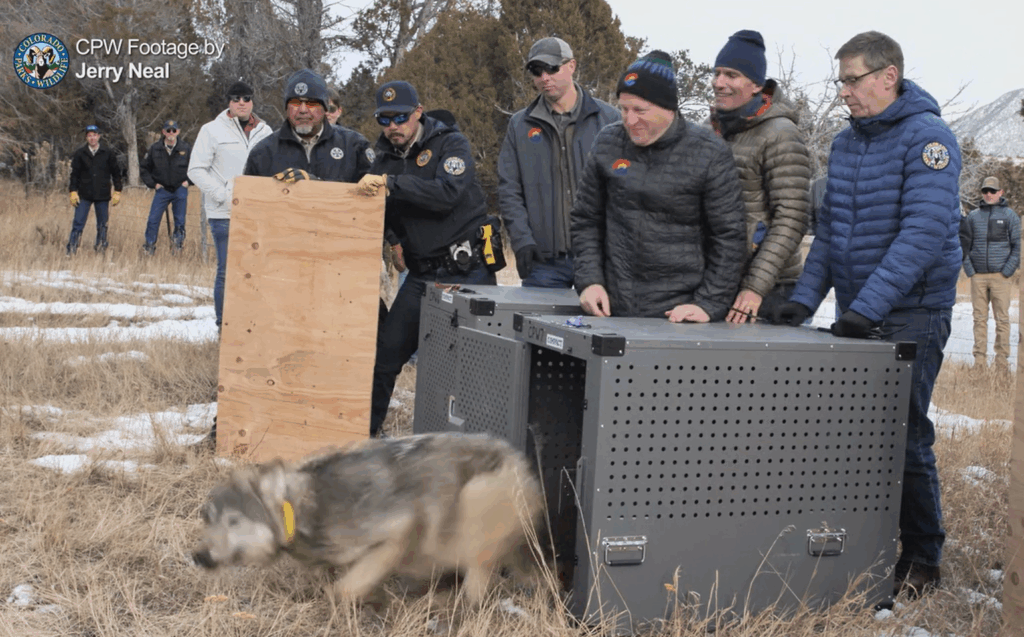
The Colorado Parks and Wildlife Commission approved more than $706,000 in wolf depredation claims for 2025 during its March meeting last week, an amount that exceeds the state’s annual wolf compensation fund by more than double. The commission rejected another...

Colorado committee recommends rejecting alcohol, marijuana tax hike to fund mental health care
Marissa Ventrelli
marissa.ventrelli@coloradopolitics.com
Updated 17 hours ago
In a rare move, Colorado’s Capital Development Committee unanimously recommended that another legislative committee reject a bill asking voters to approve higher excise taxes on alcohol and marijuana to fund a new mental health hospital in Aurora. Sponsored by Rep....

Republican Jeff Crank, Democrat Jessica Killin qualify by petition for Colorado’s 5th CD primary
Ernest Luning
ernest.luning@coloradopolitics.com
Updated 2 days ago
Republican U.S. Rep. Jeff Crank and Jessica Killin, one of the Democrats challenging the first-term incumbent, have both qualified for the primary ballot in Colorado’s 5th Congressional District after turning in a sufficient number of petition signatures, state election officials...
PREV
PREVIOUS

Republican Jeff Crank, Democrat Jessica Killin qualify by petition for Colorado's 5th CD primary
Republican U.S. Rep. Jeff Crank and Jessica Killin, one of the Democrats challenging the first-term incumbent, have both qualified for the primary ballot in Colorado’s 5th Congressional District after turning in a sufficient number of petition signatures, state election officials said this week. Crank is seeking the GOP nomination without opposition in the Republican-leaning district, […]

Colorado committee recommends rejecting alcohol, marijuana tax hike to fund mental health care
In a rare move, Colorado’s Capital Development Committee unanimously recommended that another legislative committee reject a bill asking voters to approve higher excise taxes on alcohol and marijuana to fund a new mental health hospital in Aurora. Sponsored by Rep. Bob Marshall, D-Highlands Ranch, and Sen. Judy Amabile, D-Boulder, House Bill 1301 proposes that all […]