

Swipe-fee ban a giveaway to big boxes, mega-chains | IN RESPONSE
By Jenifer Waller
Four Colorado lawmakers recently published an op-ed in Colorado Politics calling for legislation to prohibit interchange fees on the sales tax portion of credit and debit card transactions (“Why Colorado should stop charging swipe fees on sales taxes | OPINION,” March 5). Their argument sounds appealing: small businesses shouldn’t pay fees on money that belongs to the government. But the argument collapses under scrutiny, and the real beneficiaries of this bill aren’t the mom-and-pop shops on Main Street. They’re trillion-dollar corporations like Walmart, Target and The Home Depot and mega-chain restaurants like Olive Garden and KFC.
Let’s start with the central claim: credit card companies are “skimming” public tax dollars. This is flatly false. When a merchant collects $100 in sales tax, that merchant remits $100 to the state. Banks and credit unions are not involved in tax remittance at all. Card processing fees are a cost of doing business paid by the merchant, just like rent or insurance. They do not reduce state revenue by a penny.
The lawmakers cite $217 million in swipe fees on sales taxes in 2024 as though that number exists in a vacuum. Here’s the context they left out: Colorado merchants processed roughly $177 billion in credit and debit card sales that year, generating approximately $13.8 billion in tax revenue. Card processing fees are a tax-deductible business expense and, like any other cost, are built into the price consumers pay. Merchants are free right now, without any legislation, to avoid interchange on the tax portion by simply collecting sales tax via cash or check, a reality that may soon be the case for all consumers if this misguided bill becomes law. Almost none do, because accepting cards is enormously beneficial to their bottom line. Credit cards help both consumers and retailers alike by making transactions quick, seamless, secure, and accurate.
The lawmakers claim Visa and Mastercard control more than 80% of the market and centrally set interchange rates, implying monopolistic behavior. But market share alone does not equal market failure. Walmart controls 21% of the U.S. grocery market; that doesn’t mean government should set the price of eggs. Coca-Cola and Pepsi control 72% of the soft drink market; that doesn’t mean government should set the price of soda. When a merchant signs up to accept cards, it gains access to multiple payment networks, tens of thousands of issuing banks and credit unions, and billions of customers worldwide. That is an efficient, competitive and accessible marketplace.
The sponsors also claim their bill exempts banks and credit unions with assets under $60 billion, and therefore community institutions have nothing to worry about. Colorado’s community banks and credit unions strongly disagree and stand united in opposition to this legislation. The payments system is deeply interconnected, and mandates affecting the largest participants inevitably cascade down to smaller ones. We saw this with the Durbin Amendment’s debit card price controls: exempted community banks still lost interchange income, consumers saw fewer rewards programs, free checking accounts disappeared, minimum balance requirements rose, and hundreds of thousands of Americans left the banking system entirely. Lobbyists for Target, Walmart and The Home Depot may claim good intentions for small businesses and restaurants, but the simple fact is they’re pursuing this legislation in dozens of states because it’s a windfall for mega-retailers, not independent Main Street small businesses.
The op-ed frames this as relief for struggling small restaurants, citing an average of $167,000 in annual swipe fees. But a restaurant paying $167,000 in processing fees is processing roughly $10.6 million in card sales annually. That’s not a struggling diner. And this bill doesn’t only apply to small restaurants. It applies to multi-billion-dollar conglomerates like Darden, Yum! Brands, and McDonald’s. The largest remitters of sales tax in Colorado will be the largest financial beneficiaries of this bill. Most notably, Walmart, a trillion-dollar, anti-union behemoth, stands to profit millions per year. None of those savings will be passed on to consumers.
Colorado’s small businesses face real challenges. Rising rents, insurance costs and workforce issues deserve serious legislative attention. But this bill doesn’t address those problems. It rearranges costs within the payments system in ways that benefit the nation’s largest retailers and chain restaurants at the expense of the financial institutions that serve Colorado families. Our lawmakers should focus on solutions that actually help small businesses rather than advancing a proposal that helps mega-stores and mega-chains while the main-street businesses they threaten continue to struggle.
Jenifer Waller is president and chief executive of the Colorado Bankers Association.


Set appropriate state guidelines for critical surveillance technology | OPINION
Colorado Politics
colorado-politics@coloradopolitics.com
Updated 4 hours ago
I admit it: I’m worried. I’m hearing a lot about surveillance in the public arena. I hear cameras are capturing my car’s license plate wherever I drive, my face as I go in and out of stores and health facilities,...

Puppy trafficking bill promotes inhumane breeding | OPINION
Colorado Politics
colorado-politics@coloradopolitics.com
Updated 4 hours ago
By Patti Strand When Justice Thurgood Marshall wrote “The Constitution does not prohibit legislatures from enacting stupid laws,” he wasn’t wrong. He was referring to a political process sometimes ill-equipped to deal with complex issues that require subject-matter knowledge and a...

Conservation Colorado proposes measures aimed at oil and gas companies
Marissa Ventrelli
marissa.ventrelli@coloradopolitics.com
Updated 12 hours ago
The environmental group Conservation Colorado has introduced four ballot measures it says are in response to an initiative that aims to enshrine Colorado businesses’ and consumers’ right to purchase and sell natural gas in the state’s Constitution. Filed with the...

With jails overcrowding, Gov. Jared Polis asks for new prisons as lawmakers face budget shortfall
Marianne Goodland
marianne.goodland@coloradopolitics.com
Updated 10 hours ago
The Polis administration is asking for hundreds of millions of dollars to expand the state’s prison system, just as Colorado’s legislators are bracing for a worsening fiscal outlook. The request sets up a clash over priorities at a time when...
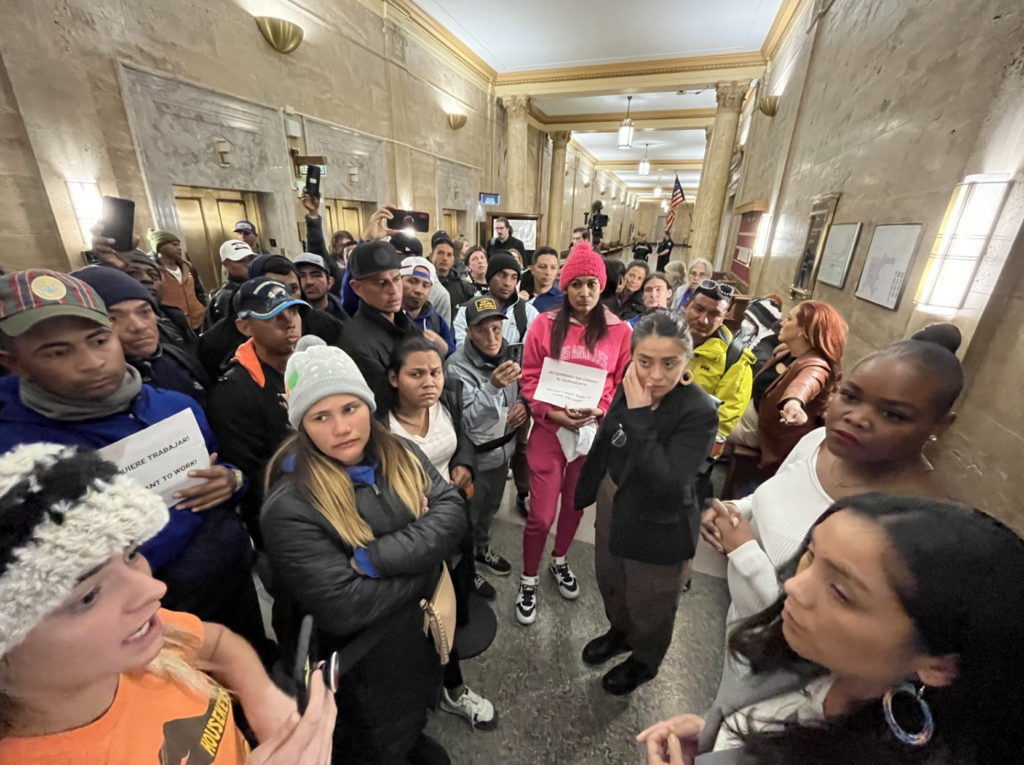
Costs explode for Colorado program covering pregnant women and children living in the U.S. illegally
Marianne Goodland
marianne.goodland@coloradopolitics.com
Updated 19 hours ago
A state program providing health care to pregnant women and children living in the country illegally is costing far more than lawmakers expected, with expenses nearly tripling in just a year and threatening to squeeze Colorado’s budget amid a nearly...

Costs explode for Colorado program covering pregnant women and children living in the U.S. illegally
Marianne Goodland
marianne.goodland@coloradopolitics.com
Updated 1 day ago
A state program providing health care to pregnant women and children living in the country illegally is costing far more than lawmakers expected, with expenses nearly tripling in just a year and threatening to squeeze Colorado’s budget amid a $1...

Penny wise but foolish by pounds | Paula Noonan
Paula Noonan
paula-noonan@coloradopolitics.com
Updated 15 hours ago
Leadership of Colorado’s General Assembly introduced the Fiscal Year 2026-2027 Legislative Appropriation bill, HB26-1333, at $75.72 million. That will be the budget to run the state legislature next year. About $74 million comes out of the general fund and the...

Proposed evictions bill fails to improve housing stability while threatening higher rents | OPINION
Colorado Politics
colorado-politics@coloradopolitics.com
Updated 1 day ago
No landlord wants to evict a tenant for non-payment of rent. That is true for large housing providers, small “mom-and-pop” owners and nonprofit housing rental providers alike. Evictions are financially and emotionally costly for everyone involved. But when rent goes unpaid, eviction...

Prevention works — invest in conflict prevention with wolves | FEEDBACK
Colorado Politics
colorado-politics@coloradopolitics.com
Updated 16 hours ago
The recent reporting on Colorado’s wolf depredation payouts exceeding $700,000 highlights a critical problem with the current approach to wolf recovery: current mainstream systems focus on compensation and ineffective reactive non-lethals. These systems are not designed to prevent conflict but attempts...
Colorado Title Board advances competing redistricting proposals, revised Pinnacol measure
Marianne Goodland
marianne.goodland@coloradopolitics.com
Updated 19 hours ago
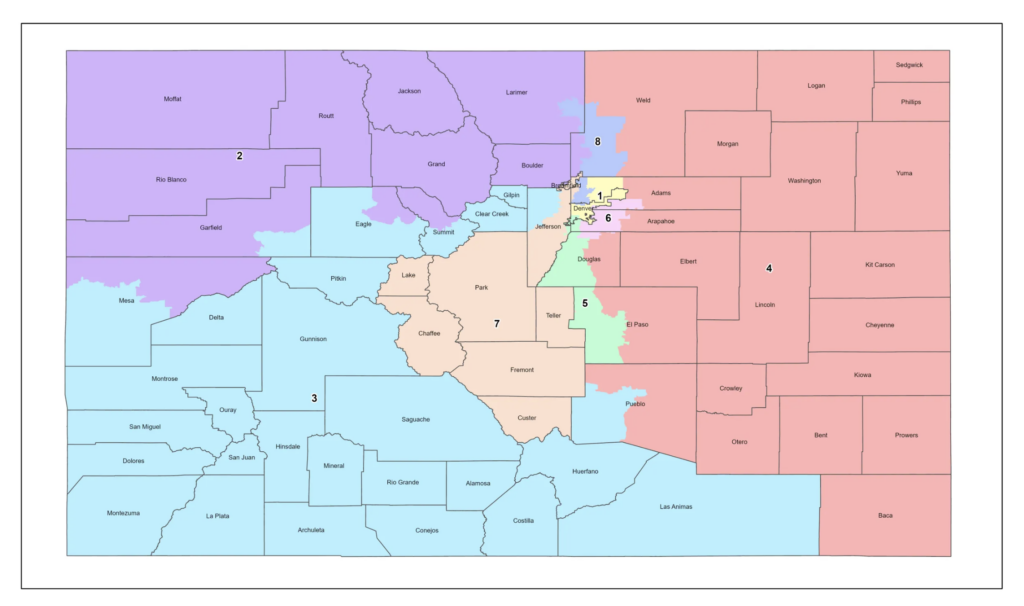
With just two meetings left before an April 15 deadline, the state’s Title Board on Wednesday pushed through a slate of ballot measures, including a revised proposal to privatize Pinnacol Assurance and dueling plans to redraw Colorado’s congressional map. The...
PREV
PREVIOUS

Leveling the playing field —why Colorado must fight fire with fire on redistricting | OPINION
By Curtis Hubbard So Dick Wadhams suddenly cares about mid-decade redistricting — hyperventilating about efforts to “hijack Colorado’s congressional map” and calling those of us involved with the effort “amazingly naive.” Where was his outrage last year when President Donald Trump ordered his MAGA allies in Texas to take the unprecedented step of drawing a […]

Senate Bill 22 critical to keeping energy costs affordable, power reliable | PODIUM
By Brian Wortinger I love Colorado’s outdoors. I’m an avid skier and hiker and my happiest days are spent deep in the mountains with no one around for miles. I want to protect that environment as much as anyone along the Front Range. But ambitious climate policy works best when it is sequenced to protect […]