

Keep kids safe without overregulating childcare | OPINION
By Tamra Ryan
As the Coors Economic Mobility Fellow for Common Sense Institute, I have written several reports in the past two years about the challenges related to affordability and availability of child care in our state. Though there are many factors affecting the dearth of affordable child care, one important issue relates to challenges providers experience while complying with all the rules and regulations while also operating efficiently.
Last fall I attended a meeting with a group of early childhood experts to discuss regulatory challenges providers face. As the group was gathering, two attendees told stories about how they found child care for their own children. In both instances, they mentioned proximity to their home as being paramount to their decision. One commented that their child care is in a licensed home and that the provider has a quality rating level of 1. Quality ratings for child care in Colorado are on a 5 point scale, with 1 being the lowest. So, while the provider is licensed, she has not had the inspections to receive the higher quality ratings. The early childhood expert was quick to say that their family’s provider is amazing, has provided care to young children for 40 years, and has made the decision not to pursue the higher quality level, presumably not because she wouldn’t qualify, but because it’s not worth her effort.
The other expert’s story was similar. In both instances, the parents made the choice based on ease of use and the feeling they had when they visited the centers. This was backed up by their subsequent experiences with their children being happy and thriving with their providers.
I was struck by the irony that though we have an elaborate system for evaluating the quality of child care providers, even the experts prioritize their family’s needs and gut feelings when they choose care for their own children. I remember touring several child care centers before my first child was born. In choosing a center, location was important, but so was the feeling we had when we visited. As non-child care experts, it didn’t occur to us to check the quality ratings of the center.
My ability to choose a center based on how it felt and where it was located rather than its quality rating was because the state regulatory agency was doing its job behind the scenes. By ensuring that licensed child care facilities meet quality and safety standards, parents like me can feel comfortable with the choice we make based on personal criteria and gut checks. And that’s the best role of government, isn’t it? Ensure the safety of the public while being relatively unobtrusive in our lives. As I parent, I am happy to know there are regulations that child care centers must follow to ensure the safety of children.
Today I know that the quality rating system has evolved to include over 50 measures, and the rule book is several inches thick when printed double-sided in a 10-point font. I know that centers struggle to keep up with the requirements and may, like the child care provider mentioned earlier, choose not to get a higher quality rating because the effort is not worth it.
In my just-released report, we share the incredible statistic that between 2019 and 2025, Colorado enacted 77 early childhood related bills, second behind California. The sheer volume of these regulations are overwhelming for child care providers, especially small centers or home providers. In the report, we recommend pursuing an approach to child care regulation that would keep children safe and ensure our most precious family members spend their days in enriching and fun environments. We suggest adopting a more explicit risk-based licensing and inspection model to streamline the process and ensure safety.
Implementing a weighted risk system by developing key indicators for abbreviated inspections could help resolve this issue. A weighted system applies a numerical score for each regulation to help measure the potential impact on children if a regulation is violated.
Senate Bill 26-020, currently under consideration in the state legislature, would create a task force a review and make recommendations of possible changes to the quality system in the state. As a parent who now knows how onerous our regulatory environment can be for child care providers, I would endorse a process that takes risk into account to improve our system and continue to keep children at the forefront. If we are to address our child care challenges, this is one avenue that must be considered.
Tamra Ryan was founder and chief executive of Women’s Bean Project and is the Common Sense Institute’s Coors Economic Mobility Fellow.

Colorado’s clean-energy future must be affordable for older adults | PODIUM
Colorado Politics
colorado-politics@coloradopolitics.com
Updated 4 hours ago
By Jason DeaBueno Last winter, one of the older adults we serve at Silver Key shared something that has stayed with me. She begun turning her heat down at night — not because she wanted to, but because she was...

Why Denver should care about conservation easements — even if you’ve never set foot on a ranch | OPINION
Colorado Politics
colorado-politics@coloradopolitics.com
Updated 4 hours ago
By Jason Swan I live in Denver. I drink tap water from my kitchen sink, hike close to home when I can, worry about wildfire smoke every summer, and try, like many families, to keep up with the rising cost...

Could it be th end of hunting as we’ve always known it in Colorado | FEEDBACK
Colorado Politics
colorado-politics@coloradopolitics.com
Updated 4 hours ago
By Eric Washburn Recently, the Colorado Parks and Wildlife (CPW) Commission voted to ban the commercial sale of fur and reject CPW’s proposed daily bag limits of 15 per day per person (450 per person per month!!) for harvesting 17...

Artificial intelligence working group agrees on framework to replace Colorado law
Marianne Goodland
marianne.goodland@coloradopolitics.com
Updated 10 hours ago
A group that has been working on artificial intelligence policy has reached an agreement on a framework that would replace the regulations adopted by Colorado legislators two years ago. The agreement has the backing of Gov. Jared Polis, who reluctantly...

Proposal to levy new fees on alcohol products in Colorado dies
Marissa Ventrelli
marissa.ventrelli@coloradopolitics.com
Updated 11 hours ago
The proposal to collect millions in new fees on alcohol products — dollars to be earmarked for Colorado programs aimed at addressing the behavioral and physical health effects of alcohol abuse — died on Tuesday. House Bill 1271 sought to...
After ‘winter of defeat,’ Colorado hopes for wetter summer
Marianne Goodland
marianne.goodland@coloradopolitics.com
Updated 13 hours ago
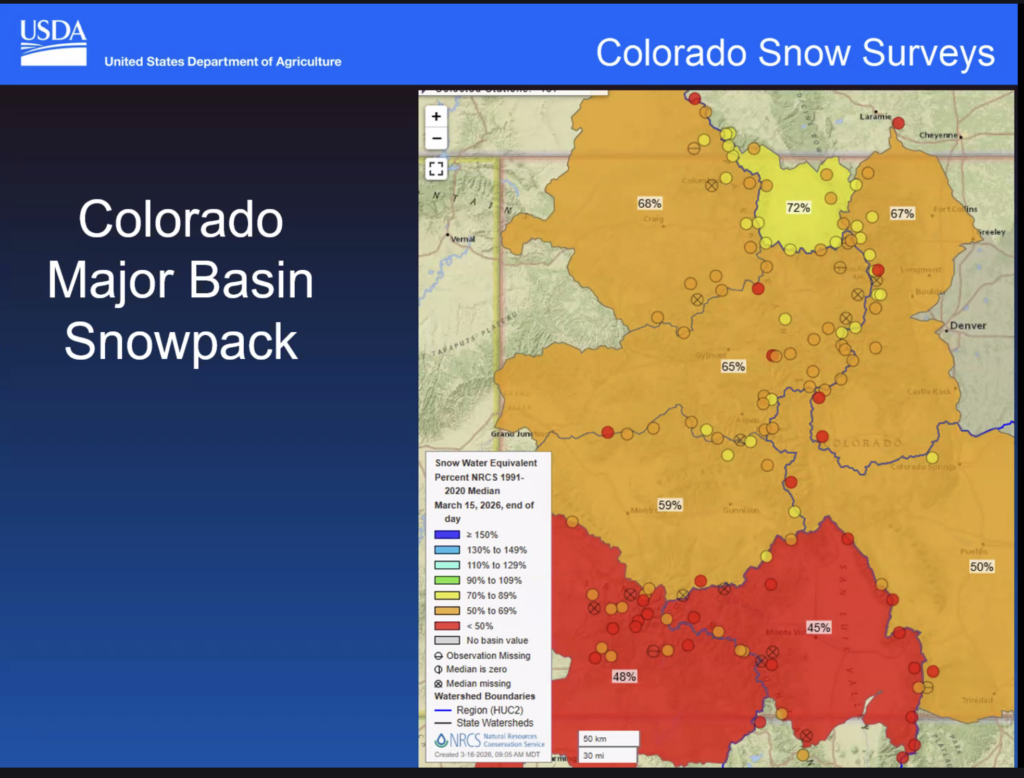
With snowpack melt already peaking in some parts of the state and drought conditions worsening compared to last year, Colorado’s water watchers are hoping for a wetter summer, though they anticipate the situation deteriorating before getting better. Meanwhile, the governor...
Colorado ethics panel tells legislator to attend sexual harassment training
Marianne Goodland
marianne.goodland@coloradopolitics.com
Updated 10 hours ago
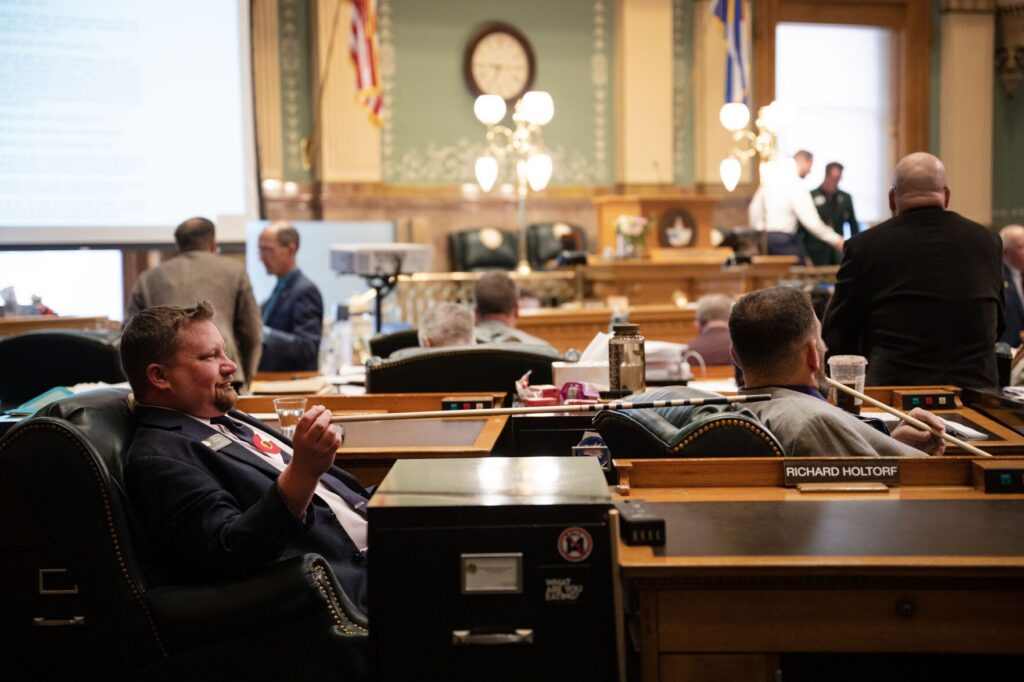
Colorado’s House ethics panel admonished a Republican legislator over allegations he used a master key to access areas of the Capitol that he was not permitted to enter and that he had made sexually harassing comments to several female lawmakers....
Want to talk to the Colorado legislature? Be nice | Hal Bidlack
Hal Bidlack
hal-bidlack@coloradopolitics.com
Updated 2 days ago
As I peruse Colorado Politics each week, in search of a topic upon which I can wax philosophic, I sometimes come across stories that seem, frankly, to be quite dull or even unimportant upon first glance. But when I dig...

Constituents still message DC — but are our reps even listening? | Miller Hudson
Miller Hudson
miller-hudson@coloradopolitics.com
Updated 2 days ago
Each time I visit the nation’s capital, it feels a bit like a homecoming — not that I would ever wish to return as a resident. Yet, I did grow up outside the city in Montgomery County, Maryland from 1956...
Access to earned wages increases retention, attendance, morale | OPINION
Colorado Politics
colorado-politics@coloradopolitics.com
Updated 2 days ago
By Diane Macheers Every payday, I’m reminded how much trust our team members place in us. They work hard, show up for our residents, and do everything they can to support themselves and their families. As an employer, we believe...
PREV
PREVIOUS

Colorado open records bill dies in Senate committee
Efforts to overhaul Colorado’s open records law stalled anew. A proposal that would have extended response times for public records requests and added accountability measures for late responses failed to advance out of its first committee and will not move forward this year. The Senate State, Veterans and Military Affairs Committee rejected Senate Bill 107, […]

Lower Basin must adapt to Colorado River hydrology | OPINION
By Nick Peters A February deadline for determining future operating guidelines for the West’s two largest reservoirs came and went with no agreement on the table and clear lines drawn in the sand. A seven-state resolution to how Lake Mead and Lake Powell will be operated when the interim guidelines expire at the end of this year wasn’t reached […]