

Colorado legislators push dozen-plus energy bills amid debate over emissions goals | ANALYSIS
Colorado legislators have introduced more than a dozen energy-related bills this year that highlight the sharp partisan split over how aggressively the state should pursue its greenhouse gas reduction goals amid worries about affordability and grid reliability.
So far, Democrats have authored 14 bills and Republicans four.
State law calls for cutting greenhouse gas emissions — including carbon dioxide and methane — by 50% by 2030 and reaching net zero by 2050. Electricity generation and oil and gas production remain the two biggest sources of statewide emissions.
Gov. Jared Polis has long championed the state’s climate targets, arguing that “clean” energy saves money on bills, protects air and water, and creates jobs. In his January 2026 State of the State address, he reaffirmed his commitment to those goals against the backdrop of a federal government that is pushing for a portfolio that includes oil and gas.
The Trump administration and U.S. Energy Secretary Chris Wright said they want to “unleash” American energy, which they view as having been shackled by regulations meant to promote “green” energy at the expense of fossil-fired power.
“By 2030, more than 70% of Colorado’s electricity will come from low-cost wind and solar,” Polis said. “But we need emerging technologies like geothermal or carbon capture to get us to 100%.”
He added that the state is “charging forward on the plan to 100% clean energy to unlock the lowest cost clean energy for Coloradans,” while working with legislators to pursue that aim with some flexibility to adapt to federal realities and protect consumers.
Data compiled by Colorado Concern, an alliance of civic and business leaders, for the current session shows renewable energy supplied 43% of Colorado’s electricity in 2024, natural gas 29% and coal 27%.
The group pointed out that costs climb steeply when pushing carbon reductions past 95%.
This year, the Democrat-sponsored bills generally push for stricter emissions controls, quicker clean energy deployment and measures to keep costs from shifting heavily onto ratepayers. Republican measures aim to extend deadlines, shield consumers from sharp rate increases and build in more flexibility to meet the carbon targets.
Senate Bill 26-102, carried by Sen. Cathy Kipp, D-Lafayette, would require data centers larger than 30 megawatts to source all their power from new renewables by 2031.
Backers of the proposal have argued that the framework is necessary for a fast-growing industry that, given its energy needs, could detract the state from achieving its carbon goals. Critics have countered that the mandates are impractical.
“The practical effect … is that we will not see future investment,” said Jennifer Solin, a representative for data center developers, in testimony before lawmakers.
Solin warned the requirement would deter data centers from choosing Colorado, costing communities grid upgrades, new jobs, school funding and property taxes as the state shifts away from fossil fuels.
House Bill 26-1226, another Democrat-backed measure, directs the Air Quality Control Commission to establish nitrogen oxides and sulfur dioxide limits by 2029 for large electric generating units that emitted more than 200 tons of those pollutants in 2024.
House Bill 26-1268 would let local governments fast-track permitting for renewable projects on previously disturbed land.
On the Republican side, Senate Bill 26-028 would remove wind from the list of eligible “clean” energy sources under state standards.
Senate Bill 26-022, sponsored by Sen. Marc Snyder, D-Gunnison, and backed by Republicans, would let utilities extend reporting deadlines or revise clean energy plans out to 2040 if meeting 2030 targets would jeopardize reliability or trigger excessive rate hikes.
Last November, the Colorado Energy Office, Xcel and other agencies asked regulators to keep Pueblo’s Comanche 2 coal plant operating an extra year to bridge a reliability gap.
The flurry of bills reflects the broader arguments over the benefits and costs of Colorado’s emissions strategy.
A Common Sense Institute analysis released in April 2025 estimated that related policies shaved $18.3 billion from gross domestic product, $13.8 billion from personal income and $32 billion from total economic output between 2009 and 2023, with 30,986 jobs lost in 2023 alone.
Ben Murrey, fiscal policy center director at Common Sense Institute, said the reductions — roughly 97 million metric tons of carbon dioxide equivalent —cost $65 per ton overall and $244 per ton for cuts beyond 2019.
“These costs are not justified by the benefits, as reductions may simply shift emissions globally while Colorado’s operations are already cleaner,” Murrey said.
Another Common Sense Institute report from January 2025 projected electricity prices climbing from 12 cents per kilowatt-hour to 18.4 cents by 2030 — more than triple the inflation rate and nearly 13 times the growth pace seen from 2010 to 2020. That trajectory would trim gross domestic product by $2.6 billion, eliminate 25,000 jobs and cut real disposable income by $1,380 for a typical family of four.
Average households could face $390 to $504 in extra annual electricity costs, with statewide added expenses reaching $970 million to $1.25 billion annually, according to the report.
Nearly 30% of Colorado households already devote more than 4% of their income to utility bills. In 2023, roughly one in ten spent 10% or more.
Meanwhile, Colorado Energy Office Executive Director Will Toor maintained that the state’s approach is balanced, advancing emissions cuts while holding costs manageable.
The agency continues to model paths that lean heavily on wind, solar and battery storage, forecasting $43 billion in net present value for 94% reductions by 2040 while factoring in health gains from reduced air pollution.
In February, Toor emphasized continued progress regardless of shifts in Washington.
“With this report representing the work Colorado did in the final six months of the Biden administration and the first six of the Trump administration, one important fact jumps out when you read it: Regardless of the federal landscape, we are charging forward in ensuring that all Coloradans have clean air and cost-efficient clean energy and transportation options,” Toor said.
The office’s latest implementation report put the state at 87.5% toward its 2030 goal based on actions completed through 2023, with full achievement still expected before 2031 — even without new legislation.
Toor pointed to November 2023 modeling that projected 98.5% reductions in electric-sector emissions by 2040 at no additional cost beyond plans already approved.
“The really big surprise in this study was just how far we are able to reduce emissions at no incremental cost from currently approved plans,” Toor said.

Denver City Council sends Xcel franchise deal to voters
Deborah Grigsby
deborah.smith@denvergazette.com
Updated 27 minutes ago
This November, Denver voters will decide whether to renew the city’s longstanding franchise agreement with Xcel Energy. Members of the Denver City Council approved on Monday sending a proposed 20-year franchise agreement with Xcel that would deliver more than $180...
Independent gubernatorial candidate Greg Lopez, a former GOP congressman, qualifies for Colorado ballot
Ernest Luning
ernest.luning@coloradopolitics.com
Updated 1 hour ago
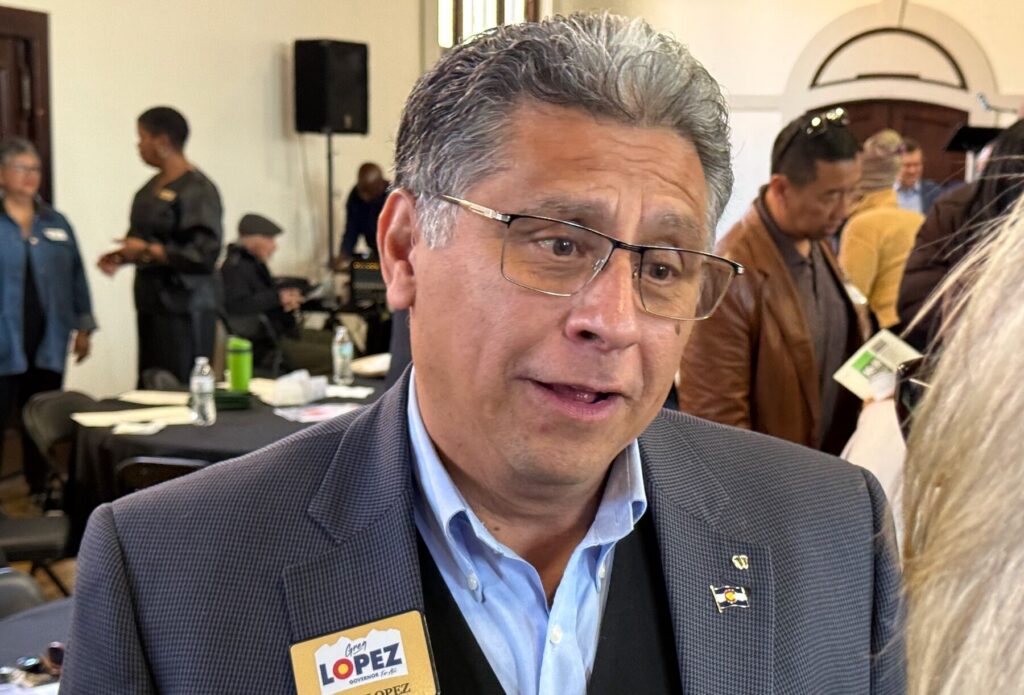
Unaffiliated gubernatorial candidate Greg Lopez, a former Republican congressman from Elizabeth who left the GOP to run as an independent, has qualified for the ballot by submitting enough petition signatures, the Colorado Secretary of State’s Office said Tuesday. He’ll face...
At Colorado’s 150th anniversary, leaders offer birthday wishes
Thelma Grimes
thelma.grimes@coloradopolitics.com
Updated 2 hours ago
As Colorado’s 150th anniversary approaches, leaders from across the state reflect on the spirit that binds the plains, mountains, Western Slope and Front Range — a shared commitment, they underscored, to opportunity, community, stewardship and personal freedom. Their tributes highlight...

Denver weighs permanent restriction on low-level traffic stops
Deborah Grigsby
deborah.smith@denvergazette.com
Updated 5 hours ago
A Denver City Council committee is considering permanently limiting certain types of low-level traffic stops used to investigate unrelated crimes and requiring better public reporting about why such stops happen. Members of the Budget and Policy Committee on Monday were...

Fort Carson soldiers develop app to plan convoys as part of Next Generation Command and Control
Mary Shinn
mary-shinn@coloradopolitics.com
Updated 4 hours ago
Planning the details of a military convoy with numerous vehicles, personnel, weapons, radios and other details can take a platoon leader three days. In addition to plotting a safe route, leaders need to map out checkpoints to track the convoy’s...
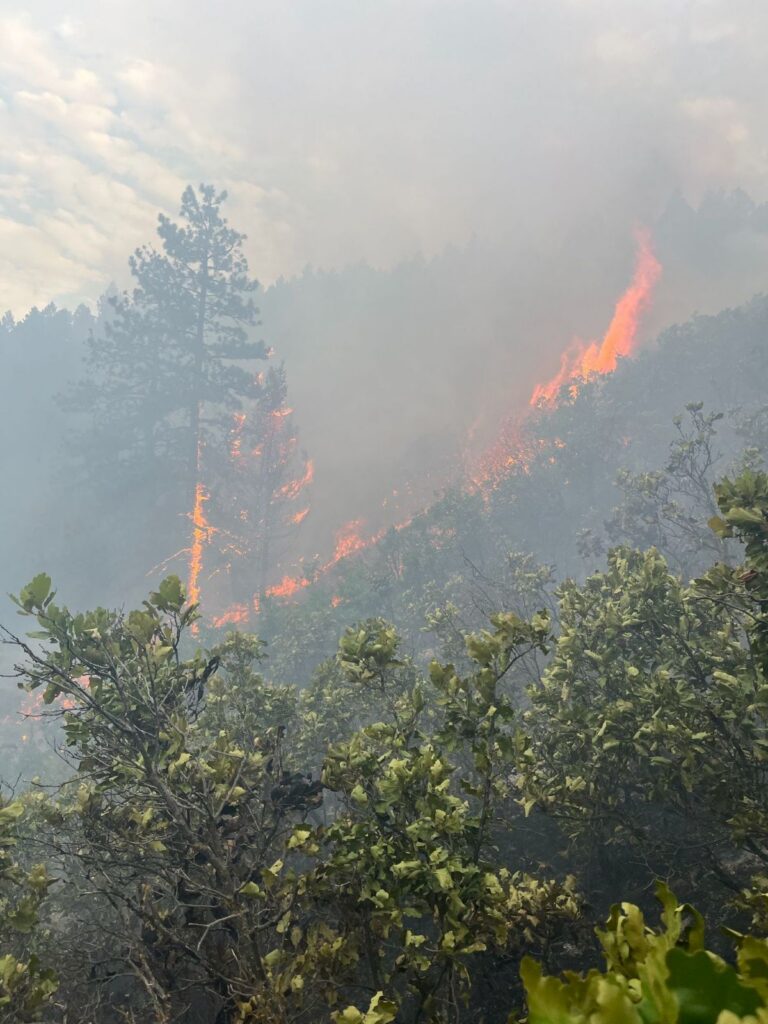
Penley fire near Sedalia reaches 75% containment
Nicholas Fogleman
nicholas.fogleman@denvergazette.com
Updated 4 hours ago
Fire crews battling the Penley fire west of Sedalia made significant progress overnight, holding the wildfire at about 3 acres and reaching 75% containment Monday, according to Douglas County officials. The fire, which sparked Sunday west of Sedalia, prompted evacuation...
Colorado board permits state to appeal injunction against arthritis drug price cap
Marissa Ventrelli
marissa.ventrelli@coloradopolitics.com
Updated 4 hours ago
A Colorado board voted Friday to allow the Attorney General’s Office to fight an injunction against a price cap on a drug that treats arthritis. A U.S. district court judge had granted the company Amgen a preliminary injunction, temporarily blocking...

Space Force should measure workforce needs as it prepares to double in size, GAO report says
Mary Shinn
mary-shinn@coloradopolitics.com
Updated 1 day ago
The Space Force needs more people. It’s just not precisely sure how many more. A Government Accountability Office report released earlier this month found that the youngest and smallest military branch does not have a process to consistently or accurately...
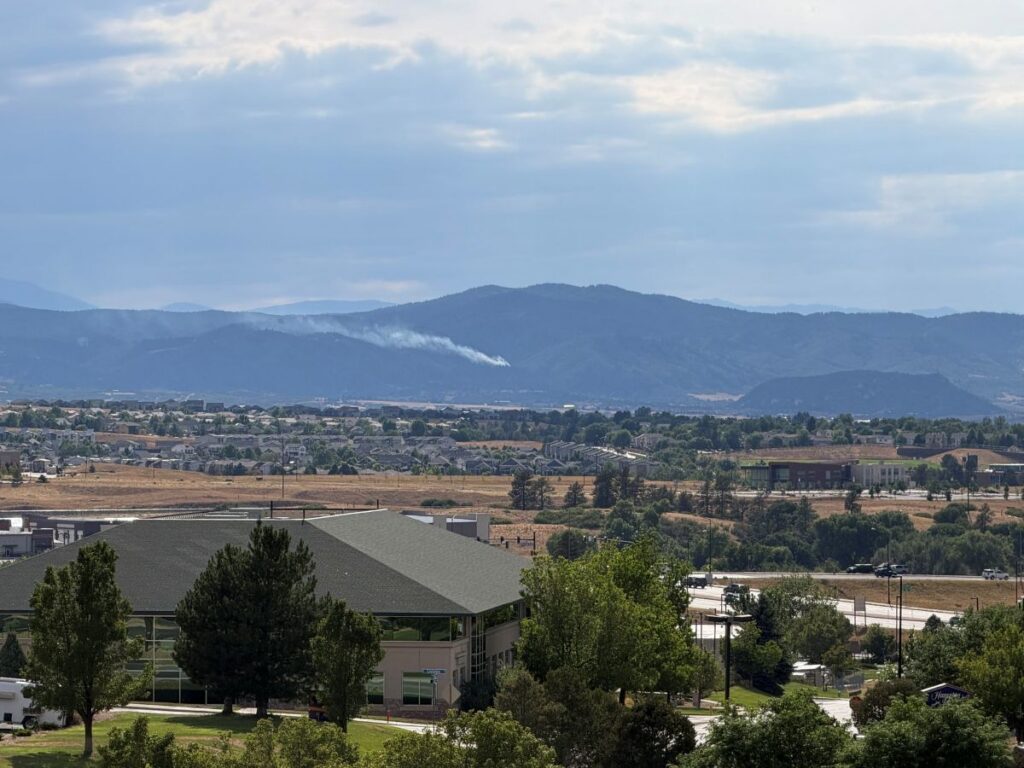
Forest fire west of Sedalia prompts evacuations in Douglas County
Nicholas Fogleman
nicholas.fogleman@denvergazette.com
Updated 1 day ago
Emergency crews are responding to a forest fire burning west of Sedalia, prompting evacuation orders for nearby residents Sunday afternoon. At about 5 p.m. Sunday, the Douglas County Sheriff’s Office issued an evacuation order for residents within a 2-mile radius...
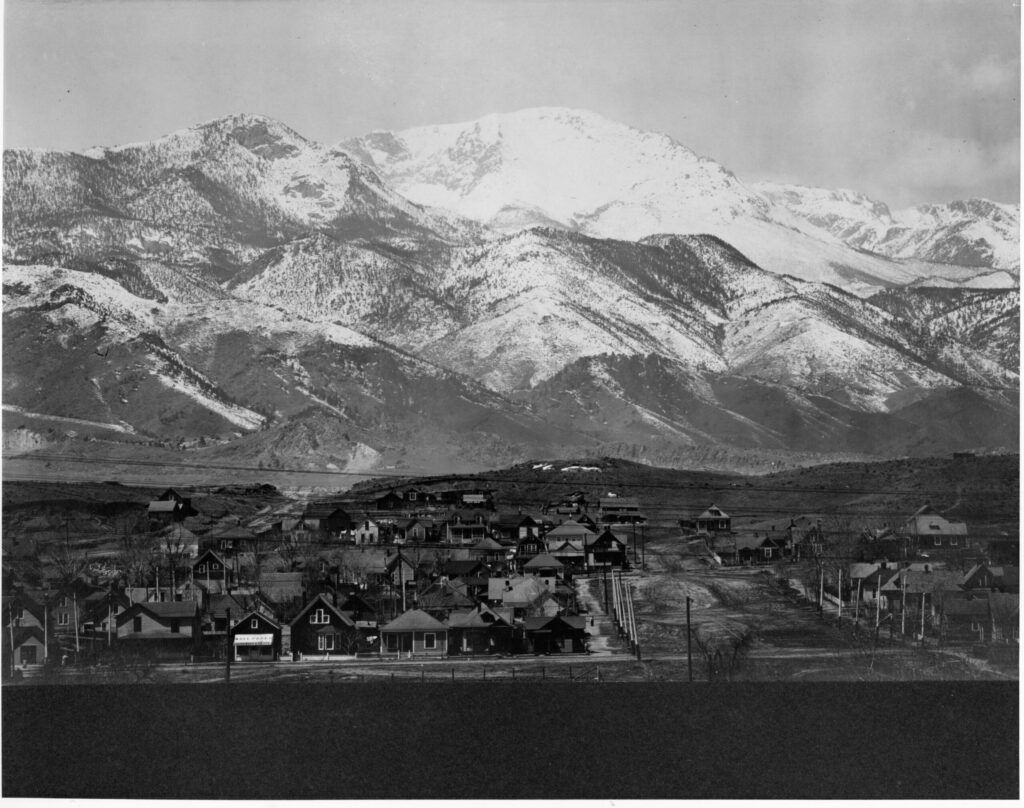
Penrose fortune paved the way for Colorado Springs to be a military, space and sports town
Mary Shinn
mary-shinn@coloradopolitics.com
Updated 1 day ago
Colorado Springs is always working to catch the next big economic wave. “We’re always trying to figure out what the next thing is going to be,” explained Matt Mayberry, director of the Colorado Springs Pioneers Museum. In the early days,...
PREV
PREVIOUS

Colorado House committee advances bills regulating AI in therapy, insurance decisions
Colorado lawmakers are moving to place guardrails on the growing use of artificial intelligence in mental health care and insurance decisions. The House Health and Human Services Committee on Thursday approved two bills that would limit how therapists and insurers use AI — requiring clinician oversight when AI is used in therapy and preventing insurance […]
Another TABOR fight: Democrats plan to redirect residents' refunds to K-12 spending
Colorado voters could decide this fall whether billions of dollars that would otherwise be returned as refunds under the Taxpayer’s Bill of Rights should instead go to public schools under a ballot measure unveiled Thursday by Democrats. Supporters say the proposal would address chronic underfunding in K-12 education, while critics argue it takes money away […]