

DPS board considers policy designating schools as ‘safe zones’ from immigration enforcement

The Denver school board discussed a major policy amendment that, if passed, will designate all district properties as “Safe Zones” and “Sensitive Locations.”
In practical terms, the proposed policy amendment would restrict federal immigration agents from interacting with students and staff at school without a judicial warrant.
District policy already bans U.S. Immigration and Customs Enforcement (ICE) officials on campus, a policy Denver Public Schools Superintendent Alex Marrero reiterated in the hours after President Donald Trump was sworn in last year, as his administration prepared for a crackdown on illegal immigration.
The proposal would specifically forbid allowing ICE access to school property without a judge’s signature, cooperating with detainer requests, and collecting and sharing student information with federal officials. It would also prohibit School Resource Officers, or SROs, from sharing information with federal agents, as well as issuing citations or making arrests that could put a student at risk of deportation.
Additionally, the proposed amendment would require any agencies working with DPS — including the Denver Police Department — to abide by it.
And it would require the district to provide resources and support to employees with “DACA status” if the federal program is rescinded.
Colloquially known as “DACA,” the Deferred Action for Childhood Arrivals is an immigration policy that permits some individuals who were in the United States on June 15, 2012, and had no lawful immigration status to receive deferred deportation and a work permit.
Trump has repeatedly promised to end DACA.
More than a dozen speakers weighed in on the policy Thursday.
Several parents mentioned the threat of deportation has negatively impacted attendance and expressed concerns on how this could impact enrollment.
“We cannot keep closing schools,” said Gladis Ibarra. “Do something about it like you said you would.”
Most of Thursday’s speakers approved amendments that would protect students and staff from aggressive immigration enforcement.
Ken Murphy was the lone dissenting voice.
“You want to protect those who have broken the law,” Murphy said.
A vote is not expected to take place until the next meeting in two weeks.
‘That would be a challenge for us’
Board President Xóchitl Gaytán said that a coalition of immigrant rights groups had proposed suggested amendments as well. One of the groups, said Bill Good, a district spokesperson, is Movimiento Poder, a grassroots organization that works to build collective power for their communities.
Having reviewed the proposed amendment, General Counsel Aaron Thompson outlined some of the hurdles the district could face.
Take bus stops.
Thompson reminded board members that U.S. District Court Judge Daniel Domenico — who dismissed the district’s lawsuit against the U.S. Department of Homeland Security last year — challenged school officials insistence that bus stops be included in a protected area, that “the entire city would be covered.”
“I think that would be a challenge for us,” Thompson said.

The item was on last month’s agenda; however, board members spent very little time discussing the language, aside from asking whether the legal department had had an opportunity to review the proposed policy.
The proposed amendment comes as city officials have explored a policy that would prohibit law-enforcement officers from wearing face coverings during city operations, with limited exceptions.
Primarily aimed at federal agents, the push emerged after national reports of masked immigration officers, with critics raising concerns about accountability.
Denver leaders say the goal is transparency and public safety, not blocking federal enforcement outright. A federal court last month struck down a similar ban in California that treated local law enforcement differently.
These local policies come as the public braces for an ICE surge in Denver. Denver Mayor Mike Johnston has squared off against the Trump administration as federal officials push for broader immigration enforcement. Trump has repeatedly criticized the city’s “sanctuary” policies.
A sanctuary city, broadly speaking, refers to local policies that limit or prohibit cooperation with federal immigration authorities. Both the Colorado government and the city of Denver have adopted laws barring such cooperation, though political leaders insist neither state nor the municipality is a “sanctuary” jurisdiction.
More than 600 miles from the U.S.–Mexico border, Denver became an unlikely hub in the nation’s migrant crisis three years ago when churches in El Paso, Texas, and Colorado began coordinating buses of asylum seekers to relieve overcrowded shelters at the border. Denver’s willingness to provide hotel rooms and other humanitarian aid quickly made the city a destination — thrusting Johnston into the national spotlight and into Trump’s crosshairs.

Judge grants partial injunction to GEO in fight against state health inspection law
Kyla Pearce
kyla.pearce@gazette.com
Updated 2 hours ago
A judge ruled Thursday that The GEO Group does not have to follow parts of a new state law requiring more frequent health and safety inspections at the Immigration and Customs Enforcement Processing Center in Aurora. Under the order of...

Parker man faces 20 years to life for serial sexual assaults
Nicholas Fogleman
nicholas.fogleman@denvergazette.com
Updated 2 hours ago
A 25-year-old Parker man who sexually assaulted three women in 2025 pleaded guilty Wednesday and will serve 20 years to life in prison. Javier Rodriguez-Andrade pleaded guilty to charges stemming from three sexual assaults involving women ages 19 to 24. ...
Buttigieg performs best among Democrats against Rubio or Vance in possible 2028 contest: Poll
David Zimmermann
david-zimmermann@coloradopolitics.com
Updated 4 hours ago
Former Transportation Secretary Pete Buttigieg appears to be the Democratic Party’s best chance at winning the presidency against Secretary of State Marco Rubio or Vice President JD Vance in 2028, according to a poll released on Thursday. In hypothetical matchups...

Douglas County moves to Stage 1 fire restrictions following recent rain
Nicholas Fogleman
nicholas.fogleman@denvergazette.com
Updated 2 hours ago
Douglas County has downgraded its fire restrictions from Stage 2 to Stage 1 on Thursday following recent rainfall and moderate fire conditions, according to the Douglas County Sheriff’s Office. The change applies to unincorporated Douglas County, as well as the...
Divided appeals court upholds warrantless DNA collection in Colorado cold case, cautions of government overreach
Michael Karlik
michael.karlik@coloradopolitics.com
Updated 41 minutes ago
Colorado’s second-highest court upheld the warrantless collection of a suspect’s DNA from a discarded soda can as constitutional on Thursday, while warning about potential abuse of DNA privacy in the absence of further guardrails. By 2-1, a three-judge Court of...
Democratic gubernatorial candidate Phil Weiser promises to appoint rural outreach director, water adviser
Marianne Goodland
marianne.goodland@coloradopolitics.com
Updated 43 minutes ago
Democratic gubernatorial candidate and current Attorney General Phil Weiser told the Colorado Water Congress Thursday he intends to appoint a rural outreach director and a water policy adviser should he win the election in November. Weiser’s speech at the Steamboat...
Man charged in Northglenn homicide of wife
Matt Kyle
matt.kyle@denvergazette.com
Updated 2 hours ago
A man has been formally charged with murder and burglary relating to a homicide last week in Northglenn. Alexei Munive-Rodriguez, 48, was arrested Sunday after he was at large following the homicide, which occurred Friday. Police were dispatched around 10:30...
Attorney General candidates present priorities at Colorado Water Congress
Marianne Goodland
marianne.goodland@coloradopolitics.com
Updated 1 hour ago
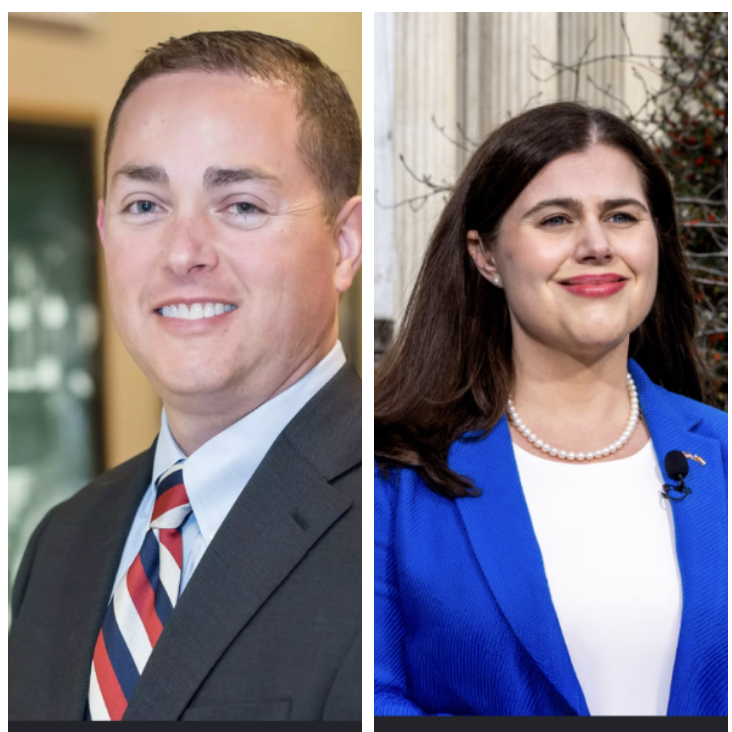
The two major-party candidates for attorney general — Republican Michael Allen, the district attorney for Teller and El Paso counties, and Democratic Secretary of State Jena Griswold — on Thursday outlined their priorities at the Colorado Water Congress. Griswold attended...

US aircraft carrier arrives in Middle East, relieving long-deployed USS Lincoln
The Associated Press
the-associated-press@coloradopolitics.com
Updated 6 hours ago
WASHINGTON (AP) — The Asia-based USS George Washington aircraft carrier is now operating in the Middle East, the U.S. military said Thursday, relieving a long-deployed carrier following reports of mental health challenges and supply shortages aboard while it was supporting...
Denver named finalist for 2028 Democratic Convention site
Thelma Grimes
thelma.grimes@coloradopolitics.com
Updated 6 minutes ago
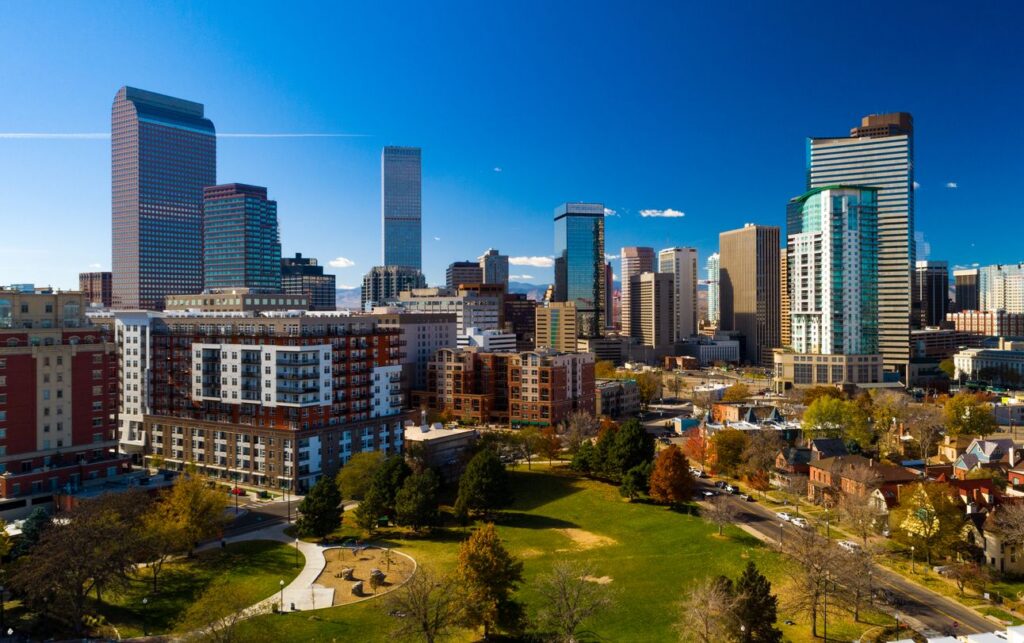
The Mile High City competes with Boston and Philadelphia The list of cities being considered to host the 2028 Democratic National Convention has narrowed even further, with Denver making the cut as one of the final three, along with Boston...