

Additional thoughts on State of the Union address/rally | Cronin and Loevy
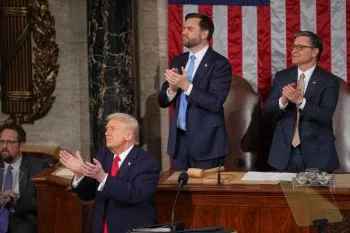
The U.S. Constitution’s Article II states that “He (the president) shall from time to time give to the Congress Information of the State of the Union, and recommend to their Consideration such Measures as he shall judge necessary and expedient … “
On Jan. 8, 1790, our first president, George Washington, appeared at Federal Hall in New York City and gave a short, less than 10-minute, formal and humble talk to Congress. He spoke about the importance of a strong defense and the need for fiscal discipline, and he offered general recommendations such as “nothing can better serve your patronage than the promotion of science and literature.”
Washington and our second president, John Adams, continued the practice of going to Congress and sharing their thoughts and recommendations. President Thomas Jefferson was a gifted writer but less gifted as a speaker, so he decided to share a written report to Congress.
Jefferson also worried that the personal delivery of this report too closely resembled the British monarch’s speech from the throne.
Jefferson’s practice of a written report was continued for more than 100 years. Woodrow Wilson, a gifted writer and orator, revived the tradition of delivering his State of the Union remarks in person.
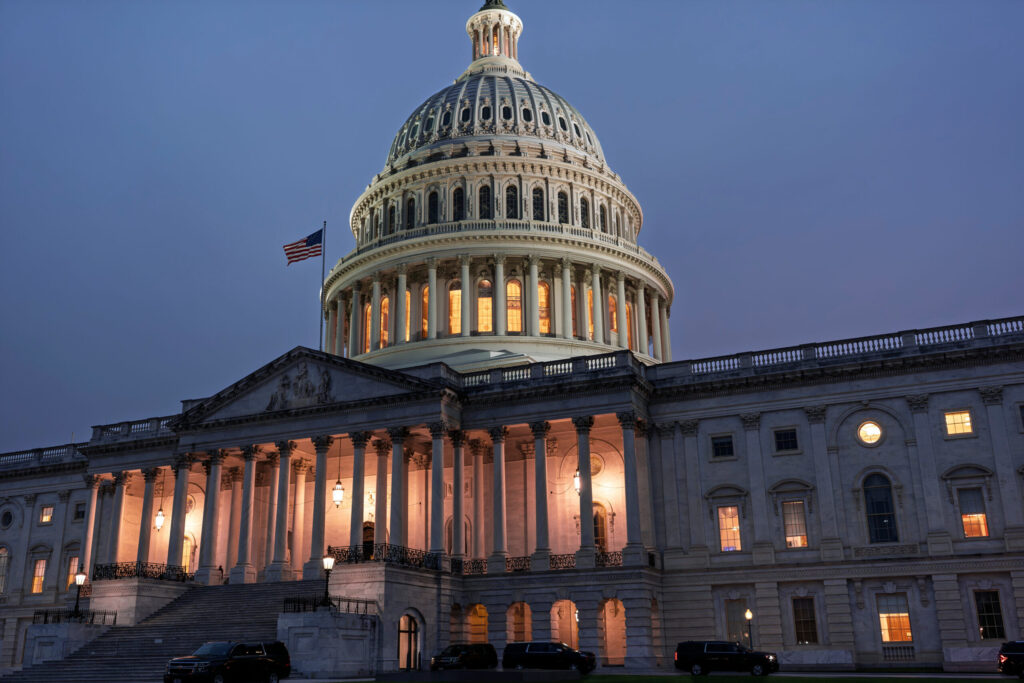
Radio and television gradually transformed this report into a much-hyped and increasingly theatrical event, with the president center stage in one of our national shrines and members of Congress expected to stand and applaud their leader. Supreme Court justices, the cabinet and military leaders add gravitas to the event. The State of the Union address is now a presidential Super Bowl. More than 32 million Americans, mostly older people, viewed Tuesday’s talk.
President Trump loves the limelight and rallies. He thrives when being the center of attention, and he is relaxed before the national cameras.
In his address to Congress and the nation this past Tuesday, he spoke for one hour, 47 minutes. (Most recent presidents have talked for an hour or less.) He praised and honored a score or more of “gallery guests,” including the U.S. men’s hockey team, fresh from their Olympic triumph, military servicemen, and activist Charlie Kirk’s widow. Trump basked in the reflected glory of these heroes.
Four members of the U.S. Supreme Court were just a few feet in front of Trump. They sat stoically as he chastised their recent tariff decision as “unfortunate.” A few days earlier, he condemned several of them as “unpatriotic.”
Trump defiantly announced he would continue administering tariffs, relying on other executive emergency powers and future help from Congress. It had taken months for the Court to make its decision. And it took merely a few hours for the White House to decide Trump could largely ignore their ruling.
Trump briefly noted international trouble spots. Notably, he said little or nothing about putting pressure on Vladimir Putin to end Russia’s invasion of Ukraine. He spent more time boasting that NATO nations now fully pay the U.S. for weapons to fight on behalf of Ukraine. He again praised himself as the world’s best peacemaker.
Trump claimed justified credit for securing the country’s southern border. He called for national resolve in deporting illegal immigrants and the need to fight foreign drug cartels.
The president declared the state of the union was strong, boasting that he had presided over the biggest economic turnaround in history. He said we are winning and that this is the beginning of a golden age. He dismissed as fake news reports of an “affordability crisis” even though affordability was one of his issues in his 2024 campaign. He said the price of eggs and gas has come way down and that his tariffs are bringing in billions of dollars.
Polls indicate the public is very concerned about the economy. But Trump offered an upbeat account, and Republicans in Congress gave him rousing applause for his claims.
Trump and his strategists know he has lost support from independents. The strategy on Tuesday was “bash and shame” Democrats. Congressional Democrats, at least those who showed up, sat there unable to figure out what to do. A few shouted retorts, but this looked unbecoming.
Trump called Democrats “crazy” and put them on the spot with a trick “got-cha” question. “Stand up,” he said, “if you believe the first duty of the American government is to protect American citizens and not illegal aliens.” Democrats, caught by surprise, sat in silence, slouching in their seats.
Here was Trump, accusing them of being unpatriotic or worse, just as he had accused the Supreme Court a few days earlier. The Democrats who did not stand looked bad, yet in the end, Trump will be faulted for misusing his “throne” for partisan trickery.
It was not a good night for Democrats. Many boycotted the event. The occasion calls for respect for the office of the president, yet if the president lies, exaggerates or unfairly attacks and tricks you, what do you do?
This format of the State of the Union address gives the president a great theater stage, and makes the other two branches look passive and un-equal. The Supreme Court is already, by its mandate, a passive branch. Few people pay attention to the end-of-the-year annual report by the Chief Justice. Congress, with its two chambers and two parties (plus some independents) rarely speaks with one voice.
We are, more than we want, a nation with an increasingly centralized federal government. And we are a presidency-dependent nation – more than the founders wanted and more than we would like. The same dependence on the chief executive is true today around much of the world. Globalization explains some of this, and national security issues dictate some of it. And by design, Congress and the justice system are decidedly slower than the executive.
Would the founders approve of what has become the rally/theater ritual (even filibuster) of our State of the Union addresses?
Probably not. They would most likely suggest that we should revisit Washington’s model of brevity, humility and nonpartisanship.
Wishful thinking.
Tom Cronin and Bob Loevy are news columnists who write regularly about politics.

A cynical import Colorado doesn’t need | SONDERMANN
Thelma Grimes
thelma.grimes@coloradopolitics.com
Updated 3 days ago
“But mommy, he started it.” Every parent, definitely those with more than one kid, has heard this instinctively defensive reaction to the point of exhaustion. It is the ultimate deflection or shifting of the blame. A similar rationale, often about...
Cute puppy overload and an audition of a different kind: Capitol M | Week of Feb. 28, 2026
Marianne Goodland
marianne.goodland@coloradopolitics.com
Updated 2 days ago
The lighter side of the Capitol, and most days, you ought to be really grateful for it. There’s a rumor (jk) floating around that an amendment is coming for the bill to legalize prostitution. The amendment would ban condoms made...
Boulder’s bleak oil-and-gas legal entanglements | Paula Noonan
Paula Noonan
paula-noonan@coloradopolitics.com
Updated 2 days ago
Good neighbor policy in the fossil-fuel-energy industry stops at Boulder’s door. If any other county or municipality decides to rumble with Exxon Mobil and Suncor Energy over their legal exposure to climate lawsuits, those entities will no doubt face “Bleak...
How much liberty do you really believe in? | Hal Bidlack
Hal Bidlack
hal-bidlack@coloradopolitics.com
Updated 4 days ago
I’m guessing my regular readers, if asked which Colorado Politics story I would choose to write about this week, would guess the Out West Roundup, which I admit is a personal favorite. The notion New Mexico would launch a “Truth...

Dems try to hijack Colorado’s congressional map | Dick Wadhams
Dick Wadhams
dick-wadhams@coloradopolitics.com
Updated 2 days ago
Colorado Democrats are hellbent to sideline the Independent Congressional Redistricting Commission in the 2026 election and ultimately steal three Republican congressional seats in 2028 and 2030. A hilariously named group that calls itself “Coloradans for a Level Playing Field” wants...

Like Trump nationally, incumbent Colorado Dems lose sight of what matters to everyday people | Miller Hudson
Miller Hudson
miller-hudson@coloradopolitics.com
Updated 7 days ago
My years as a high-level radioactive waste manager took me in and out of Washington, D.C. frequently during the 1990s. Following Newt Gingrich’s successful 1994 ouster of the Democratic majority in Congress, following their 40-year reign, I was surprised many...

Colorado farmers fight fires one day, stand in line for ashes the next | Rachel Gabel
Rachel Gabel
rachel-gabel@coloradopolitics.com
Updated 7 days ago
Fires on the plains are not the roaring, mosaic burns in the mountains that leap across canyons and leave the skeletons of trees behind as monuments of destruction. In this country, the first gust of wind hits like a left...

The First Amendment protects the Second | Jon Caldara
Jon Caldara
jon-caldara@coloradopolitics.com
Updated 1 week ago
It’s not an attack on the Second Amendment, but the First Amendment. I know this is going to sound crazy but, there was a time when liberals, not conservatives, were the champions of free speech. Today? Now in Colorado it...

What Gallup polls teach us about presidents | Cronin & Loevy
Tom Cronin Bob Loevy
tom-cronin-bob-loevy@coloradopolitics.com
Updated 7 days ago
The Gallup organization, founded by George Gallup, announced Feb. 11 they will no longer conduct their well-known polls that rate whether the Americans approve or disapprove the way presidents handle the job. Gallup began these polls in the late 1930s...
One small step for dialing back the partisanship | SONDERMANN
Eric Sondermann
eric-sondermann@coloradopolitics.com
Updated 1 week ago
Much ink, including a good deal of my own, has been spilled on the excesses of super-charged, toxic partisanship in this current era. Except for true believers along with those who profit from this all-consuming poison, there is broad agreement...
PREV
PREVIOUS

Competing overtime bills for agriculture workers split Colorado Democrats
Competing bills setting the overtime threshold for farmworkers have split legislators at the Colorado state Capitol, with one group saying a law passed in 2021 has harmed, rather than helped, farming operations and workers alike, while the other side insists that farmworkers should be treated like any other employee. The first group, which is bipartisan, […]

US and Israel launch a major attack on Iran and Trump urges Iranians to 'take over your government'
The U.S. and Israel launched a major attack on Iran on Saturday, and President Donald Trump called on the Iranian public to “seize control of your destiny” by rising up against the Islamic leadership that has ruled the nation since 1979. Some of the first strikes appeared to hit areas around the offices of Supreme Leader Ayatollah Ali Khamenei, and Iranian media […]