Toll to sexual assault survivors rises if they feel blamed and disbelieved
Natalie, a single mother, dropped off her son at daycare, went to therapy and then returned home. She swallowed a fistful of pills, washing them down with a six-pack of beer. She was ready to end her life.
“I just wanted the pain to go away,” she said.
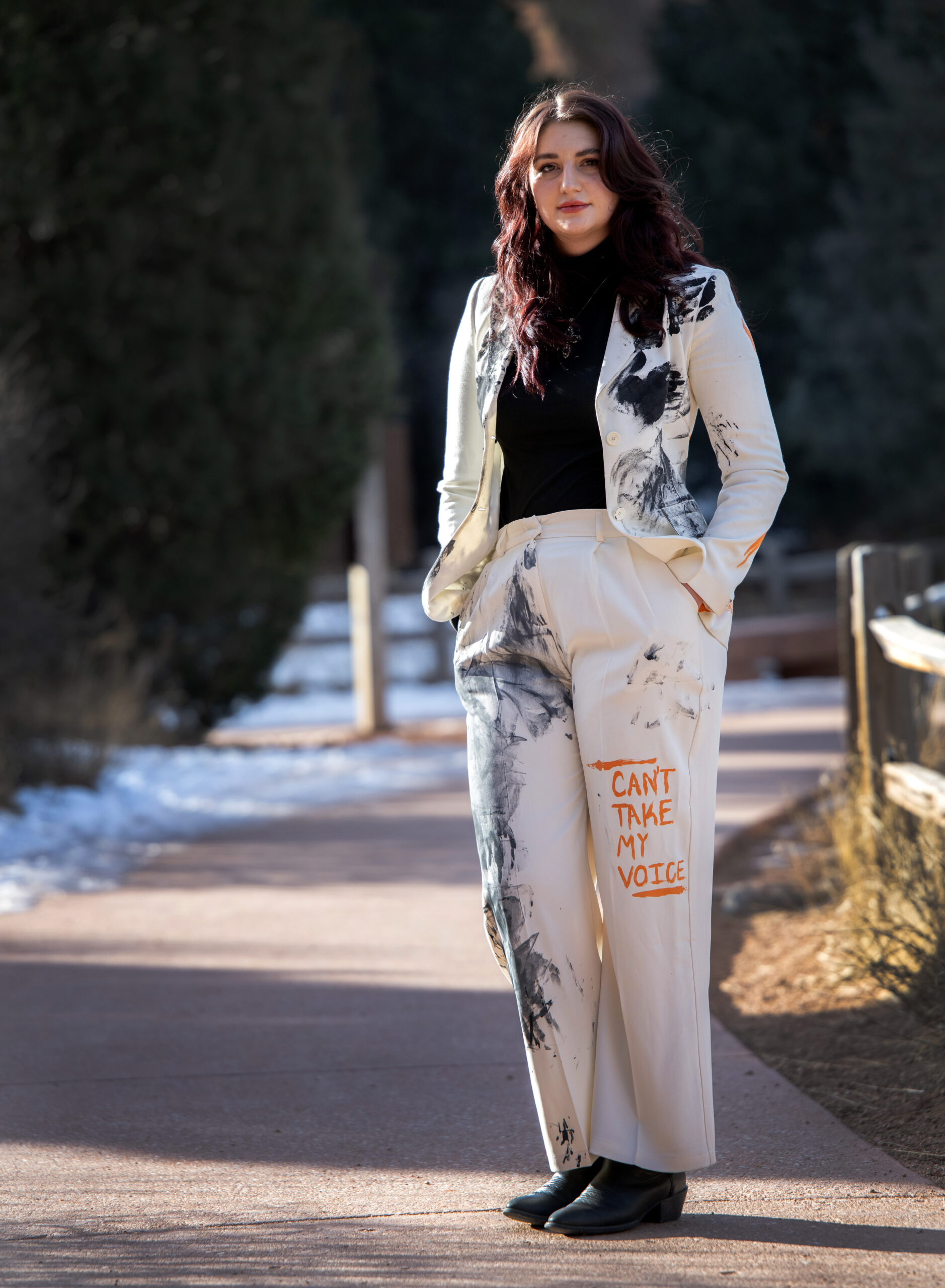
Brittney Smith, an artist living in Colorado Springs, also contemplated suicide.
“I can’t look at myself in the mirror and know who I am anymore. I used to be so many things. That person, who I was before, died,” she said.

Both women reported being sexually assaulted to police. Both said they felt doubted and dismissed, as their cases languished or were dropped. Both women spiraled into despair.
“My experience in reporting is the single most traumatic thing I’ve ever been through — even worse than the assault,” said Natalie, now 40 and living in Northglenn. She asked that her last name not be used to protect her family’s privacy.
Victims of sexual assault are at high risk for post-traumatic stress disorder, both in the immediate aftermath of the attack and sometimes recurring months or years later, according to multiple studies on the psychological toll of rape.
One-third will either consider suicide or attempt it. And they are five times more likely to abuse prescription drugs and 10 times more likely to use hard drugs, according to the research.
All of that is worsened if they feel blamed or disbelieved, said Elizabeth Newman, director of public policy for the Colorado Coalition Against Sexual Assault, the state’s largest coalition and advocacy group to prevent sexual violence.
“It can be really hard to separate the emotional and mental impact of the actual sexual assault from the response that follows,” she said.
It presents a paradox for those in the advocacy world, Newman said. On the one hand, she said it is important for victims to report crimes to help get potential attackers off the street. But on the other, Newman said, there is a steep toll to their emotional well-being if cases go nowhere and they feel abandoned.
A Denver Gazette investigation found that, in the past decade, out of 10 reported rapes across Colorado, only one resulted in an arrest, based on an analysis of Colorado Bureau of Investigation crime statistics.
This story outlines the struggles of two women who shared their experience with The Denver Gazette. Police and prosecutors involved in their cases were also contacted for comment.
Smith, now 23, said she was raped and possibly drugged on March 1, 2024, by a man she had met casually. He had offered to help her move into an apartment in Denver and then she went with him to meet friends and go dancing.
Although she had several drinks that night, she said she was not drunk. The man pressured her into taking the shot of liquor he handed her, she said. Soon after, she mostly blacked out.
She remembers being in the parking lot. She remembers falling down the stairs to her apartment. She remembers him watching her as she collapsed on her bed, unable to move her body or even lift her head.
He forced oral sex and then intercourse, she said.
“I remember saying no and then I passed out,” she said.
Afterwards, she was so motionless he seemed alarmed and shook her, asking if she was OK, she said. Then he left.
The Denver police detective who interviewed her seemed uninterested and thought the case was probably unprovable, she said. He wanted her to call the suspect on a recorded line and get him to confess, but the man never picked up. She said she was told that without a confession there wasn’t much they could do.
Smith said police had the man’s name, photo, where he worked and license plate number.
She also gave them the name of a friend who said the suspect had been sexually aggressive with her. That friend, who was interviewed by The Denver Gazette but asked not to be named, said she posted a warning on the Facebook page “Are We Dating the Same Guy” and got multiple responses from other women who said they had similar experiences. The post is no longer available.
At the time, Smith said that she gave police the information about the Facebook posts, thinking it might show a pattern. She said she was told, “We can’t do anything with that.”
That was nearly two years ago.
There has been no arrest, nor has the suspect been questioned, as far as she knows. She said police told her they couldn’t find him.
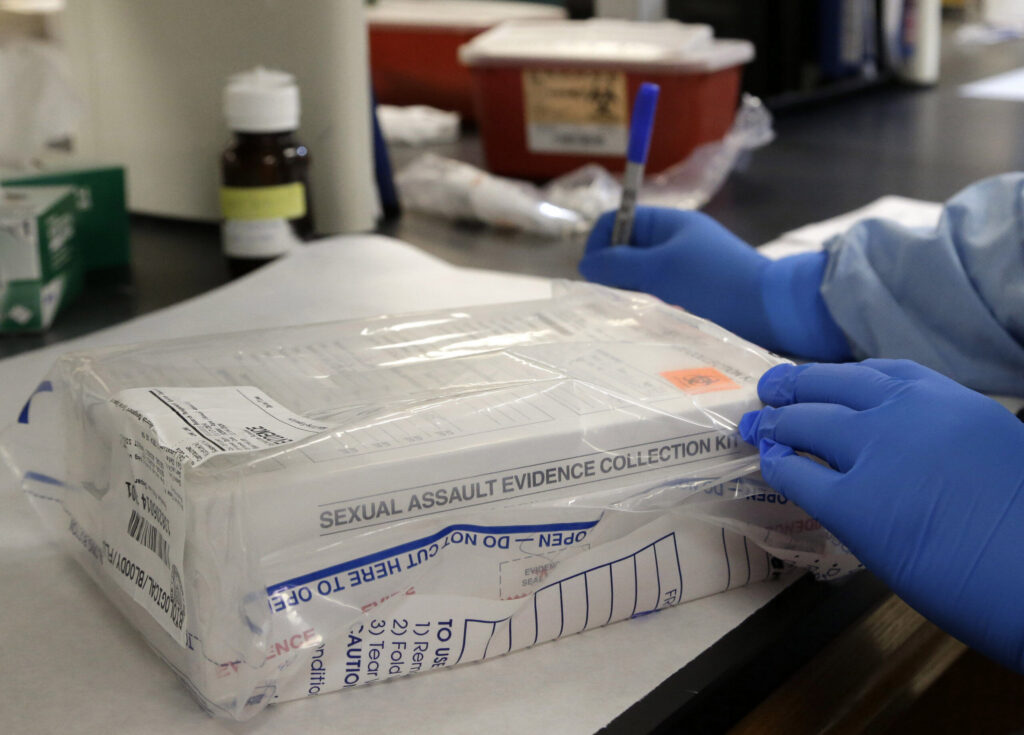
Recently, her rape kit came back showing his DNA present, she said she was told by police. It was matched to DNA already in the system, although she said she has no further details.
The only reason she reported, she said, was to potentially protect others.
The Denver police declined to comment on the case.
In Natalie’s case, she went to Loveland police in 2018 and said she had been sexually assaulted four times with increasing violence by a company supervisor when she worked in that city.
It happened, she said, two years prior but she waited to report until she no longer worked there out of fear of retaliation.
She didn’t fight back during the attacks — twice in his car and twice in the office — because “my instinct was to freeze,” she said, adding he would choke her and demand she call him “sir.”
The detective was dubious, she said, asking why she waited so long to report. He wanted her to call the suspect to get a confession. It triggered her anxiety, but she tried five times anyway. The man never answered.
The detective, she said, wanted her to show him where the first assault in the car occurred. She got confused about the location. He started telling her about accusers making up false allegations, she said.
She said she gave the detective the name of the suspect’s ex-girlfriend. She said the woman told her he had done the same thing to her and was willing to talk to the police.
It is unclear whether the detective called her.
After police questioned the suspect, Natalie said the detective said he no longer believed her. He also told her she should “see what real suffering looks like,” she said.
The case was forwarded to the Larimer County District Attorney, who declined to proceed because it would be too hard to prove beyond a reasonable doubt, a district attorney spokesperson told The Denver Gazette.
“Law enforcement can turn over every stone in an investigation, we can believe a victim, and that burden may still be too high given all the evidence available,” the spokesperson said in an email, adding that the decision predated the current district attorney.
Loveland police, in an email to The Denver Gazette, said based on its review of the case “no information suggests the detective involved operated outside of protocol.”
“Regarding the victim’s expressed feelings of disbelief or intimidation, those reflect her personal perspective. We cannot speak on her behalf. From the material reviewed though, no deviation from protocol appears evident,” the spokesperson’s email said.
After Natalie swallowed the pills that morning in 2018, she panicked and called 911, realizing she didn’t want to leave her son. She was taken to the hospital and then involuntarily committed to a mental health facility for two days. Once released she underwent extensive out-patient treatment.
Still, she suffered for years with depression. She worries about the impact to her son, now 12.
“Mommy is not upset with you,” she remembers telling him when he was little. “I just can’t get out of bed.”
She wonders if the cost of reporting is too high.
“We build these ideas of how our society is supposed to work, that we can trust the system,” she said. “The message I got was I didn’t matter. I guess I wasn’t the right kind of victim.”


Colorado rape cases rarely result in an arrest and prosecution
Jenny Deam
jenny-deam@coloradopolitics.com
Updated 2 hours ago
Authorities say they are especially difficult cases. In Colorado, most go nowhere. Over the past decade, for every 10 reports of rape, there is only one arrest. Warning: This story contains descriptions of sexual violence. Kiersten May remembered a fuzziness...
Hillary Clinton deposition paused after Lauren Boebert allegedly leaks photo from inside hearing
Molly Parks, Washington Examiner
molly.parks.washington.examiner@gazetteedit.wpenginepowered.com
Updated 20 hours ago
The House Oversight Committee has paused the deposition of former first lady and Secretary of State Hillary Clinton on Thursday after political commentator Benny Johnson shared a photo on social media of the closed-door hearing. Rep. Lauren Boebert (R-CO), who...

Greeley voters halt landmark development project
Hap Fry, Special to The Gazette
hap-fry@gazette.com
Updated 1 day ago
GREELEY – The landscape-altering Cascadia development project has been put on ice, according to unofficial results of a city referendum on the project Tuesday. The proposed development would have included an 8,600-seat multiuse arena and ice center that would be home to the Colorado Eagles,...
State audit: Rape kit backlog reduced but more work needed to hit goal
Jenny Deam
jenny-deam@coloradopolitics.com
Updated 23 hours ago
In the past year, the Colorado Bureau of Investigation has slashed the time it takes to process DNA collected in sexual assault cases, but the agency still is far short of its turnaround goal, the state auditor reported on Wednesday....

Polis administration awards $7.2 million to cut emissions from large buildings
Scott Weiser
scott.weiser@gazette.com
Updated 23 hours ago
The Colorado Energy Office awarded $7.2 million Wednesday to help owners of large buildings across the state pursue high-impact projects that reduce greenhouse gas emissions through improved energy efficiency and electrification. The grants, drawn from federal Climate Pollution Reduction Grant...
House Ethics Committee dismisses some claims, advances others against Rep. Ron Weinberg
Marianne Goodland
marianne.goodland@coloradopolitics.com
Updated 15 hours ago
The House Ethics Committee voted on Wednesday to accept three allegations filed against Rep. Ron Weinberg, R-Loveland, but combined two into one subject area. The two issues deal with claims of inappropriate comments made to female lawmakers in two separate...
Bipartisan opposition sinks eviction bill in Colorado
Marissa Ventrelli
marissa.ventrelli@coloradopolitics.com
Updated 2 days ago
Two Democrats sided with Republicans on a legislative panel to reject a proposal that would have made several changes to eviction filings and proceedings, including requiring judges to suppress court records. Sponsored by Rep. Junie Joseph, D-Boulder, House Bill 1047...
Ex-Cherry Creek superintendent must repay one month’s salary after abrupt resignation
Nico Brambila
nico.brambila@denvergazette.com
Updated 19 hours ago
Former Cherry Creek School District Superintendent Chris Smith must repay one month’s salary for failing to provide the board of education with three-month’s notice of his resignation, The Denver Gazette has learned. The board of education has not waived the...

Colorado lawmakers react along partisan lines to Donald Trump’s State of the Union address
Ernest Luning
ernest.luning@coloradopolitics.com
Updated 2 days ago
President Donald Trump could have been describing two different countries in Tuesday’s State of the Union address — one entering a “Golden Age” and the other enduring daily stress under a “lawless” regime — at least as far as the...
Senate committee kills bill to track education violations
Sage Kelley
sage.kelley@denvergazette.com
Updated 2 days ago
A proposed bill following in the wake of multiple Jeffco Public Schools sexual misconduct cases won’t make it to the Senate floor. The Colorado Senate State, Veterans and Military Affairs committee denied proposed Senate Bill 26-055 on Tuesday afternoon with...