

‘Housing mismatch’ improving in Colorado Springs, but residents losing purchasing power: Report
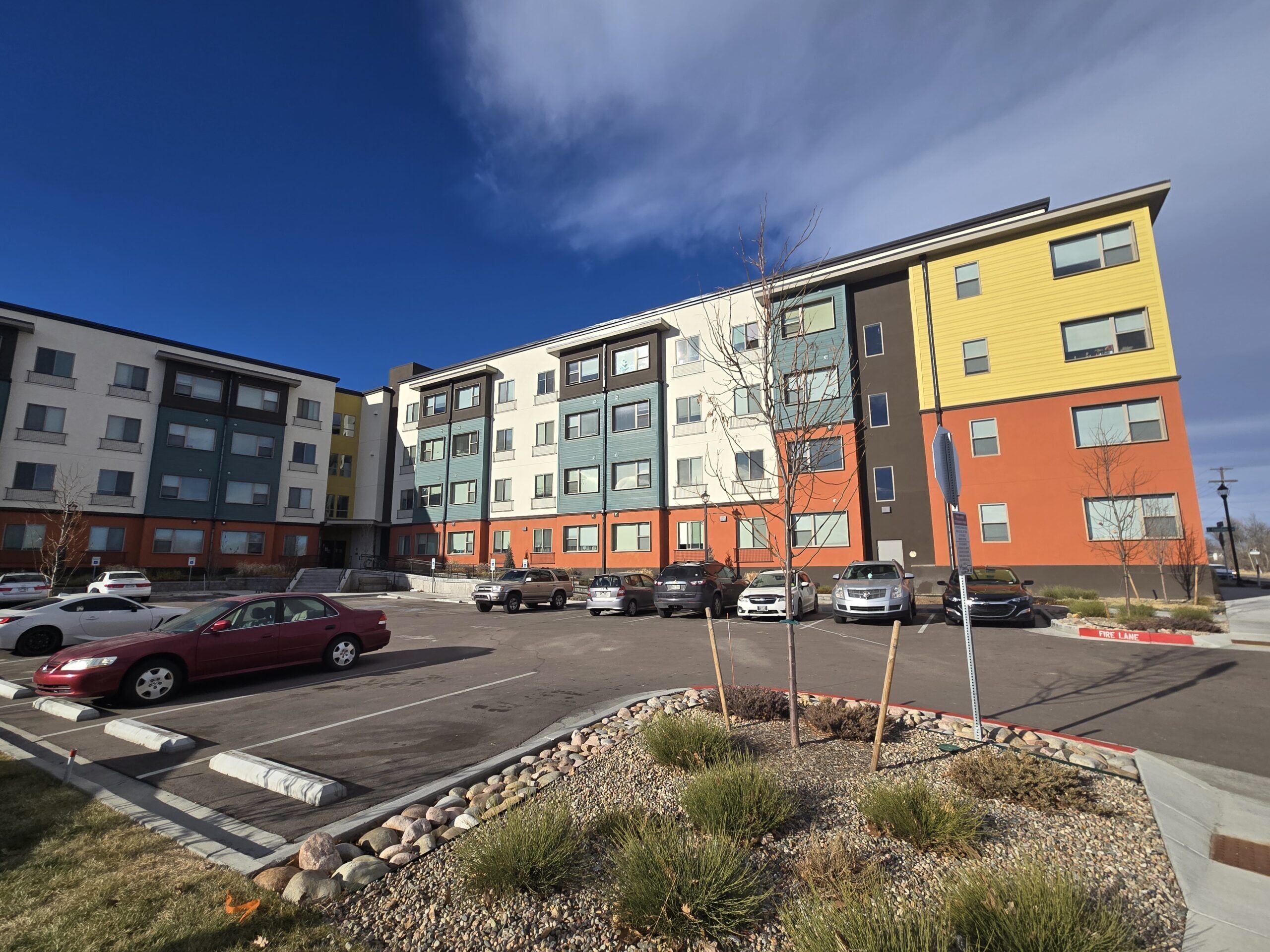
Residents in Colorado Springs and El Paso County are losing purchasing power as average rental housing and home prices over the last decade have increased more than two to three times that of average incomes.
At the same time, a “housing mismatch” between the types of homes being built in the area and the homes residents can afford is improving. More homes built in 2025 were lower-priced starter homes that were more affordable for young families and senior citizens, according to the second annual “state of housing” report released Thursday by Pikes Peak Housing Network.
The nonprofit, formed in 2023, supports “innovative and collaborative solutions” to promote housing affordability, access and development in the Colorado Springs area. Pikes Peak Housing Network operates under the umbrella of the Colorado Springs Chamber of Commerce & EDC.
“Things are hopeful. There is some light at the end of this tunnel,” the Housing Network’s Executive Director Jill Gaebler told a standing room-only crowd of local elected officials, housing experts, developers, economists and community members at Phantom Canyon Brewing Company in downtown Colorado Springs. “We are in, still, a significant housing crisis, but I think there’s room to celebrate.”
Gaebler is also a former Springs councilwoman and the former development director of Greccio Housing, a local affordable housing development organization.
The Housing Network’s 2025 report drew conclusions from information collected from various government agencies and housing organizations. It asserts that high housing costs across El Paso County, coupled with increasing insurance rates and property taxes, are forcing residents to spend more of their income on housing, which often causes families to live beyond their financial means — and leaves them at risk of losing their homes.
Though more housing permits were pulled in 2025 in El Paso County — 5,710 last year, compared to 3,852 in 2024 — developers pulled 115 fewer permits in 2025 for single-family homes, which reduces supply and keeps housing prices high, the report states.
However, last year saw a significant increase in the number of multifamily housing permits pulled: 2,744 permits were filed, about three times as many as the 832 units permitted in 2024.
Here are some other highlights of the report. Data was sourced from groups including the Colorado Demography Office, El Paso County, Pikes Peak Regional Building Department, Pikes Peak Association of Realtors and Federal Reserve Bank of St. Louis, among others.
- There are currently 317,276 housing units in El Paso County. Assuming 10% more housing units than households in a healthy housing market, the county needs 331,091 housing units, leaving a deficit of 13,815 units.
- Since 2015, incomes in El Paso County have risen 49%, while average rental housing costs have risen 111% and home prices by 141%.
- El Paso County continues growing faster than other Colorado counties. The Colorado Demography Office expects residents aged 25-34 will see the largest population growth in the county between 2025 and 2030. Residents 65 and older are the next-fastest-growing age demographic. Younger residents and seniors are seeking smaller homes located closer to amenities, and the county must build the types of housing those demographics are asking for, the report states.
- The median home price in the county is $460,000. Including insurance and property taxes, the monthly mortgage cost for a homebuyer purchasing a median-priced home is $3,457. A household paying this mortgage rate must earn $138,280 a year or more; earning less means they are “cost burdened,” or paying more than 30% of their income on housing.
The region needs to build more lower-priced homes, such as townhomes and condominiums, to provide entry-level homebuying opportunities for more residents, according to the report.
Condos have historically been a more affordable option for residents and have helped first-time homebuyers enter the market. The state’s stringent construction defects laws, though, deterred developers from building this type of housing for years because it left them at risk for costly legal battles over issues like leaks. That made it challenging to find insurers for condominium projects, they previously said.
In May, the state reformed construction defects laws and passed legislation that incentivizes developers to build more condominiums to provide more affordable entry-level housing for Coloradans. - Residents are losing purchasing power as home prices outpace incomes. In 2000, Gaebler said, the median home price in El Paso County was three times the median income. In 2015, it cost four times the median income to purchase a home. In 2025, it took 5.6 times the median income to purchase a home, down from nearly six times the median income in 2024.
“So home prices are coming down, incomes may be coming up a bit, and this is getting better. There is a little bit of hope,” Gaebler said. - The “housing mismatch” between homes being built locally and the homes residents can afford is improving. In 2024, 18% of homes were priced at or below $450,000. In 2025, 29% of homes were priced at or below that threshold.
Still, the gap between market-rate and affordable housing options for residents whose incomes are between 30% and 120% of $78,800, the median income in El Paso County, is growing.
In 2022, 58% of the local community was cost burdened and that number has grown in the years since, said Toby Gannett, chief executive officer of the multi-phase Draper Commons affordable housing development in downtown Colorado Springs.
“Fifty-eight percent of our community lies in the affordable housing spectrum. …But who are these people? Military, E-1 through junior officers. Teachers, entry-level through vice principals. City employees. … These are the heart and soul of our working community and they are increasingly being priced out of our community,” he said. - In 2025, 2,744 multifamily housing units were permitted, including 1,899 market-rate units and 845 affordable rental units, or those rented between 30%-80% of the area median income. This is a significant increase from 832 total multifamily units permitted in 2024 but still falls short of regional need.
According to the city of Colorado Springs’ recently released regional housing needs assessment, there’s a deficit of 13,320 rental units across the city and county — and 68% of those units are needed for residents earning less than 80% of the median income in El Paso County. - Renters need to earn $67,500 a year on average to afford a one-bedroom apartment in the area. This is down from $68,524 in 2024, but the median annual income in the county is $78,800, so many residents can’t afford to rent an apartment without a roommate or other financial support, the report states.
- Despite high numbers of permits pulled and new multifamily housing being built, average rents and vacancies in Colorado Springs are stable. The average monthly rent for a one-bedroom apartment at the end of 2025 was $1,395, or 3.4% lower than the average rent of $1,469 at the end of 2024. Average vacancy rates in Colorado Springs at the end of 2025 were 8.3%, a nearly 1% increase from 2024.
- Since 2015, the national average age of first-time homebuyers has increased from 31 years old to 40 years old. More residents remaining in rentals for more of their lives drives a need for more rental housing, the report states.
- More homeowners in Colorado Springs and El Paso County want flexible housing that can evolve with them as they age. Among other features, they’re looking for single-level homes, or homes with accessory dwelling units or integrated housing suites. The report anticipates more people will modify their homes to accommodate multi-generational living and asserts that local zoning laws should permit those uses.


DU acknowledges those who’ve made ‘indelible impacts’ at 2026 Founders Celebration | NONPROFIT REGISTER
Joanne Davidson Special to Colorado Politics
joanne-davidson-special-to-colorado-politics@coloradopolitics.com
Updated 12 minutes ago
UNIVERSITY OF DENVER Denver News: El Pomar Foundation and four individuals who have made what Chancellor Jeremy Haefner described as “indelible impacts” on the University of Denver were honored at the 2026 Founders Celebration. The March 4 dinner celebration was held in Seawell Ballroom, with the 400 guests including...

Split vote by Colorado Title Board stops ballot push to privatize Pinnacol Assurance
Marianne Goodland
marianne.goodland@coloradopolitics.com
Updated 1 hour ago
The Colorado Title Board, a three-member panel that sets the language for ballot measures, recently reversed a prior decision and blocked a proposal to privatize Pinnacol Assurance from moving forward. The main issue decided by the title board is whether...

Jackson and Kavanaugh disagree over if the Supreme Court treats Trump like Biden
David Zimmermann Washington Examiner
davidzimmermannwashingtonexaminer@wpstage.coloradopolitics.com
Updated 1 hour ago
Supreme Court justices Ketanji Brown Jackson and Brett Kavanaugh disagreed on Monday over whether the high court treats President Donald Trump the same as former President Joe Biden in cases brought by their respective administrations. Jackson, who often writes dissents...

Rand Paul announces tentative date for Mullin DHS confirmation hearing
Washington Examiner Staff, Washington Examiner
washington.examiner.staff.washington.examiner@gazetteedit.wpenginepowered.com
Updated 2 hours ago
The nomination of Sen. Markwayne Mullin (R-OK) to be the next Department of Homeland Security Secretart was officially sent to the Senate by the White House on Monday. Mullin was nominated on March 5 by President Donald Trump to replace...

Trump calls SAVE America Act his ‘No. 1’ priority for House GOP
Rachel Schilke, Washington Examiner
rachel.schilke.washington.examiner@gazetteedit.wpenginepowered.com
Updated 2 hours ago
DORAL, Florida — President Donald Trump made his “biggest plea” to House Republicans on Monday: Pass the SAVE America Act, a GOP voter identification bill, even if it takes the rest of this year. A little over 100 of the...

Colorado Senate panel OKs bill named for Boulder teen cyclist killed in 2023 crash
Marissa Ventrelli
marissa.ventrelli@coloradopolitics.com
Updated 3 hours ago
The Senate Judiciary Committee on Monday gave unanimous approval to a bill that would require law enforcement officers responding to crashes resulting in serious injury or death to offer drivers a voluntary breathalyzer test. Sponsors hope the measure would provide...

You get what you pay for in your state reps | Hal Bidlack
Hal Bidlack
hal-bidlack@coloradopolitics.com
Updated 14 hours ago
My regular readers will know of my affection for the Out West Roundup, a Colorado Politics feature that lets us keep up to date with the goings on out here in the western U.S., and draws attention to stories that...

A warrant should mean something — expedite carrying them out | OPINION
Colorado Politics
colorado-politics@coloradopolitics.com
Updated 14 hours ago
By Aaron Ping My name is Aaron Ping. I am a father from Washington state, and I am writing because my 16-year-old son, Avery, cannot. Avery died on Dec. 19, 2024. The drugs that killed him were ordered through Snapchat....

Lower Basin must adapt to Colorado River hydrology | OPINION
Colorado Politics
colorado-politics@coloradopolitics.com
Updated 14 hours ago
By Nick Peters A February deadline for determining future operating guidelines for the West’s two largest reservoirs came and went with no agreement on the table and clear lines drawn in the sand. A seven-state resolution to how Lake Mead and Lake Powell will...

Keep kids safe without overregulating childcare | OPINION
Colorado Politics
colorado-politics@coloradopolitics.com
Updated 5 hours ago
By Tamra Ryan As the Coors Economic Mobility Fellow for Common Sense Institute, I have written several reports in the past two years about the challenges related to affordability and availability of child care in our state. Though there are many factors affecting the dearth of...