

Denver mayor says city police will detain ICE officers using ‘excessive force’
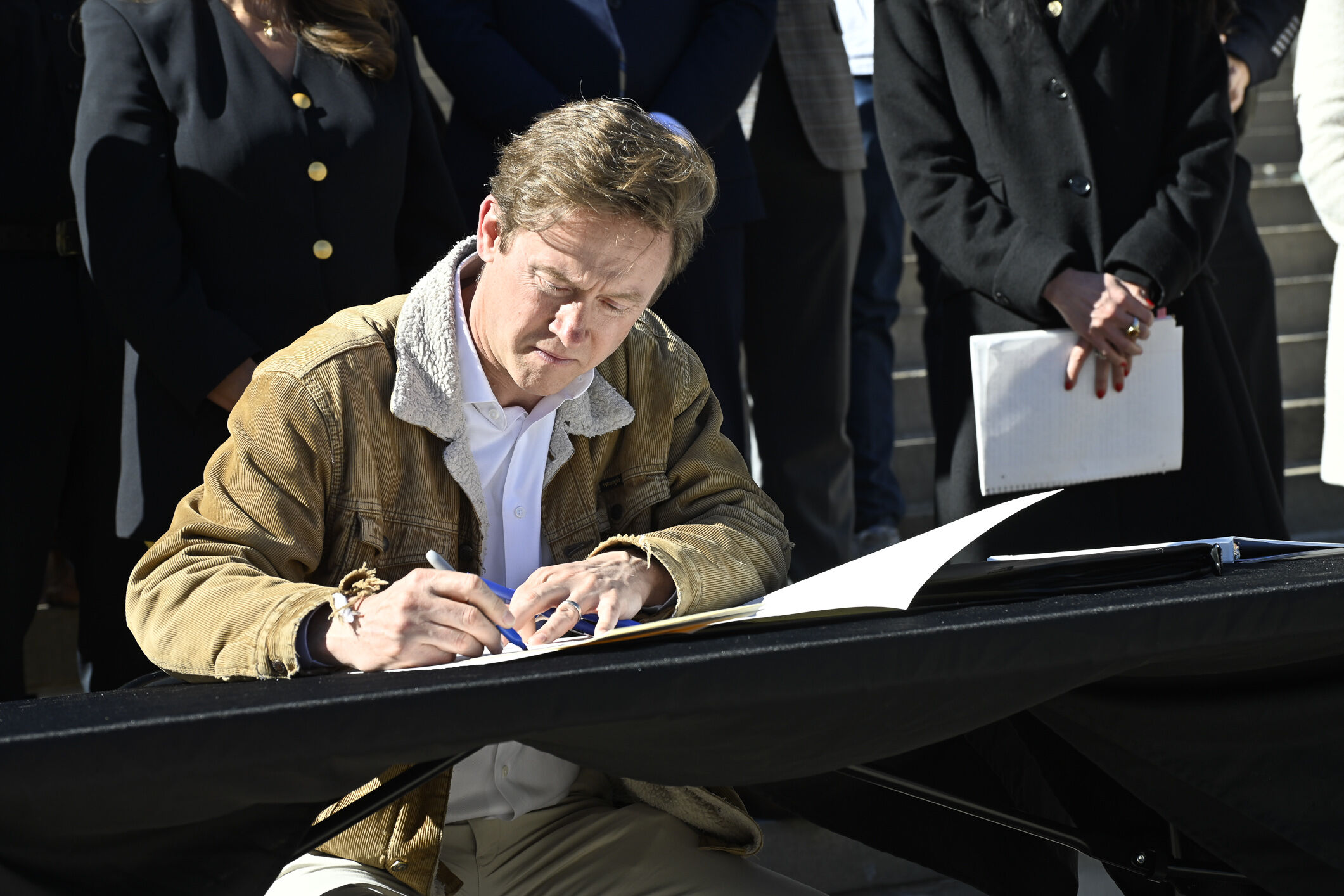
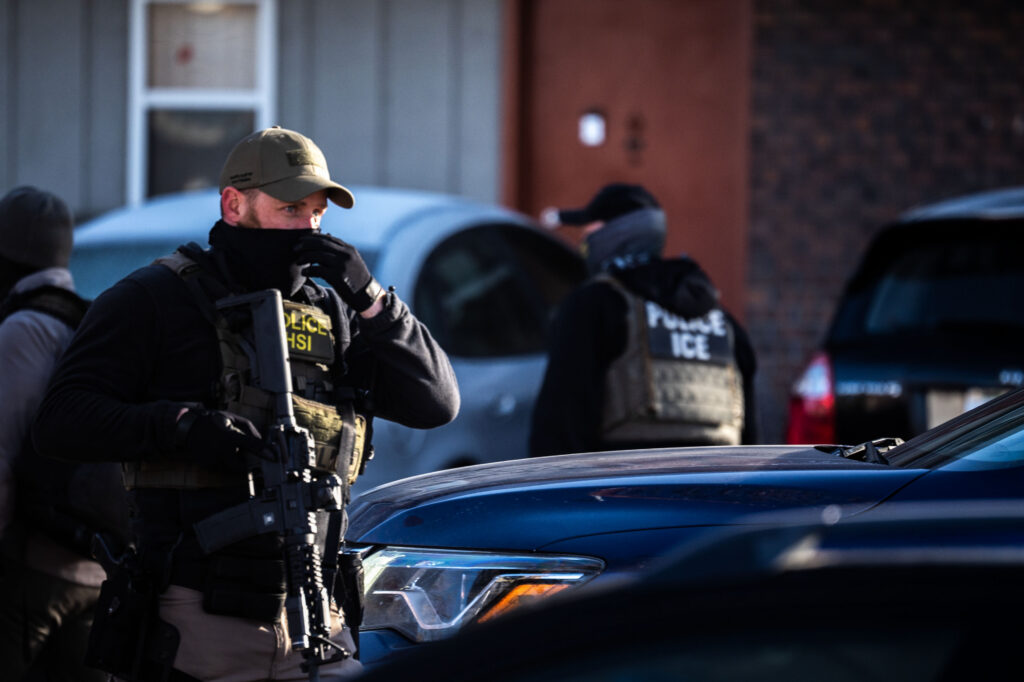
Denver Mayor Mike Johnston on Thursday outlined his city’s response to immigration enforcement operations, including intervening to stop federal officers when local police observe them using “excessive” force.
Johnston also said the city will not allow federal authorities to “stand in our way” in situations where emergency responders must render first aid, presumably in cases where someone, such as a civilian, gets hurt in an immigration operation.
The mayor’s move is the latest in a string of proposals from Democrats, who have begun to position the state and jurisdictions they dominate in a more confrontational stance. The attorney general, for example, wants residents to report alleged misconduct by federal agents via an online tool. At the state Capitol, legislators are considering a proposal to allow a “cause of action” by individuals injured — presumably by federal agents — in an immigration enforcement action.
Both Denver and Colorado have long adopted “sanctuary” policies, which refer to laws or ordinances that limit or prohibit cooperation with federal immigration authorities.
What the Denver mayor outlined, however, sets a new phase in the conflict between the federal government and the city — since the new mandates, directed at city workers, are more active. That is, they require city employees, notably the police, to actively insert themselves into ongoing enforcement operations, whereas current laws prohibit cooperation.
“If we see any ICE officer using excessive force against the Denver resident, we will step in to detain that officer and remove them from the situation,” Johnston said. “We hold our own officers to that standard, and we will hold any ICE agent to the same. If an ICE agent assaults or shoots or kills a civilian in Denver, we will investigate and prosecute that crime as the facts demand, regardless of what the federal government does.”
He added: “Our goal is not to provoke, but to protect. So, to protect Denver, our first responders will always provide lifesaving aid to anyone who is injured, no matter who injured them. No ICE officer gets to stand in our way of saving someone’s life.”
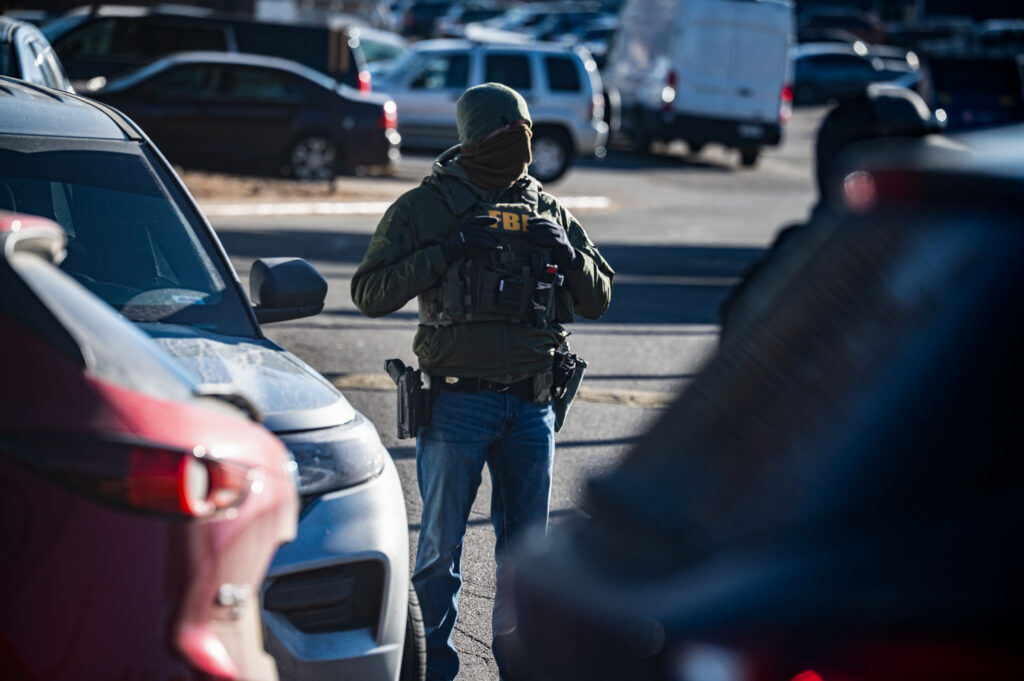
Specifically, the executive order announced Thursday outlines several actions and principles, including the following:
- Bars city agencies from allowing immigration enforcement agents from staging on city property for civil immigration enforcement purposes, except when they have a judicial warrant or a court order, or as otherwise required by law
- Requires the city police to identify the supervisor of the immigration agents operating in the city “when it’s tactically safe and won’t interfere with immigration law enforcement”
- Directs local law enforcers to use their body-cameras to record immigration enforcement operations
- Requires the local law enforcers to use “de-escalation protocols” to protect “peaceful protesters and “ensure public health, welfare, safety, and the preservation of First Amendment rights”
- Mandates first responders to render aid to “anyone injured at the scene of any immigration enforcement action”
- Directs the city police to conduct investigations into reported legal violations and refer “felony matters” to the Denver District Attorney or the Colorado Attorney General
- Prohibits city agencies from sharing databases or technology use agreements with the Department of Homeland Security without a subpoena, judicial warrant, court order, or except as required by law
Additionally, the order said it reaffirms the city’s position that places like schools, churches, stadiums, libraries, and hospitals are “available to provide specific services to the public, and are to be accessed for those purposes only.”
That appears to be a reference to fears expressed by activists and others that immigration agents would raid schools and churches. No immigration raid has occurred at a school campus in Denver since Trump took office.
The U.S. Immigrations and Customs Enforcement has had a longstanding practice of discouraging enforcement actions in so-called sensitive locations, such as schools, churches and hospitals. While the policy discouraged enforcement actions at these locations, it actually did not prohibit agents from doing so.
Within hours of assuming office, President Donald Trump rescinded the policy. His acting homeland security secretary at the time said the move ensured law enforcers’ hands were not tied.
Johnston’s order also said immigration enforcement officers may not “stop, detain, question or search individuals based on location, occupation, language, accent, race, or ethnicity,” unless there is probable cause.
The order does not identify how the city intends to enforce this ban.
Denver Police Chief Ron Thomas said the executive order makes it clear that Denver will protect its residents, and federal agents are expected to follow local laws and public safety regulations.
“While local police officers cannot and would not legally obstruct or interfere with lawful immigration enforcement actions, all law enforcement officers have a statutory obligation to intervene if they witness illegal or excessive force being used by any law enforcement officer, to include federal agents,” Thomas said.
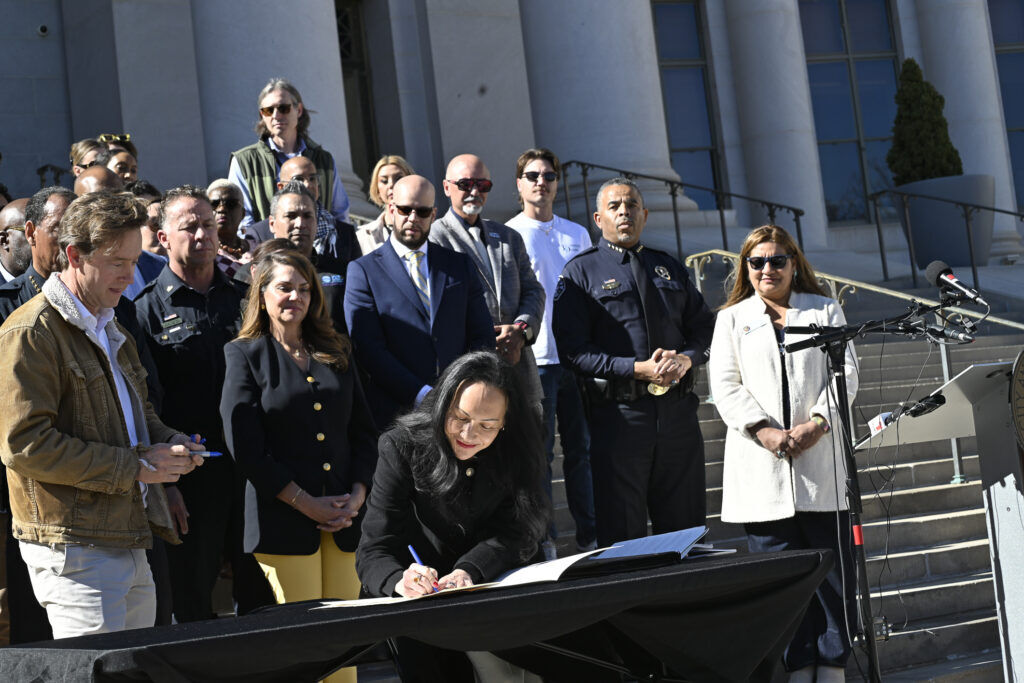
Denver City Attorney Miko Brown said provisions in the executive order would apply to all city-owned property, which could include parks and facilities such as the National Western Complex.
“There is a menu of legal options that we could take depending on the circumstances,” Brown said of enforcing the executive order. “That could range from a civil penalty, it could also result in a criminal charge, or it could result, for instance, in the city attorney asking a court to issue an injunction to prohibit that conduct.”
However, should Denver encounter conflicts between local and federal officers, Thomas said the first step would be to “lead with de-escalation.”
Some suggested that, given recent incidents with federal immigration agents in Minneapolis, Johnston’s action may be “poking the bear.”
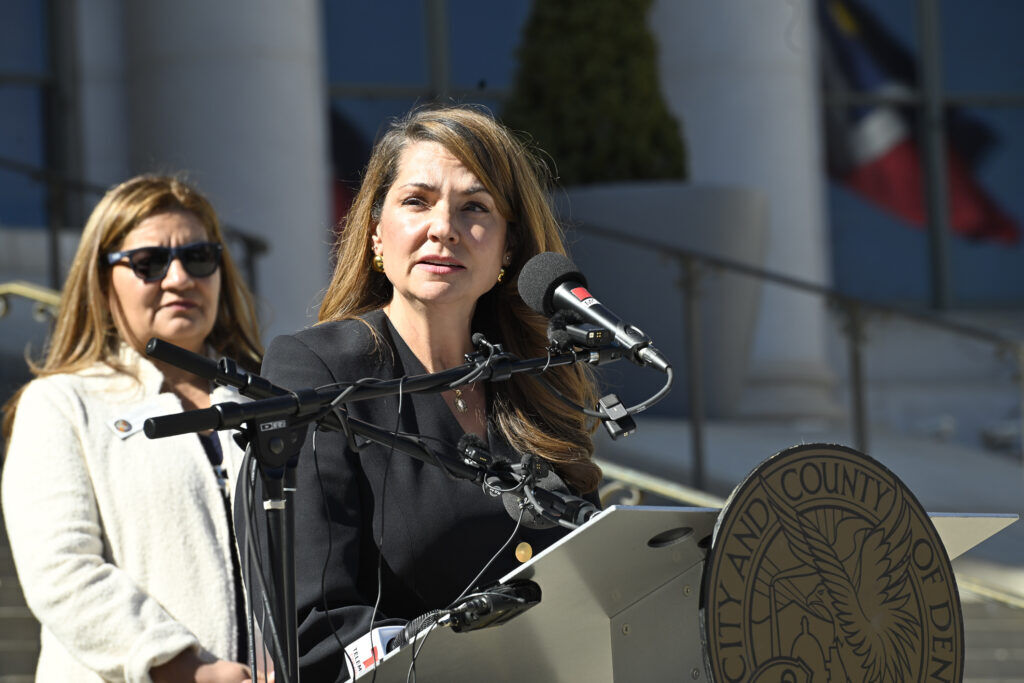
“ICE has been here,” Denver City Council President Amanda Sandoval told reporters. “So, this isn’t a call to say, ‘Hey, come to us.’ They are in our community.”
Johnston said he is unaware of any recent incidents involving ICE agents in city-owned or city-controlled buildings.
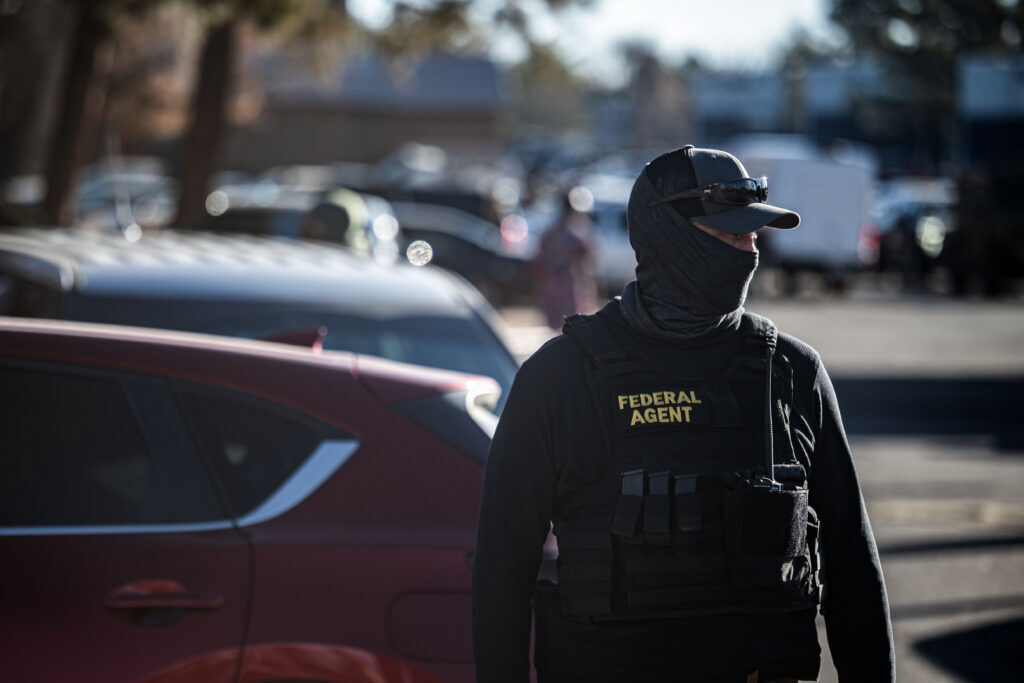
The mayor’s executive order comes on the heels of a new city ordinance making its way through the Denver City Council that proposes banning law enforcement officers, including federal immigration agents, from covering their faces during an arrest or detention or inside a city facility.
The proposed ordinance, which is up for its final vote on Monday, also establishes a minimum standard for visible identification during law enforcement actions in Denver and would require officers to provide their name and badge number when asked.
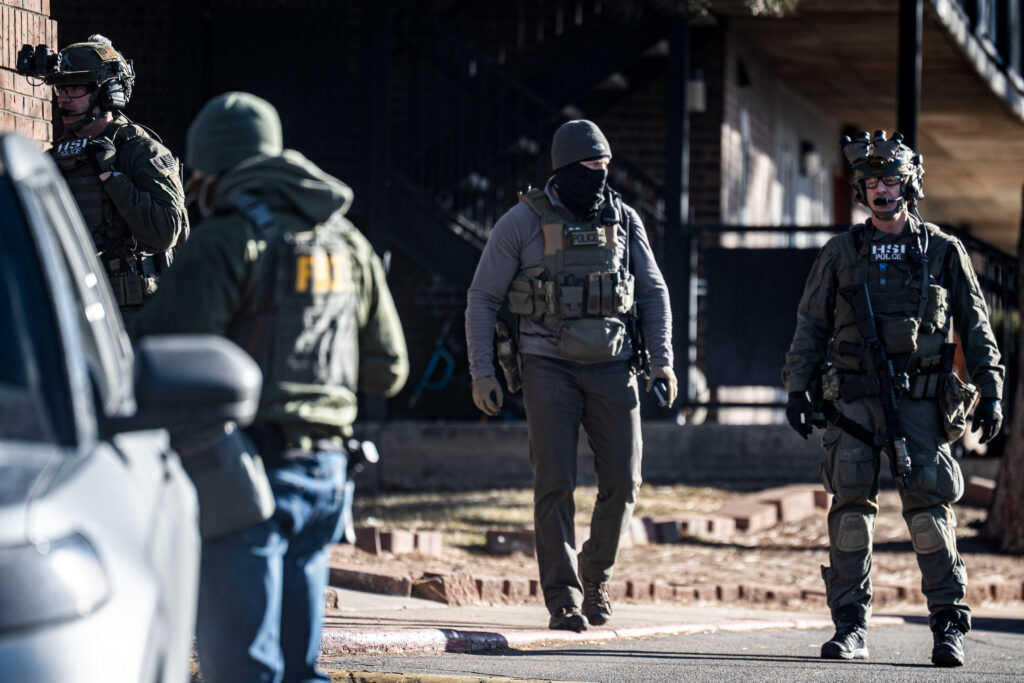
Officers who violate the new city ordinance, if passed, would face penalties of up to $99 or 300 days in jail, with discretion for citations.
A federal judge recently struck down a similar anti-masking bill in California.
Johnston told reporters that the new executive order and the forthcoming mask ban being considered by the council are not redundant but, rather, a “combined strategy.”
“The biggest feeling we’re trying to fight is fear, and our hope is that with clarity comes confidence with Denver,” he said.
(Stephen Swofford, Denver Gazette)

Polis pushes back after Trump administration again denies federal disaster aid
Marissa Ventrelli
marissa.ventrelli@coloradopolitics.com
Updated 8 hours ago
A dispute over federal disaster aid escalated Monday as Colorado Gov. Jared Polis faulted the Trump administration for rejecting the state’s appeals for assistance following last fall’s fires and flooding. The state initially filed for a Major Disaster Declaration for...
Denver continues to explore moving to a biennial budget
Deborah Grigsby
deborah.smith@denvergazette.com
Updated 17 hours ago
There’s continued momentum to shift the city of Denver to a biennial budget cycle, and if approved by the City Council, the measure would be sent to voters on the November 2026 ballot. The idea, first put forth in December,...

Bipartisan Colorado bill targeting AI chatbot risks advances
Tricia Stortz
digital@denvergazette.com
Updated 2 days ago
A bipartisan Colorado bill targeting risks posed by AI chatbots advanced out of committee last week with a 10-3 vote in its first hearing. House Bill 26-1263, which would establish new requirements for “conversational AI” services, cleared the House Business...
Home rule has protected Colorado cities for over 125 years | Cronin and Loevy
Tom Cronin Bob Loevy
tom-cronin-bob-loevy@coloradopolitics.com
Updated 2 days ago
Colorado is currently gripped by a political struggle between the governor plus the legislature in Denver and populous home-rule city governments, mainly on the Front Range, such as Colorado Springs. In the past few years, the legislature has been passing bills that applied to city government policies, which...
What you need to know about the Colorado legislature reading a 661-page bill aloud
Marianne Goodland
marianne.goodland@coloradopolitics.com
Updated 3 days ago
A rarely used procedural move by a Republican legislator threw the Colorado House into an extended slowdown, after she invoked her right to have a nearly 700-page state budget bill read aloud in full. Once Rep. Brandi Bradley, R‑Roxborough Park,...
City of Northglenn, state fail to reach agreement on mental health facility amid safety concerns
Marissa Ventrelli
marissa.ventrelli@coloradopolitics.com
Updated 4 days ago
The City of Northglenn said it was unable to reach an agreement with the state on a pair of transitional living facilities for individuals with mental health conditions run by the Colorado Department of Human Services. The facilities, located across...
Colorado lawmakers grapple with spending cuts amid $1 billion-plus deficit
Marianne Goodland
marianne.goodland@coloradopolitics.com
Updated 5 days ago
The battle over Colorado’s budget for next year — which stalled in the House over a procedural maneuver — entered a more difficult phase on Thursday, when legislators grappled with hundreds of millions of dollars in proposed reductions to balance...
New rules for private judges in Colorado include discipline oversight, campaign contributions
David Migoya
david.migoya@gazette.com
Updated 4 days ago
The Colorado Supreme Court recently determined the state’s private judges — retired jurists appointed to oversee civil cases that rarely get public scrutiny — can now make political contributions freely and without reserve, overruling a prohibition that had been in...
Wayne Williams joins city as Colorado Springs Mayor Mobolade’s new chief of staff
Brennen Kauffman
brennen-kauffman@coloradopolitics.com
Updated 6 days ago
Wayne Williams will be the next chief of staff for Colorado Springs Mayor Yemi Mobolade, turning the two former election opponents into partners in city government. The two officially announced the hire Thursday, citing Williams’ decades of experience with city,...
House GOP stalls Colorado budget debate by forcing full reading of 661-page bill
Marianne Goodland
marianne.goodland@coloradopolitics.com
Updated 5 days ago
A procedural battle at the Colorado Capitol boiled over on Wednesday night, when a House Republican demanded the 661‑page state budget be read aloud in full — a move that delayed the advance of the proposed $46.8 billion spending plan....
PREV
PREVIOUS

SCOTUS whisperer? Justice Carlos Samour may get second opportunity to turn state dissent into national precedent
For the second time in two years, Justice Carlos A. Samour Jr. occupies an unusual position: Having his dissent in a Colorado Supreme Court case potentially forming the basis of U.S. Supreme Court precedent. Earlier this week, the nation’s highest court accepted an appeal questioning whether plaintiffs may sue fossil fuel producers under state law […]

As measles cases rise nationally, Colorado braces for imported infections
Colorado has had just one measles case this year, but that doesn’t mean Dr. Michelle Barron sleeps well at night. With spring break around the corner, Barron worries out-of-state travelers will bring more than their luggage to the Centennial State. “My big worry right now is DIA (Denver International Airport), said Barron, senior medical director […]