

Colorado legislators, prosecutors clash over proposal to limit access to third-party data
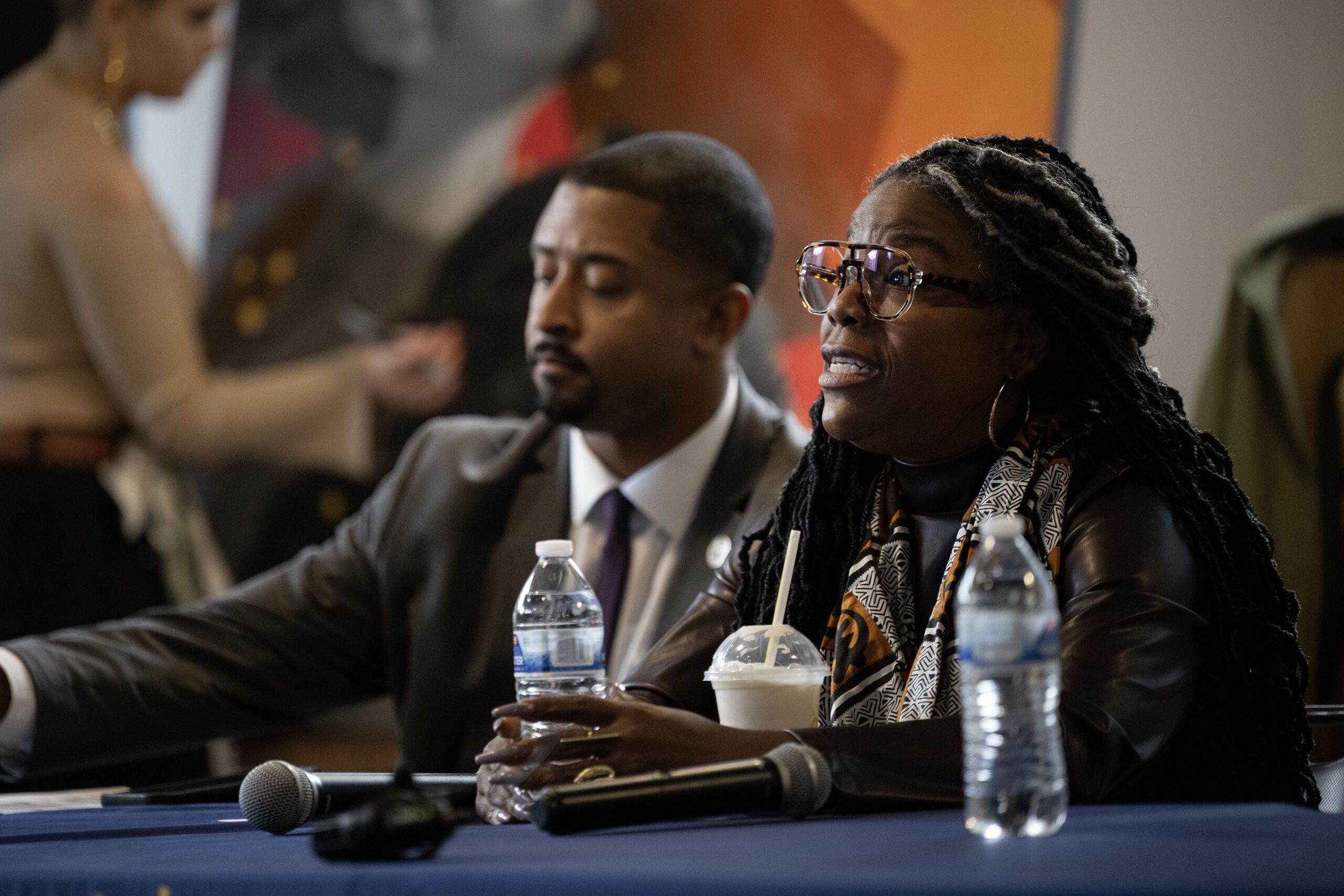
A coalition of Colorado lawmakers is pushing to prohibit the police from purchasing personal consumer data without a warrant, setting up a clash with prosecutors who warn the measure could hamper criminal investigations.
The legislators backing the measure frame it as a privacy issue, citing the Fourth Amendment, which protects citizens against unreasonable government searches and seizures.
The critics said the information targeted by the legislation is already publicly available, adding law enforcers would be precluded from obtaining information that could help them dig into and solve cases.
House Bill 1037, sponsored by Reps. Jennifer Bacon, D-Denver, and Ken DeGraaf, R-Colorado Springs, and Sen. Lisa Cutter, D-Evergreen, would prohibit law enforcement and government entities from purchasing specific “personal data” from third parties without a warrant, except in emergencies.
They include names, bill information and addresses, social security numbers, home addresses, demographic data, as well as web browsing or search history and health and financial information.
They also include profiles or “inferences” about a person based on data collected by a third party.
Under the proposal, law enforcement entities would be banned from requesting or obtaining such data from other agencies, whether local or federal law enforcement, when the data sets were obtained from a third party.
The bill also aims to prohibit personal data purchased from a third party from being used as evidence in court — unless a warrant was issued permitting the purchase.
“Fundamentally, what we are saying in Colorado is that people have an expectation of privacy around their consumer-based data when they’re contracting with consumer entities,” said Bacon. “If law enforcement wants to buy it, that’s great, but if they want to use it against me, the information also needs to qualify for a warrant.”
The Colorado District Attorneys Council, which represents the state’s 23 district attorneys, opposes the bill, arguing sponsors are misinterpreting the Fourth Amendment.
The Fourth Amendment protects personal property and information, such as homes, cars, texts and emails, and location data. If law enforcers want to search property protected by the Fourth Amendment, they must obtain a warrant.
However, public data — such as names, phone numbers, and home addresses — is not protected and can be accessed by law enforcement at any time, even if they purchased it, according to Jessica Dotter, the group’s chief of legislative policy.
Dotter said crime analysts often use paid online databases, such as Lexis Nexis, to conduct research. All the information in those databases is openly available to the public, she said, noting that, if HB 1037 is enacted, law enforcement agencies will be the only entities disallowed from accessing the information.
“This bill would just prevent sworn officers, who we ask to obtain the truth and obtain evidence in cases, from getting that truth and getting that information that allows them to do their jobs,” she said.
Dotter said the district attorneys are worried the bill would prevent law enforcement from collecting enough evidence to build a case, and, that even if they do, there’s a possibility that a judge would dismiss that evidence.
“I think it’s going to be a huge uphill battle because you won’t necessarily have the ability to access whether or not, when somebody downloaded Google or signed up for Xcel utilities, they ever gave consent in that manner, because they don’t anticipate that being used for that reason,” she said. “If a court says the law enforcement officer obtained this data in violation of the law, then we’re stuck with that law.”
Colorado lawmakers from both parties have introduced several bills this legislative session on data privacy protections, which have attracted bipartisan support — but also opposition.
HB 1037 is notable for its heavy emphasis on prohibiting the sharing of information among law enforcement agencies amid Colorado’s laws barring local entities from working with the federal government when it comes to immigration enforcement, thought the statutes permit cooperation in criminal cases.
Bacon didn’t know of any specific instance in which state or local law enforcement purchased personal data and used it to arrest someone. Meanwhile, a report issued by the American Civil Liberties Union last month said U.S. Immigration and Customs Enforcement (ICE) has purchased a social media and phone surveillance system that tracks users’ movements.
Anaya Robinson, ACLU Colorado’s policy director, claimed that law enforcement is using these third-party data brokers to circumvent the Fourth Amendment.
“We just want to ensure that additional protection in statute and that very clear guidance around what data law enforcement at the state and local level in Colorado can and cannot access without a judicial warrant or a subpoena from a judge, or another legally-accessible court order,” Robinson said.
Robinson said the bill specifically focuses on information protected under the Fourth Amendment, such as texts, call records, geolocation data, and purchase data.
“They’re things that an individual would generally believe are either between them and the individual or individuals they’re communicating with, or between them and the company that they’re purchasing from or interacting with,” Robinson said. “We believe that there is a reasonable expectation of privacy there in the cases that we’re contemplating in this bill.”
Bacon, meanwhile, insisted that law enforcement is wrong to assume all information consumers give to a company — whether it be an app, a magazine subscription, or a cellphone carrier — should be publicly accessible.
“They don’t think consumers have an expectation of privacy,” she said. “They believe all of my information that I gave to Black Girl Hair Magazine could be considered public information, and if that’s the case, then what we’re saying is that you do, in the state of Colorado, have an expectation of privacy.”
Following seven hours of debate Wednesday evening, Bacon and DeGraaf asked to only hold a hearing on the bill, with the House Judiciary Committee expected to vote on it at a later date.


Ex-Colorado Sen. Sonya Jaquez Lewis avoids prison, gets probation for forged ethics letters
Marianne Goodland
marianne.goodland@coloradopolitics.com
Updated 4 hours ago
Former state Sen. Sonya Jaquez Lewis, D-Longmont, was sentenced Friday to two years of supervised probation and 150 hours of community service, and a $3,000 fine, to be waived if she completes an additional 100 hours of community service. The...

Benavidez chosen to fill Senate District 21 vacancy after Michaelson Jenet resigns
Marianne Goodland
marianne.goodland@coloradopolitics.com
Updated 12 hours ago
A Democratic Senate District 21 vacancy committee Thursday night chose former Rep. Adrienne Benavidez, D-Adams County, to replace former Sen. Dafna Michaelson Jenet. Michaelson Jenet resigned on Feb. 13 to become the director of the David and Laura Merage Foundation...

Colorado Democrat John Hickenlooper becomes first statewide candidate to submit nominating petitions
Ernest Luning
ernest.luning@coloradopolitics.com
Updated 14 hours ago
U.S. Sen. John Hickenlooper on Thursday became the first statewide candidate to submit petition signatures for Colorado’s June Democratic primary, according to his campaign and the Colorado Secretary of State’s Office. Seeking reelection to a second term, Hickenlooper is facing...

Colorado lawmakers want to crack down on sports betting companies
Marissa Ventrelli
marissa.ventrelli@coloradopolitics.com
Updated 6 hours ago
A coalition of legislators has introduced a bill that backers said would help combat sports gambling addiction, particularly among children. Colorado voters approved Proposition DD in 2019, legalizing sports betting statewide. The majority of the state’s sports betting revenue goes...
House Ethics Committee dismisses some claims, advances others against Rep. Ron Weinberg
Marianne Goodland
marianne.goodland@coloradopolitics.com
Updated 1 day ago
The House Ethics Committee voted on Wednesday to accept three allegations filed against Rep. Ron Weinberg, R-Loveland, but combined two into one subject area. The two issues deal with claims of inappropriate comments made to female lawmakers in two separate...

Colorado House advances bill to ban pet stores from selling dogs and cats, as opponents warn of black market surge
Marissa Ventrelli
marissa.ventrelli@coloradopolitics.com
Updated 2 days ago
Colorado lawmakers advanced legislation Monday that would prohibit pet stores from selling dogs and cats sourced from large-scale commercial breeders, a move sponsors said would shut down the “puppy mill pipeline” but which critics warned would push sales into unregulated...

Laura Clellan officially named director of Colorado Parks and Wildlife
Marianne Goodland
marianne.goodland@coloradopolitics.com
Updated 3 days ago
Laura Clellan, who has been acting director of Colorado Parks and Wildlife since Nov. 25, was named the agency’s permanent director Monday by the Colorado Parks and Wildlife Commission. She replaced Jeff Davis, who resigned in lieu of termination weeks...

Colorado group files 6 ballot measures to counter redistricting proposals backed by Democrats
Marianne Goodland
marianne.goodland@coloradopolitics.com
Updated 1 day ago
A half-dozen congressional redistricting ballot measures were filed Friday by a Colorado advocacy group in response to proposals filed last week from a group seeking to flip three Republican-held U.S. House seats in two years. “The gist of it is...

Colorado senators hold heated debate on latest immigration bill
Marianne Goodland
marianne.goodland@coloradopolitics.com
Updated 4 days ago
A bill that would allow individuals who get injured during an immigration action to sue federal agents in state court won preliminary approval from the Colorado Senate on Monday. The bill would permit a “cause of action” by such individuals...

Colorado Senate Democrats choose Sen. Cathy Kipp as president pro tempore
Marianne Goodland
marianne.goodland@coloradopolitics.com
Updated 1 day ago
Senate Democrats on Monday elected Sen. Cathy Kipp, D-Fort Collins, as the next president pro tempore. Kipp replaced former Sen. Dafna Michaelson Jenet, D-Commerce City, who resigned her seat earlier this month. Kipp faced off against Sen. Tony Exum, D-Colorado...
PREV
PREVIOUS

Lawmakers propose raising excise taxes on alcohol, marijuana to fund mental health spending
Colorado lawmakers hope to refer a measure to the November ballot that would increase excise taxes on alcohol and marijuana, with the revenue going toward mental health and civil commitment facilities around the state. House Bill 1301, sponsored by Rep. Bob Marshall, D-Highlands Ranch, and Sen. Judy Amabile, D-Boulder, would impose sales tax increases of […]

Hillary Clinton deposition paused after Lauren Boebert allegedly leaks photo from inside hearing
The House Oversight Committee has paused the deposition of former first lady and Secretary of State Hillary Clinton on Thursday after political commentator Benny Johnson shared a photo on social media of the closed-door hearing. Rep. Lauren Boebert (R-CO), who sits on the House Oversight Committee, provided the photo of Clinton to Johnson, he said […]