

Divided appeals court reverses murder convictions due to faulty self-defense instruction
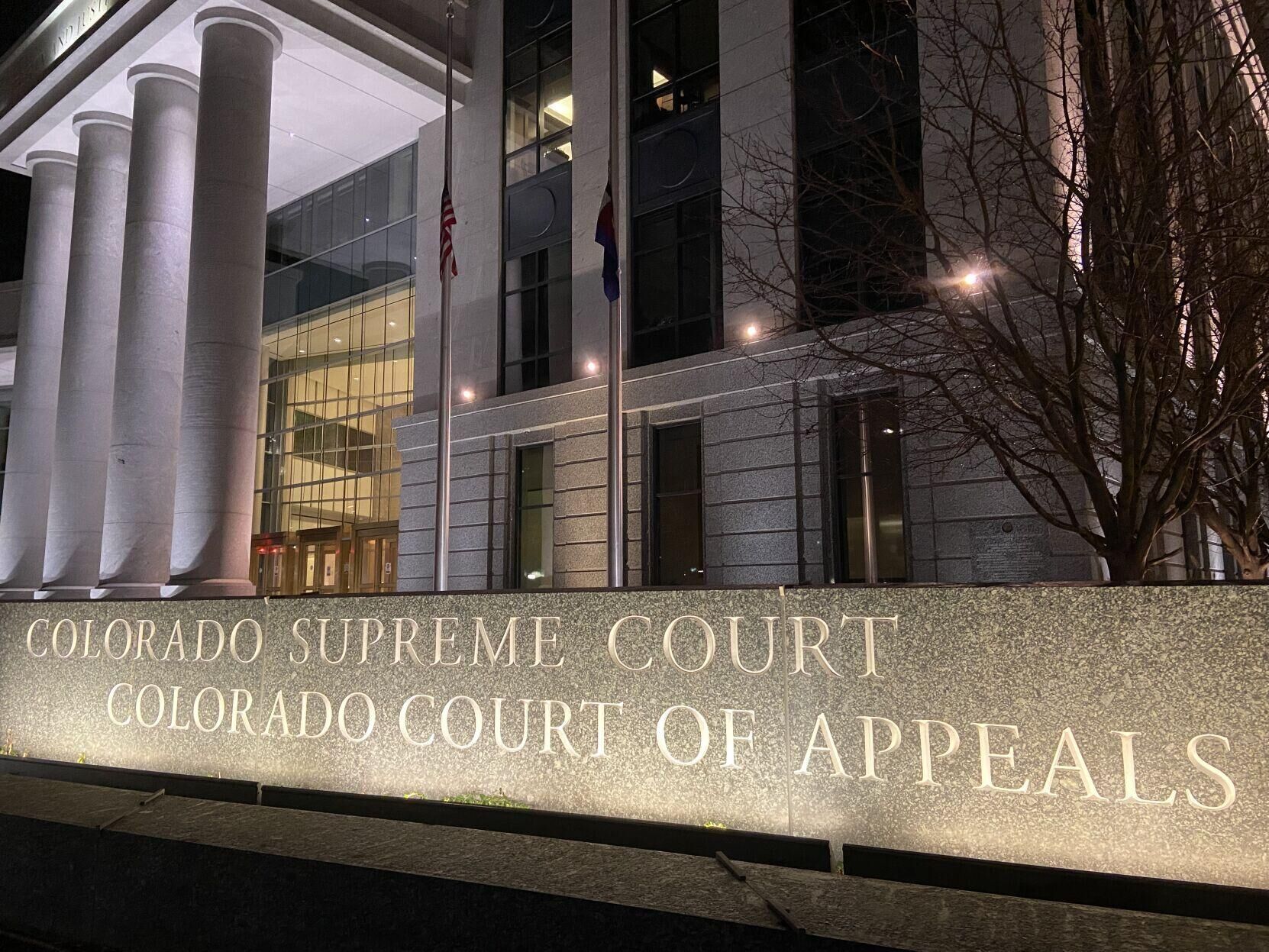
Colorado’s second-highest court concluded last week that an incomplete self-defense instruction required the reversal of an El Paso County defendant’s murder convictions.
Demetrius Montez Martin was among those present late at night at a club in Colorado Springs. An argument ensued and Martin got in his vehicle and drove off. Someone fired multiple gunshots in the direction of his vehicle. Martin stopped, got out, and fired his own gun back toward the crowd of people in the parking lot.
He fatally shot Margie Crow, who was driving her own vehicle and was not involved in the firefight.
At trial, Martin asserted the prosecution had not proven he was the shooter and, alternatively, that he acted in self-defense. Jurors convicted Martin on two counts of murder and related firearms offenses. He received a life sentence in prison.
On appeal, Martin argued District Court Judge Catherine Mitchell Helton mistakenly omitted key language from the self-defense instruction given to jurors. She declined to instruct jurors specifically that Martin would be legally authorized to use force on “persons acting in concert” against him, or that he used force out of an “apparent necessity” under the circumstances.
During oral arguments last year to a three-judge Court of Appeals panel, Judge Michael H. Berger wondered how Martin’s actions could even be classified as self-defense.
“That’s a question for the jury to decide,” responded defense attorney Eric A. Samler. “Once the (trial judge) decides that a self-defense instruction is appropriate, it’s not for this court to decide, ‘Well, is that self-defense or not self-defense?'”
“The argument was, he stopped because he was concerned that if he just continued to flee, he would continue to get chased and at some point, he’s in a position where he’s just gonna be gunned down,” summarized Judge Craig R. Welling. “He’s under assault. And instead of continuing to flee and hoping they don’t pursue, he responds in self-defense. And that’s reasonable and it should have considered the number of assailants. That’s the theory of self-defense.”
Case: People v. Martin
Decided: February 19, 2026
Jurisdiction: El Paso County
Ruling: 2-1
Judges: Craig R. Welling (author)
Daniel M. Taubman
Michael H. Berger (dissent)
By 2-1, the appellate panel’s majority determined Martin’s jury should have been instructed to consider his actions in light of the possibility that multiple assailants were attacking him. Alternatively, jurors should have considered the “apparent necessity” of Martin’s actions.
Welling, writing for himself and Judge Daniel M. Taubman in the Feb. 19 opinion, noted the evidence suggested that there could have been as many as five different weapons fired at the crime scene.
“And, although the court gave the jury an instruction that tracked the pattern jury instructions, it still didn’t properly instruct the jury on multiple assailants,” wrote Welling.
“This is not a self-defense case,” wrote Berger in dissent. Although the prosecution did not object to a self-defense instruction at trial, Berger argued Helton would have been on solid ground had she declined to give one in the first place.
Further, Berger believed the omission of the multiple assailants language did not likely affect the jury’s verdict.
“Martin was already leaving the scene of the fight when he decided to stop, walk back towards the nightclub, then walk back to his car, retrieve a gun, and start shooting. This is not self-defense,” he wrote.
The case is People v. Martin.


New Supreme Court member announced, justices hear oral arguments | COURT CRAWL
Michael Karlik
michael.karlik@coloradopolitics.com
Updated 5 hours ago
Welcome to Court Crawl, Colorado Politics’ roundup of news from the third branch of government. The governor announced his pick to fill a vacancy on the state Supreme Court, and the justices heard oral arguments in multiple criminal and civil...

Colorado’s federal judges maintain approach to immigration detentions while escalating warnings
Michael Karlik
michael.karlik@coloradopolitics.com
Updated 2 days ago
Colorado’s federal judges are maintaining their view that the government’s assertion of broad immigration detention authority is unlawful, casting aside a recent appellate decision to the contrary as “unpersuasive” and out of step with the predominant interpretation by the judiciary....

U.S. Supreme Court strikes down Trump’s tariffs, upending central plank of economic agenda
Lindsay Whitehurst
lindsay.whitehurst@associatedpress.com
Updated 3 days ago
WASHINGTON • The Supreme Court struck down President Donald Trump’s global tariffs on Friday, handing him a major loss on an issue crucial to his economic agenda. The 6-3 decision centers on tariffs imposed under an emergency powers law, including...

Federal judge partially allows challenge to proceed against Colorado unclaimed property program
Michael Karlik
michael.karlik@coloradopolitics.com
Updated 3 days ago
A federal judge allowed some claims to proceed last week against Colorado’s treasurer, based upon alleged constitutional violations flowing from the state’s process for reuniting people with their unclaimed property. Previously, U.S. District Court Judge Charlotte N. Sweeney dismissed the...
GoFundMe donations for victim do not lessen defendant’s restitution obligation, appeals court rules
Michael Karlik
michael.karlik@coloradopolitics.com
Updated 1 day ago
Donations made to a victim’s crowdfunding page do not necessarily reduce the defendant’s obligation to pay crime victim restitution, Colorado’s second-highest court concluded on Thursday. Under state law, crime victim compensation boards reimburse victims for certain monetary losses, including funeral...

Colorado senators initially push for — then drop ‘identity’ factor in parenting time decisions
Marissa Ventrelli
marissa.ventrelli@coloradopolitics.com
Updated 3 days ago
The sponsors of a proposal that would require suppression of records in name-change petitions for minors removed a provision that would have mandated the courts to factor in the issue of “identity” when allocating parenting time. In its original form,...

Appeals court divided over effect of retroactive sentence on parole calculation
Michael Karlik
michael.karlik@coloradopolitics.com
Updated 1 day ago
Colorado’s second-highest court grappled last week with the framework for calculating a defendant’s earliest possible parole date in light of two intersecting legal principles — a judge’s ability to make an order retroactive, and the requirement that separate, simultaneous sentences...

Federal judge allows some claims to proceed over denial of cancer meds in El Paso County jail
Michael Karlik
michael.karlik@coloradopolitics.com
Updated 2 days ago
A federal judge allowed claims to proceed last week against some medical and sheriff’s office employees at the El Paso County jail over their alleged failure to ensure a detainee received his cancer medication during four months of incarceration. Stuart...
Colorado’s chief justice exceeds average number of dissents with 4-plus months left in term
Michael Karlik
michael.karlik@coloradopolitics.com
Updated 5 days ago
Since the start of the Colorado Supreme Court’s 2025-2026 term in September, Chief Justice Monica M. Márquez has now exceeded her average number of dissenting opinions, with more than four months remaining before the court breaks for the summer. The...
Appeals court finds state wrongly blocked ex-worker’s evidence in termination challenge
Michael Karlik
michael.karlik@coloradopolitics.com
Updated 5 days ago
Colorado’s second-highest court ruled last week that the Colorado State Personnel Board wrongly blocked a former employee from submitting documentation to challenge his termination, even though he followed the board’s instructions to obtain the materials. Eric Strumpf was the budget...
PREV
PREVIOUS

With deadline looming, Colorado House Ethics Committee narrows case against Rep. Ron Weinberg
With a Wednesday deadline to vote on seven ethics allegations against Rep. Ron Weinberg, R-Loveland, the Colorado House Ethics Committee signaled that it is poised to dismiss most of the claims, including campaign finance, conduct and firearm-related accusations, while focusing its scrutiny on allegations tied to a 2025 incident at the Brown Palace and questions […]

Colorado Senate Democrats choose Sen. Cathy Kipp as president pro tempore
Senate Democrats on Monday elected Sen. Cathy Kipp, D-Fort Collins, as the next president pro tempore. Kipp replaced former Sen. Dafna Michaelson Jenet, D-Commerce City, who resigned her seat earlier this month. Kipp faced off against Sen. Tony Exum, D-Colorado Springs. The vote total was not announced, although caucus Chair Sen. Dylan Roberts, D-Frisco, said […]