

State Rep. Peña outlines significant inequalities in Colorado’s school finance law | A LOOK BACK
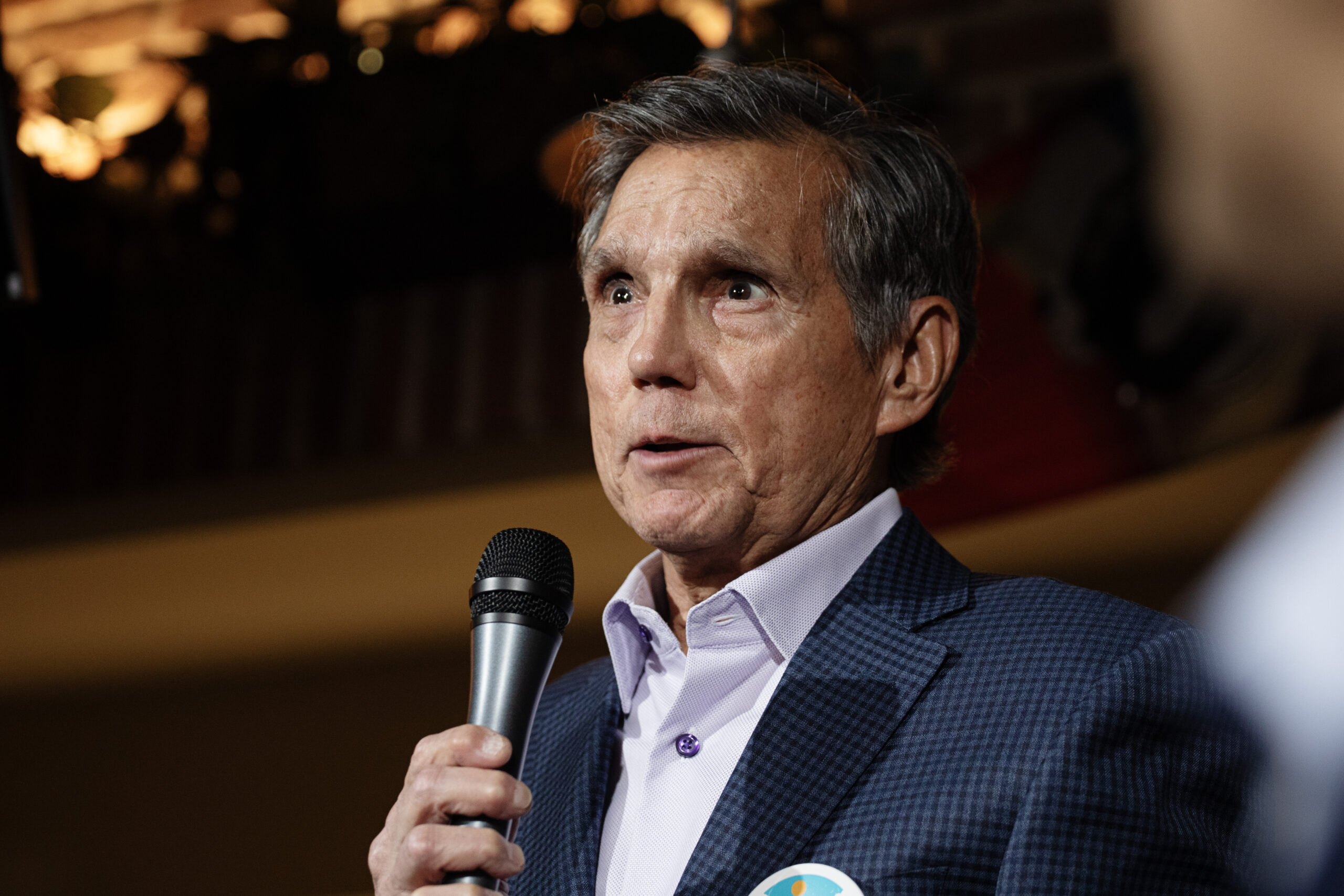
Forty-Five Years Ago This Week: In a guest column published in The Colorado Statesman, House Minority Leader Rep. Federico Peña, D-Denver, wrote that his greatest disappointment with the legislative process was “the inability, or unwillingness, of the General Assembly to address major issues in a forthright manner.”
One of the most serious issues was Colorado’s school finance reform. In 1973, the Colorado General Assembly had rewritten school finance law, which in effect added more money for public education and shifted significant financial support to the state. But the Colorado Department of Education cautioned in multiple annual reports to the legislature that inequalities persisted under the 1973 act and recommended corrective action.
Peña wrote that the legislature had failed to respond and, by 1977, spending in school districts ranged from $3,101 per pupil in the wealthiest districts to $1,004 per pupil in the poorest.
“In sum, public education in Colorado continued to be a function of local property wealth, or lack thereof,” Peña argued, “and children were not experiencing equal educational opportunities across the table.”
In 1978, a group of parents successfully sued the State Board of Education, arguing that their children were not receiving an equal, competitive education compared to those in high-wealth school districts. Judge Joseph R. Quinn ruled on March 13, 1979, that the Colorado school financial system was unconstitutional because of large disparities in the funding of Colorado children’s education.
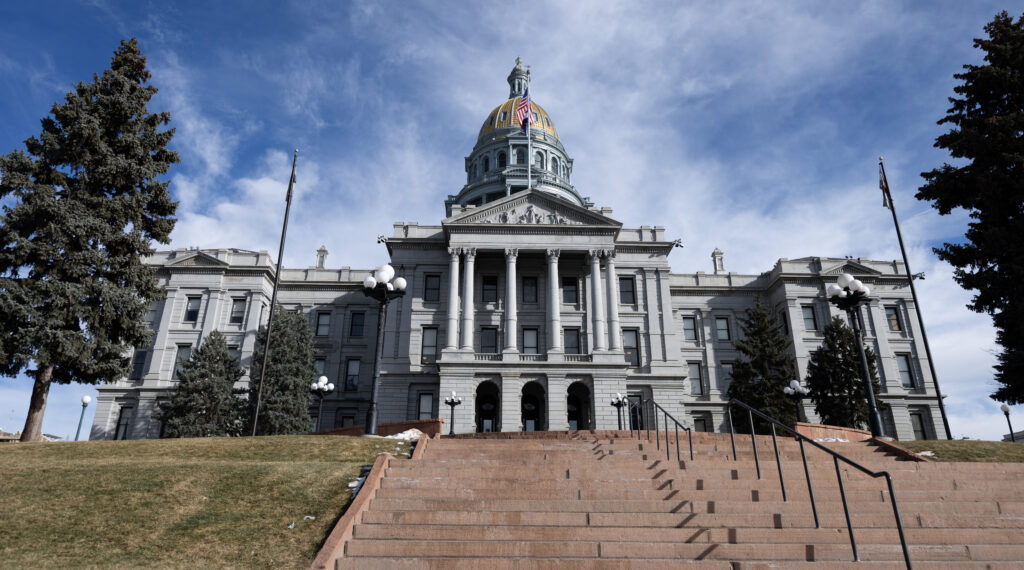
“The day the district court’s ruling was issued, one would have thought that the ‘gold dome’ had fallen upon the state legislature,” Peña wrote. He described members of the legislature accusing Quinn, widely regarded as the best trial judge in Colorado, of not understanding the law. And no one, he wrote, spoke of the children, equality of opportunity, or basic fairness.
“No one admitted that the Department of Education had been warning us of these problems since 1973,” Peña wrote.
When the furor eased, Peña argued that legislators embarked on a “strategy of delay” and the eight-member Legal Services Committee, without consulting any other legislators, filed an ‘amicus brief’ with the Supreme Court to defend the current statute.
“To date, no major surgery has been performed on our school’s finance act and we nervously await the Supreme Court’s decision,” Peña wrote. “If we had addressed the school finance challenge when we had a sizable surplus in our state budget, perhaps we would not be worrying as we are today.”
Twenty-Five Years Ago: Controlling growth in Colorado’s metro corridor was listed as a top priority for both Gov. Bill Owens and legislative leaders of both parties, but House Bill 01-1225, co-sponsored by Senate President Pro-Tem Ed Perlmutter, D-Golden, and Rep. Joe Stengel, R-Littleton, was the subject of furious debate.
“Imagine what a developer would put in a bill to protect his interest, and this is what you’ve got in HB 1225,” said Susan LeFever, Director of the Sierra Club’s Rocky Mountain Chapter. “It reads like a developer’s wishlist.”
HB01-1225, which had broad support from developers and even the Colorado Livestock Association, would require most populations and the fastest-growing cities and counties to enact binding master plans, with an outlined process for public input that would direct housing to areas with sufficient infrastructure to accommodate new growth.
Executive Director of the Colorado Environment Coalition, Elise Jones, said the bill was “sprawl as usual” and that the legislation was “long on burdensome, costly mandates for Colorado’s communities and short on relief for the critical problems of sprawl and traffic jams.”
Stengel vehemently disagreed with his critics, “This bill is a ‘homebuyer’s bill of rights’ … in that it will keep down the price of housing, particularly in the Denver metro area.”
Rachael Wright is the author of several novels, including The Twins of Strathnaver, with degrees in Political Science and History from Colorado Mesa University, and is a contributing columnist to Colorado Politics, the Colorado Springs Gazette, and the Denver Gazette.


Colorado lawmakers push legislation to shrink RTD board, increase pay as ridership struggles continue
Marissa Ventrelli
marissa.ventrelli@coloradopolitics.com
Updated 2 hours ago
Colorado lawmakers are advancing a new push to overhaul the Regional Transportation District, proposing to shrink the board, raise member pay, and boost ridership back to pre-pandemic levels. While some stakeholders see the effort as a step forward, others warn...

Colorado legislators drove up cost of Medicaid program
Marissa Ventrelli
marissa.ventrelli@coloradopolitics.com
Updated 4 hours ago
Some of Colorado’s spending woes in Medicaid can be traced to lawmakers who had approved new or expanded programs in the last few years, driving up state costs to the tune of tens of millions of dollars. Just three measures...

Colorado leaders weigh next steps after US Supreme Court rules against state’s ‘conversion therapy’ ban
Marissa Ventrelli
marissa.ventrelli@coloradopolitics.com
Updated 2 hours ago
Colorado leaders and advocacy groups remain divided after the U.S. Supreme Court on Tuesday ruled against the state’s ban on conversion therapy for minors, ruling 8-1 that the 2019 law violates the First Amendment. While it is a victory for...
Legislature busy sending lots of minor bills for governor’s signature | Hal Bidlack
Hal Bidlack
hal-bidlack@coloradopolitics.com
Updated 17 hours ago
One of the benefits of being, well, I guess technically, some type of journalist writing here on Colorado Politics, isI get on interesting mailing lists. A while back, some kind soul in the governor’s office added me to the daily...
SB26-140 will protect access to rare disease treatments | OPINION
Colorado Politics
colorado-politics@coloradopolitics.com
Updated 17 hours ago
By Amanda Boone There are moments in life that leave an indelible mark on your soul. For me, one came in the middle of the night when I took a full breath for the first time in over a decade....
Lawmakers hold the key to solving Colorado’s mental health crisis | OPINION
Colorado Politics
colorado-politics@coloradopolitics.com
Updated 17 hours ago
By Ryan M. Burkhart The U.S. is currently in the midst of a mental health crisis, and here in Colorado, more than 28% of residents live with a mental health condition. Unfortunately, a majority of Colorado residents are currently locked...
‘Change the terrain’ for deliberative democracy | FEEDBACK
Colorado Politics
colorado-politics@coloradopolitics.com
Updated 17 hours ago
Vince Bzdek’s Gazette piece on James Fishkin’s experiments in deliberative democracy is an interesting read, though the very factors that produced its results — balanced information, expert moderation, and structured discussion — are what everyday politics lacks, and precisely what...

Colorado Gov. Polis signs social media warrant bill after last year’s veto
Marissa Ventrelli
marissa.ventrelli@coloradopolitics.com
Updated 20 hours ago
Colorado law enforcement will soon have faster access to digital evidence after Gov. Jared Polis signed a pared‑down bill requiring social media companies to acknowledge and respond to search warrants on a tight timeline, a shift from a broader proposal...
Under fire from legislators and critics, Colorado’s top Medicaid official resigns
Marianne Goodland
marianne.goodland@coloradopolitics.com
Updated 23 hours ago
Colorado’s top Medicaid official stepped down on Monday, just as a bipartisan bloc of state senators prepared to formally urge Gov. Jared Polis to remove her over what they called years of mismanagement, waste and costly errors inside the state’s...

Killing off the Regional Transportation District | Miller Hudson
Miller Hudson
miller-hudson@coloradopolitics.com
Updated 2 days ago
This column is appearing the same day state Sen. Matt Ball (D) of Denver and his legislative co-sponsors unveil legislation implementing many of the recommendations advanced by last summer’s Regional Transportation District Accountability Committee. Although it isn’t readily apparent, they...
PREV
PREVIOUS

Here's what to know about the Homeland Security shutdown starting this weekend
Another shutdown for parts of the federal government is expected this weekend, following an impasse over funding for the U.S. Department of Homeland Security amid a push by Democrats for changes in immigration enforcement. Funding for the federal agency is set to expire Saturday. As the partial shutdown looms, local airport authorities said they won’t speculate about […]

Colorado Politics Calendar Feb. 16-22
CoPo’s weekly political calendar will help you find political and public-policy events throughout Colorado. It includes candidate and issue campaign events, public policy meetings, court hearings, state and local party conventions, assemblies, debates, rallies, parades, speaking engagements, traveling dignitary appearances, water meetings, book signings, county commission hearings, city council meetings and more. As a subscriber, […]