Colorado Supreme Court accepts cases about reliability of gun-to-bullet matching

The Colorado Supreme Court announced on Monday that it will hear two cases questioning the reliability of expert testimony that purports to identify whether a specific bullet was fired from a specific gun.
At least three of the court’s seven members must agree to take up a case on appeal. There is currently one vacancy, which the governor will fill next week.
The justices also signaled they may intervene in an ongoing insurance lawsuit in El Paso County, where a judge’s order seemingly ran contrary to a recent Supreme Cout decision in a similar case.
TOOLMARK ANALYSIS
“Toolmark” analysis involves examining the marks left on fired ammunition when it exits the barrel of a gun. Law enforcement may compare the markings from a recovered bullet at a crime scene to a bullet fired from the suspected weapon to determine if the same gun was used in the crime.
For courts to admit scientific evidence at trial, it needs to satisfy certain thresholds for reliability. Judges consider whether the scientific technique can and has been tested, whether the technique has undergone peer review, and the error rate, among other things.
Two defendants who were convicted of murder in Denver and Arapahoe counties challenged the expert toolmark testimony during their appeals. At the time, there were indicators that toolmark analysis had questionable scientific validity.
For example, in 2016, the President’s Council of Advisors on Science and Technology reported that “early studies indicate that examiners can, under some circumstances, associate ammunition with the gun from which it was fired.” However, “most of these studies involved designs that are not appropriate for assessing the scientific validity or estimating the reliability of the method as practiced.”
Then, in 2023, the Maryland Supreme Court reversed a defendant’s convictions by 4-3, concluding the toolmark examiner’s testimony was not reliable.
“We do not question that firearms identification is generally reliable, and can be helpful to a jury, in identifying whether patterns and markings on ‘unknown’ bullets or cartridges are consistent or inconsistent with those on bullets or cartridges known to have been fired from a particular firearm,” wrote the majority. But “firearms identification has not been shown to reach reliable results linking a particular unknown bullet to a particular known firearm.”
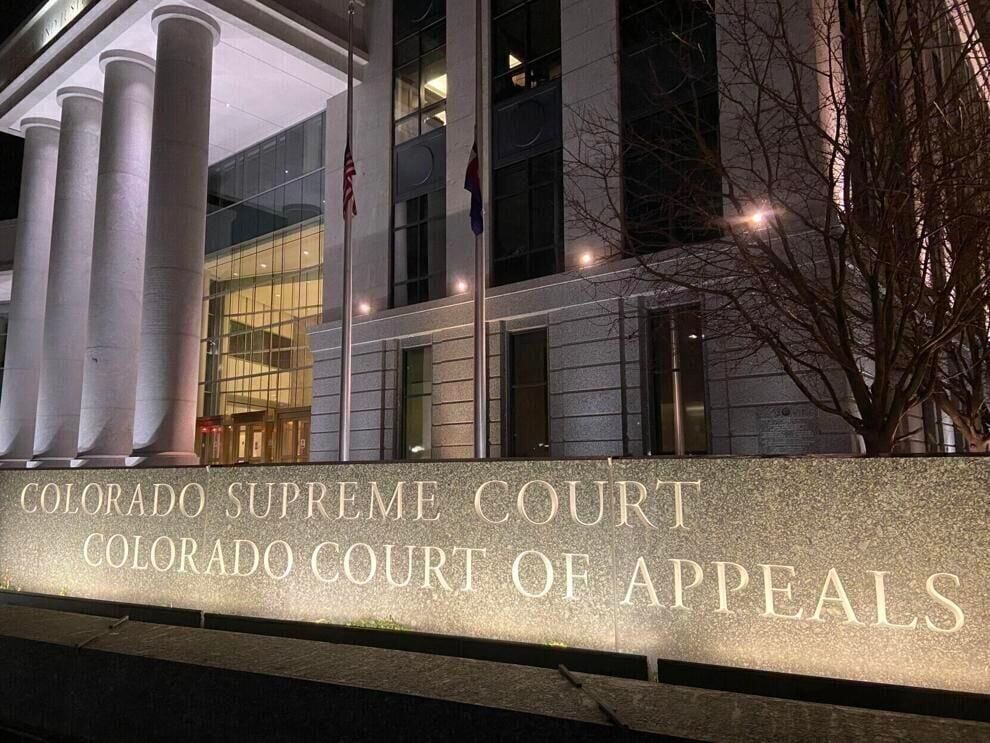
Each of the three-judge Court of Appeals panels acknowledged the critiques but ultimately upheld the convictions.
In the case of Ramon Rodriguez-Ortiz out of Denver, the Court of Appeals explained that toolmark analysis has been “meaningfully tested,” subjected to peer review, and has a low error rate.
Crucially, and unlike the Maryland case, the expert witness “qualified his opinion by saying that his determinations were not based on any quantitative analysis, and that his final conclusion was a subjective determination, not an objective one,” wrote Judge Rebecca R. Freyre last year.
Later, another panel addressed the Arapahoe County case of Mauricio Alvarado-Vasquez. Similarly, the Court of Appeals relied on the witness’s own caveats about the limitations of his analysis.
The expert “explained that any conclusions that a firearm and a bullet matched were ultimately determinations that experts decided based on their training and experience, and that each expert could have a different understanding of what constituted a sufficient match,” wrote Judge Daniel M. Taubman. “He admitted that his conclusions were not subject to peer review and that his methods could not determine who had handled the weapon at the time of the alleged crime.”
Both defendants appealed to the Supreme Court, seeking guidance about the scientific reliability of toolmark analysis.
Attorney Eric A. Samler, representing Alvarado-Vasquez, argued that the theory underlying toolmark comparisons is that each gun produces unique markings that are the same for each bullet. But those assumptions can be problematic, especially if markings are shared among firearms of a specific class.
“This poses a serious risk for misidentifying: if an examiner confuses subclass characteristics for individual ones, they will assume they have found the specific source of a bullet/cartridge case when the gun may only have come from the same batch of dozens, hundreds, or even thousands of guns,” wrote Samler.
The Supreme Court agreed to examine whether — and under what circumstances —toolmark evidence can be admissible.
The cases are Rodriguez-Ortiz v. People and Alvarado-Vasquez v. People.
MEDICAL RECORDS AND PSYCH EVAL
Samantha Pinto of Colorado Springs sued her former employer and insurance company, United Services Automobile Association, after she was injured in a 2020 rear-end accident. The insurer for the at-fault driver paid her $500,000, but Pinto’s estimated losses from her inability to work totaled nearly $1.4 million. Consequently, she sought the maximum of $300,000 under her USAA policy.
In September 2023, the USAA claims department offered her “$0.00 to settle” the claim. Pinto’s lawsuit sought the benefits under her policy and damages under state law for USAA’s unreasonable delay or denial.
At a Jan. 16 hearing, District Court Judge Eric Bentley addressed Pinto’s objections to some of USAA’s demands. She challenged USAA’s requests for her medical records related to other accidents that happened in 1999 and 2022. Pinto also disputed that she should sit for a neuropsychological exam with USAA’s medical expert.
Pinto’s attorney, Timothy G. Buxton, argued USAA was trying to “create new medical evidence that was not before the adjuster at the time the adjuster made her decision and USAA denied the claim,” in violation of Supreme Court precedent.
Bentley ordered Pinto to provide medical records, including documentation from her other accidents, and to sit for a psych eval. Although Bentley referenced a recent Supreme Court decision shooting down a different judge’s order for a personal injury plaintiff to be examined by that same doctor, he did not explain why he was ruling differently.
Pinto immediately turned to the Supreme Court.
“It is well settled law in Colorado that a denial of underinsured motorist benefits … is evaluated based on the evidence and information available to the insurer at the time it made its coverage decision, not on evidence developed later during litigation or trial,” her lawyers wrote. “Defendant is doing what this Court has already said it is not allowed to do: attempting to create new evidence to justify its position when defendant did nothing to try and make this evidence or request this evidence become available prior to rendering its decision.”
The Supreme Court ordered USAA to explain why it should not overturn Bentley’s order.
The case is Pinto v. United Services Automobile Association.


A day in the life of the Capitol: Capitol M | Week of Feb. 14, 2026
Marianne Goodland
marianne.goodland@coloradopolitics.com
Updated 2 days ago
The lighter side of the Capitol, usually. If you were walking around the Capitol on Feb. 12, there was plenty to see and to be amused (or delighted) by. Let’s start with the high school kids from Greeley’s District 6....
Appeals court clarifies what materials judges may rely on for postconviction decisions
Michael Karlik
michael.karlik@coloradopolitics.com
Updated 14 hours ago
Colorado’s second-highest court clarified on Thursday that trial judges who are deciding whether to grant relief to convicted defendants may rely on the materials attached to, or referenced in, the parties’ arguments. In contrast to direct appeals of criminal convictions,...
Colorado legislators, friends and family pay tribute to late Sen. Faith Winter
Marianne Goodland
marianne.goodland@coloradopolitics.com
Updated 14 hours ago
Colorado legislators on Friday, joined by current and former lawmakers, memorialized the late Sen. Faith Winter, noting her contributions to public policy in transportation, family and medical leave, and climate legislation. Winter died in an auto accident on Nov. 26...

No deal: Basin states remain deadlocked as Colorado River negotiations collapse again
Marianne Goodland
marianne.goodland@coloradopolitics.com
Updated 10 hours ago
With a Feb. 14 deadline looming, the seven states in the Colorado River Basin have not reached an agreement on how to manage the river after the 2026 operating guidelines expire later this year, and John Entsminger, Nevada’s chief negotiator,...

Push to regulate high concession prices in Colorado could hurt vendors, critics warn
Bernadette Berdychowski
bernadette.berdychowski@denvergazette.com
Updated 10 hours ago
High food and drink prices have long been a staple of going to a sports game, concert, festival or even the airport. But as inflation has increasingly pinched people’s wallets, pushback against excessive concession prices is growing. The issue has...

Colorado Democrats seek to legalize prostitution by July
The Denver Gazette
the-denver-gazette@coloradopolitics.com
Updated 14 hours ago
A group of Democrats is seeking to legalize prostitution in Colorado, arguing that current penalties “endanger” consenting adults. The proposal, if enacted, would decriminalize prostitution statewide and preempt local ordinances that ban it. If signed into law, it will take...

Evergreen CommonSpirit gunman identified as previous patient
9News
9news@coloradopolitics.com
Updated 16 hours ago
A gunman who shot into a primary care office in Evergreen Thursday afternoon was previously a patient at the facility, authorities said. Lance Black, 62, fired about 19 shotgun rounds into various pieces of equipment, computers and walls at a...

‘There will be costs,’ warns Jason Crow after failed indictments for ‘illegal orders’ video | TRAIL MIX
Ernest Luning
ernest.luning@coloradopolitics.com
Updated 10 hours ago
U.S. Rep. Jason Crow, the Aurora Democrat who represents Colorado’s 6th Congressional District, signaled this week that he’s considering pursuing legal action against members of the Trump administration after a federal grand jury in Washington declined to indict Crow and...

Colorado policymakers scramble with prisons on track to exceed capacity
Marianne Goodland
marianne.goodland@coloradopolitics.com
Updated 14 hours ago
Colorado’s prison system is on track to exceed capacity within the next year, driven by a sharp slowdown in parole releases, staffing shortages and an aging inmate population — all as lawmakers grapple with an $800 million general fund shortfall...

Senate Democrats weigh skipping Trump State of the Union address
David Sivak, Washington Examiner
david.sivak.washington.examiner@gazetteedit.wpenginepowered.com
Updated 2 days ago
EXCLUSIVE — Senate Democrats are grappling with whether to leave their chairs empty later this month when President Donald Trump travels to the Capitol to deliver the first State of the Union address of his second term. Senior Democrats have...