

Colorado budget writers put Medicaid caregiver pay cuts on hold

The Colorado General Assembly’s budget decision-makers have put proposed pay cuts on hold for people who care for a family member with a disability who receives Medicaid.
The Joint Budget Committee made the decision after hours of testimony from family caregivers and several advocates.
The Department of Health Care Policy and Financing has been struggling to manage a substantial spike in Medicaid spending, which accounts for about one-third of the state’s budget, even as Colorado faces a $1 billion budget deficit.
Members of the JBC earlier expressed concerns with Gov. Jared Polis’ proposal last November on how to plug that deficit, which included a plan to fund Medicaid below its projected growth.
“This isn’t a trim,” said JBC member Sen. Barbara Kirkmeyer, R-Brighton. “It’s a blow to families who are already fighting to get care. These numbers represent real people.”
“We used to balance the budget on the backs of students. Now, we’re balancing it on the backs of people who rely on Medicaid,” added Rep. Rick Taggart, R-Grand Junction. “This is a crisis of priorities.”
At issue during a JBC meeting last week were two proposals by the Department of Health Care Policy and Financing that it said would reduce Medicaid spending and “caregiver burnout” — a 56-hour weekly cap on paid caregiving hours for family caregivers and a “rate alignment” that would align their pay with that of host home providers. That would result in a pay decrease for most family caregivers.
Late last month, the JBC voted to maintain the current 112-hour weekly cap, but the state agency urged them to reconsider. Several days later, the committee voted to revisit the cut at a later date.
Nicole Villa, who said she provides full-time care to a family member with a disability, argued that family caregivers should be paid more than host homes because, while the latter have multiple staff providing care throughout the day, the former do everything themselves.
“We don’t have a choice,” Villa said. “We are stuck doing this 24/7, and HCPF seems to think that my son’s safety and cleanliness are worth only nine dollars an hour.”
Villa accused the state health agency of “gaslighting” the JBC by telling its members the realignment would save the state money, but, she argued, the opposite is true.
“We are saving the state so much money by doing this ourselves,” she said. “It’s hard, it’s disgusting, and there is no one else who would do this for our adults. It doesn’t get easier.”
Medicaid services have provided Lindy Sally with a home and access to resources that help her daughter, who has a rare genetic condition, thrive in her environment.
“With the changes currently being proposed, our lives would change drastically,” said the single mother of three. “These changes put families like mine at risk of losing their homes that have already been modified to meet our children’s needs. They would force students out of school districts and communities that understand and support their unique care requirements.”
“My child’s needs do not decrease because of funding or hours reduced,” Sally said.
Elizabeth Moran, executive director of the Arc of Colorado, argued that the cuts and realignment are simply cost-shifting measures — not cost-saving ones.
“It does not eliminate the increased need, it pushes people into crisis,” she said, adding that the cuts could result in an increased need for institutional beds that the state won’t be able to accommodate for.
“Why are some of the deepest cuts aimed at people with disabilities, people with low incomes, and those with the fewest choices?” Moran asked. “You have an opportunity to show that ‘Colorado for All’ is more than a slogan. It really reflects our values and our budget.”
Sen. Judy Amabile, D-Boulder, said she had concerns about implementing the cuts, especially after hearing from caregivers that they would rather work uncompensated hours than hire an outside caregiver “because they are the parents.”

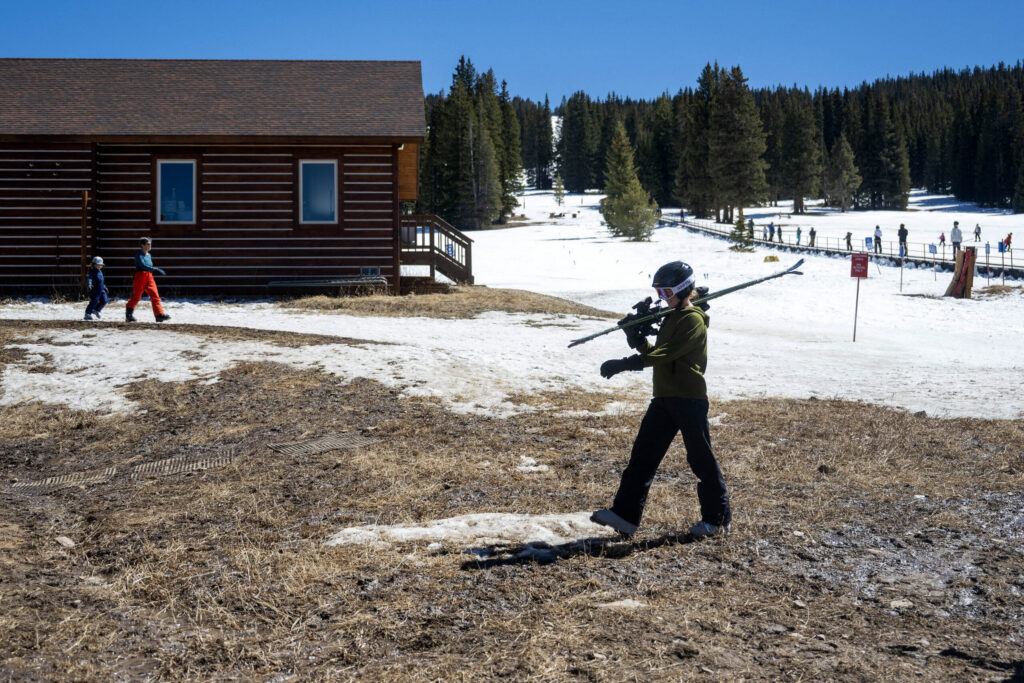
Colorado ski resorts announce early closures amid historic snowpack lows, high temperatures
Kyla Pearce
kyla.pearce@gazette.com
Updated 11 hours ago
As Colorado’s historically low snowpack year comes to a close and spring conditions take over the mountains, the state’s major ski resorts are announcing closing dates — some of which are weeks before historic closing dates. Most of Colorado’s ski...

Boulder police investigate sexual assault, ‘drugging’ at bar near CU
Matt Kyle
matt.kyle@denvergazette.com
Updated 14 hours ago
The Boulder Police Department is investigating reports of sexual assault and “suspected drugging” involving underage girls at a bar. There may be additional victims who have not yet come forward, the department said in a news release. The bar, Scrooge...

Democratic US Sen. John Hickenlooper qualifies for Colorado primary by petition, will skip assembly
Ernest Luning
ernest.luning@coloradopolitics.com
Updated 1 day ago
U.S. Sen. John Hickenlooper has qualified for Colorado’s Democratic primary after the first-term incumbent submitted enough valid petition signatures to make the ballot, state officials said. Hickenlooper is facing primary challenges from state Sen. Julie Gonzales, D-Denver, and university professor...
‘Civility in the City’ event with two national experts to be held Monday at UCCS
DEBBIE KELLEY
debbie-kelley@coloradopolitics.com
Updated 9 hours ago
Two notables working on the front lines of civic and cultural repair will discuss “Civility in the City” on Monday at the University of Colorado’s Colorado Springs campus. The event will feature Maury Giles, CEO of Braver Angels, and Alexandra...
Pinnacol separation bill delayed as Colorado budget remains in flux due to $1.5B deficit
Marianne Goodland
marianne.goodland@coloradopolitics.com
Updated 1 day ago
A bill that would allow Pinnacol Assurance to formally sever its remaining ties with the state appears unlikely to emerge anytime soon, as House leaders juggle a massive budget shortfall, unresolved negotiations with key stakeholders, and growing doubts about whether...

U.S. Sen. Michael Bennet qualifies by petition for Colorado’s Democratic gubernatorial primary
Ernest Luning
ernest.luning@coloradopolitics.com
Updated 1 day ago
U.S. Sen. Michael Bennet on Tuesday became the first gubernatorial candidate to qualify for Colorado’s June primary ballot after state election officials determined the three-term Democrat’s campaign submitted enough valid petition signatures. Bennet is running against Attorney General Phil Weiser...

Thornton police investigating homicide
Matt Kyle
matt.kyle@denvergazette.com
Updated 1 day ago
Police in Thornton are investigating a homicide that happened late Wednesday night. Thornton Police Department officers responded just before 11 p.m. near the intersection of East 88th Avenue and Grant Street after a 911 caller reported someone bleeding. Upon arrival,...

Colorado legislators consider $500 million in general fund cuts amid $1.5 billion deficit
Marianne Goodland
marianne.goodland@coloradopolitics.com
Updated 2 days ago
The legislature’s Joint Budget Committee is working through a list Wednesday of about 150 suggestions to cut as much as $1.5 billion in general fund dollars out of next year’s budget. The largest on the list prepared by JBC staff...
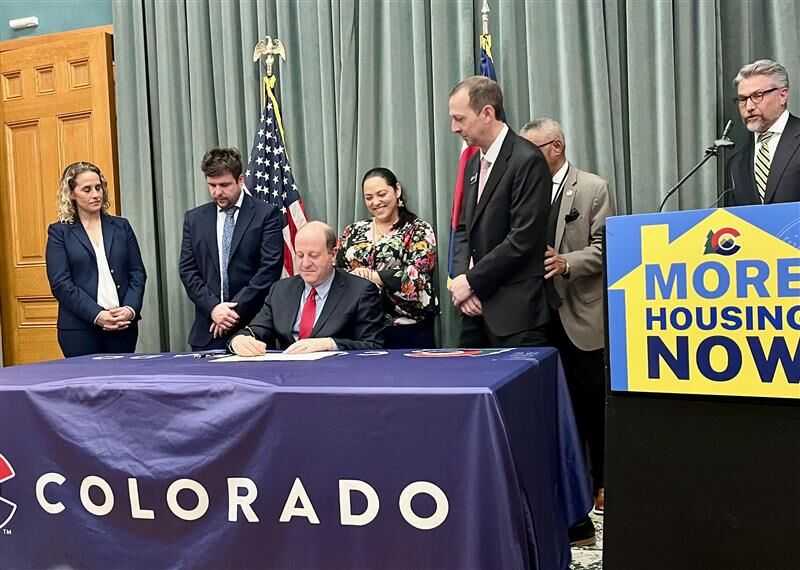
Gov. Jared Polis signs housing bills amid push for ‘affordability’
Marissa Ventrelli
marissa.ventrelli@coloradopolitics.com
Updated 1 day ago
Gov. Jared Polis held the first public bill signing of the 2026 legislative session on Wednesday on a pair of housing measures that, sponsors said, are aimed at affordability. Part of Democrats’ “affordable” housing package this year, the bills —...

Colorado farmers begin spring planting season with soaring fertilizer costs and price-gouging fears
Marianne Goodland
marianne.goodland@coloradopolitics.com
Updated 4 hours ago
As Colorado farmers prepare their fields for spring planting, many are sounding the alarm over fertilizer prices that have surged far beyond what they say global supply disruptions can explain. With nitrogen costs up 30% in a matter of days,...
PREV
PREVIOUS
Colorado lawmakers seek faster warrant response from social media firms
Proponents argue legislation would prevent school shootings Colorado officials on Monday claimed that the Evergreen High School shooting could have been prevented if social media companies had been required to respond faster to warrants — and they are pushing legislation at the state and federal levels to speed up that process. Current laws allow social […]

Laura Clellan named sole finalist for Colorado Parks and Wildlife director
The Department of Natural Resources announced Monday that Laura Clellan, who is currently serving as acting director of Colorado Parks and Wildlife, is the only finalist for the job. Clellan has been acting director of CPW since Nov. 25, when she replaced Jeff Davis, who served as the agency’s director for just over two years. […]