

Susan Blanco, innovator in the judiciary | SUPREME COURT FINALISTS
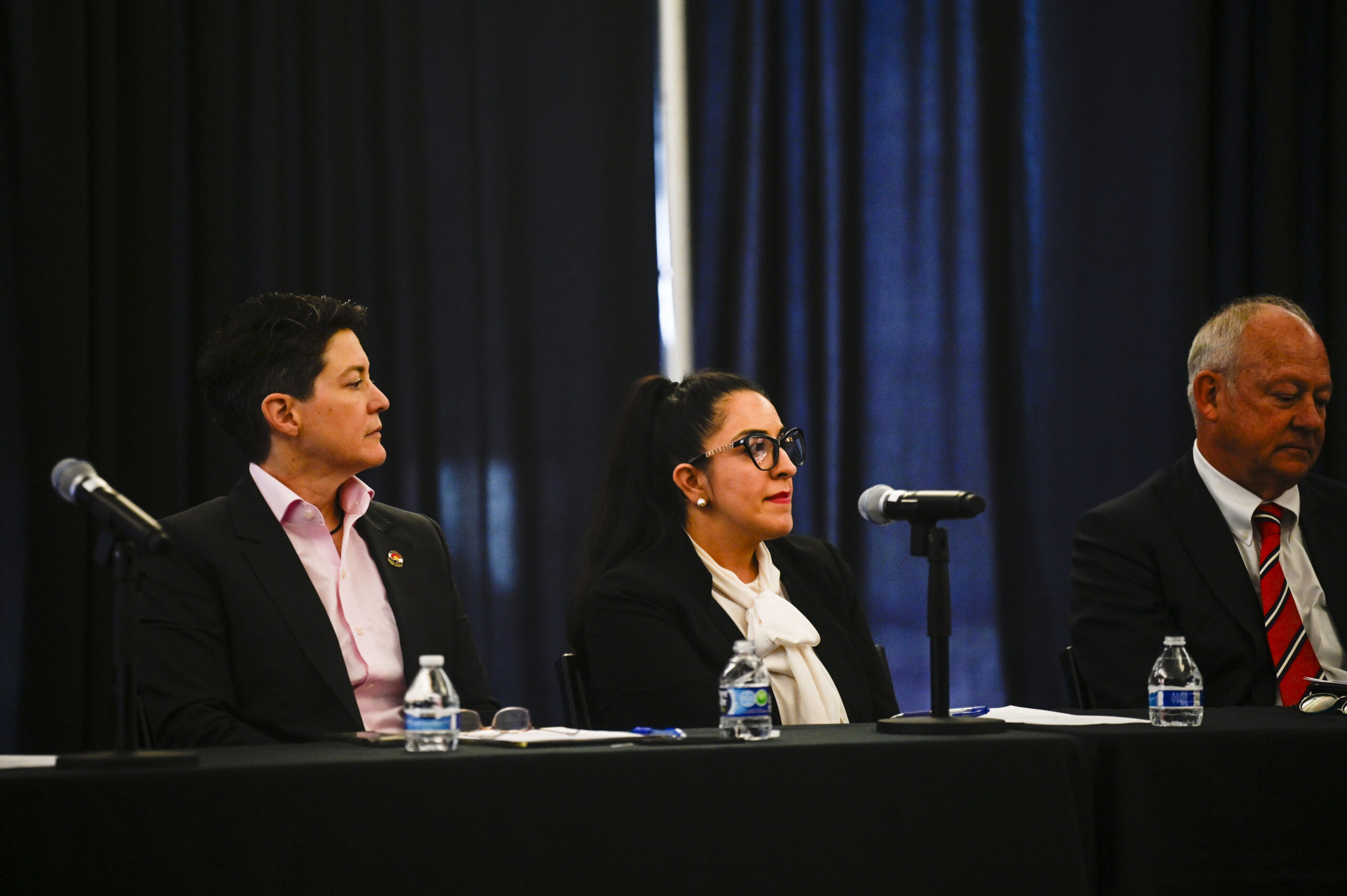
Less than 24 hours after her selection as a finalist for a Colorado Supreme Court vacancy, Chief Judge Susan Blanco was back on the bench in Fort Collins, moving methodically through the variety of complications she encountered.
“Your goatee might grow to your belly button by then,” she quipped to a defendant awaiting the delayed results of a blood test. “We’ve been seeing this happen for a while, so just have some patience.”
“There’s no need to have you drive five hours down here. We can do this with technology,” Blanco told a defendant, who said she did not have a car to get to her next court appearance.
“Sometimes, people get nervous and what they say out loud doesn’t match what their intentions were,” she said to a defendant who offered conflicting explanations of his dangerous behavior behind the wheel. “It’s your driving, not the words that you said, that are the basis of this sentence.”
Blanco, 48, became a district judge in January 2017 for Larimer and Jackson counties. Although the Supreme Court’s roster currently includes four former trial judges and two former chief judges, Blanco told Colorado Politics that her range of experience — from prosecutor to criminal defense attorney to representing children in child neglect cases — sets her apart.
“We would visit people’s homes. You, kind of shoulder-to-shoulder, figure out how to help these kids and these parents reunify, if it can happen,” she said. “There was a lot that I didn’t really appreciate that people were going through when I was a prosecutor.”
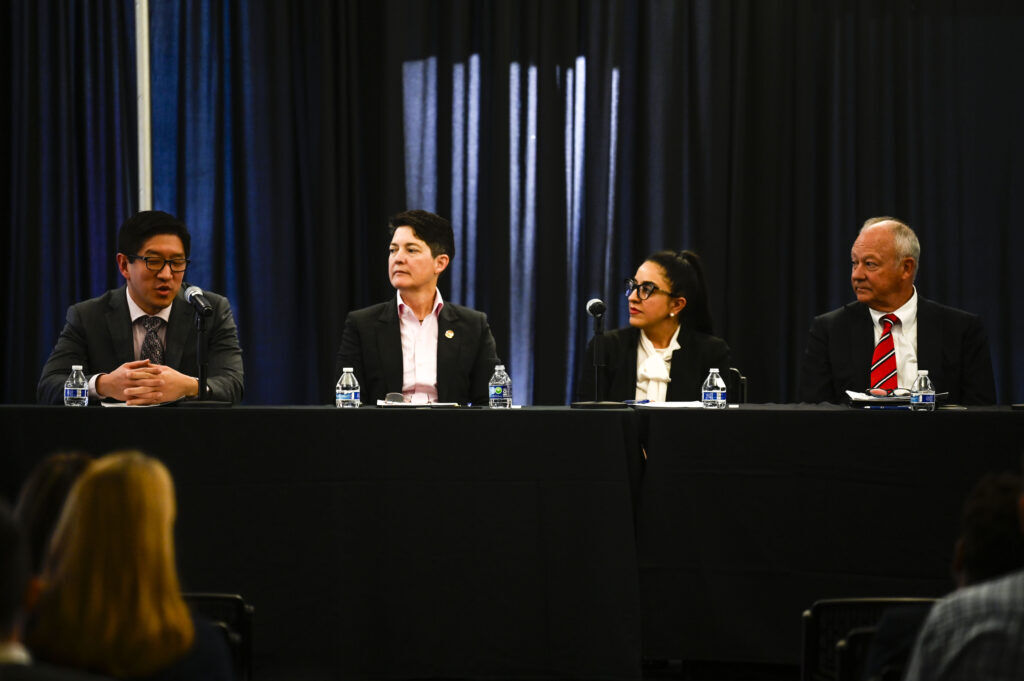
Now, Blanco’s influence extends beyond her courtroom and her judicial district. She was involved with writing the judiciary’s livestreaming policy in the wake of the pandemic and leads the Judicial Department’s access-to-justice and information technology committees.
Last month, the chief justice brought her before the legislature to discuss the growth of competency courts — a program Blanco recently started in her own jurisdiction. In a 2024 TEDx talk, Blanco described her frustration as a new judge with the state hospital’s inability to promptly evaluate people who were unable to assist in their defense due to mental conditions.
“I started in desperation to threaten to hold the leaders of the hospital in contempt of court,” she said. Eventually, she convened various interested parties to develop a competency court, designed as an “off-ramp” for people to receive services and exit the criminal justice system.
Larimer County Sheriff John Feyen, who has known Blanco for over 20 years, said the competency court has resulted in better outcomes because people are receiving improved services, complying with their medications and living a better quality of life.
“I think her work here, with the specialty court, again is an embodiment of who Susan Blanco is. Trying to find good outcomes while holding people accountable,” he said. “I think Chief Judge Blanco’s elevation to the state Supreme Court may provide a broader platform for incorporating similar courts throughout the state.”
“She just has that knack for being a leader in that respect,” said District Court Judge Juan G. Villaseñor, who serves alongside Blanco in Larimer County. She “loves to engage in policy and craft policy, implement policy, think about how to better serve the stakeholders. In this case, people. The people of Colorado, who are going to be using the courts, voluntarily or compulsorily.”
He added that Blanco is skilled at the “academic and legal” aspects of judging, but she is also an ambassador for the judiciary to the public.
“She’s a firm believer in being out in the community and doing that,” said Villaseñor.
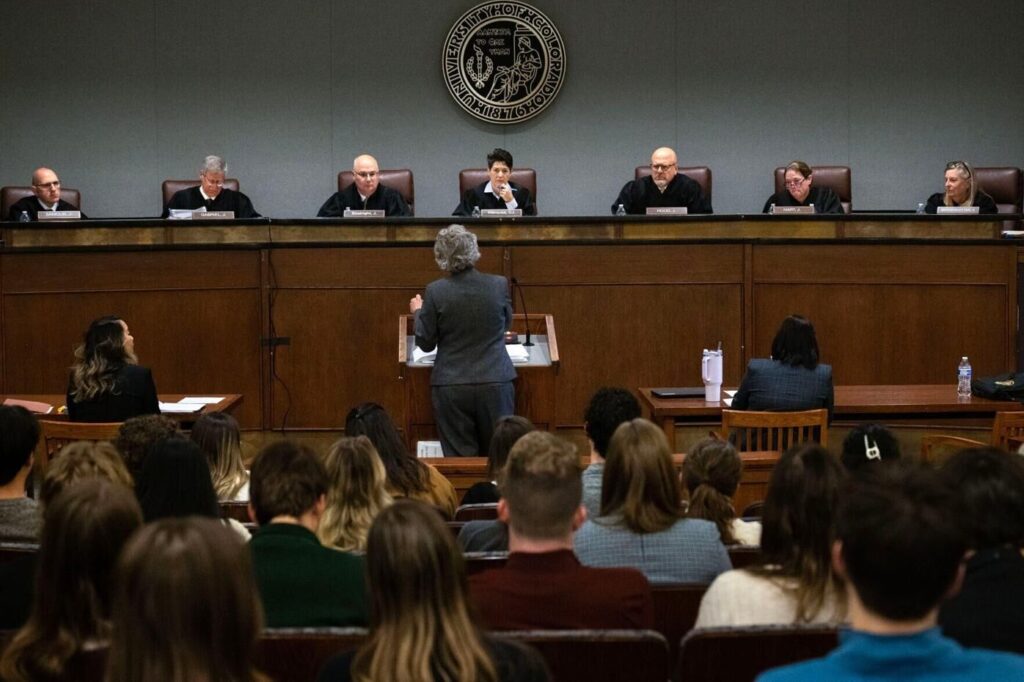
Although the Supreme Court is most visible when it holds oral arguments or issues opinions in cases, the job largely entails behind-the-scenes committee work and administration of the legal system. Blanco told Colorado Politics she enjoys working on the access-to-justice and IT committees, but she would embrace whatever assignment she receives as a justice.
At the same time, she said she is interested in working on safeguards for generative artificial intelligence.
“I think we’re gonna have to do a lot more work on that front when it comes to harnessing rules on technology to make sure people are getting a fair trial, and everyone knows how to authenticate evidence so it’s more reliable,” she said.
Blanco described in her judicial application the need for the Supreme Court to honor each judicial district’s “autonomy to implement local operational policies.” She cited her own weekend work setting bonds remotely in rural jurisdictions in southwestern Colorado.
“We work hand-in-hand with that community” to learn what they want bond-settings to look like, she said.
Although Blanco acknowledged that she did not have experience with some subjects, like water law, she said she would lean on her law clerks, other members of the court and be humble in asking lawyers for help in explaining issues.
“The invitation, as a practitioner, is sometimes really appreciated,” Blanco said.
Asked about the state Supreme Court’s responsibility to protect the integrity of the legal system amid a deluge of challenges to the lawfulness of the federal government’s actions, Blanco emphasized the need for judicial independence.
“My family are immigrants,” she said. “It’s not lost on me what it looks like when the rule of law is absent from a society.”

Who are the 3 finalists for the Colorado Supreme Court?
Michael Karlik
michael.karlik@coloradopolitics.com
Updated 52 minutes ago
A citizen-led nominating commission has chosen the finalists for a vacancy on the Colorado Supreme Court, the first opening in five years on the seven-member court. The vacancy arose after the unexpected resignation of Justice Melissa Hart, who formally departed...
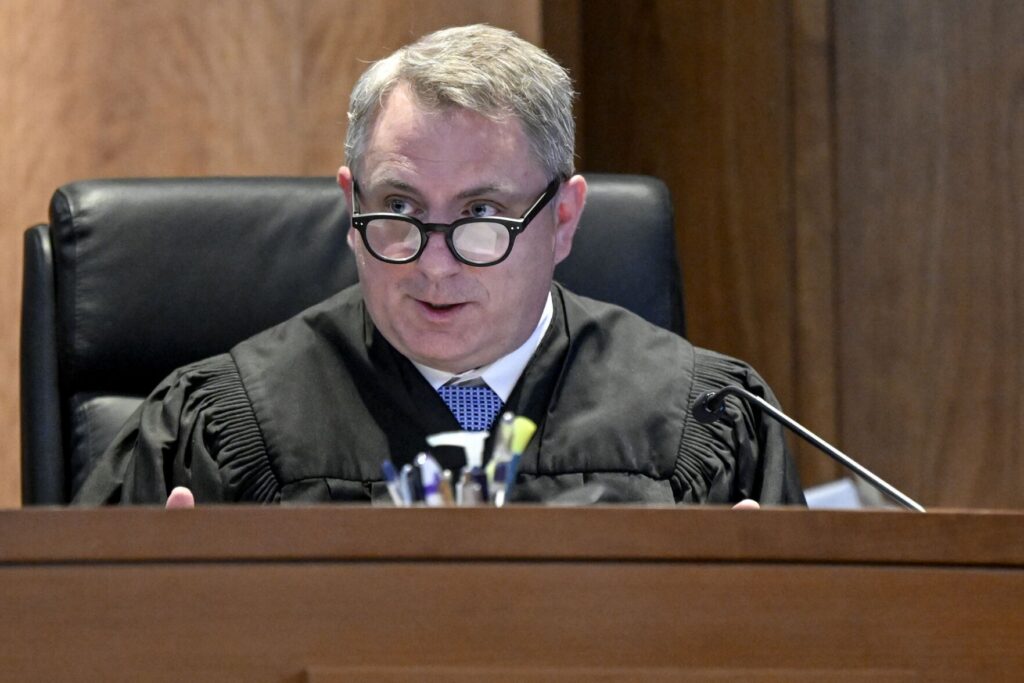
Christopher Zenisek, trial judge experienced with high-profile cases | SUPREME COURT FINALISTS
Michael Karlik
michael.karlik@coloradopolitics.com
Updated 54 minutes ago
After the Marshall fire burned through Boulder County in the final days of 2021 and wound up destroying more than 1,000 homes, the sprawling 4,000-plaintiff litigation was assigned to District Court Judge Christopher Zenisek of Jefferson County. Zenisek would go...
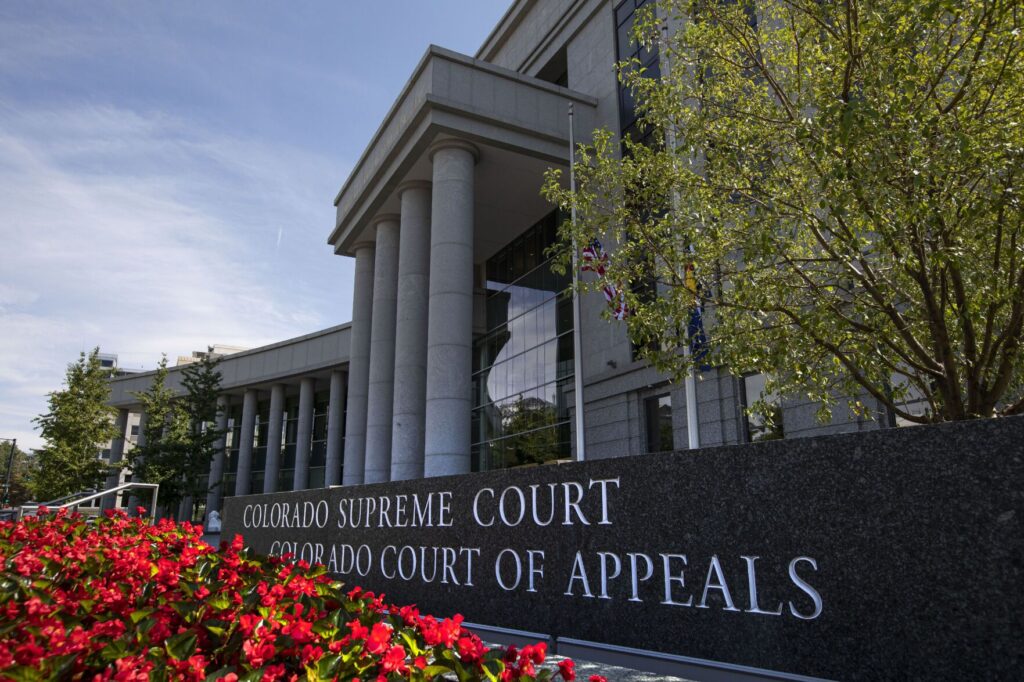
Andrea Wang, water and energy expert | SUPREME COURT FINALISTS
Michael Karlik
michael.karlik@coloradopolitics.com
Updated 59 minutes ago
When the late Chief Justice Mary Mullarkey authored a 2002 opinion in the complex and long-running Taylor Ranch case involving landowners’ claims to access a 77,000-acre tract in the San Luis Valley, she worked with her law clerk, Andrea S....

Colorado joins lawsuit against Trump energy emergency order
Scott Weiser
scott.weiser@gazette.com
Updated 1 hour ago
Colorado Attorney General Phil Weiser joined a multistate lawsuit challenging an executive order invoking the National Emergencies Act that President Donald Trump issued on the day of his inauguration. The order fast-tracks fossil fuel projects by bypassing or shortening environmental...
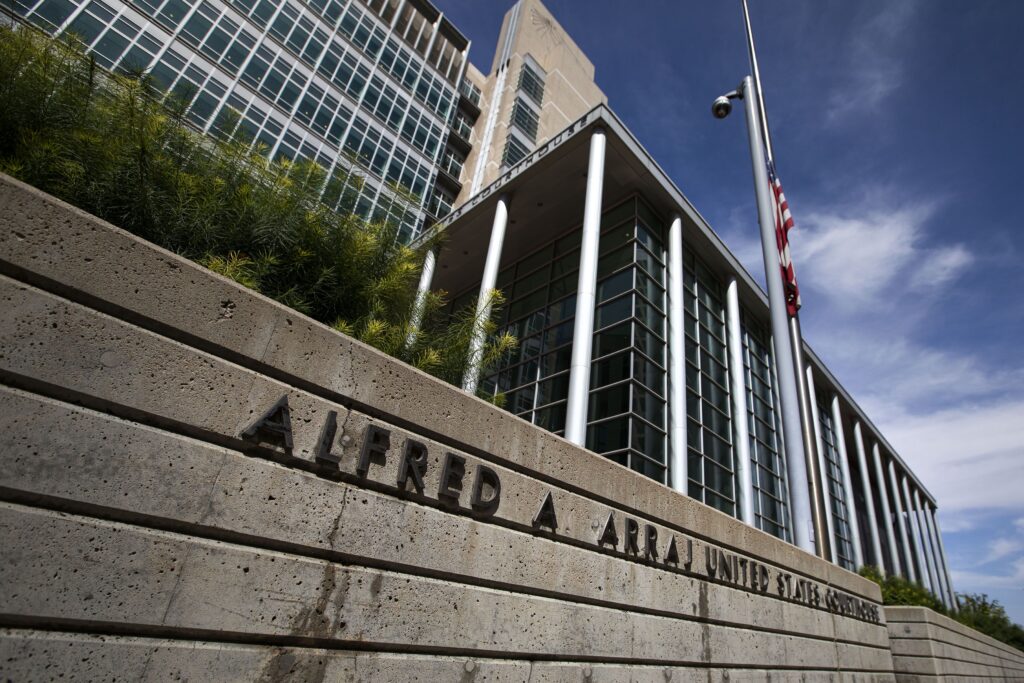
Colorado’s federal judges slash motions backlog to lowest in years
Michael Karlik
michael.karlik@coloradopolitics.com
Updated 1 day ago
Colorado’s federal trial judges collectively had 37 motions in civil cases that had been sitting on their dockets for at least six months without a ruling, as of Sept. 30. That is the smallest backlog the state’s U.S. District Court...
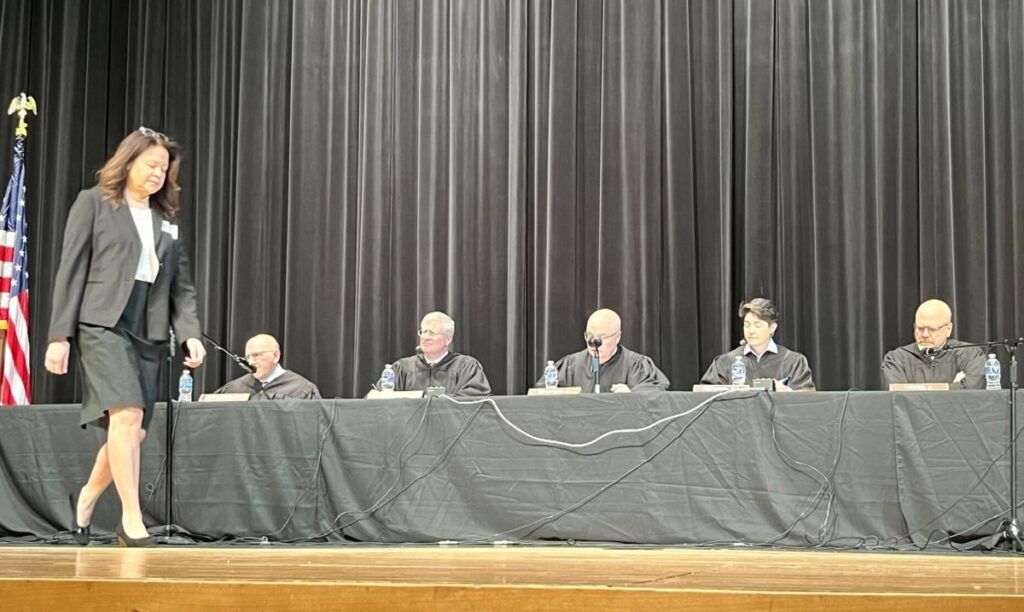
Colorado Supreme Court to review child custody decision
Michael Karlik
michael.karlik@coloradopolitics.com
Updated 1 day ago
The Colorado Supreme Court announced on Monday that it will review whether the state’s second-highest court described the correct framework for deciding whether to terminate a parent’s legal rights over a child. At least three of the court’s seven members...

Judicial agencies appear for oversight hearings, judge warns government about rejected arguments | COURT CRAWL
Michael Karlik
michael.karlik@coloradopolitics.com
Updated 2 days ago
Welcome to Court Crawl, Colorado Politics’ roundup of news from the third branch of government. Leaders of various judicial-related agencies appeared for oversight hearings in front of state lawmakers, plus a federal judge is cautioning the government about repeatedly raising...
Colorado justices reject defendant’s claim of race-based murder prosecution
Michael Karlik
michael.karlik@coloradopolitics.com
Updated 2 days ago
The Colorado Supreme Court rejected a convicted defendant’s argument on Monday that Arapahoe County prosecutors unconstitutionally singled out him and another Black teenager for murder prosecutions as adults, while offering lenient plea deals to their two non-Black co-defendants. Lloyd Chavez...
Colorado justices reject defendant’s claim of race-based murder prosecution
Michael Karlik
michael.karlik@coloradopolitics.com
Updated 2 days ago
The Colorado Supreme Court rejected a convicted defendant’s argument on Monday that Arapahoe County prosecutors unconstitutionally singled out him and another Black teenager for murder prosecutions as adults, while offering lenient plea deals to their two non-Black co-defendants. Lloyd Chavez...
Colorado justices find portion of anti-SLAPP law unconstitutional
Michael Karlik
michael.karlik@coloradopolitics.com
Updated 2 days ago
The Colorado Supreme Court ruled on Monday that a 2019 law designed to protect the exercise of First Amendment rights conflicts with the state constitution in certain scenarios involving appeals from county courts. Known as the “anti-SLAPP” law, which stands for...
PREV
PREVIOUS

Colorado GOP vice chair Richard Holtorf resigns, says it’s ‘impossible’ to work with chair Brita Horn
Colorado Republican Party Vice Chair Richard Holtorf notified GOP officials on Tuesday that he will step down from the party position at the end of the month, citing his inability to work with state chair Brita Horn. Holtorf, a third-generation cattle rancher, former state lawmaker and congressional candidate, is the second state GOP vice chair […]
Andrea Wang, water and energy expert | SUPREME COURT FINALISTS
When the late Chief Justice Mary Mullarkey authored a 2002 opinion in the complex and long-running Taylor Ranch case involving landowners’ claims to access a 77,000-acre tract in the San Luis Valley, she worked with her law clerk, Andrea S. Wang. “She’s just a very thoughtful person, and her writing style is good. I found […]