

Federal judge blocks USDA ‘pilot project’ affecting Colorado food assistance

A federal judge blocked the U.S. Department of Agriculture on Wednesday from proceeding further with a “pilot project” that would require five Colorado counties to rapidly recertify more than 100,000 households for food assistance.
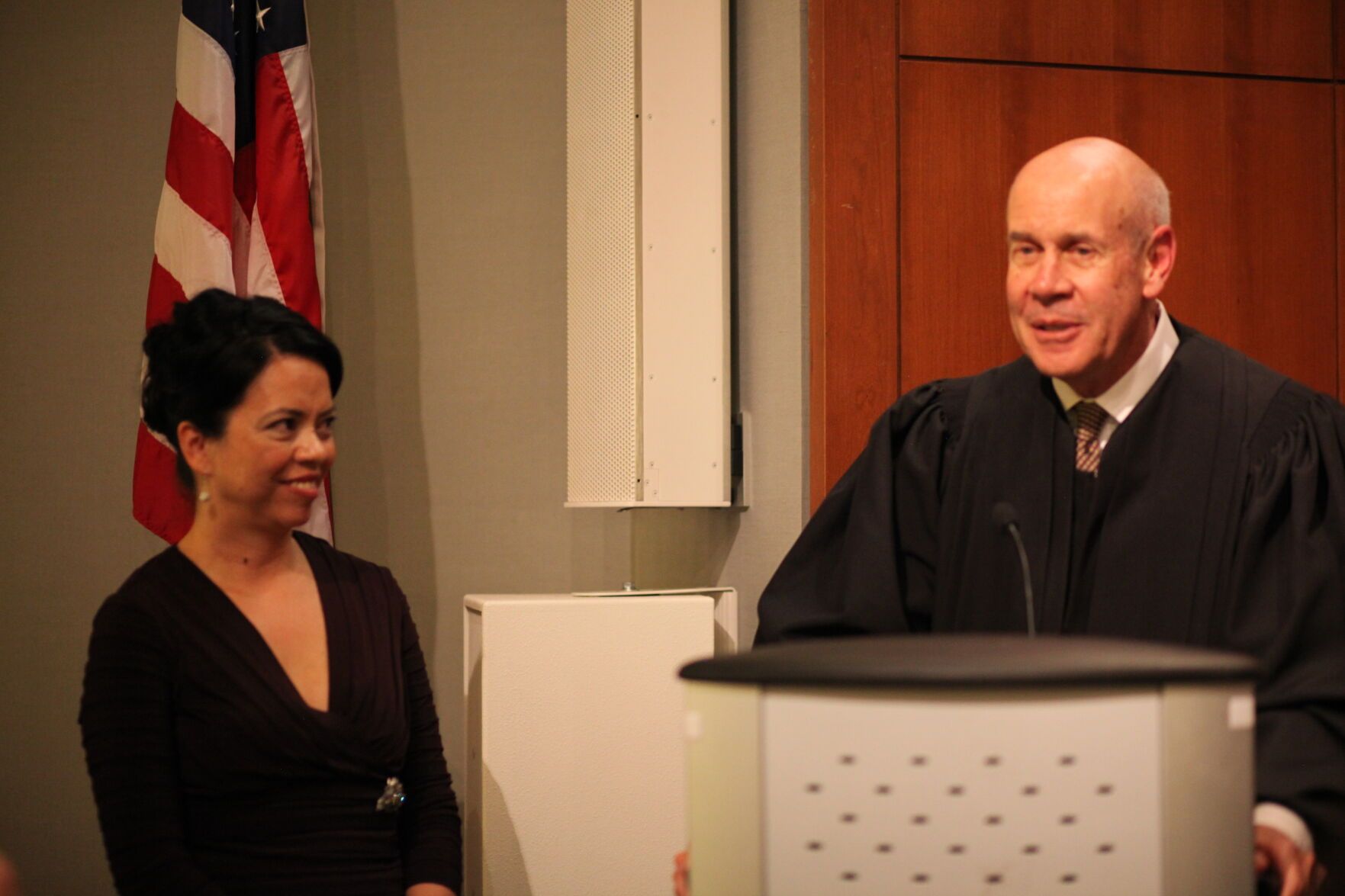
In a brief ruling from the bench, U.S. District Court Senior Judge R. Brooke Jackson found Colorado would face imminent and irreparable harm in the form of households losing Supplemental Nutrition Assistance Program benefits and the USDA potentially withholding millions of dollars in funding from the state.
“Finally, the court finds that the threat of sanctions, which, quite frankly, is a very real threat, is itself causing the irreparable harm,” said Jackson, a Barack Obama appointee. “Putting the state in the position of having to proceed with the sword of the United States hanging over their head.”
Jackson heard from the state that the USDA’s mid-December demand to participate in the pilot project is an unrealistic imposition on the targeted counties and the SNAP recipients who live there. The government’s stated concern is the possibility of increased benefits fraud in states that administer SNAP through their counties, as Colorado does.
Jackson repeatedly asked the U.S. Department of Justice’s attorney what evidence the USDA had of any fraud in the five affected counties.
Attorney Tyler J. Becker responded that the USDA has looked at county-administered programs in other states that have provided their data to the department, and “intrastate duplication” of benefits is more of a problem there.
“What evidence is there to support this accusation? This is a big deal. You’re accusing Colorado with fraud. And you throw it out and you say it’s obvious that USDA thought there were some problems with Colorado. Fraud — fraud in Colorado,” said Jackson. “I’ve asked you that two or three times. You’ve given me nothing to support that. And yet you just make this statement — accusing Colorado of one of the worst kinds of conduct that you can accuse it of. How do you do that?”
On Dec. 17, Deputy Under Secretary Patrick A. Penn sent a letter to Gov. Jared Polis “hereby requiring Colorado to participate” in a pilot project. Penn cited, as a reason, “ongoing fraud affecting federally funded food benefits.” As an intervention, the USDA proposed to require Arapahoe, Adams, Jefferson, Boulder and Douglas counties to review and recertify all households receiving SNAP benefits within 30 days.
Normally, Colorado recertifies beneficiaries every six months, staggering the process such that one-sixth of households are renewed in a given month.
“Failure to participate in this pilot project as specified by USDA will trigger noncompliance procedures,” Penn’s letter continued. “It may also affect Colorado’s continued participation in SNAP.”
On Jan. 12, days before the deadline, the state sought a preliminary injunction blocking the USDA’s demand. Separately, Minnesota is litigating against its own pilot project letter. Two days after Colorado filed its motion, the USDA withdrew SNAP funding from Minnesota, minutes before a judge there was scheduled to hear the case. The judge quickly blocked the department from enforcing its demand, finding the government imposed a new obligation “without any reasoned explanation.”
“USDA gave Colorado no advance notice, no time to plan. Just an unexpected letter that showed up in the governor’s mailbox with an untenable deadline,” Deputy Solicitor General David Moskowitz told Jackson. “The request wasn’t remotely feasible. … It wasn’t meant to be. This is not a real pilot project. It doesn’t look anything like a real pilot project.”
Becker, the Justice Department attorney, said the abrupt action against Minnesota had “nothing to do” with the pilot project. He added that Colorado’s deadline to comply had passed and the USDA had not initiated sanctions. If the department did want to penalize the state, there would be a separate process, in which Colorado could raise its objections.
“So, Colorado is going to be sanctioned. If it doesn’t comply, it’s going to be sanctioned, yes?” asked Jackson.
“USDA has not made that determination,” said Becker.
“Would you be able to enlighten us as to why the department has singled out Minnesota and Colorado for these pilot projects?” pressed Jackson.
Becker argued that states administering SNAP through counties are more susceptible to delivering duplicate benefits. But Jackson countered that USDA had no data to that effect for Colorado. Further, a pair of reports from 2023 and 2024 made findings about Denver and Larimer counties, but not for the five jurisdictions mentioned in Penn’s letter.
“When they decided to go for a pilot project in Colorado, this state, what evidence was there in their possession, on which they relied, about fraud, waste and mismanagement?” Jackson asked. “Do you have that in your possession? And can you tell us what it is?”
Becker repeated that the department had statistics from other states, but not for Colorado and not for the five targeted counties.
Finally, Jackson noted the department had to publish a notice if the pilot project would likely have “a significant impact on the public.” Becker argued the USDA did not believe there would be a significant impact to the 100,000 affected households.
“If there’s no substantial impact here, then why in the world are you doing this (pilot project)?” asked Jackson. “Here we are fighting about it in federal court. You can’t have it both ways.”
Jackson said he would issue a separate written order soon elaborating upon his oral ruling that blocked the USDA from taking further action.
The case is The State of Colorado v. Trump et al.

Colorado lawmakers hear about increased judicial discipline complaints, fallout from Missy Woods misconduct
Michael Karlik
michael.karlik@coloradopolitics.com
Updated 5 hours ago
Members of the Colorado legislature’s judiciary committees heard about a large increase in complaints against judges and additional forensic misconduct that has come to light, during three days of oversight hearings last week. Leaders of several judicial-related agencies appeared between...
Federal judge warns DOJ against raising repeatedly rejected arguments in immigration detention cases
Michael Karlik
michael.karlik@coloradopolitics.com
Updated 5 hours ago
A federal judge in Colorado warned the U.S. Department of Justice on Monday against raising arguments that she and other judges have repeatedly rejected in cases challenging the lawfulness of immigration detentions. In a Jan. 26 order finding the government...

Colorado Supreme Court to address child’s CCTV testimony
Michael Karlik
michael.karlik@coloradopolitics.com
Updated 1 day ago
The Colorado Supreme Court announced on Monday that it will review the impact of a victim’s closed-circuit testimony on the prosecution of a juvenile defendant. At least three of the court’s seven members must agree to hear an appeal. There...

10th Circuit to hold all-judges hearing, judicial committee turns down ‘civility code’ | COURT CRAWL
Michael Karlik
michael.karlik@coloradopolitics.com
Updated 2 days ago
Welcome to Court Crawl, Colorado Politics’ roundup of news from the third branch of government. The Denver-based federal appeals court agreed to hold a rare all-judges hearing in a criminal case, plus a state Supreme Court committee overwhelmingly rejected a...

Divided Colorado Supreme Court curtails use of laced-substances defense
Michael Karlik
michael.karlik@coloradopolitics.com
Updated 3 hours ago
The Colorado Supreme Court on Monday walked back the ability of criminal defendants to claim their conduct was the result of consuming an intoxicating substance that secretly contained another behavior-altering substance. Under state law, “involuntary intoxication” is an affirmative defense,...
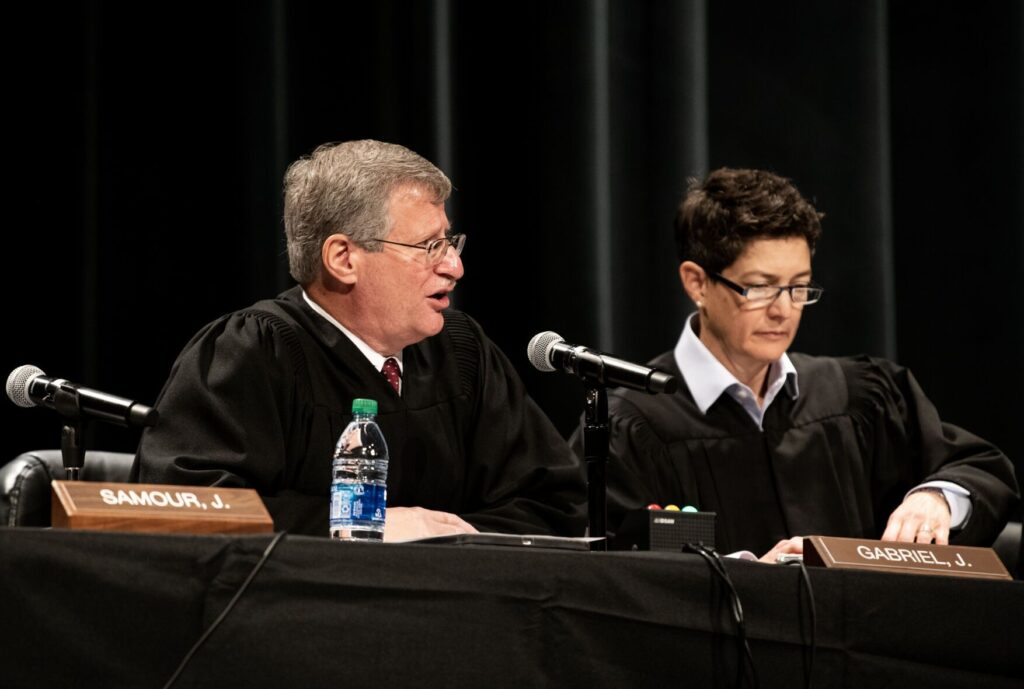
Colorado justices say utilities commission overreached by immunizing Xcel in rate document
Michael Karlik
michael.karlik@coloradopolitics.com
Updated 2 days ago
Xcel Energy cannot rely upon a rate-setting document to broadly immunize itself from liability against electrocutions, the Colorado Supreme Court ruled on Monday. The justices originally heard the electrocution-related lawsuit from Francisco Cuevas to decide whether Xcel’s tariff, which sets...
Colorado Supreme Court committee rejects civility proposal amid fears of weaponization by judges, ‘jerks’
Michael Karlik
michael.karlik@coloradopolitics.com
Updated 2 days ago
The Colorado Supreme Court’s Civil Rules Committee overwhelmingly rejected a proposal last week to create an enforceable “civility code” for lawyers and legal paraprofessionals, which would allow judges to quickly impose corrective action without a formal complaint and investigation by...
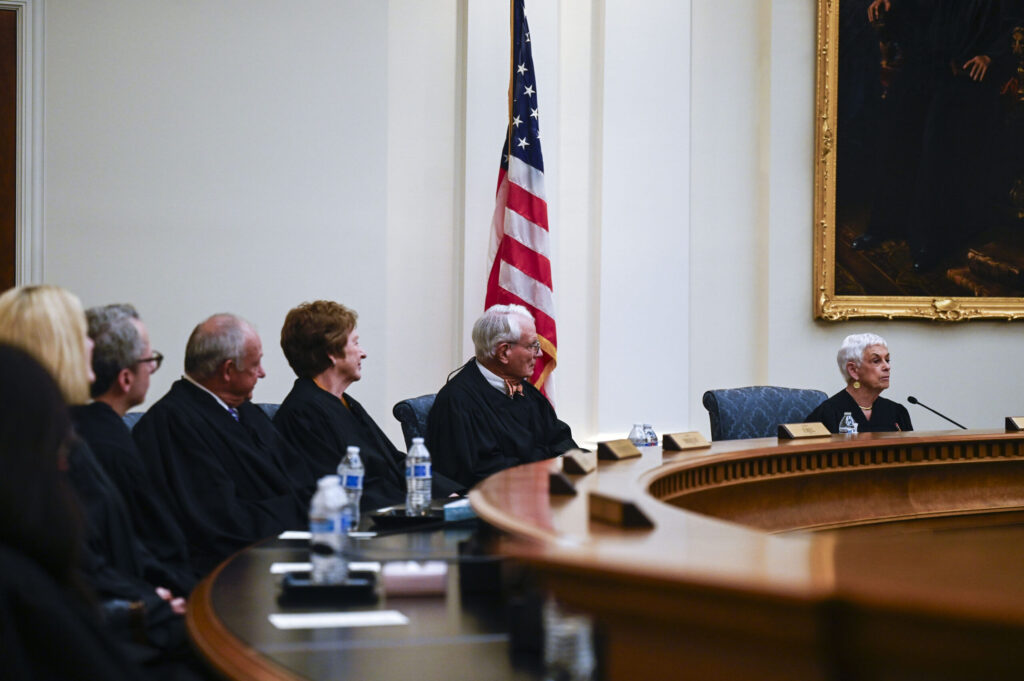
10th Circuit to address resentencing of probation violators in rare all-judges hearing
Michael Karlik
michael.karlik@coloradopolitics.com
Updated 4 days ago
The Denver-based federal appeals court agreed on Thursday to hold a rare all-judges hearing to determine the proper procedure for resentencing a criminal defendant who has violated the terms of his probation. In the federal appellate courts, the vast majority...
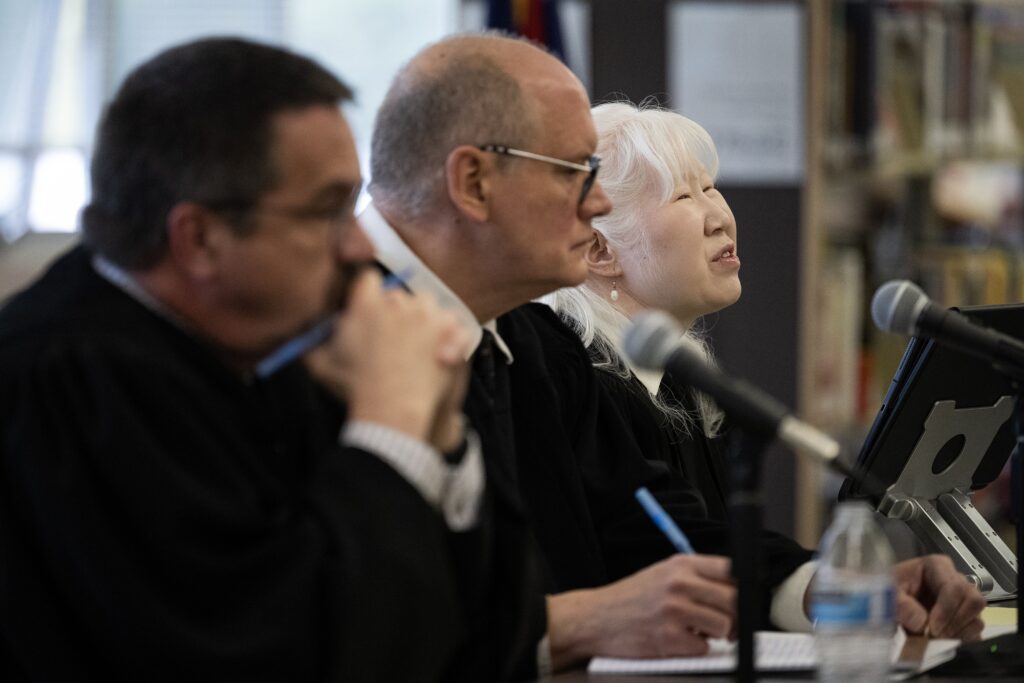
Appeals court overturns Adams County sex offense convictions due to prosecutor’s misconduct
Michael Karlik
michael.karlik@coloradopolitics.com
Updated 3 days ago
Colorado’s second-highest court reversed multiple child sex assault convictions on Thursday after concluding an Adams County prosecutor committed misconduct while cross-examining the defendant. A three-judge Court of Appeals panel observed the charges against Daniel Michael Boerner depended on the jury...

Fort Carson soldier’s wife could be deported
Carol McKinley
carol-mckinley@coloradopolitics.com
Updated 6 days ago
As the country’s largest immigration enforcement crackdown continues in Minnesota’s Twin Cities, a Fort Carson sergeant is fighting a personal immigration crisis — one that may implode his family. Sgt. Tyler Garza’s wife, Jennifer Maradiaga Baca, is not a legal...
PREV
PREVIOUS

Colorado's Democratic delegation calls for Noem's removal, ICE overhaul
The Democratic members of Colorado’s congressional delegation on Tuesday called for Department of Homeland Security Secretary Kristi Noem to resign or be impeached in the wake of the second fatal shooting by federal immigration agents in Minnesota this month amid mounting criticism of the Trump administration’s deportation policies. In addition, the state’s two Democratic senators, […]

Tax bill shock: Colorado homeowners could see property taxes surge by as much as 40%
The new year is bringing many Colorado homeowners sticker shock: property taxes are going up, and for some, the increases range from 20% to more than 40%. For some homeowners, that can be more than $1,000 in tax increases over the last two years. Mike Fitz, 76, lives in Centennial in a single-family home he’s […]