Divided Colorado Supreme Court curtails use of laced-substances defense
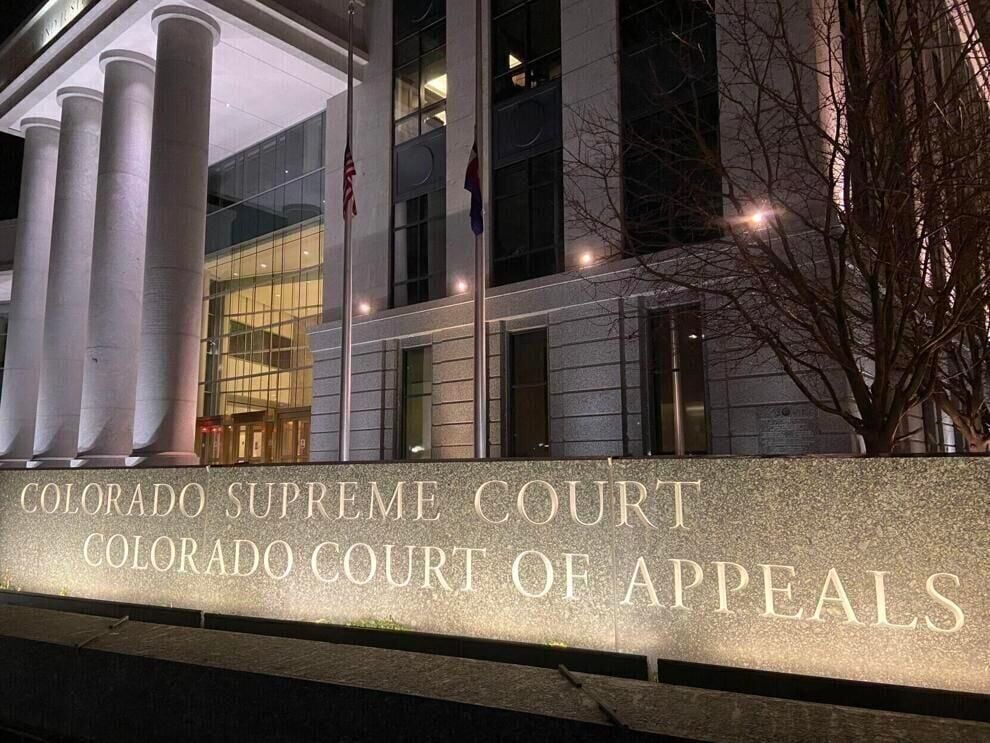
The Colorado Supreme Court on Monday walked back the ability of criminal defendants to claim their conduct was the result of consuming an intoxicating substance that secretly contained another behavior-altering substance.
Under state law, “involuntary intoxication” is an affirmative defense, meaning the prosecution has to disprove some component of that defense for the jury to reach a guilty verdict. The defense reflects the principle that a person under the influence of drugs is not criminally liable for his conduct unless he introduces substances into his body that he “knows or ought to know have the tendency to cause intoxication.”
But what if there is evidence a defendant ingested one drug, and his reaction suggests it was actually laced with something else?
By 4-2, the Supreme Court concluded a person who consumes an already intoxicating substance “ought to know” it will affect their behavior, regardless of what it has been laced with.
“Contrast this with a case where someone takes and eats a brownie at a potluck with friends, but it turns out to be a pot brownie that causes their intoxication. If we define the substance as the pot brownie, this hypothetical defendant would still have the involuntary intoxication defense available to them,” wrote Justice Brian D. Boatright in the Jan. 26 opinion. The “fact that they consumed a dessert from a known friend at a reputable event indicates that they likely had no reason to know that it was intoxicating.”
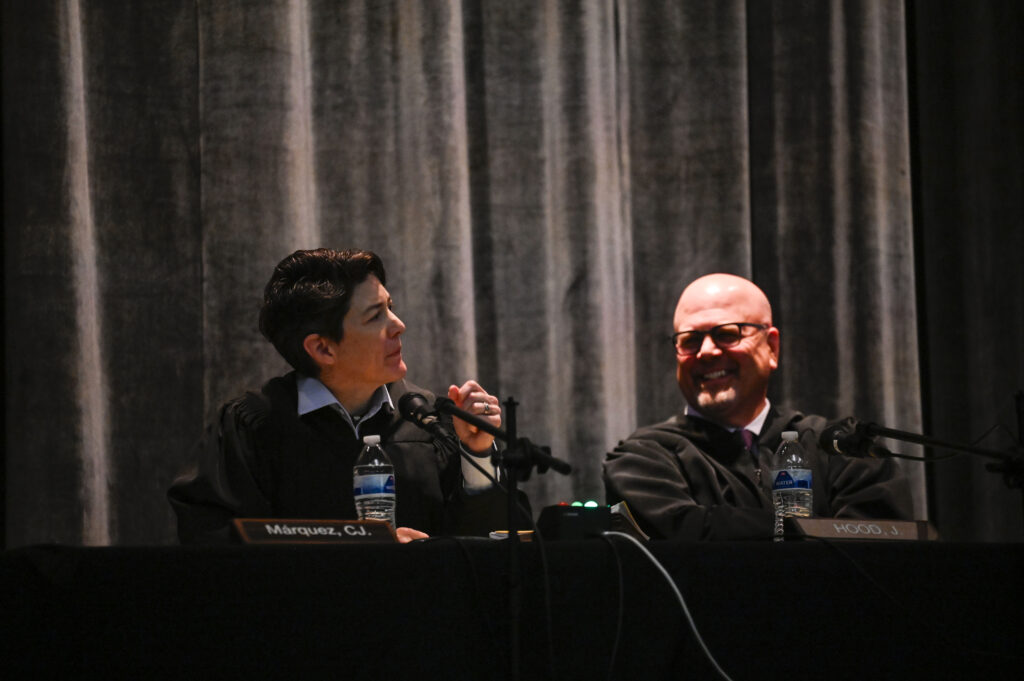
Chief Justice Monica M. Márquez and Justice William W. Hood III each wrote dissents addressing slightly different points. The primary dissent from Márquez argued the majority’s opinion would subject “otherwise innocent people” to criminal charges if a jury could not evaluate whether they consumed a substance laced with something more dangerous.
“An adult who responsibly consumes a single cup of alcoholic punch or a cocktail at a party, unaware that the punch or cocktail is spiked with an illegal stimulant, may not claim involuntary intoxication,” she wrote, “even if the accidentally ingested stimulant is what causes the person to engage in unlawful behavior.”
Hood emphasized that he understood the downside of allowing someone who “chooses to consume unpredictable street drugs” to later be acquitted for criminal behavior resulting from the drug. But, like Márquez, he was concerned about what would happen to people whose conduct is less reckless.
“After all, the hypothetical person who consumes what turns out to be a spiked drink wouldn’t necessarily know who made the drink or what they or others secretly put in it, at a respectable licensed establishment or at a house party with red Solo cups ripe for mischief,” Hood wrote.
In the underlying case, a Denver jury convicted Isaac U. Mion of robbery, criminal mischief and menacing after he acted aggressively toward two security guards and threatened a motorist. Although there was clear evidence he committed the offenses, Mion claimed he was involuntarily intoxicated at the time. Specifically, he testified a friend shared a marijuana joint with him, but it must have contained an illicit substance because it caused Mion to have a far different reaction than normal.
No other case in Colorado had addressed whether a defendant could claim involuntary intoxication when he acknowledges ingesting an intoxicating substance but is unaware of the presence of a second substance. Mion’s trial judge declined to instruct the jury they could find Mion was involuntarily intoxicated, noting there was “no evidence that it was anything other than marijuana” that Mion smoked.
However, a three-judge panel for the Court of Appeals concluded the defense of involuntary intoxication can apply in situations akin to consuming an alcoholic drink secretly laced with a “date rape” drug.
“To rule otherwise would mean that anytime a person knowingly ingests an intoxicant — no matter how mild — the person will be criminally responsible for any resulting behavior, even if what was ingested contained, unbeknownst to the defendant, a different intoxicant,” wrote Judge Craig R. Welling.
Because Mion’s testimony, combined with responding officers’ observations, provided some evidence he took more than marijuana, the appellate panel ordered a new trial so jurors could consider his involuntary intoxication defense.
The Supreme Court’s majority saw differently.
Boatright wrote that the focus of the involuntary intoxication defense is on the substance as a whole, not individual ingredients. If someone ate a marijuana brownie clearly labeled as such, he explained, the person would be voluntarily intoxicating themselves. The same principle applied when Mion knowingly accepted a joint to smoke.
“Significantly, Mion did not obtain the joint from a licensed establishment; to the contrary, it was a street drug that he accepted from someone whose name he did not even know,” wrote Boatright. “Moreover, he took it and smoked it without even asking what it was.”
Márquez countered that she would have let a jury decide whether Mion was involuntarily intoxicated due to the presence of a different, unknown substance in the joint that caused him to act erratically.
“Because I believe such individuals should be allowed to argue to a jury that they are not culpable for their crimes and that holding otherwise is both illogical and contrary to the statute’s language, I cannot subscribe to the majority’s interpretation,” she wrote.
The case is People v. Mion.

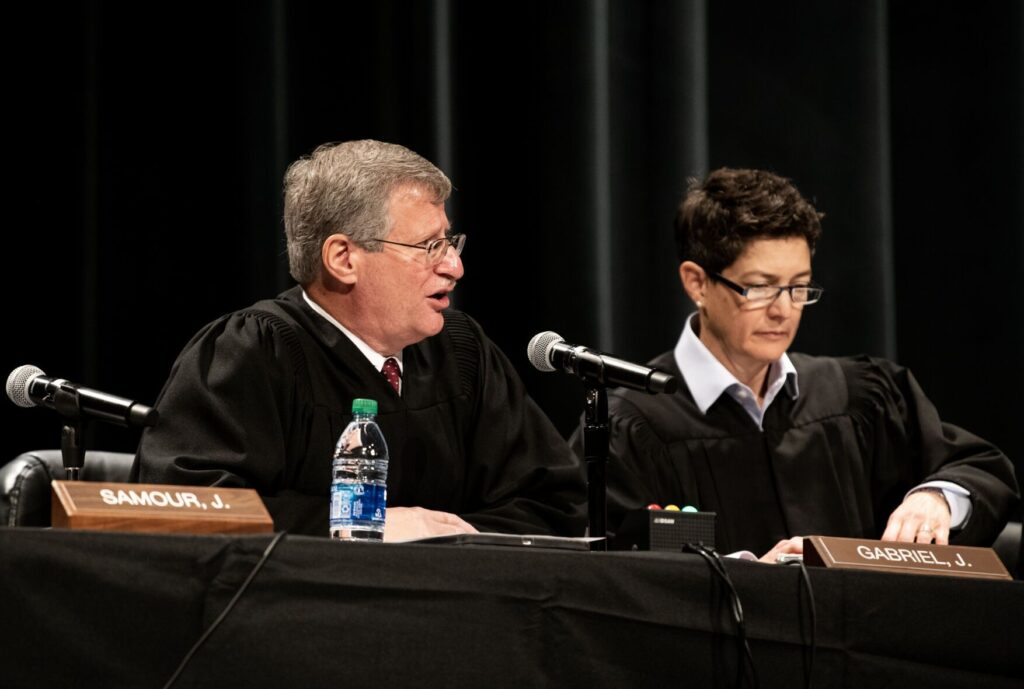
Colorado justices say utilities commission overreached by immunizing Xcel in rate document
Michael Karlik
michael.karlik@coloradopolitics.com
Updated 3 hours ago
Xcel Energy cannot rely upon a rate-setting document to broadly immunize itself from liability against electrocutions, the Colorado Supreme Court ruled on Monday. The justices originally heard the electrocution-related lawsuit from Francisco Cuevas to decide whether Xcel’s tariff, which sets...
Colorado Supreme Court committee rejects civility proposal amid fears of weaponization by judges, ‘jerks’
Michael Karlik
michael.karlik@coloradopolitics.com
Updated 8 hours ago
The Colorado Supreme Court’s Civil Rules Committee overwhelmingly rejected a proposal last week to create an enforceable “civility code” for lawyers and legal paraprofessionals, which would allow judges to quickly impose corrective action without a formal complaint and investigation by...
10th Circuit to address resentencing of probation violators in rare all-judges hearing
Michael Karlik
michael.karlik@coloradopolitics.com
Updated 2 days ago
The Denver-based federal appeals court agreed on Thursday to hold a rare all-judges hearing to determine the proper procedure for resentencing a criminal defendant who has violated the terms of his probation. In the federal appellate courts, the vast majority...
Appeals court overturns Adams County sex offense convictions due to prosecutor’s misconduct
Michael Karlik
michael.karlik@coloradopolitics.com
Updated 1 day ago
Colorado’s second-highest court reversed multiple child sex assault convictions on Thursday after concluding an Adams County prosecutor committed misconduct while cross-examining the defendant. A three-judge Court of Appeals panel observed the charges against Daniel Michael Boerner depended on the jury...

Fort Carson soldier’s wife could be deported
Carol McKinley
carol-mckinley@coloradopolitics.com
Updated 4 days ago
As the country’s largest immigration enforcement crackdown continues in Minnesota’s Twin Cities, a Fort Carson sergeant is fighting a personal immigration crisis — one that may implode his family. Sgt. Tyler Garza’s wife, Jennifer Maradiaga Baca, is not a legal...

Elizabeth School District dismisses challenge to book-ban injunction on eve of appellate arguments
Michael Karlik
michael.karlik@coloradopolitics.com
Updated 3 days ago
An Elbert County school district has dismissed its challenge to a judge’s injunction ordering it to return banned books to library shelves, days before the Denver-based federal appeals court was set to hear oral arguments this week. Although a three-judge...

Colorado Supreme Court to hear cases on insurance coverage for COVID, witness credibility
Michael Karlik
michael.karlik@coloradopolitics.com
Updated 5 days ago
The Colorado Supreme Court announced on Tuesday that it will decide the degree to which a virus or other hazard must affect a commercial property before it can trigger loss-or-damage coverage under an insurance policy. At least three of the...
Federal judge says prisoner cannot sue for dog-bite injury
Michael Karlik
michael.karlik@coloradopolitics.com
Updated 5 days ago
A federal judge concluded last week that a man cannot sue the government for injuries he sustained when a dog allegedly attacked him while he participated in a prison program. Kenneth M. Chandler, representing himself, was participating in the “FIDOS”...

Federal judge recommends dismissing trans athletics lawsuit by area school districts
Eric Young
eric.young@gazette.com
Updated 5 days ago
A judge has recommended dismissing a federal lawsuit filed by multiple school districts against the Colorado Attorney General’s and Civil Rights Offices over their policies dictating students’ participation in athletics and activities based on their biological sex rather than gender...
Appeals judge asks Colorado Supreme Court to once again clarify magistrate rules
Michael Karlik
michael.karlik@coloradopolitics.com
Updated 6 days ago
A member of Colorado’s second-highest court urged the state Supreme Court last week to revise confusing language in the rules governing magistrates, less than two weeks after an attempted cleanup of the rules took effect. Magistrates are judicial employees who are...