

Enterprise fees surge as more of Colorado’s budget escapes TABOR limits

More than 30 years after Colorado voters approved the Taxpayer’s Bill of Rights, a growing share of state spending now falls outside the voter-approved limits intended to restrain government growth.
A new report shows that fee-funded “enterprises” — state-owned businesses exempt from TABOR’s revenue cap — have expanded dramatically, raising worries that lawmakers are increasingly relying on fees, rather than taxes, to fund government programs.
At its core, TABOR limits the government’s ability to raise revenue. Political subdivisions must obtain voter approval for any tax increase, and it requires dollars above the TABOR limit to be refunded to residents. Numerous efforts have been made to repeal TABOR since its enactment. As recently as November 2020, voters rejected efforts to significantly overhaul or repeal it.
Indeed, that tug-and-pull among TABOR, taxes and fees has manifested in big fights at the ballot box and at the state Capitol. Broadly speaking, groups have sought to increase state revenue — such as the current efforts to raise up to $4 billion by eliminating Colorado’s flat income tax rate and raising taxes on higher-income earners — while others have pushed to bring down the income tax rate.
A report by the Common Sense Institute said fee-based enterprises generated $742 million in 1994, the year TABOR went into effect. Thirty years later, that revenue had ballooned by nearly 3,400% to $25.8 billion.
In 1996, 46% of total state spending was exempt from the TABOR spending cap. Almost 30 years later, in 2024, nearly three-quarters of the state’s spending is now TABOR-exempt, amounting to about $9,000 per Coloradan, the group said.
This increase is “really unsustainable,” said Kelly Caulfield, Common Sense Institute’s executive director. She said her organization “strongly recommends” that lawmakers keep up to date on these trends and “try to really resist the urge to introduce more ways to circumvent TABOR” this legislative session.
Faced with more than $1 billion in state budget deficit, it will be tempting for lawmakers to fund their bills with new or existing enterprises, Caulfield said, but doing so would place a strain on their constituents’ wallets.
“Coloradans have caught onto these concerning trends,” she said. “The legislature is really hiding the ball, and raising these fee-based enterprises is starting to become common knowledge that I hear both Democrats and Republicans citing.”
Taxes versus Fees
In 2011, a full decade before it was implemented statewide, the City of Aspen passed an ordinance banning single-use plastic bags and requiring retailers to charge 20 cents for paper bags, with the revenue going toward the city’s waste management and recycling programs.
Seven years later, a group called the Colorado Union of Taxpayers sued the city, arguing that the fee could be considered a tax and was therefore unconstitutional under TABOR because voters had not approved it. The Colorado Supreme Court ruled in Aspen’s favor, finding that the charge was, indeed, a fee, not a tax, and therefore not subject to TABOR.
The Aspen bag fee case set a legal precedent for distinguishing fees from taxes in Colorado, said Chris Stiffler, an economist at the Colorado Fiscal Institute.
“A fee is when you get a service directly for what you’re paying, whereas a tax is something that goes into the General Fund and goes to higher ed, K-12, Medicaid, or something like that,” he said. “The outcome of (the Aspen case), in my mind, was that there’s a little more flexibility in what you can define as a fee and what you can do with that revenue.”
While fees have always existed in Colorado, the creation of “enterprises” following TABOR’s passage led to a significant increase in revenues from fees, Stiffler said.
Colorado’s public colleges and universities are considered enterprises under TABOR, meaning the state’s ability to increase their revenue is restricted. Stiffler argued that this has led to chronic underfunding and budgetary constraints, which schools offset by raising tuition.
Higher education is the state’s largest enterprise, accounting for nearly 62% of total enterprise revenue in fiscal year 2022-2023, the most recent year for which data are available.
“I know some people who are very anti-government will say, ‘Well, look at all these enterprise fees, the government has grown insanely,’ but are the dollars that someone’s paying in tuition to go to CU really government growth, or is that just students paying tuition to go to college?” Stiffler said.
Lawmakers are ‘circumventing voter intent’
In 2020, voters passed Proposition 117, which requires voter approval for new enterprises expected to generate $100 million or more from fees within their first five years of implementation.
“We thought we had solved this problem of escalating fees, but we found with the trends that the legislature circumvented voter intent by continuing to authorize enterprise funds that fall just below that cap,” said Caulfield.
Lawmakers have unsuccessfully attempted to pass legislation eliminating certain fees over the years, including measures to repeal the state’s paper grocery bag fee and retail delivery fees.
Caulfield said the state sees the government as “a solution to society’s problems,” and it is struggling to find funding sources ahead of the American Rescue Plan Act’s expenditure deadline at the end of this year.
“We relied on those one-time federal grants under ARPA, and no one in the state prepared for the offramps,” she said. “I just think the legislature got used to those levels from ARPA and is looking at fees to continue that.”
While Colorado has one of the lowest income tax rates in the country at 4.25%, if income taxes were used to fund enterprises, it would get closer to 6%, according to Caulfield.
“That’s 41% higher than our current tax rate,” she said. “Fees are so important because they cloud the general public’s understanding of what the effective tax rate is and how much it’s contributing to the growth of government, and that’s not always elevated in the press and policymakers’ talking points.”
In general, Stiffler said the Colorado Fiscal Institute opposes fees because they tend to be regressive, disproportionately affecting low-income individuals.
“A $100 car registration fee to me is different than a $100 fee to someone who makes minimum wage, and it’s way different from $100 to Bo Nix,” he said.
State lawmakers have passed a number of “pretty robust” tax credits for lower- and middle-income Coloradans to offset the financial impact of fees, such as the Family Affordability Tax Credit, Stiffler said.
But, he added, it’s not always enough.
Caulfield said she’s not opposed to fees across the board, arguing that some imposed by the state make sense.
“I’m happy to pay some extra money to help Parks and Wildlife with our state parks access sticker,” she said. “My family purchases that every year, because that’s a right of mine to decide how I want to spend my weekends, and I want to access our beautiful natural resources, so that kind of fee makes sense to me.”
However, in Caulfield’s view, the drawbacks of the majority of the fees imposed by the state outweigh the benefits.
“At the end of the day, we have to make sure that lawmakers are aware of how they are expanding the footprint of the state government,” she said. “I think voters are starting to understand that fee growth really needs to be kept at a minimum to address the most important priorities of the state.”
In response to a question about whether he would sign bills creating new enterprises into law this session, a spokesperson for Gov. Jared Polis replied: “Fees cannot be used to balance the Budget, because TABOR only allows for enterprises to impose fees, not the legislature or state government. The governor is supportive of reducing fees and has reduced car and business registration fees in previous years.”
“In a budget surplus year like 2026-2027 is projected to be, reducing fees can increase room under the TABOR limit to balance the budget,” the spokesperson said.
The spokesperson noted a Joint Budget Committee bill Polis signed last session that temporarily reduced the road safety surcharge, a fee added to vehicle registrations and rentals that helps fund the state’s transportation projects, by $3.70.
Polis is also proposing a 50% reduction in fees to the Air Ambulance Cash Fund in his budget submission for Fiscal Year 2027.


Latest death brings down wolves’ survival rate to 44% in Colorado
Marianne Goodland
marianne.goodland@coloradopolitics.com
Updated 5 hours ago
The female wolf of the mating pair for the King Mountain pack has died, bringing total fatalities to 14 out of the 25 animals reintroduced in Colorado. The wolf, identified as No. 2310, was among the 10 wolves brought to...
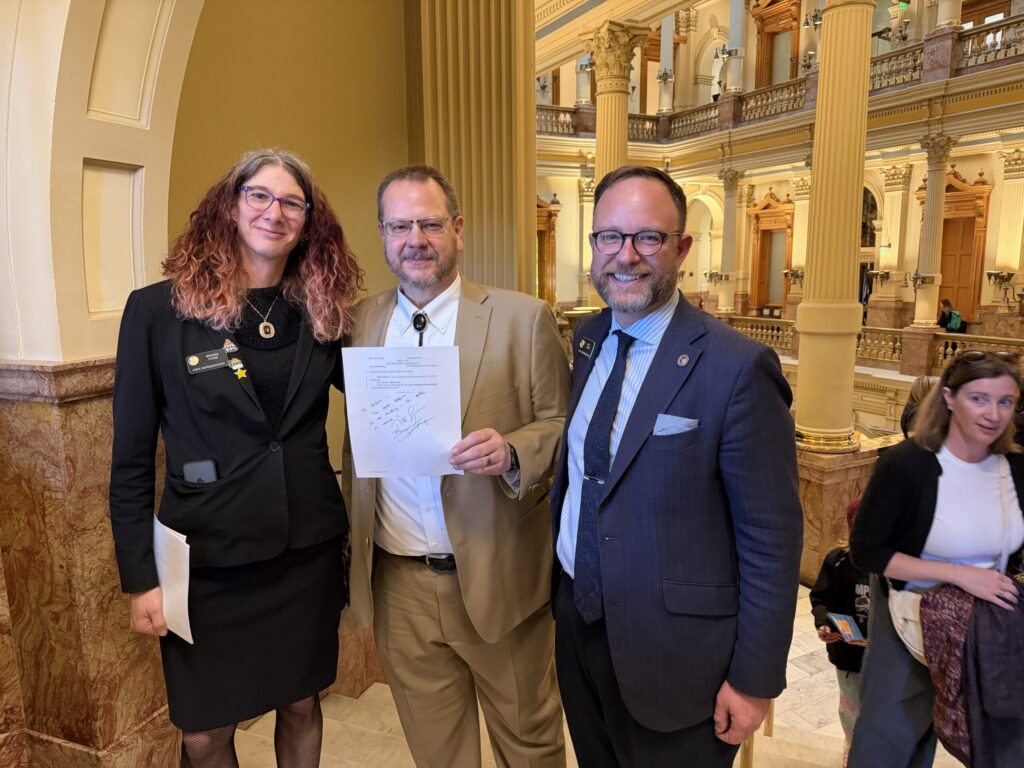
Roasts, get yer roasts, here: Capitol M | Week of March 14, 2026
Marianne Goodland
marianne.goodland@coloradopolitics.com
Updated 3 days ago
The lighter side of the Capitol, especially in the past week Apparently, the pending and eventual switch to daylight stupid time has put people in some pretty funny moods. And thank goodness! On March 4, the Senate approved the appointments...

Boebert challenger Eileen Laubacher joins lawsuit aimed at blocking her from Democratic assembly
Ernest Luning
ernest.luning@coloradopolitics.com
Updated 20 hours ago
A Denver District Court judge on Thursday permitted Democratic congressional candidate Eileen Laubacher to join a lawsuit filed by one of her primary opponents seeking to prevent Laubacher from participating in the party’s assembly process in a bid to qualify...
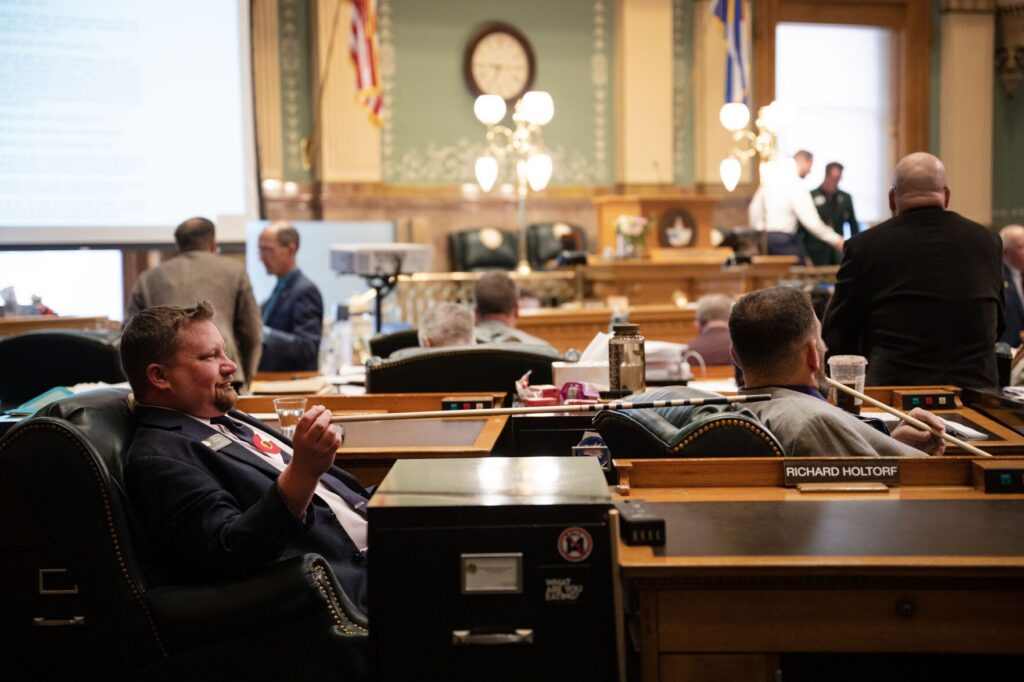
House Ethics Committee to begin hearing on Weinberg complaint
Marianne Goodland
marianne.goodland@coloradopolitics.com
Updated 1 day ago
The House Ethics Committee on Tuesday will begin a hearing requested by Rep. Ron Weinberg, R-Loveland, tied to an ethics complaint filed against him by Rep. Brandi Bradley, R-Roxborough Park. The ethics committee had found probable cause on two issues...
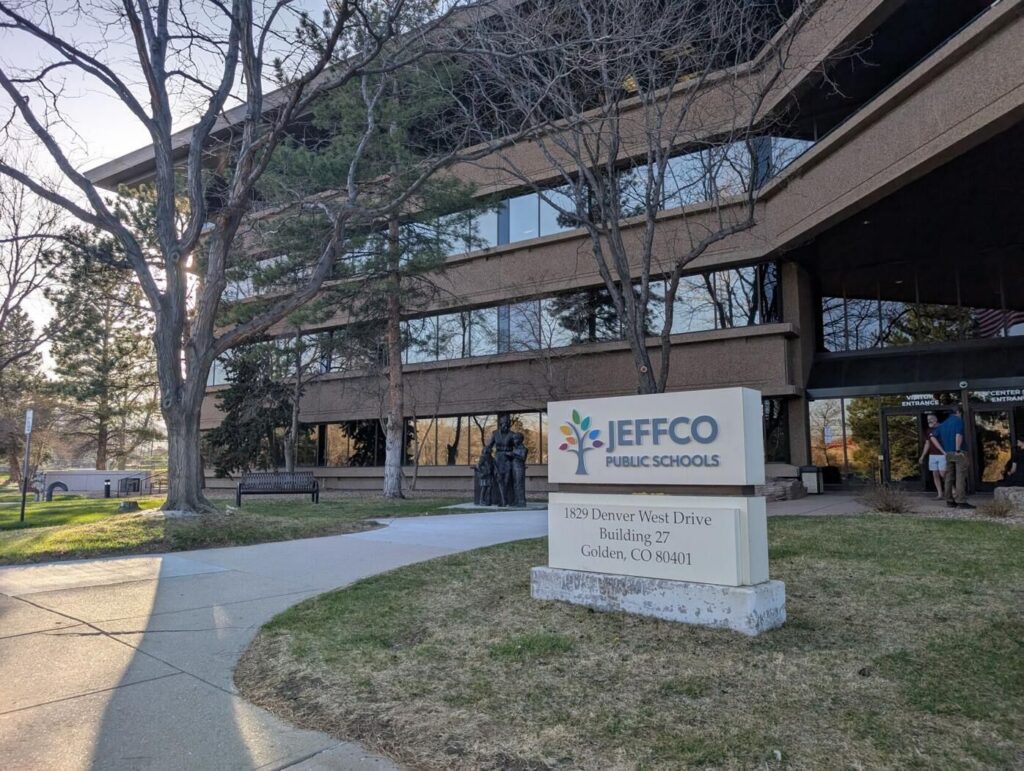
Jeffco Public Schools found in violation of Title IX
Sage Kelley
sage.kelley@denvergazette.com
Updated 23 hours ago
Civil rights office: Male students occupy 61 roster positions on girls’ sports teams The U.S. Department of Education announced Friday that the Jeffco Public Schools district violated Title IX by permitting male students to access female bathrooms and compete in...
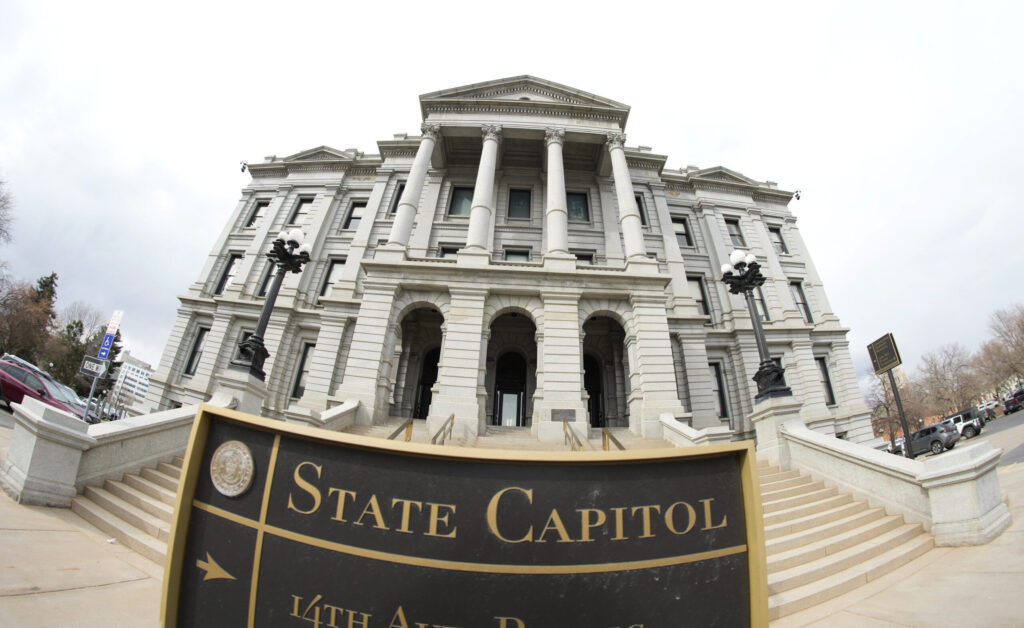
Colorado plans to slash interim committee work amid budget woes
Marianne Goodland
marianne.goodland@coloradopolitics.com
Updated 3 hours ago
In a tight-budget year, the work of interim committees — those off-session groups that look at transportation, agriculture, water, healthcare, wildfires, pensions, and anything else lawmakers want to look at — is on the chopping block. And this year, no...
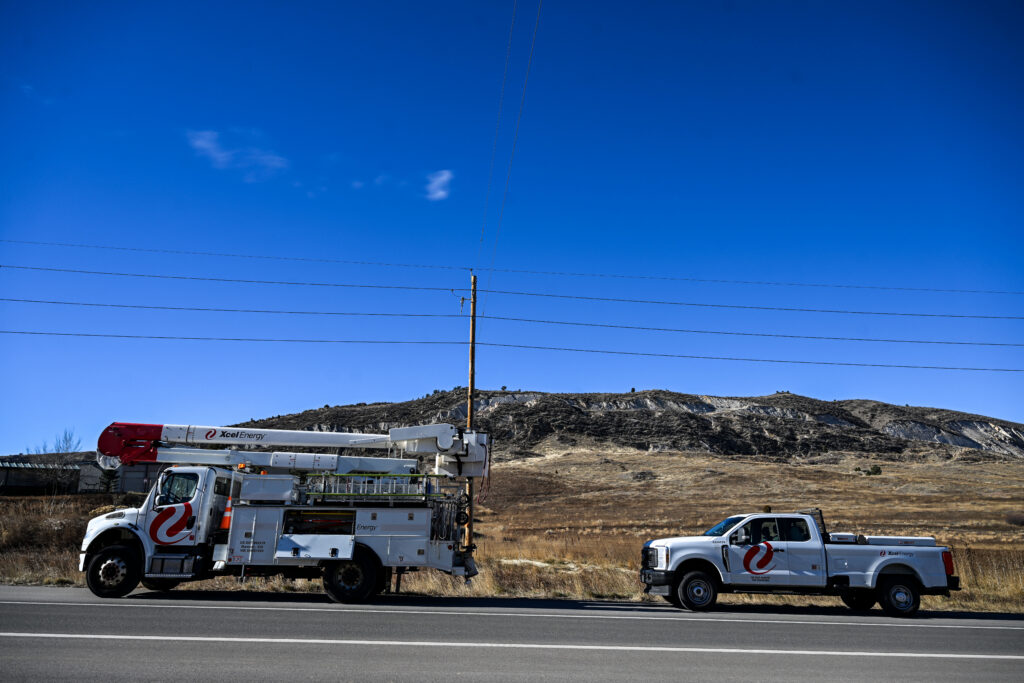
Xcel Energy: Power shutoff ‘likely’ Saturday in Boulder, Jefferson counties
Dan Boniface
dan.boniface@denvergazette.com
Updated 24 hours ago
Up to 43,000 residents in parts of Boulder and Jefferson counties should be prepared to have their power shut off Saturday afternoon, Xcel Energy said. The power company said it was “planning for a likely Public Safety Power Shutoff (PSPS)...
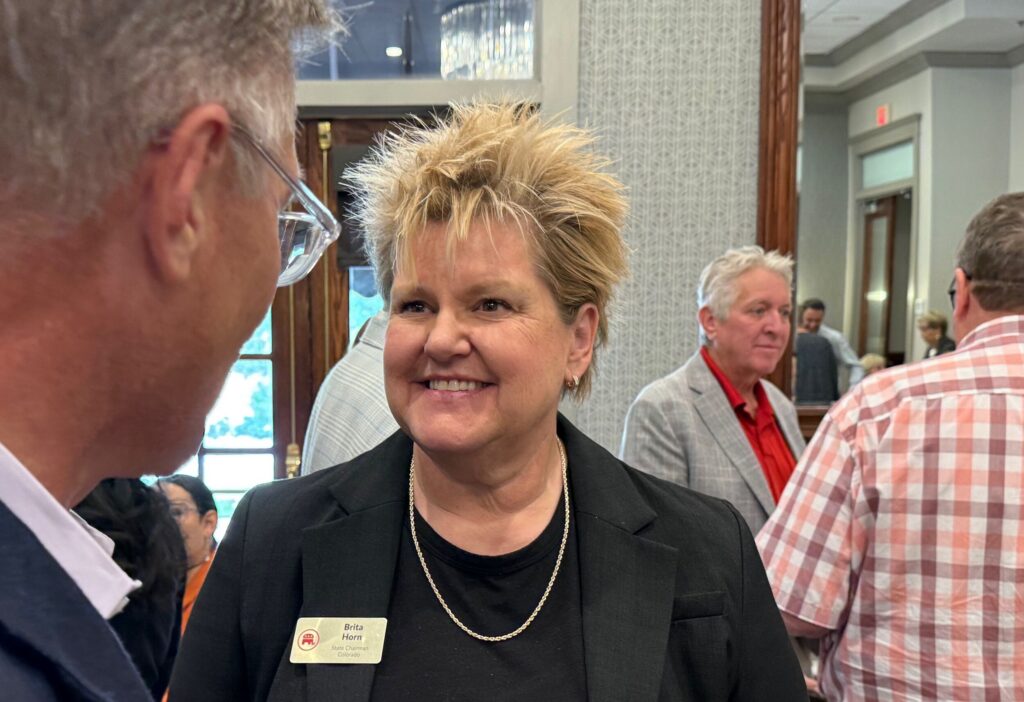
Colorado GOP chair Brita Horn says she’ll resign next month, points to ‘divide within our party’
Ernest Luning
ernest.luning@coloradopolitics.com
Updated 2 days ago
Colorado Republican Party Chair Brita Horn said Thursday that she will resign her position next month following the GOP’s state assembly, citing what she described as an “enduring divide” within the party “marked by vitriol and hostility.” Horn’s announcement came...

Senate committee moves forward with Colorado ballot measure to redirect TABOR refunds to schools
Marianne Goodland
marianne.goodland@coloradopolitics.com
Updated 23 hours ago
A Senate panel on Thursday voted along party lines to move forward with a bill that would ask voters for permission to eliminate Taxpayer’s Bill of Rights refunds and redirect those dollars to K-12 public education. The 6-3 vote in...

Wolf depredation payouts in Colorado top $700,000 in 2025
Marianne Goodland
marianne.goodland@coloradopolitics.com
Updated 1 day ago
The Colorado Parks and Wildlife Commission approved more than $706,000 in wolf depredation claims for 2025 during its March meeting last week, an amount that exceeds the state’s annual wolf compensation fund by more than double. The commission rejected another...
PREV
PREVIOUS

Let's find out who's up to the gubernatorial task post Polis | Paula Noonan
Gov. Jared Polis is bold and his policies are bolder than bold. That’s the paraphrase of his State of the State speech to open the 2026 General Assembly and start off his last year in office. His sweeping review of his many accomplishments took some swipes at media who doubted his home-run-hitting prowess. He noted […]

Fort Carson soldier's wife could be deported
As the country’s largest immigration enforcement crackdown continues in Minnesota’s Twin Cities, a Fort Carson sergeant is fighting a personal immigration crisis — one that may implode his family. Sgt. Tyler Garza’s wife, Jennifer Maradiaga Baca, is not a legal U.S. citizen and an immigration judge’s 15-year-old deportation order from 2011 hangs over her head. […]