Federal judge says prisoner cannot sue for dog-bite injury

A federal judge concluded last week that a man cannot sue the government for injuries he sustained when a dog allegedly attacked him while he participated in a prison program.
Kenneth M. Chandler, representing himself, was participating in the “FIDOS” program at the federal penitentiary in Littleton in June 2024. While he was training his own dog, another unmuzzled dog who was new to the program allegedly attacked Chandler. He suffered scarring and physical and emotional pain.
Chandler filed a negligence claim against the government under the Federal Tort Claims Act, which permits lawsuits for money damages against the United States in certain circumstances. However, the government argued that Chandler could not pursue such a claim because he could only obtain compensation through a workers’ comp-like program, the Inmate Accident Compensation Act.
As described by law professor Andrea C. Armstrong in a 2021 article, the IACA allows for compensation for “lost-time wages.” Any payments for the injuries themselves are only made after the injured party is released from prison.
“Moreover, there is an absolute bar to recovery of compensation if the incarcerated worker fully recovered while in custody and there is no longer any impairment at their time of release,” wrote Armstrong.
Chandler responded to the government’s motion to dismiss by disputing that he was participating at the time of his injury in “any work activity in connection with the maintenance or operation of the institution,” as the IACA requires.
“The FIDOS Program contract repeatedly refers to the program as a ‘volunteer program,'” he wrote.
Before deciding the motion, U.S. Magistrate Judge Cyrus Y. Chung asked the government to explain why the dog-training program was “in connection with the maintenance or operation of” the prison. He also wondered whether “any prison work assignments would not be covered by that statutory language.”
The program “is connected to the orderly operation” of the prison, responded Assistant U.S. Attorney Erika A. Kelley, “because it reduces inmate idleness and keeps participating inmates constructively occupied.”
She attached a statement from the FIDOS program coordinator who said that, to her knowledge, she was unaware of any work assignment at Chandler’s prison that was not subject to the IACA.
In a Jan. 13 order, Chung agreed with the government that Chandler had to file a workers’ comp-style claim, rather than pursue a lawsuit for damages. He also acknowledged the difficulty of any prisoner being able to successfully sue for the type of injuries Chandler sustained.
“Most, if not all, prison work assignments would be ‘connected’ to the operation of the institution in the same ways. Indeed, the defendant admits that it is unaware of any work assignment not falling under IACA’s umbrella, raising a question of whether such a broad interpretation of ‘operation’ runs counter to the principle that a court is ‘to give meaning to every word of a statute where possible’,” wrote Chung. “But the statute’s breadth appears to have been part of Congress’s design.”
He concluded the dog-training initiative was a work program and that Chandler’s injuries were governed by the IACA. Therefore, Chandler could not sue the government.
The case is Chandler v. United States of America.


Federal judge recommends dismissing trans athletics lawsuit by area school districts
Eric Young
eric.young@gazette.com
Updated 17 hours ago
A judge has recommended dismissing a federal lawsuit filed by multiple school districts against the Colorado Attorney General’s and Civil Rights Offices over their policies dictating students’ participation in athletics and activities based on their biological sex rather than gender...
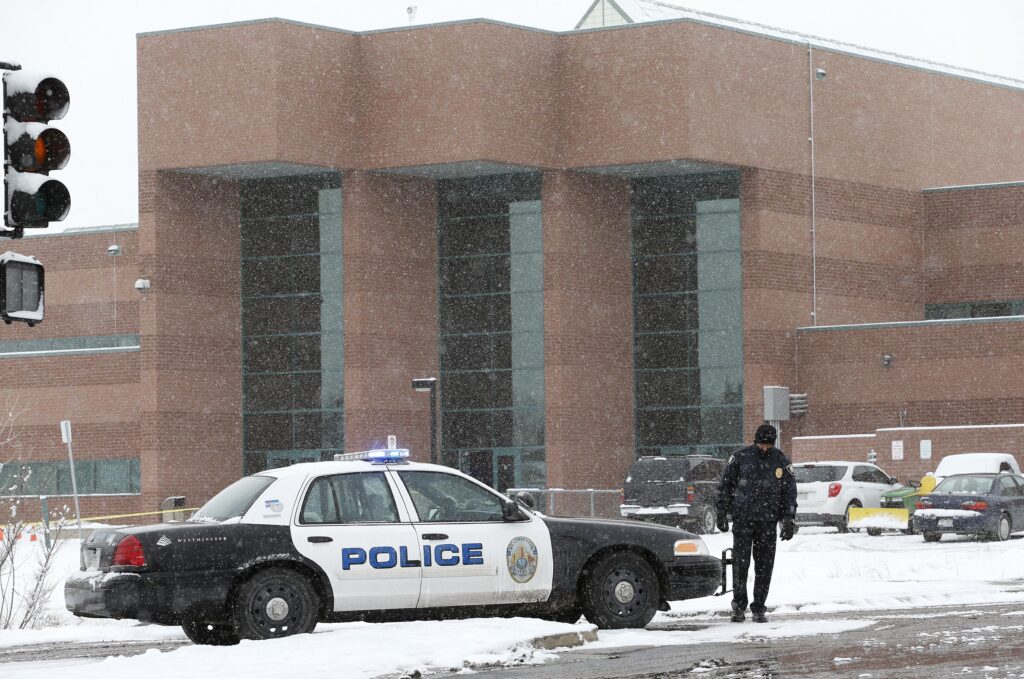
Gov. Jared Polis touts Colorado’s ‘significant’ drop in crime in 2025
Marissa Ventrelli
marissa.ventrelli@coloradopolitics.com
Updated 14 hours ago
Gov. Jared Polis is touting a recent report saying Colorado’s overall crime rate decreased by double-digit margins over the past year. “I am thrilled to see our data-driven investments in law enforcement support and crime prevention are working,” Polis said...

Democrats Michael Bennet, Phil Weiser and their backers bank $9 million for Colorado gubernatorial race
Ernest Luning
ernest.luning@coloradopolitics.com
Updated 20 hours ago
Democratic gubernatorial candidates U.S. Sen. Michael Bennet and Attorney General Phil Weiser, and the campaign committees that support them, entered the election year with almost $9 million on hand, as the race to succeed term-limited Colorado Gov. Jared Polis heats...
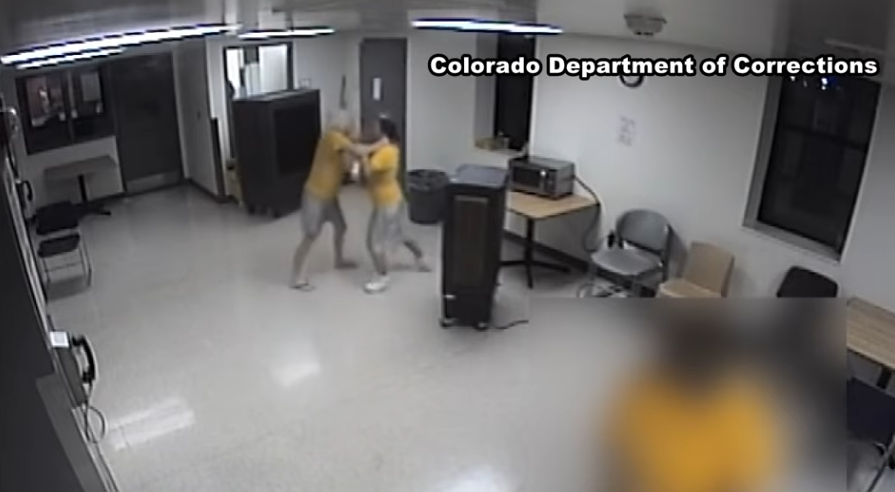
Tina Peters involved in prison altercation caught on video
Dan Boniface
dan.boniface@denvergazette.com
Updated 18 hours ago
Tina Peters appears to have been involved in a prison altercation on Sunday with another inmate and the incident was caught on video. The incident happened at the La Vista Correctional Facility where Peters is serving a roughly nine-year prison...

Court rules against Colorado Rep. Jason Crow, other Democrats in ICE visitation policy challenge
Michael Kunzelman
michael.kunzelman@associatedpress.com
Updated 16 hours ago
WASHINGTON • A federal judge refused Monday to temporarily block the Trump administration from enforcing a new policy requiring a week’s notice before members of Congress can visit immigration detention facilities. U.S. District Judge Jia Cobb, who is based in Washington, D.C., concluded...

Colorado air regulators propose higher fees for pollution permits and reports
Scott Weiser
scott.weiser@gazette.com
Updated 21 hours ago
Colorado’s air quality agency plans to raise charges for air pollution permits and emissions reports for businesses that release even modest amounts of contaminants, potentially increasing fees by 65-70% over two years to generate $13.5-$14 million, according to state budget...

With guidelines expiring, federal agency releases draft plan for Colorado River operations
Marianne Goodland
marianne.goodland@coloradopolitics.com
Updated 4 hours ago
Two months after the seven states of the Colorado River Basin failed to reach consensus on managing the waterway, the U.S. Bureau of Reclamation issued a set of proposed alternatives. The alternatives are familiar concepts, including “no action” — an...

Denver gas prices surge but diesel mix-up not to blame, expert says
Dan Boniface
dan.boniface@denvergazette.com
Updated 2 days ago
Denver gas prices surged 16.6 cents per gallon last week, but one expert said the public should not blame the hike on a recent diesel mix-up that damaged hundreds of vehicles and contaminated nearly 50 gas stations. “No, it has...
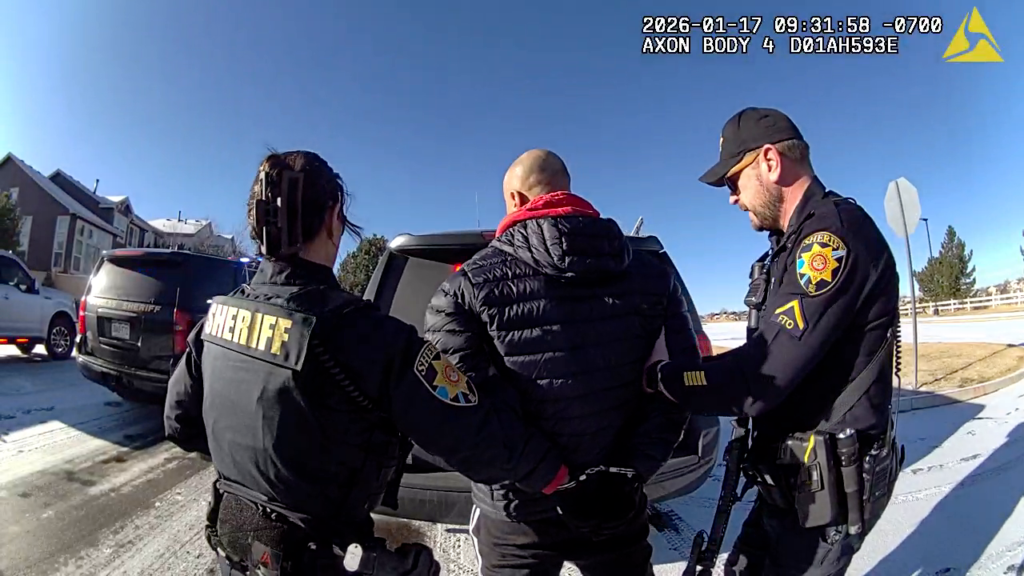
Flock cameras assist in road rage shooting arrest in Douglas County
Dan Boniface
dan.boniface@denvergazette.com
Updated 2 days ago
Douglas County deputies on Monday said Flock Safety cameras were critical in an investigation that led to the arrest of a road rage shooting suspect. Deputies with the Douglas County Sheriff’s Office said 43-year-old Mitchell Aaron Weber was arrested Saturday...
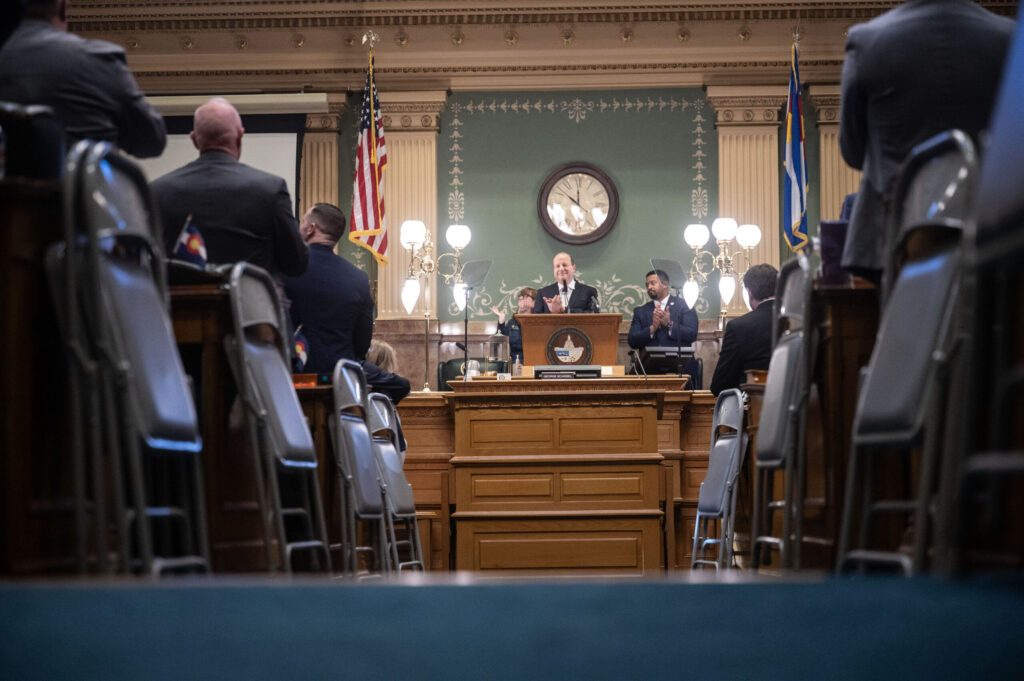
Colorado governor insists local officers can work with DEA agents amid non-cooperation law
The Denver Gazette
the-denver-gazette@coloradopolitics.com
Updated 2 days ago
Gov. Jared Polis on Friday insisted that local law enforcement officers in Colorado can — and should — work with federal drug enforcement authorities to go after criminal activity. An official of the U.S. Drug Enforcement Agency earlier said Colorado’s...