

Colorado justices weigh overlap between child prostitution offenses
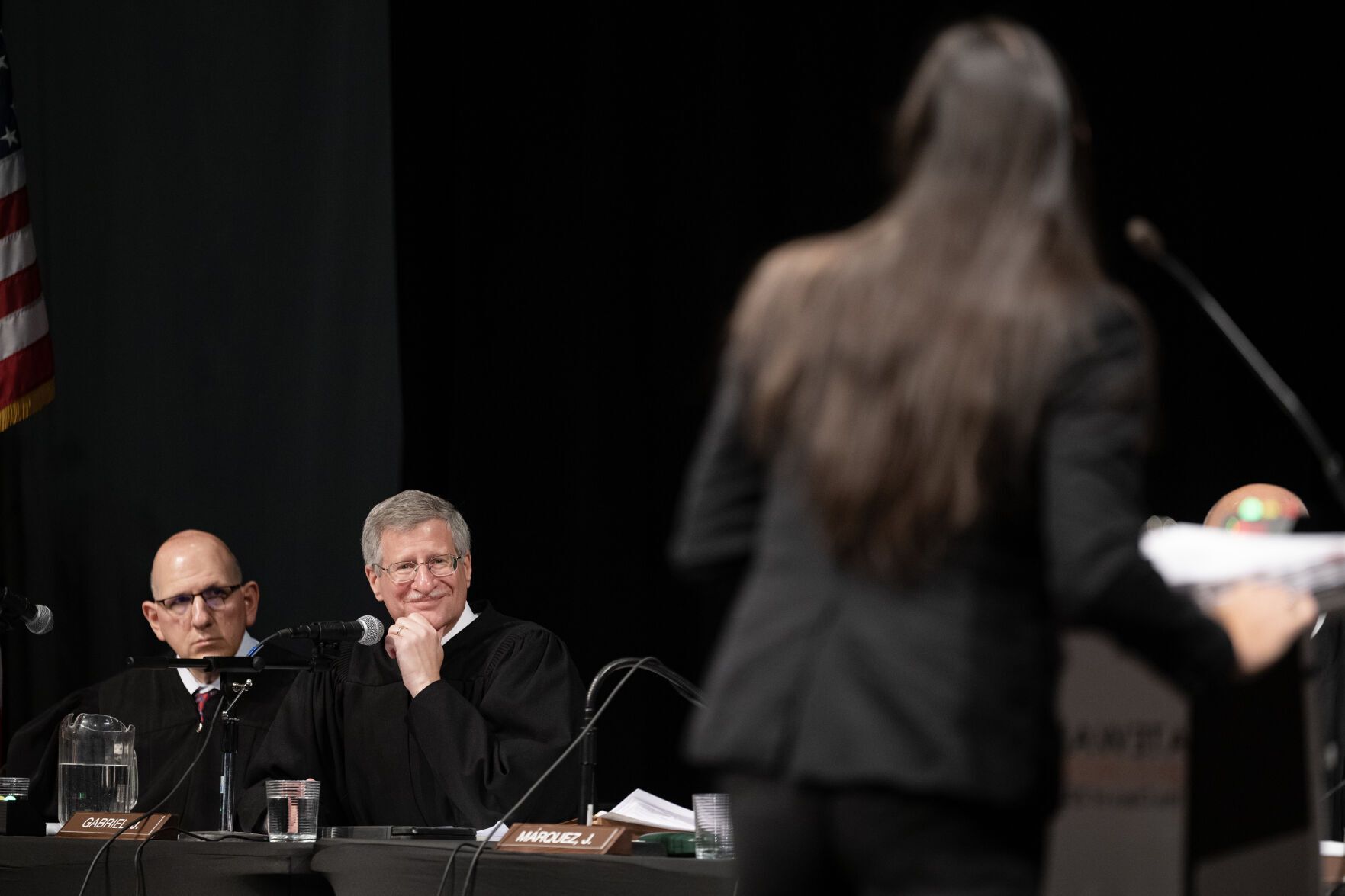
Members of the Colorado Supreme Court last week appeared willing to uphold a man’s conviction for an attempted child prostitution offense, which the state’s second-highest court previously found to be a violation of his right to equal protection under the law.
An El Paso County jury convicted Javier Vega Dominguez of two attempted child prostitution offenses, one of which carried a specific number of years in prison and the other resulted in a potential life sentence behind bars. The Court of Appeals concluded that, under Colorado’s equal protection guarantee, the fact Vega Dominguez received two different sentences for the same underlying conduct violated his rights.
But some members of the Supreme Court were hesitant to accept that conclusion during the Jan. 14 oral arguments. Specifically, while the Court of Appeals believed the error was obvious at the time of trial, the appellate court acknowledged it was “extending the analysis” of earlier precedent to Vega Dominguez’s convictions.
“The definition of obvious error, I’m simplifying, is a case right on point and that is so obvious the trial court should have intervened itself. I’m having trouble seeing how this was obvious,” said Justice Richard L. Gabriel.
“The legislature didn’t do us any favors with all these crimes, right? Pretty confusing,” added Justice Carlos A. Samour Jr. “I find it interesting when we argue about what’s obvious error and what should have been obvious to the poor trial court here. We are all trying to put our heads together and make sense of all these statutes, and it’s interesting.”
Colorado courts have interpreted the constitutional guarantee of equal protection to forbid the state from creating two laws that criminalize identical conduct but impose harsher consequences for one offense than the other. Under state law, patronizing a prostituted child involves a completed sex act or an agreement to perform such an act, with the potential for life in prison. Inducement of child prostitution, on the other hand, involves a person’s “word or action” to encourage a child’s prostitution.
In reviewing Vega Dominguez’s convictions for attempted patronizing and attempted inducement, a three-judge Court of Appeals panel looked at his arrangement via text message to pay a 15-year-old boy — who was actually an undercover officer — for sex acts. The judges concluded Vega Dominguez violated both laws in the same way: attempting to exchange money for sex. Yet, he was serving a possible life sentence for patronizing and only four years for inducement.
“We therefore conclude that Vega Dominguez’s conviction for attempted patronizing a prostituted child violates his right to equal protection,” wrote Judge Ted C. Tow III, adding that the violation was “obvious” in light of court precedent.
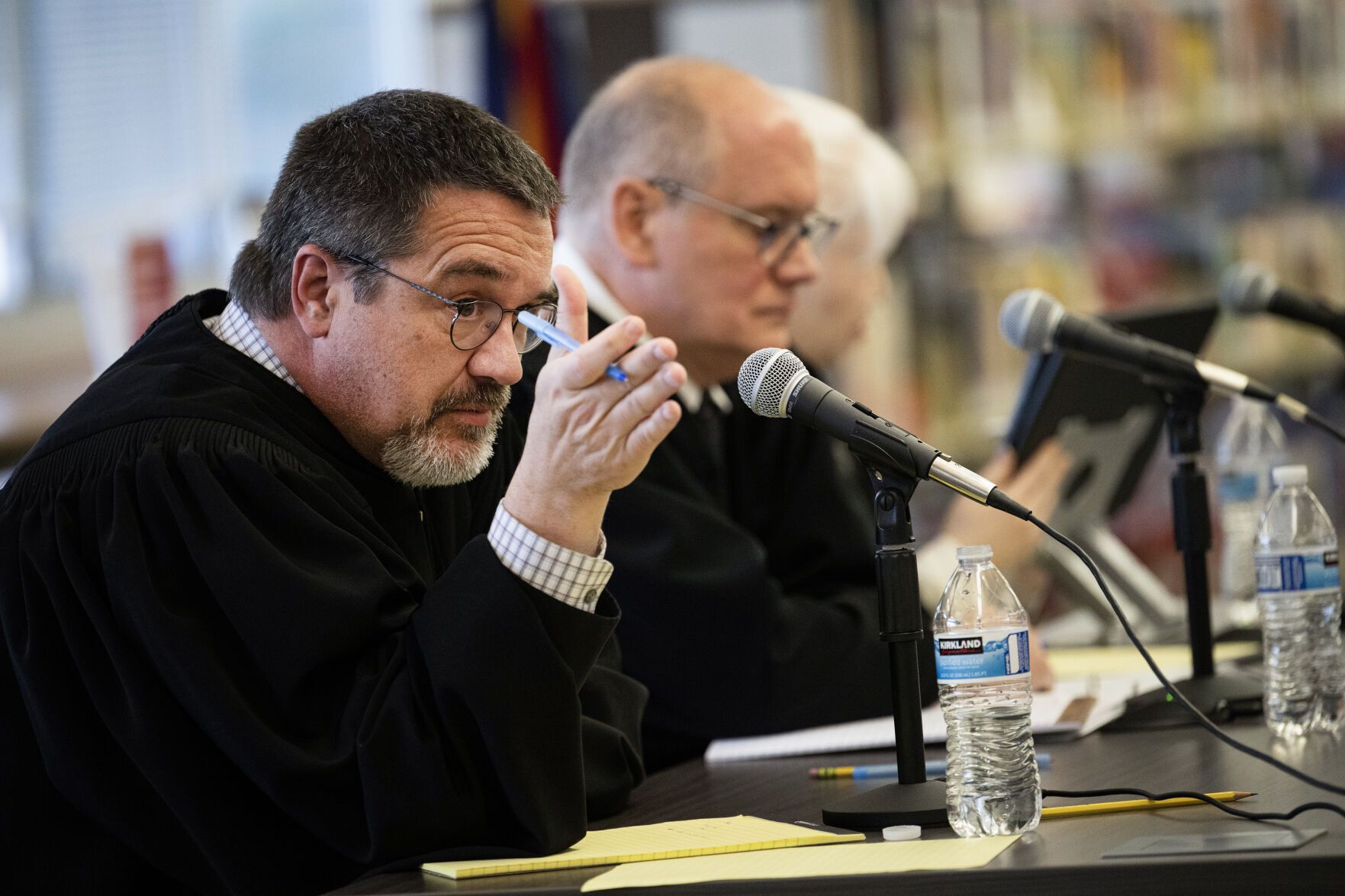
Senior Assistant Attorney General Jessica E. Ross argued to the Supreme Court that any error was not obvious, even if the laws theoretically prohibited the same conduct. Moreover, she cautioned against finding an equal protection violation because the effect is to constrain a prosecutor’s charging decisions and the legislature’s ability to define criminal offenses.
Colorado’s equal protection principle is “really narrowly focused on situations where the legislature has left up to the prosecutor no legislatively bound guidance for that decision,” Ross said.
Public defender Kamela Maktabi countered that, if two laws prohibit the same conduct and one carries a harsher punishment, “and there’s no distinction why one defendant gets a harsher sentence than the other, then I think it makes it more difficult for prosecutors to fulfill their mission of equal application of the law,” she said.
“How important is it in this case, if at all, that the charges were attempts to induce and attempt to patronize?” asked Justice Maria E. Berkenkotter.
Very important, responded Maktabi, because patronizing requires the act of prostitution, while inducement does not.
“That distinction doesn’t separate the patronizing from the inducement because both were attempted offenses” in Vega Dominguez’s case, she said.
The case is People v. Vega Dominguez.

Federal judge dismisses developer’s challenge to Denver affordable housing ordinances
Michael Karlik
michael.karlik@coloradopolitics.com
Updated 4 hours ago
A federal judge dismissed a homebuilder’s constitutional challenge on Tuesday to a pair of Denver ordinances that impose obligations on developers related to the affordable housing demands created by new construction. Two related companies, redT Homes and redT Capital Partners,...

10th Circuit distances itself from prior decision making it easier to toss prisoner lawsuits
Michael Karlik
michael.karlik@coloradopolitics.com
Updated 7 hours ago
The Denver-based federal appeals court distanced itself on Wednesday from its own recent decision that made it easier for prison officials to end civil lawsuits by transferring incarcerated plaintiffs between facilities. A three-judge panel of the U.S. Court of Appeals...

Appeals court overturns Douglas County vehicular homicide conviction due to faulty jury instructions
Michael Karlik
michael.karlik@coloradopolitics.com
Updated 1 day ago
Colorado’s second-highest court overturned a defendant’s vehicular homicide conviction and 12-year prison sentence on Thursday after determining a Douglas County judge omitted key language from the jury instructions that could have resulted in a different outcome. James Paul McDonald was...

Federal judge dismisses malicious prosecution claim against former Denver prosecutor
Michael Karlik
michael.karlik@coloradopolitics.com
Updated 1 hour ago
A federal judge concluded on Monday that a former Denver prosecutor could not be sued for allegedly causing the arrests of two plaintiffs after they failed to appear for trial on the scheduled date, even though the trial had been...

Judicial discipline commission reports increased transparency, increased submissions
Michael Karlik
michael.karlik@coloradopolitics.com
Updated 2 days ago
The Colorado Commission on Judicial Discipline received 473 misconduct complaints about judges in 2025, which was nearly 29% higher than in 2024 and substantially greater than any time in the past decade. However, only 31 complaints were referred to the commission...

Colorado Gov. Jared Polis ignites fierce debate after raising clemency questions in Tina Peters case
Marianne Goodland
marianne.goodland@coloradopolitics.com
Updated 2 days ago
Gov. Jared Polis ignited a political firestorm Tuesday night after weighing in on the prison sentences of two former Colorado officials — a Democrat and a Republican — convicted of attempting to influence a public servant. The comments quickly fueled...

Colorado Supreme Court signals intervention in dispute over treatment for trans children
Michael Karlik
michael.karlik@coloradopolitics.com
Updated 3 days ago
The Colorado Supreme Court ordered Children’s Hospital Colorado on Tuesday to explain why it should not direct the organization to resume providing certain types of services to transgender children in compliance with the state’s non-discrimination law. Last month, a Denver...

Judge nixes latest policy requiring 7 days’ notice for Congress members to visit ICE facilities
Michael Kunzelman
michael.kunzelman@associatedpress.com
Updated 3 days ago
WASHINGTON (AP) — A federal judge agreed on Monday to temporarily suspend the latest version of a Trump administration policy that requires members of Congress to provide a week’s notice before they can visit immigration detention facilities. U.S. District Judge...
Judge nixes latest policy requiring 7 days’ notice for Congress members to visit ICE facilities
Michael Kunzelman
michael.kunzelman@associatedpress.com
Updated 3 days ago
WASHINGTON • A federal judge agreed on Monday to temporarily suspend the latest version of a Trump administration policy that requires members of Congress to provide a week’s notice before they can visit immigration detention facilities. U.S. District Judge Jia...

Colorado Supreme Court clarifies restraining order violations can always support burglary charge
Michael Karlik
michael.karlik@coloradopolitics.com
Updated 2 days ago
The Colorado Supreme Court’s majority ruled on Monday that a violation of a restraining order can also serve as a basis for finding a defendant guilty of burglary. Under state law, a person commits second-degree burglary by unlawfully entering or...
PREV
PREVIOUS

State Supreme Court holds oral arguments, 10th Circuit revives dormant initiative | COURT CRAWL
Welcome to Court Crawl, Colorado Politics’ roundup of news from the third branch of government. The state Supreme Court heard oral arguments last week in multiple civil and criminal cases, plus the Denver-based federal appeals court is doing something unusual for its own round of arguments this week. At the Supreme Court • In a rare […]

With guidelines expiring, federal agency releases draft plan for Colorado River operations
Two months after the seven states of the Colorado River Basin failed to reach consensus on managing the waterway, the U.S. Bureau of Reclamation issued a set of proposed alternatives. The alternatives are familiar concepts, including “no action” — an unlikely scenario — and certain levels of coordination, including voluntary measures, among the states. One […]