

Colorado justices weigh constitutionality of student backpack search based on confidential tip
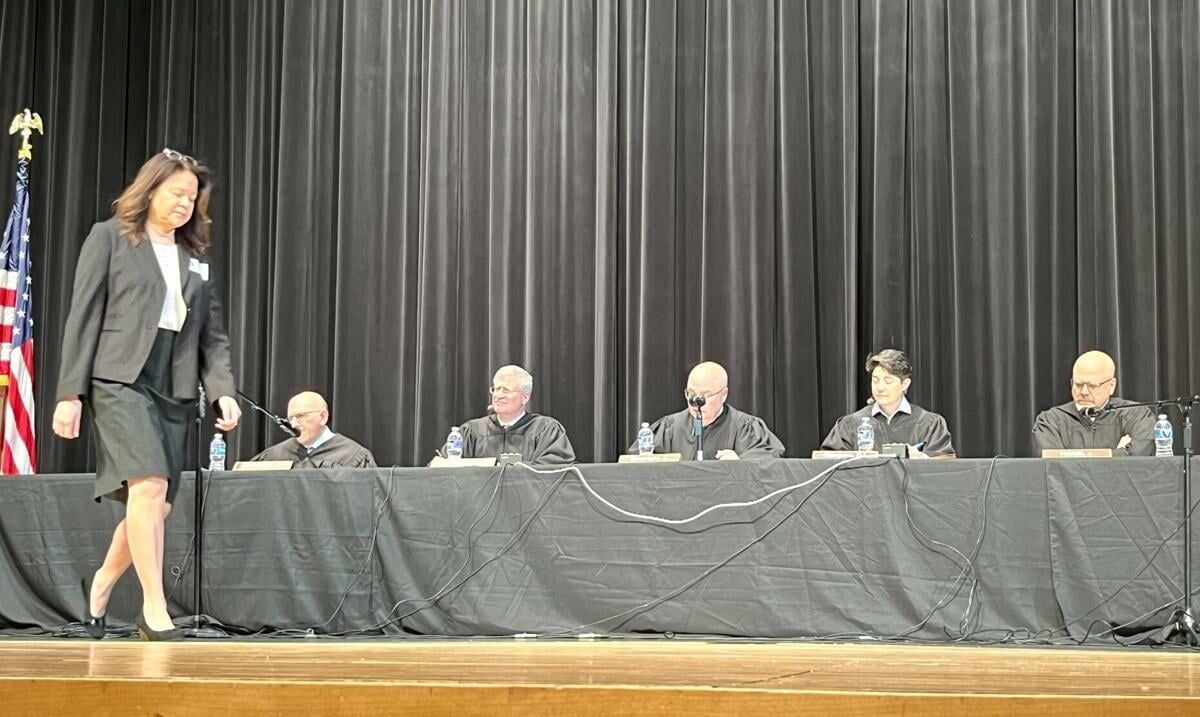
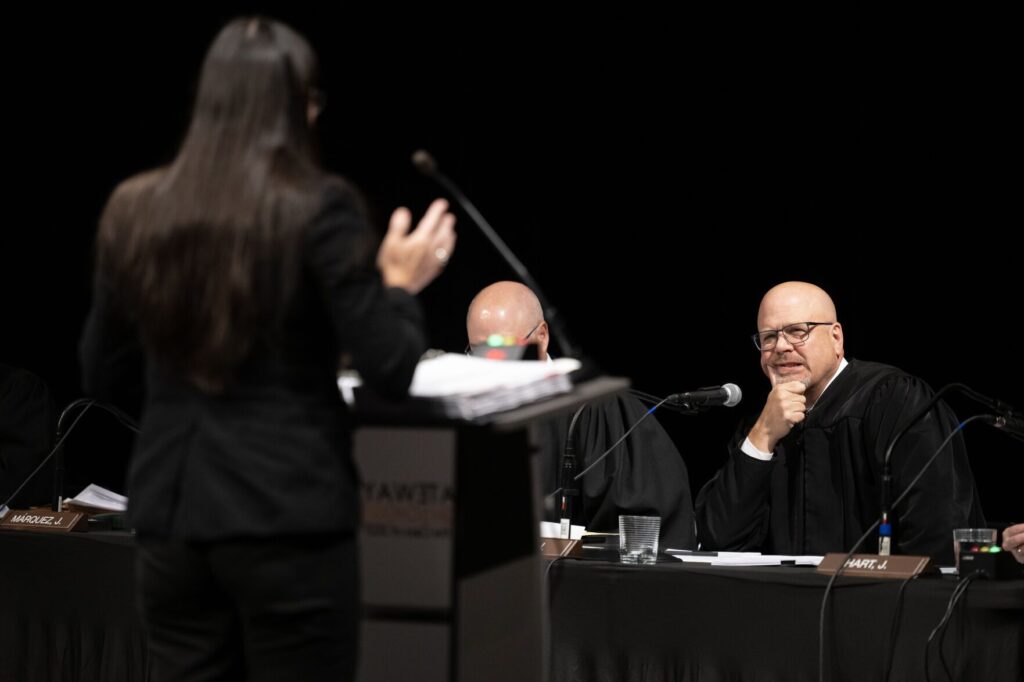
The Colorado Supreme Court considered on Wednesday whether a tip submitted through the state’s confidential school safety system provided a Douglas County administrator with reasonable suspicion to search a student’s backpack for drugs.
A trial judge blocked evidence from the search from being used against the child, prompting the district attorney’s office to appeal directly to the Supreme Court. In contrast to most cases that reach the state’s highest court, the filings and the underlying case history are shielded from public view. However, the justices and attorneys discussed the relevant details during oral arguments.
Someone submitted a tip through Safe2Tell, Colorado’s confidential school safety reporting system, alleging a student was smoking marijuana in biology class. The tip also described the student and indicated he was spraying cologne to mask the smell. Thirty-five minutes later, an operator received the tip. Shortly afterward, an administrator contacted the student, T.J.W. Although T.J.W. displayed seemingly no signs of drug use, a search of the backpack turned up evidence of marijuana.
“It seems like there was ample corroboration, at least of the identity of the individual,” Chief Justice Monica M. Márquez told the prosecution. “What we don’t have, and you seem to acknowledge, was corroboration of the actual activity. Is that necessary? And if not, I will express some concern.”
“There are just limitations in the way a school can corroborate these tips,” responded Chief Deputy District Attorney Megan Rasband.
The arguments repeatedly referenced a 1985 U.S. Supreme Court decision, New Jersey v. T.L.O., which addressed the constitutional prohibition on unreasonable searches and seizures in the school context. The court acknowledged that while students retain some privacy rights while in school, the need to maintain order “does not require strict adherence to the requirement that searches be based on probable cause.” Consequently, the court found school officials are typically justified in initiating warrantless searches when there is a reasonable belief of uncovering evidence of a legal or rule violation.
Similarly, Rasband asked the state Supreme Court to rule that a search is initially justified when the “unique nature of the high school context” and the anonymity of the Safe2Tell tip, among other things, make action by the school reasonable. Although corroboration of a confidential tip might be necessary, she said, there were “a lot of details” in the tip against T.J.W.
“What we don’t have,” countered Justice Richard L. Gabriel, “is somebody who said, ‘I smelled the marijuana in the classroom. I smelled the cologne in the classroom.’ So, we don’t have direct corroboration of the alleged criminal activity, true?”
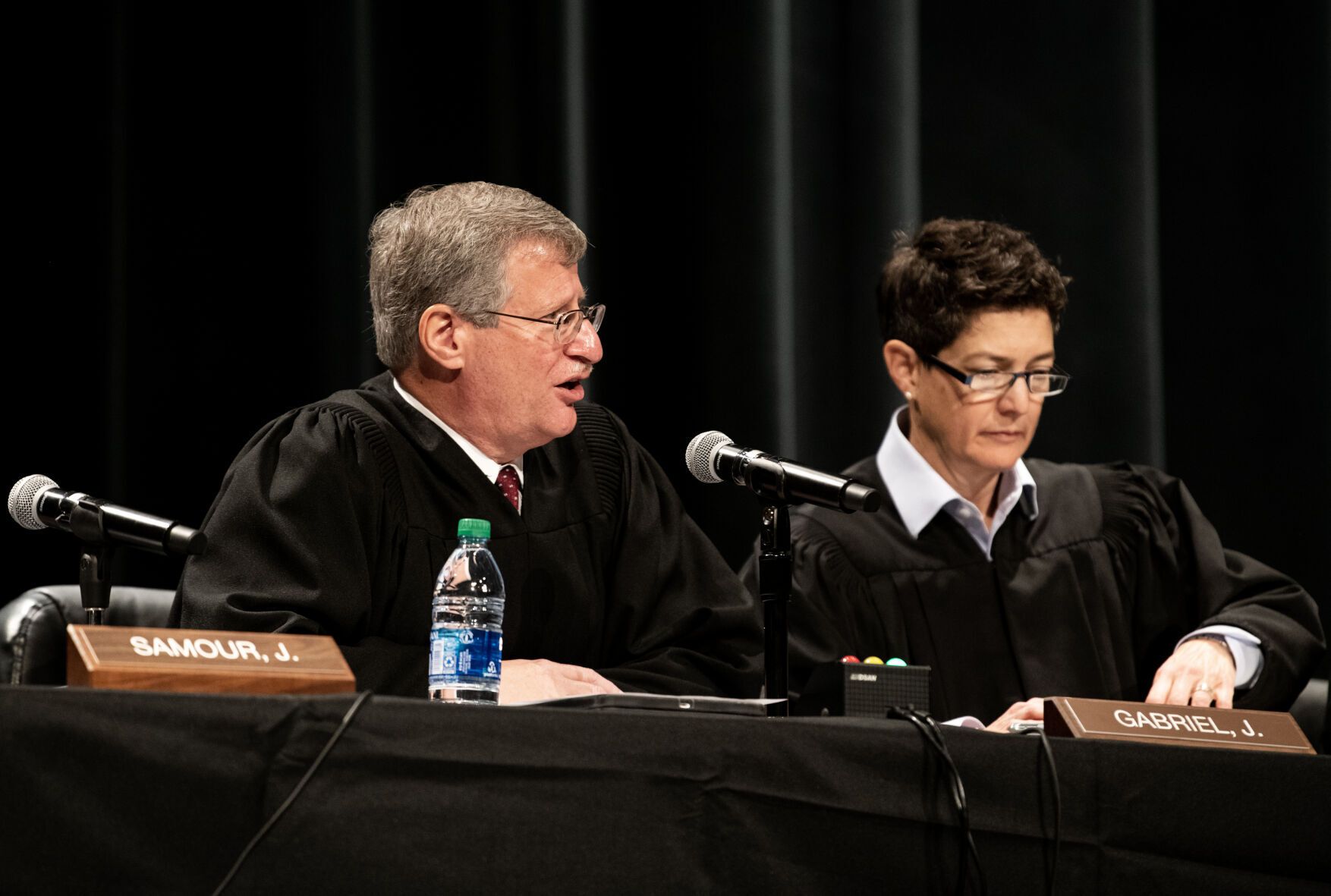
“It’s always easy to Monday-morning quarterback,” added Justice Maria E. Berkenkotter. But “I guess I’m curious, though, that the vice principal or assistant principal didn’t go and check in with the teacher. Looking at reasonableness, is that factoring in?”
Michael S. Juba, representing T.J.W., asked the court to avoid ruling that the anonymity of the Safe2Tell tip contributed to its reliability.
“The anonymity of this program does not give it more reliability. It gives it less reliability,” he said, noting T.J.W.’s alleged conduct occurred “in a classroom full of students and the teacher, (without) any indication that something was going on, this was marijuana being smoked in a classroom.”
“What would tip it over to make it reasonable suspicion?” asked Justice Brian D. Boatright. “If he had come in and had bloodshot and watery eyes?”
Yes, said Juba, but that was not the case with T.J.W.
Márquez wondered what a reasonable search would entail if the tip alleged T.J.W. had a gun instead of marijuana.
“Do we have to ask school officials to corroborate the possession of a weapon before” searching the backpack, she asked.
Yet Márquez also raised concerns about “potential abuse” of Safe2Tell’s confidential reporting system, despite its roughly 2% false-report rate.
“If I’ve got a beef with Justice (Carlos) Samour in biology class and I just report multiple Safe2Tell tips, and I can very adequately describe Justice Samour and what class schedule he has,” she said, “I can make sure that he gets hauled out of class and his backpack is searched.”
The case is People in the Interest of T.J.W.

10th Circuit oral arguments to feature trial judges for first time in 12 years
Michael Karlik
michael.karlik@coloradopolitics.com
Updated 15 minutes ago
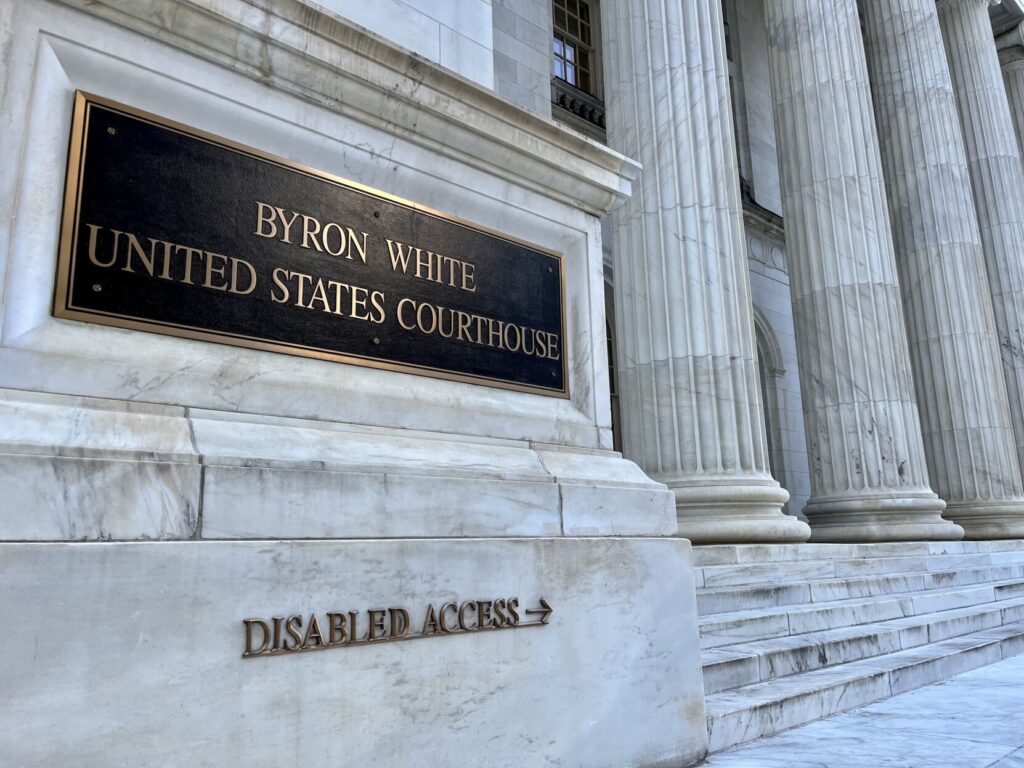
When the Denver-based federal appeals court convenes next week to hear oral arguments, six new faces will be staring down from the bench. No, the U.S. Court of Appeals for the 10th Circuit has not added six new members. It...
Federal judge says ICE cannot impose monitoring conditions beyond immigration judge’s order
Michael Karlik
michael.karlik@coloradopolitics.com
Updated 2 hours ago
A federal judge told U.S. Immigration and Customs Enforcement on Thursday that it cannot impose additional restrictions or monitoring conditions beyond those ordered by an immigration judge when releasing a person on bond. In November, U.S. District Court Judge Gordon...

10th Circuit rebuffs Jeffco’s attempt to expand immunity footprint
Michael Karlik
michael.karlik@coloradopolitics.com
Updated 5 hours ago
The Denver-based federal appeals court confirmed on Wednesday that it would not treat a judge’s decision to move a civil case forward as the automatic equivalent of denying immunity to governmental officials. The order from the U.S. Court of Appeals...

Colorado Supreme Court to hear cases on witness retaliation, slip-and-fall
Michael Karlik
michael.karlik@coloradopolitics.com
Updated 5 hours ago
The Colorado Supreme Court announced on Monday that it will decide whether defendants can be convicted of retaliating against a victim or witness when that person has not yet testified and is not scheduled to testify. At least three of...
Colorado Supreme Court struggles with rubric for significant reductions in parenting time
Michael Karlik
michael.karlik@coloradopolitics.com
Updated 5 hours ago
The Colorado Supreme Court attempted to identify on Wednesday the circumstances under which judges may reduce the number of days a parent spends with their child post-divorce without it rising to the level of a “restriction” that requires more rigorous...

Douglas County Sheriff, DA sue Polis administration over immigration policy
Marissa Ventrelli
marissa.ventrelli@coloradopolitics.com
Updated 23 hours ago
Douglas County Sheriff Darren Weekly and District Attorney George Brauchler filed a lawsuit against Colorado Gov. Jared Polis, challenging the constitutionality of a state statute on immigration visas. Filed on Wednesday, the suit also named Colorado Attorney General Phil Weiser,...

Colorado justices wary of expanding rezoning by ballot initiative
Michael Karlik
michael.karlik@coloradopolitics.com
Updated 2 hours ago
The Colorado Supreme Court appeared wary on Wednesday of allowing rezonings of planned-unit developments to occur through a vote at the ballot box, rather than a municipality’s detailed review process that accounts for specific factors. In contrast to traditional, or...
In Tina Peters appeal, judges telegraph some degree of reversal | ANALYSIS
Michael Karlik
michael.karlik@coloradopolitics.com
Updated 2 days ago
Former Mesa County clerk Tina Peters seems poised to walk away from the state’s Court of Appeals with her criminal convictions largely intact, even as a three-judge appellate panel raised concerns about her sentence and one specific conviction. Peters, a...

Judge warns against expansive use of post-9/11 rule in immigration detentions
Michael Karlik
michael.karlik@coloradopolitics.com
Updated 2 days ago
A federal judge concluded on Monday that the government applied a 9/11-era regulation to a man in immigration detention in violation of his constitutional rights, in seemingly the first decision out of Colorado addressing the increased use of the “automatic...
Tina Peters will ask appeals court to overturn her conviction today: Here’s what you need to know.
Colorado Politics
colorado-politics@coloradopolitics.com
Updated 2 days ago
Lawyers for former Colorado elections clerk Tina Peters will try to convince a state appeals court on Wednesday afternoon to overturn her conviction in a case involving a security breach at the election office she ran. Mesa County jurors convicted...
PREV
PREVIOUS

Longtime Denver resident Dick Young, a retired rear admiral and pioneering civic advocate, dies at 94
Richard Edward Young, a retired rear admiral, attorney and towering figure in Colorado’s civic landscape for more than six decades, died Jan. 7. He was 94. A lifelong advocate for civil rights, fair housing, veterans and his neighborhood, Young was a decorated officer in the Naval Reserves and held prominent leadership roles across the decades, […]

Federal judge says ICE cannot impose monitoring conditions beyond immigration judge's order
A federal judge told U.S. Immigration and Customs Enforcement on Thursday that it cannot impose additional restrictions or monitoring conditions beyond those ordered by an immigration judge when releasing a person on bond. In November, U.S. District Court Judge Gordon P. Gallagher found that the government violated the rights of Khristyne Batz Barreno by keeping […]