

Federal judge declines to dismiss claims against prison officials for seizure-related death
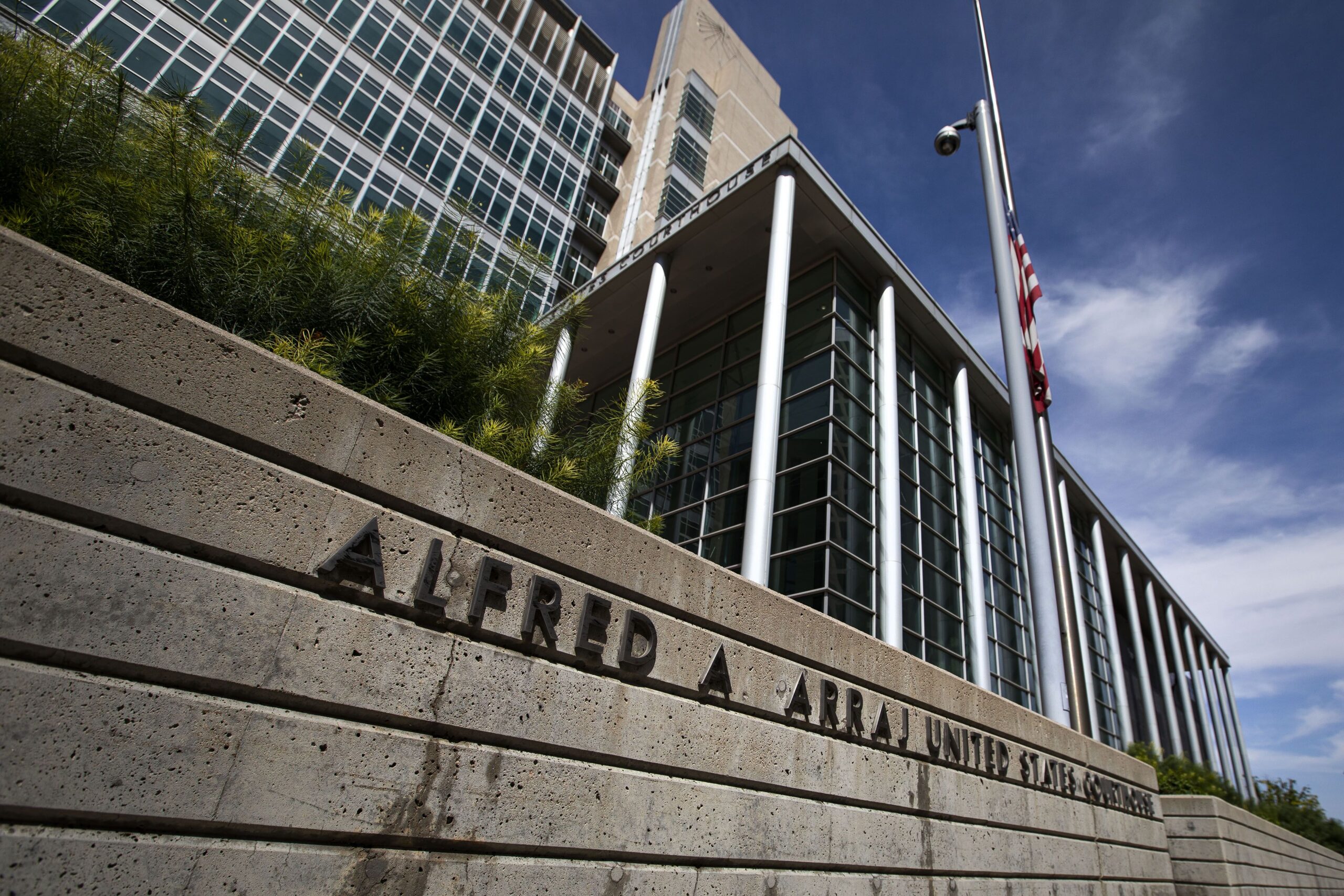
A federal judge declined last month to dismiss the claims against numerous prison employees for a man’s in-custody death following several seizures and his repeated ingestion of liquified pain-numbing medication.
The mother and minor children of Victor Esquivel sued the state’s corrections director, prison supervisors, corrections officers, medical employees and a medical staffing firm after Esquivel’s September 2022 death at the Colorado Territorial Correctional Facility. The plaintiffs alleged the defendants were deliberately indifferent to Esquivel’s serious medical needs, in violation of his constitutional right to be free from cruel and unusual punishment.
Broadly, the complaint described Esquivel as having a history of mental illness and substance use disorder. He suffered several seizures in the months before his death, which stemmed from melting down lidocaine patches and ingesting the liquid.
Allegedly, the defendants knew this to be a prevalent practice throughout the prison. Moreover, they specifically knew Esquivel was endangering himself. In their various roles, the defendants allegedly failed to treat Esquivel properly, did not refer him to those who could provide suitable care, failed to protect him from known risks or neglected to monitor him adequately.
The individual defendants invoked qualified immunity, which is a judicially created doctrine to shield government employees from civil lawsuits unless they violate someone’s rights as clearly established through court decisions.
But in a Dec. 19 order, U.S. District Court Judge Charlotte N. Sweeney rejected defense counsel’s argument as so brief as to be almost “lazy.”
“Defendants’ cursory assertions of such an important defense,” she wrote, “threaten to undermine its importance and, at worst, insult the individuals on whose behalf it is asserted.”

Otherwise, Sweeney concluded the plaintiffs had credibly alleged the defendants knew about a significant risk of harm to Esquivel and disregarded it. The defendants, represented by various attorneys who advanced similar reasons for dismissal, had attempted to argue that they had no constitutional obligation to protect Esquivel from “exposure to illegal drugs.”
“The first problem with this theory is that, if recognized, it would mean that incarcerated people are entitled to greater protection from the effects of the ingestion of drugs than non-incarcerated people,” wrote attorney Katherine M.L. Pratt for one of the corrections defendants. “This is simply not logical. Were Plaintiff not incarcerated, he could have easily walked into any pharmacy, bought lidocaine patches over-the-counter, taken them home, boiled them, and ingested the liquid.”
The plaintiffs countered that the defendants were misstating the issue.
“This case is about specific known risks to Mr. Esquivel arising from a failure to treat seizure and mental health disorders, combined with housing him in an area where prescription lidocaine exposed him to harm due to his self-medicating of untreated mental suffering,” the plaintiffs’ attorneys wrote.
Sweeney agreed with the plaintiffs’ description of the alleged constitutional violation.
“Fundamentally, Plaintiffs have plausibly alleged that Defendants … all knew the dangers that lidocaine posed to Mr. Esquivel but failed to act in the face of those known dangers,” she wrote.
The case is The Estate of Victor Esquivel et al. v. Williams et al.

GoFundMe donations for victim do not lessen defendant’s restitution obligation, appeals court rules
Michael Karlik
michael.karlik@coloradopolitics.com
Updated 8 hours ago
Donations made to a victim’s crowdfunding page do not necessarily reduce the defendant’s obligation to pay crime victim restitution, Colorado’s second-highest court concluded on Thursday. Under state law, crime victim compensation boards reimburse victims for certain monetary losses, including funeral...
Colorado senators initially push for — then drop ‘identity’ factor in parenting time decisions
Marissa Ventrelli
marissa.ventrelli@coloradopolitics.com
Updated 9 hours ago
The sponsors of a proposal that would require suppression of records in name-change petitions for minors removed a provision that would have mandated the courts to factor in the issue of “identity” when allocating parenting time. In its original form,...
Appeals court divided over effect of retroactive sentence on parole calculation
Michael Karlik
michael.karlik@coloradopolitics.com
Updated 15 hours ago
Colorado’s second-highest court grappled last week with the framework for calculating a defendant’s earliest possible parole date in light of two intersecting legal principles — a judge’s ability to make an order retroactive, and the requirement that separate, simultaneous sentences...
Federal judge allows some claims to proceed over denial of cancer meds in El Paso County jail
Michael Karlik
michael.karlik@coloradopolitics.com
Updated 1 day ago
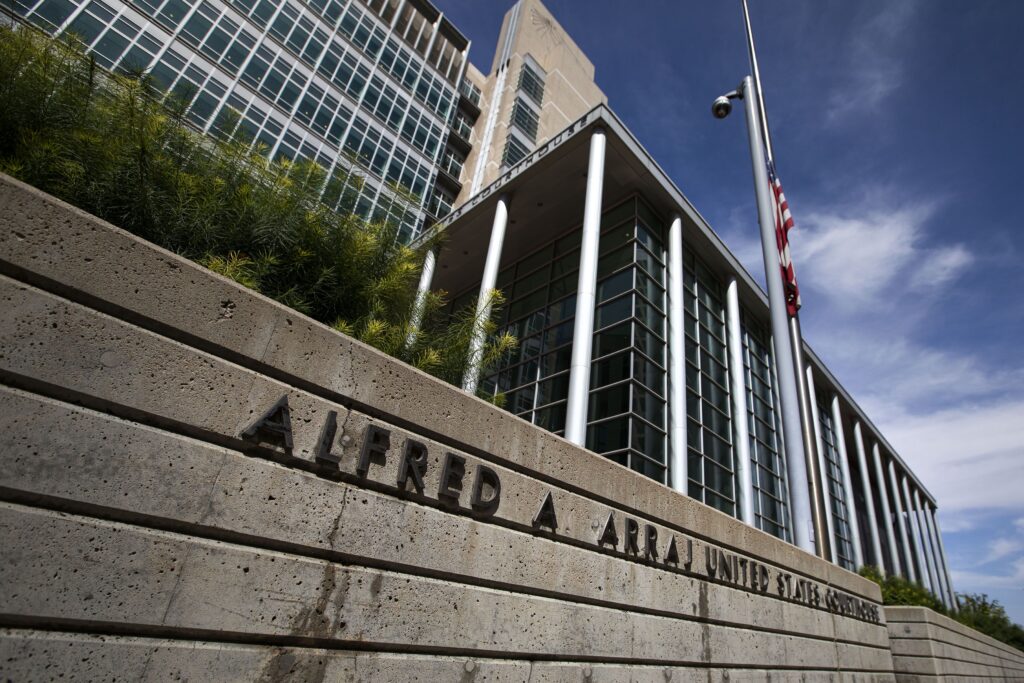
A federal judge allowed claims to proceed last week against some medical and sheriff’s office employees at the El Paso County jail over their alleged failure to ensure a detainee received his cancer medication during four months of incarceration. Stuart...
Colorado’s chief justice exceeds average number of dissents with 4-plus months left in term
Michael Karlik
michael.karlik@coloradopolitics.com
Updated 1 day ago
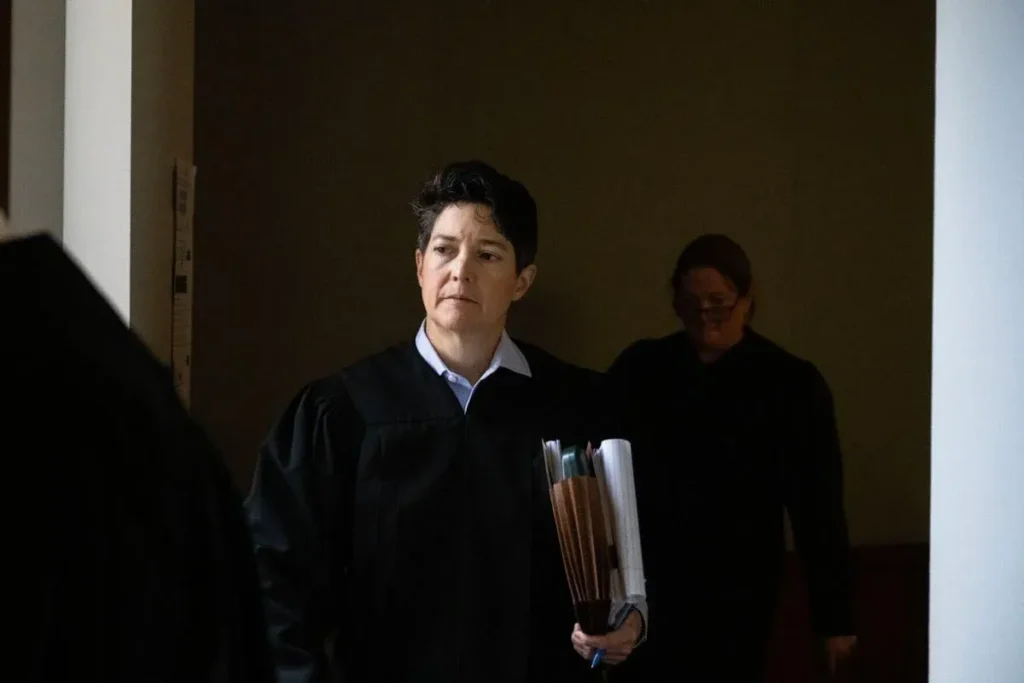
Since the start of the Colorado Supreme Court’s 2025-2026 term in September, Chief Justice Monica M. Márquez has now exceeded her average number of dissenting opinions, with more than four months remaining before the court breaks for the summer. The...
Appeals court finds state wrongly blocked ex-worker’s evidence in termination challenge
Michael Karlik
michael.karlik@coloradopolitics.com
Updated 2 days ago
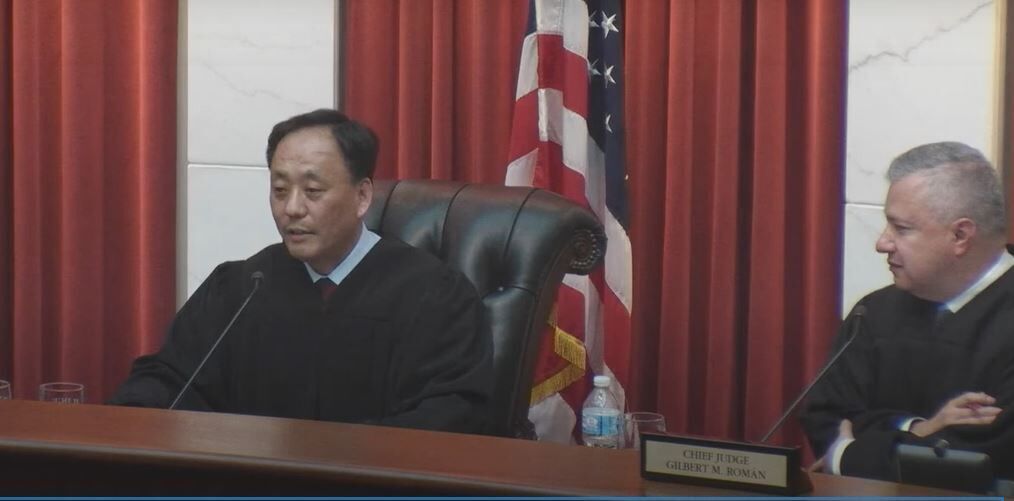
Colorado’s second-highest court ruled last week that the Colorado State Personnel Board wrongly blocked a former employee from submitting documentation to challenge his termination, even though he followed the board’s instructions to obtain the materials. Eric Strumpf was the budget...

Colorado’s ‘first public Christian school’ sues state, alleges discrimination
Eric Young
eric.young@gazette.com
Updated 8 hours ago
Riverstone Academy, a public elementary school that opened last fall in Pueblo as a tuition-free option with Christian-based instruction, has filed a lawsuit against the state of Colorado over alleged religious discrimination. The lawsuit, filed in U.S. District Court for...
Divided Colorado Supreme Court rejects defendant’s claim of deficient DNA investigation
Michael Karlik
michael.karlik@coloradopolitics.com
Updated 2 days ago
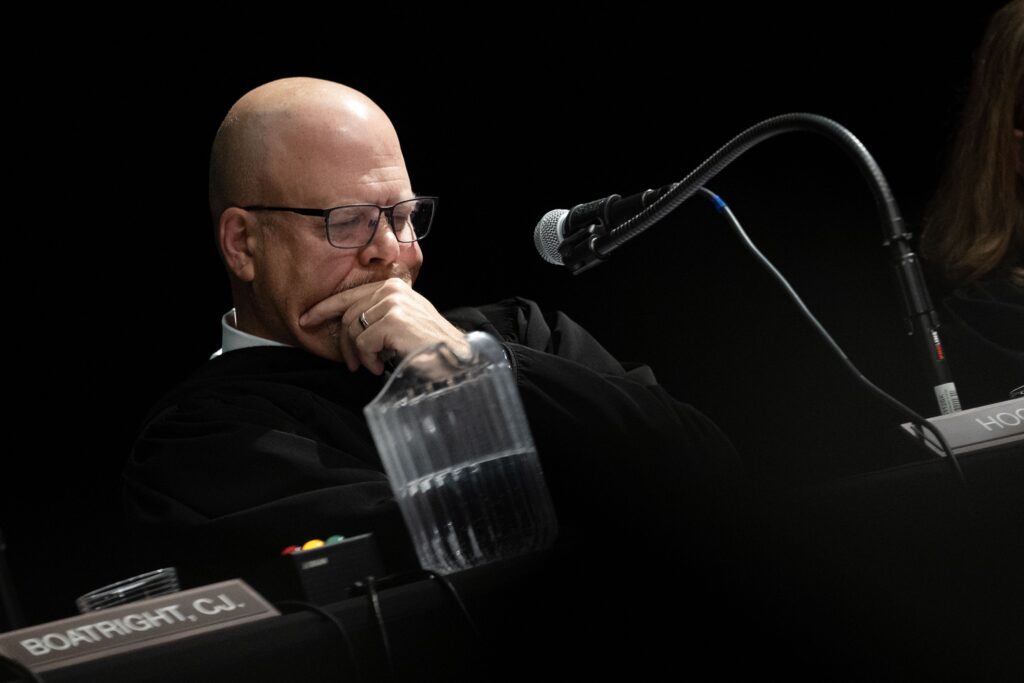
The Colorado Supreme Court decided on Tuesday, by 4-2, that a defendant failed to allege how uninvestigated, inaccessible DNA evidence would have shown he was wrongly convicted. When Jamale D. Townsell filed a petition from prison seeking postconviction relief, he...
Colorado justices uphold shooting conviction despite jury saying defendant not the shooter
Michael Karlik
michael.karlik@coloradopolitics.com
Updated 1 day ago
The Colorado Supreme Court ruled on Tuesday that a man can stand convicted of murder, even though jurors found he was not the one who shot the victim and the evidence suggested he was not present for the shooting. There...

Susan Blanco new Colorado Supreme Court justice
Michael Karlik
michael.karlik@coloradopolitics.com
Updated 2 days ago
Chief Judge Susan Blanco of Larimer and Jackson counties is the newest member of the Colorado Supreme Court, Gov. Jared Polis announced on Tuesday. “A few words come to mind: Innovation. Excellence. Creativity. Hard work. These are values we need...
PREV
PREVIOUS

Appeals judge believes children's representatives may challenge certain parental rights decisions
A member of Colorado’s second-highest court argued on Wednesday that, despite a recent state Supreme Court ruling prohibiting anyone other than the government from pursuing child-welfare cases, a child’s legal representative may still appeal certain decisions. By 2-1, a three-judge Court of Appeals panel decided it could not review a trial judge’s decision out of […]

Independent Crank challenger Matt Cavanaugh joins Democratic primary in Colorado's 5th CD
Matt Cavanaugh, the Army combat veteran and author who has been running an independent campaign to unseat first-term Republican U.S. Rep. Jeff Crank in Colorado’s 5th Congressional District, registered this week as a Democrat and will seek the party’s nomination for the seat. Cavanaugh told Colorado Politics that his principles haven’t changed, but the former […]