

10th Circuit judges recap do’s and don’ts for lawyers
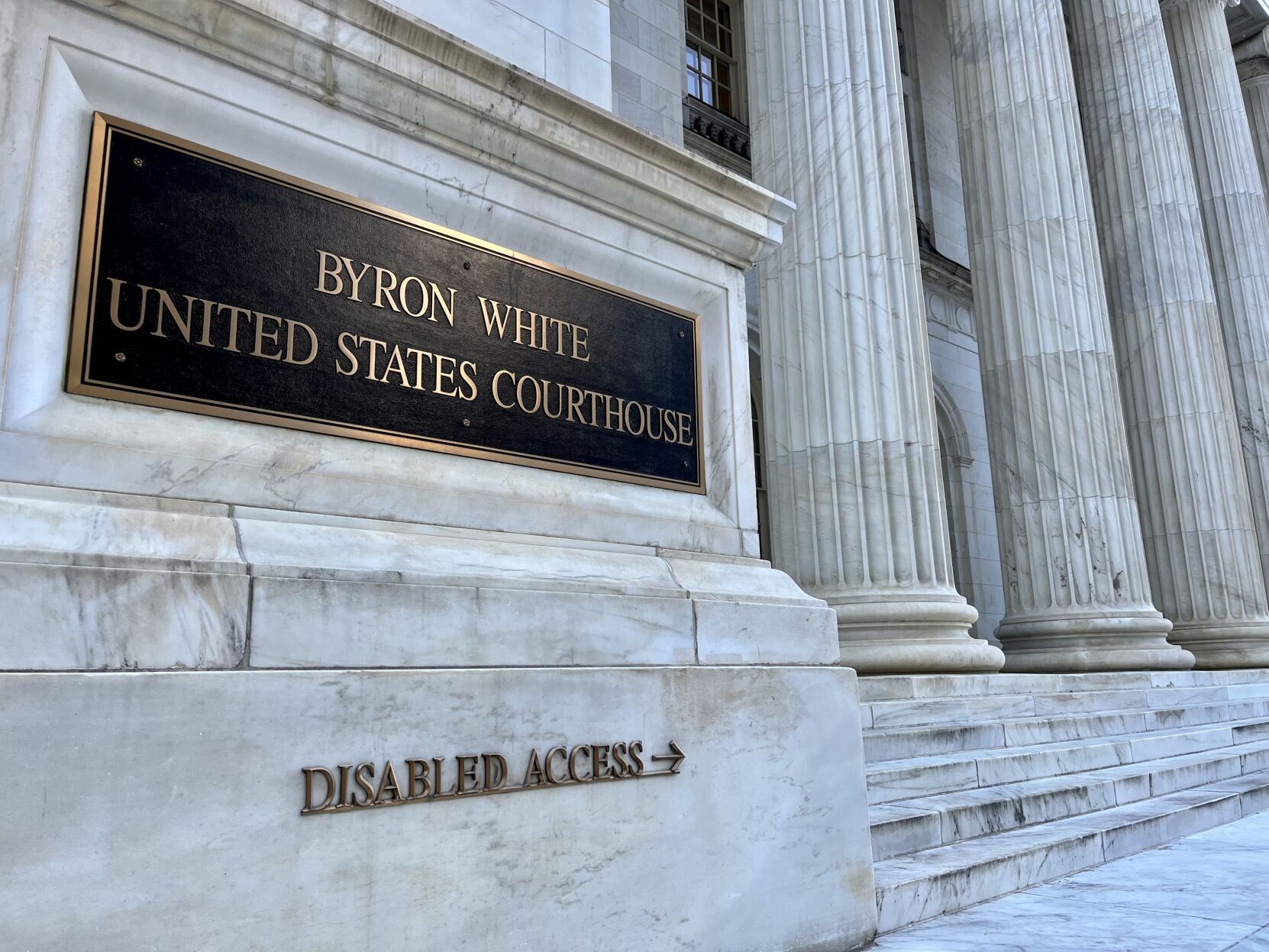
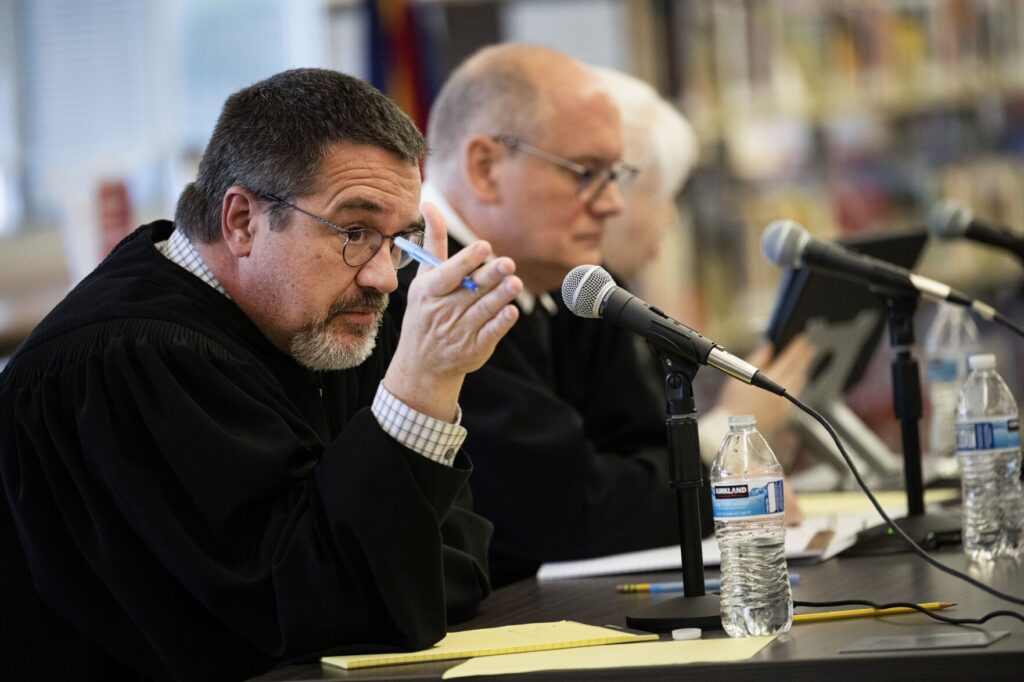
Two members of the Denver-based federal appeals court spoke to attorneys on Monday about how to present cases effectively, and when it is helpful for outside entities to weigh in on pending appeals.
Judges Robert E. Bacharach of Oklahoma and Gregory A. Phillips of Wyoming, who are both Barack Obama appointees to the U.S. Court of Appeals for the 10th Circuit, indicated “amicus curiae” briefs submitted by non-parties will generally receive less attention. However, those filings could educate judges about issues that are consequential elsewhere in the country, even if they are relatively obscure in the 10th Circuit.
“An amicus may be more attuned to that and I’m not. So, I do think in terms of measuring the global significance of an issue, those can be helpful,” said Bacharach. “Obviously, a lot of times there may be groups that have very important interests. But if they’re more in terms of policymaking or ideologically oriented, those won’t typically have great bearing on me in what I’m trying to do, which is not figure out what is the best result but just what is the correct result based on the case law that we have.”
The judges spoke at the year-end virtual 10th Circuit review sponsored by the Oklahoma City Chapter of the Federal Bar Association, the Faculty of Federal Advocates and the Tenth Circuit Historical Society. The 10th Circuit hears appeals in three-judge panels for federal cases arising from Colorado, Oklahoma, Kansas, Utah, New Mexico and Wyoming.
Phillips said that for issues without a clear precedent from the 10th Circuit or the U.S. Supreme Court, it is not safe to assume the 10th Circuit will adopt a position simply because multiple other courts have done so.
“Obviously, other circuits would be helpful to us,” he said. But that is “not to say we’re gonna adopt them, even if it’s a uniform rule in two or three others.”
A numerical tally might be more helpful, Phillips added, in rare “en banc” hearings where all circuit judges will consider a case and potentially overrule the court’s own precedent.
“If someone were to ask you hypothetically, ‘Why did you decide that case the way you did, Judge Phillips?’ I don’t know that anybody would start by saying, ‘There were three district courts that said this, there were two circuit courts that said this,'” said Bacharach. “But you’re probably going to be thinking of explaining the logic in the opinion in terms of the building blocks for why you came up with the decision that you did, as opposed to just regurgitating a number of cases.”

On the subject of oral arguments, both judges suggested framing the exchange as a “discussion,” rather than as an opportunity for judges to derail an attorney’s scripted points with their questions.
“I’ve seen cases swing 3-0 one way to 3-0 the other way in an argument,” said Phillips. “And there are some cases where it’s not gonna make a huge difference. But it’s an opportunity. Listen to what the court’s asking about.”
“Try to resist the temptation to speculate on why we’re asking particular questions,” said Bacharach. “To illustrate, you may come in with three arguments and you really wanna talk about the first two, and you know you only have 15 minutes. And maybe we only want to ask you about that third one.
“You may be thinking the third one is something that you find the weakest. That you really don’t wanna be using up your 15 minutes on this third one,” he continued. “You may not know, it may or may not be the case, that the judge may not be persuaded at all about your first two arguments, but may be thinking seriously or be inclined to vote to reverse or vacate based on your third argument.”
Bacharach also warned lawyers against pursuing too many issues on appeal.
“The tendency of human nature that when you get to the eighth issue, even if it’s not conscious, the reader, the judge will think, ‘Obviously, the advocate felt there were seven issues that were more persuasive than this,’ and is maybe less amenable to that argument than he or she might otherwise be if it was your first issue,” he said.
Finally, the judges spoke about their pet peeves, including excessive use of acronyms, making personal attacks against the other side or the trial judge, and chewing gum or gesticulating during oral arguments. Bacharach also said that certain types of graphics, like screenshots from body-worn camera footage, can be helpful, but the vast majority of 10th Circuit opinions do not contain illustrations.
“There are a lot of judges, I would say, that have a really negative view of visual aids,” he said. “When you write a brief for our court, you have no idea what judges are gonna be assigned to your panel. … No writer wants to distract a reader, and obviously no practitioner wants to distract a panel.”
The virtual event also featured presentations on various legal developments, including trends in “habeas corpus,” a longstanding legal tool used to challenge one’s confinement. U.S. Magistrate Judge Chris M. Stephens of the Western District of Oklahoma briefly spoke of a sharp increase in immigration-related habeas petitions that have led district judges to repeatedly rebuff the government’s broad interpretation of its detention authority.
“It’s taking a huge amount of resources from local district courts, and those resources are then impacting the proceedings of other cases,” he said, adding that the 10th Circuit and Supreme Court would hopefully address the legality of detention practices in the coming months or years.

10th Circuit warns lawyers after finding fake case in filing
Michael Karlik
michael.karlik@coloradopolitics.com
Updated 1 hour ago
The Denver-based federal appeals court warned attorneys to be more careful last month after discovering one lawyer cited a fake case in his arguments. In recent months, federal and state judges in Colorado have begun cautioning lawyers explicitly about the...
Colorado leaders weigh next steps after US Supreme Court rules against state’s ‘conversion therapy’ ban
Marissa Ventrelli
marissa.ventrelli@coloradopolitics.com
Updated 14 minutes ago
Colorado leaders and advocacy groups remain divided after the U.S. Supreme Court on Tuesday ruled against the state’s ban on conversion therapy for minors, ruling 8-1 that the 2019 law violates the First Amendment. While it is a victory for...

10th Circuit rules cognitively impaired man’s risk of lobotomy, mistreatment in Mexico not ‘torture’
Michael Karlik
michael.karlik@coloradopolitics.com
Updated 14 hours ago
The Denver-based federal appeals court concluded last month that a man’s risk of mistreatment or forced lobotomy in his native Mexico did not amount to “torture” that should shield him from deportation. A three-judge panel of the U.S. Court of...
Colorado justices side with news organizations for disclosure of high-level child abuse data
Michael Karlik
michael.karlik@coloradopolitics.com
Updated 18 hours ago
The Colorado Supreme Court ruled on Monday that the state must disclose the number of child abuse reports at individual group living facilities in response to an open records request, as the addresses are already in the public domain. The...
Divided Colorado Supreme Court finds Denver detective did not violate defendant’s Miranda rights
Michael Karlik
michael.karlik@coloradopolitics.com
Updated 14 hours ago
The Colorado Supreme Court determined on Monday that a Denver detective did not improperly resume questioning of a defendant in custody after he invoked his right to counsel. By 4-3, the justices reversed a trial judge’s order that found a...

Out-of-state judges address ex-discipline director’s lawsuit, Colorado justices accept federal invitation | COURT CRAWL
Michael Karlik
michael.karlik@coloradopolitics.com
Updated 1 day ago
Welcome to Court Crawl, Colorado Politics’ roundup of news from the third branch of government. A pair of out-of-state judges got down to business in a lawsuit brought by Colorado’s former judicial discipline director, plus the state Supreme Court has...
Federal judge upholds constitutionality of Colorado campaign contribution limits
Michael Karlik
michael.karlik@coloradopolitics.com
Updated 4 days ago
A federal judge upheld Colorado’s individual campaign contribution limits as constitutional on Thursday, finding that three Republican plaintiffs failed to prove the campaign finance framework violates their First Amendment rights. U.S. District Court Senior Judge John L. Kane recognized that...

Appeals court rejects theory that existing tax revenue undermines need for new fees
Michael Karlik
michael.karlik@coloradopolitics.com
Updated 4 days ago
Colorado’s second-highest court rejected a plaintiff’s claim on Thursday that the tax revenue generated by an existing activity should prevent local governments from imposing new fees aimed at regulating the activity. The question stemmed from Colorado’s unique constraints on taxation...
Appeals court finds no illegal sentence when defendants forfeit time-served credit
Michael Karlik
michael.karlik@coloradopolitics.com
Updated 3 days ago
Colorado’s second-highest court ruled on Thursday that criminal defendants may agree to relinquish the credits they earned while incarcerated pending trial, despite a state law guaranteeing that such time “shall be deducted” from a person’s sentence. Kerry Ellis Endsley pleaded...
Appeals court reinstates Garfield County arson charge
Michael Karlik
michael.karlik@coloradopolitics.com
Updated 2 days ago
Colorado’s second-highest court reinstated a Garfield County defendant’s arson charge on Thursday, concluding a trial judge improperly credited a witness’s claim that she alone was responsible for starting the fire. A sheriff’s deputy responded to a brush fire near Parachute...
PREV
PREVIOUS
Divided appeals court overturns defendant's $350,000 restitution obligation
Colorado’s second-highest court overturned a defendant’s obligation to pay nearly $350,000 in crime victim restitution last week because an Arapahoe County judge issued the restitution order beyond the legal deadline. The divided decision of a three-judge Court of Appeals panel is the latest illustration of the struggle some judges continue to have with Colorado’s restitution […]

Organizers of petition to recall City Councilmember Tom Bailey turn in signatures
A group of northern Colorado Springs residents turned in a stack of signed petition forms Monday afternoon in an attempt to recall City Councilmember Tom Bailey. Timothy Lewin, Paul Carson and Laura Wilkey were the main organizers who dropped off the packets at the City Clerk’s office. Lewin said the group had gathered “just under” […]