

Colorado Supreme Court ponders insurers’ ability to defend against policyholders
The Colorado Supreme Court considered last week what steps insurance companies must take to defend themselves against lawsuits from injured policyholders who, based on a technicality, were legally not at fault for their injuries.
When an insured driver has an accident with someone who is uninsured, they may obtain benefits under their own insurance policy for the damages they suffer. Insurers who delay or deny such benefits can be sued for their actions.
During the Dec. 16 oral arguments, however, the justices questioned whether Progressive Direct Insurance Company was prevented from adequately defending itself against a lawsuit from its policyholder, Andrew Ortiz. Specifically, the alleged at-fault driver did not participate in the case and Ortiz obtained a default judgment against her. Legally, that meant she admitted liability for the accident.
So, if Progressive wanted to argue that Ortiz really was more responsible for the accident compared to the defaulting driver, what should it have done?
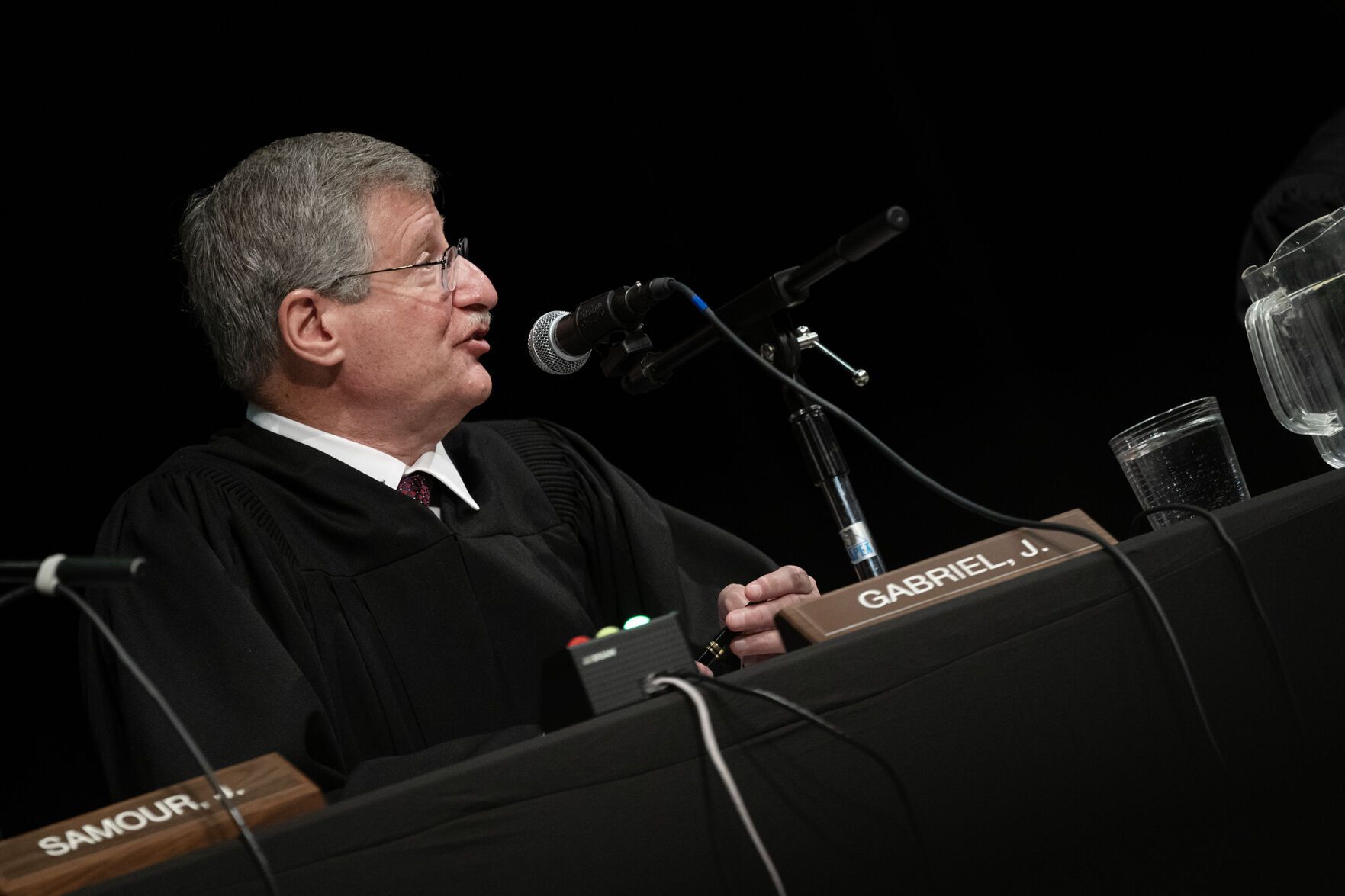
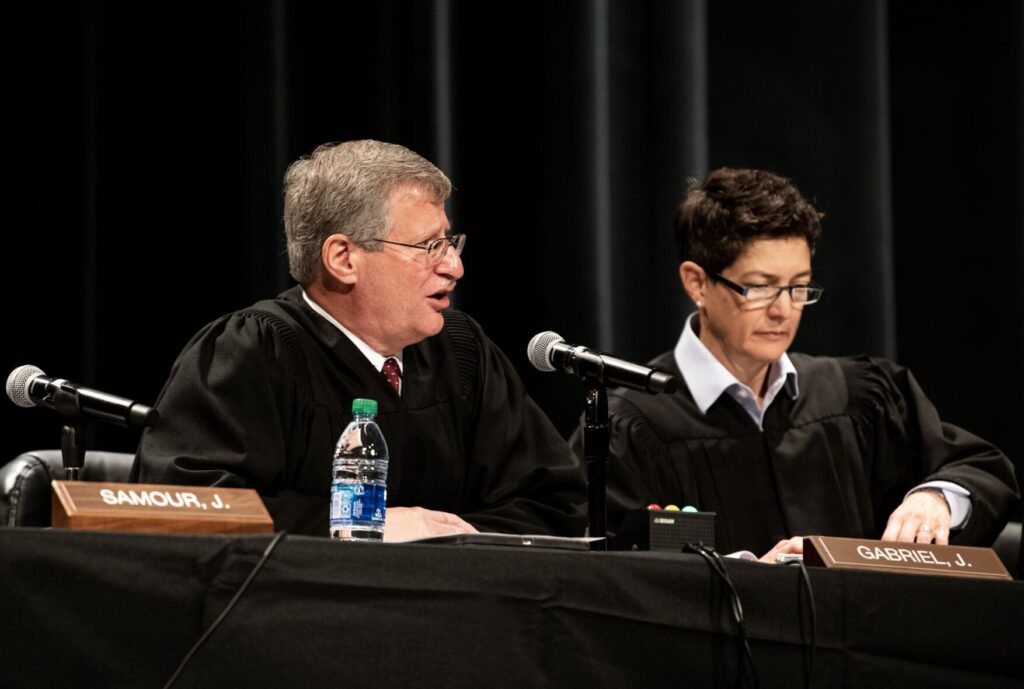
“I get why the plaintiff here has to be entitled to get a default judgment,” said Justice Richard L. Gabriel to Ortiz’s lawyer. “The law allows that. And then if you want to try to collect against the (defaulting driver), you can try to do that. But it’s much more troubling to say that the insurer is bound by that, when they have a comparative fault argument and they’re never given a chance to argue it. They have to get the chance to argue it at someplace, it seems to me.”
Attorney Nelson A. Waneka responded it may be the case that, despite the jury hearing about a driver’s default, evidence of the plaintiff’s responsibility for the accident is overwhelming at the trial against the insurance company.
“I don’t know in that context that the default is gonna carry the day,” he said. But “that is just not what we had in this circumstance.”
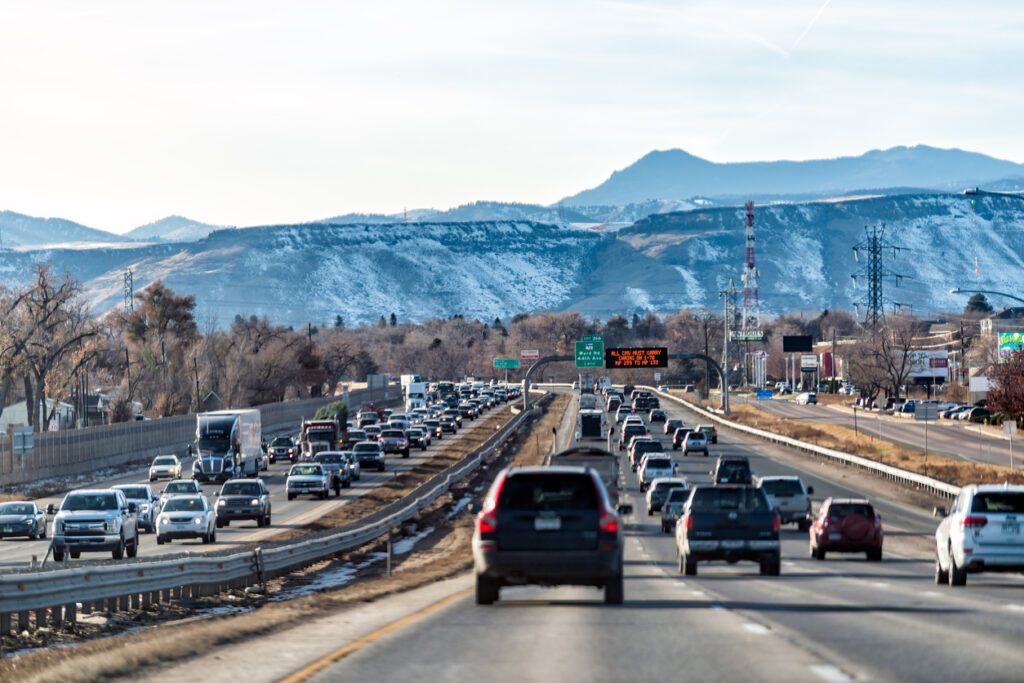
Ortiz and another driver collided at a Denver intersection in January 2020. He sued the driver for negligence and his own insurer, Progressive, for its allegedly unreasonable investigation and denial of his claim.
The uninsured driver did not participate in the case, prompting Ortiz’s claims against her to resolve in his favor by default. Progressive argued it should be able to defend at a hearing against the other driver’s liability, considering it would have to pay for the damages she caused. But District Court Judge Alex C. Myers rejected that argument, explaining the other driver’s default already established her liability and Progressive would now get the chance to argue how much the damages were.
Progressive participated in a damages hearing, and ended up paying Ortiz $86,959 for the non-appearing driver’s actions. At a separate trial for Ortiz’s claims against the company, jurors found Progressive liable for acting in bad faith and unreasonably delaying or denying benefits. They awarded Ortiz in excess of $216,000.
Progressive asked Myers for a new trial, arguing it should have been allowed to contest the defaulting driver’s liability versus Ortiz’s own responsibility for the crash. Myers disagreed, finding Progressive had not specifically shown why such proceedings were necessary until right before the trial. Even then, “the jury rejected Progressive’s argument and theory” at trial, Myers added.
A three-judge Court of Appeals panel agreed that under Supreme Court precedent, Progressive had to make a “particularized showing” that its participation in a hearing on the defaulting driver’s liability was necessary for fairness. Because Myers correctly concluded Progressive did not, and because Progressive was able to litigate the accident in multiple places, the panel upheld the outcome.
Judge Lino S. Lipinsky de Orlov wrote separately to say he agreed, but he was concerned that the Supreme Court’s 2004 precedent, which everyone relied upon, produces unfair results when the allegedly at-fault driver fails to appear.
Because the default judgment established responsibility for the non-appearing driver, there was never “a trial to determine Ortiz’s liability for the collision underlying this case,” Lipinsky wrote. “I believe Progressive should have been allowed to litigate Ortiz’s fault, if any.”
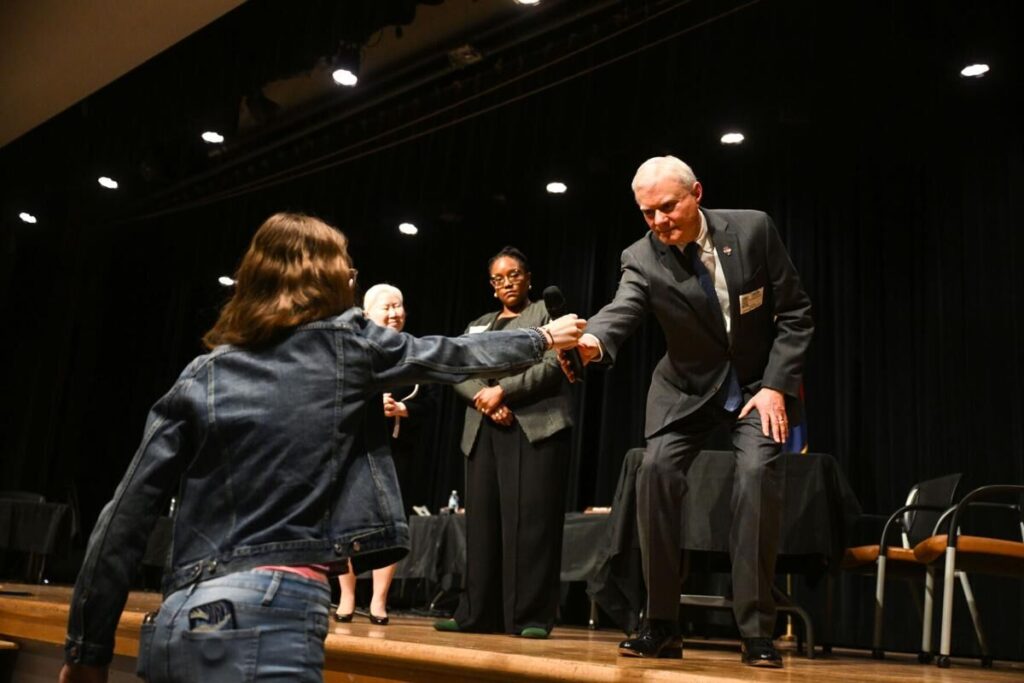
“Progressive never has an opportunity to present the fault argument. Instead, the court tells the jury, ‘I’ve already determined default,'” Brendan O. Powers, representing Progressive, argued to the Supreme Court. He added that the court should “embrace the idea of ignoring the default” under the circumstances.
“I have some concern that your argument would basically preclude a plaintiff from getting a default judgment,” said Gabriel.
Waneka agreed that courts cannot “totally ignore the fact that the uninsured driver defaulted.”
Some justices observed jurors could have heard about both the default and about Progressive’s reasons for why Ortiz was actually at fault.
“The argument, I think, is that you didn’t have the easy path,” said Justice Maria E. Berkenkotter. “You had a path, right? But you didn’t have the easier path.”
Justice Melissa Hart did not attend the arguments. She has been on a leave of absence since late October and, three days after the arguments, announced her intent to step down in January.
The case is Progressive Direct Insurance Company v. Ortiz.

Federal judge finds immigration judge denied bond using faulty reasoning, dubious evidence
Michael Karlik
michael.karlik@coloradopolitics.com
Updated 1 hour ago
A federal judge concluded last week that an immigration judge employed the incorrect procedure when denying bond to a detainee and relied on dubious evidence to find he was a flight risk. Under federal rules governing immigration cases, the filings and...

Justice Hart to leave Supreme Court, new recs from Access to Justice Commission | COURT CRAWL
Michael Karlik
michael.karlik@coloradopolitics.com
Updated 1 day ago
Welcome to Court Crawl, Colorado Politics’ roundup of news from the third branch of government. A member of the Colorado Supreme Court unexpectedly announced her retirement from the bench, plus the state’s Access to Justice Commission has made recommendations following...

Judge denies AstraZeneca’s bid to block Colorado drug discount law
Marissa Ventrelli
marissa.ventrelli@coloradopolitics.com
Updated 1 day ago
A Colorado district court judge denied drug manufacturer AstraZeneca’s request for an injunction to block enforcement of a recent law barring drug manufacturers from imposing restrictions on covered entities to obtain drugs under a federal discount program. The law states...

Colorado Supreme Court finds judge mistakenly barred evidence over officer’s failure to unmute body cam
Michael Karlik
michael.karlik@coloradopolitics.com
Updated 1 day ago
A Fremont County judge incorrectly barred evidence from being used against a defendant based upon a Cañon City officer’s failure to unmute his body-worn camera, the Colorado Supreme Court decided on Monday. Under a comprehensive police accountability law enacted in 2020,...
Colorado Supreme Court holds municipal sentences may not be greater for identical state crimes
Michael Karlik
michael.karlik@coloradopolitics.com
Updated 1 day ago
The Colorado Supreme Court ruled on Monday that municipalities may not subject defendants to sentences that are harsher under their own ordinances than for identical offenses under state law. In the Dec. 22 opinion, Chief Justice Monica M. Márquez noted...
Divided appeals court nullifies defendant’s $37,000 restitution obligation due to faulty order
Michael Karlik
michael.karlik@coloradopolitics.com
Updated 4 days ago
Colorado’s second-highest court concluded on Thursday that a defendant has no obligation to pay nearly $37,000 in crime victim restitution due to a faulty order that even the trial judge acknowledged was contrary to the law. In Colorado, as part...

Federal court issues injunction on Colorado gas stove labels law
Marissa Ventrelli
marissa.ventrelli@coloradopolitics.com
Updated 1 day ago
A federal judge in Denver has issued an injunction blocking enforcement of a newly enacted state law that would have required retailers to place labels on gas-fueled stoves with warnings about their potential effects on air quality. The law, House...
Justice Melissa Hart to step down from Colorado Supreme Court
Michael Karlik
michael.karlik@coloradopolitics.com
Updated 3 days ago
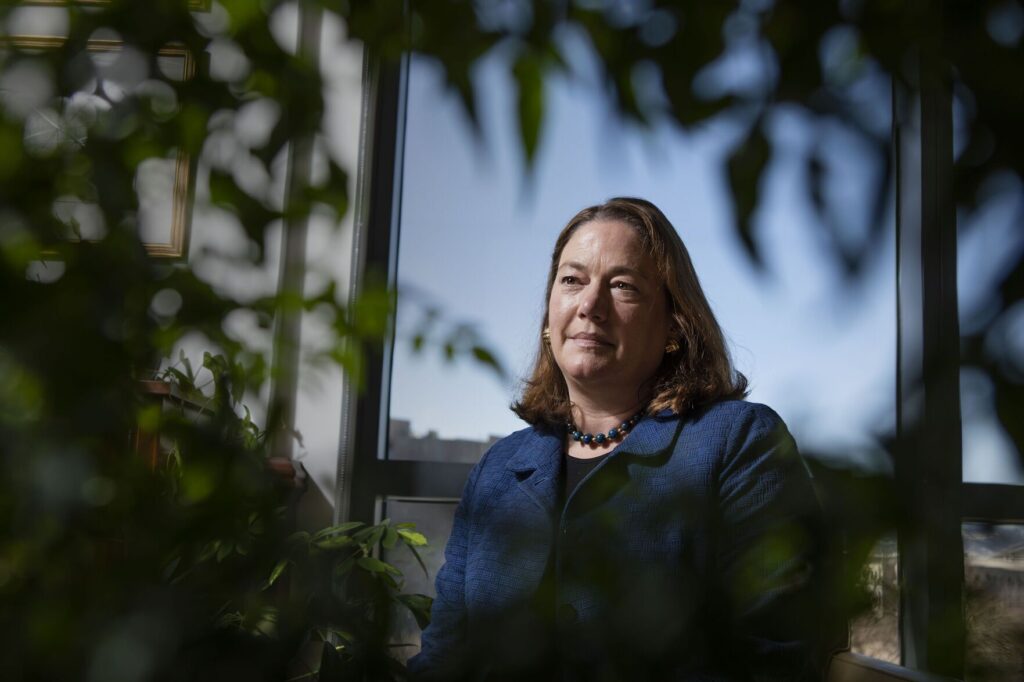
Justice Melissa Hart will step down from the Colorado Supreme Court effective Jan. 5, the Judicial Department announced unexpectedly on Friday. Hart has been on an unexplained and unusual leave of absence from the court since Oct. 28. She told Colorado Politics...
Colorado Supreme Court may address ‘new form of representation’ in criminal case
Michael Karlik
michael.karlik@coloradopolitics.com
Updated 3 days ago
The Colorado Supreme Court signaled last week that it may get involved in an ongoing Denver criminal proceeding in which the prosecution alleges a trial judge sidestepped the clear rules for appointing defense counsel. At least four of the court’s...
Justices debate what to do when governments withhold key info from plaintiffs
Michael Karlik
michael.karlik@coloradopolitics.com
Updated 4 days ago
Members of the Colorado Supreme Court seemed to be on different pages when they considered on Tuesday whether a woman injured by a sidewalk defect in Manitou Springs was forever barred from suing the actual entity responsible because she did...
PREV
PREVIOUS
Pine beetle infestation in Colorado's Front Range forests prompts action from Gov. Polis
Pine beetle infestations are quickly spreading across large areas of Colorado’s ponderosa pine forests, evident from aerial surveys conducted by the U.S. Forest Service over the last year. The USFS surveys found beetle infestations in mountainous and foothill regions from Larimer County to El Paso County have been on the rise over the last year, […]

69th Denver Debutante Ball celebrates families and tradition | NONPROFIT REGISTER
DENVER DEBUTANTE BALL Denver News: One of the Old Guard’s most cherished traditions, the annual Denver Debutante Ball, celebrated its 69th year on Dec. 22 when 31 debutantes were presented at the historic Brown Palace Hotel. The daughters, granddaughters, aunts and nieces from prominent families whose last names include Coors, Benson, Frampton, Garnsey, Van Schaack and Watts descended the hotel’s grand staircase to curtsy under the heirloom crystal chandelier that is […]