

Colorado Supreme Court finds judge mistakenly barred evidence over officer’s failure to unmute body cam
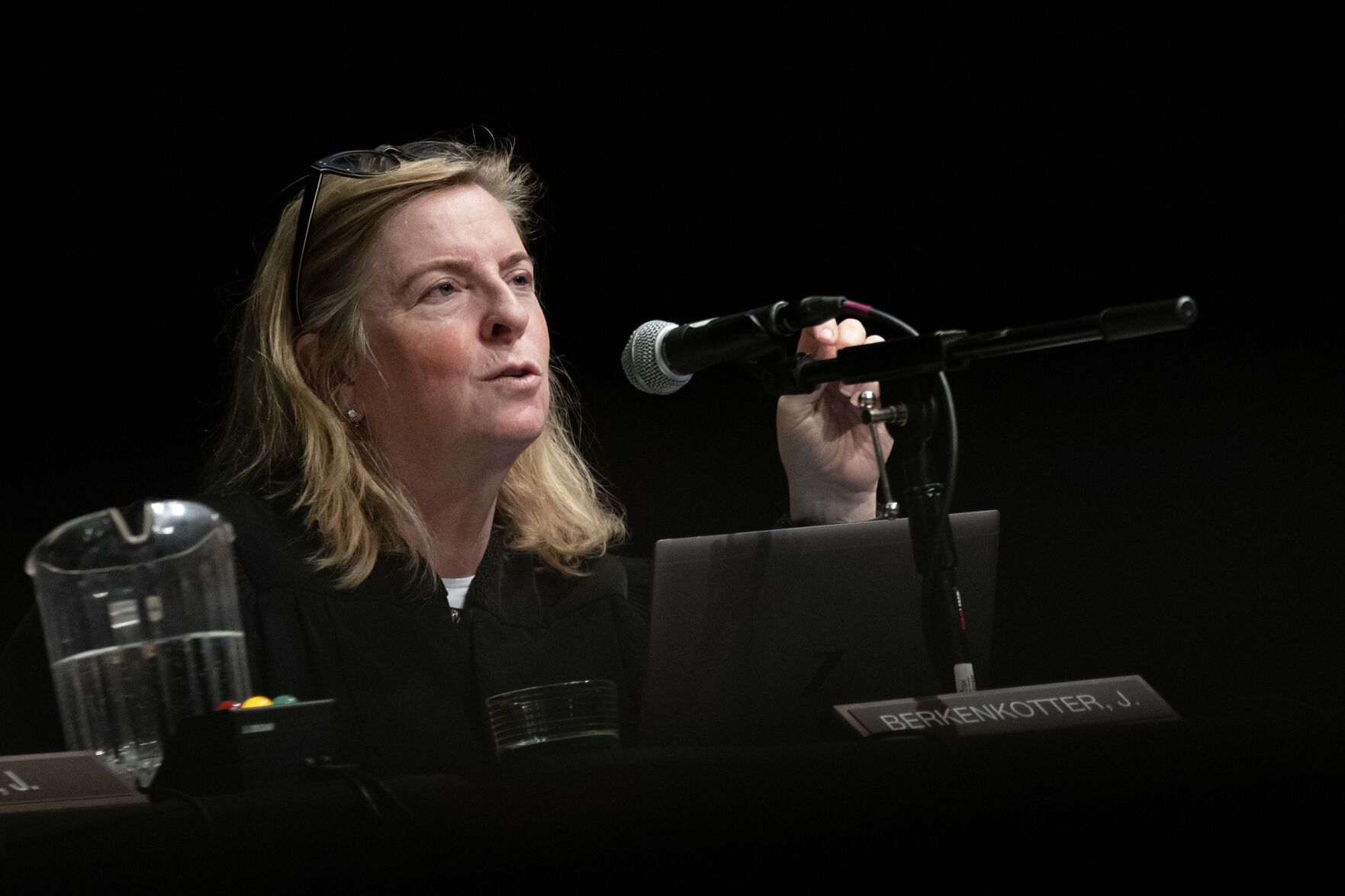
A Fremont County judge incorrectly barred evidence from being used against a defendant based upon a Cañon City officer’s failure to unmute his body-worn camera, the Colorado Supreme Court decided on Monday.
Under a comprehensive police accountability law enacted in 2020, law enforcement officers are generally required to wear and use body-worn cameras when interacting with members of the public. If they do not, there is a “permissive inference” that the missing footage would have reflected the officer’s misconduct. Further, if the prosecution relies on statements or actions that occurred during the unrecorded encounter, there is a “rebuttable presumption of inadmissibility.”
The question before the Supreme Court was whether evidence obtained from a criminal defendant’s hotel room could be used against him after the investigating officer failed to audio-record a single statement by a motel employee identifying the defendant’s room number.
In October 2024, officers were monitoring a Motel 6 for a specific suspect driving a white vehicle. When they pulled the vehicle over for an alleged traffic violation, they realized their target was not in the car. Nonetheless, they arrested the occupant, Thomas James Havens, on outstanding warrants.
After finding alleged drug evidence in the vehicle, officers questioned Havens. He told Officer Austin Modlin he was staying in room 220 at the Motel 6. Modlin spoke with a motel employee who stated that Havens was in room 223. Based on the discrepancy, Modlin obtained a search warrant and uncovered additional evidence of criminal activity in the room.

The defense sought to bar the motel room evidence from being used against Havens, noting that Modlin failed to unmute his body camera to record the motel employee’s statement.
At a hearing in May, District Court Judge Lauren Swan excluded the evidence through a series of logical steps. First, she noted the police accountability law created an assumption that the missing audio reflected misconduct.
“Misconduct by a police officer is exculpatory information,” Swan said. “How could it not be in a criminal investigation?”
Then she observed that the criminal rules require the prosecution to disclose evidence favorable to the defense. Despite the prosecution being on notice of an issue “for almost over five months,” it had not done so.
Allowing Modlin to testify about his actions “for the very first time” would put the defense at a disadvantage, Swan continued. Therefore, she did not permit Modlin to testify as to why he muted his body camera.
Without Modlin’s testimony, the assumption of misconduct remained, and there was no evidence beyond the employee’s statement that led police to Havens’ room number. Omitting it from the warrant undermined probable cause and, consequently, the evidence could not be used against Havens.
The district attorney’s office immediately appealed to the Supreme Court.
“The body-worn camera statute does not create an affirmative duty upon law enforcement or the prosecution to document why an officer muted or failed to unmute his body-worn camera,” the prosecution argued. “The court erred when it read this requirement into the statute.”
The Supreme Court agreed.
The prosecution has no obligation “to provide a report to the defense when an officer fails to unmute the audio on a BWC. Thus, the court mistakenly barred Officer Modlin’s testimony as a discovery sanction,” wrote Justice Maria E. Berkenkotter in the Dec. 22 opinion.
That mistake led Swan to omit the clerk’s statement, find fault with the search warrant, and exclude the evidence from the motel room. In reality, the prosecution should have been allowed to demonstrate that the motel employee’s statement was properly included despite the muted footage.
“We express no opinion on how the district court should rule after its hearing on remand,” concluded Berkenkotter.
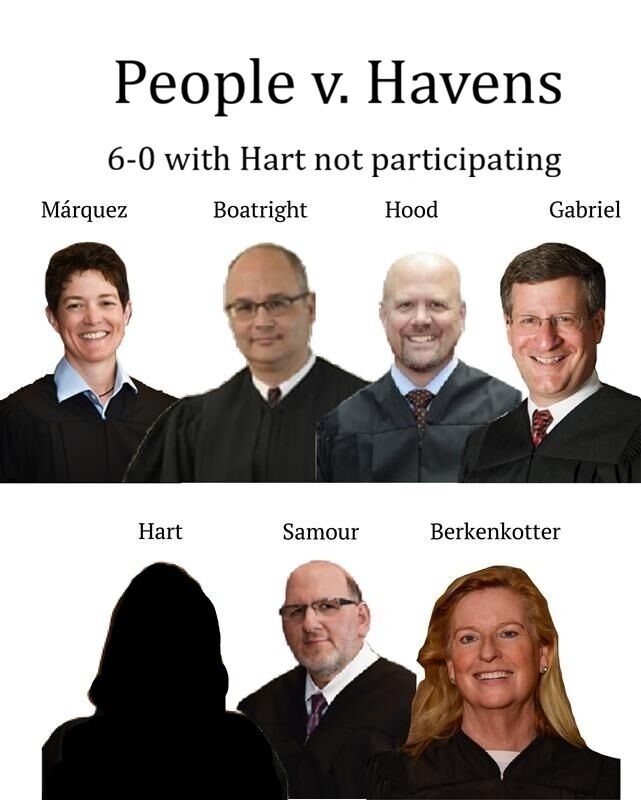
Justice Melissa Hart did not participate in the decision. She has been on a health-related leave of absence since Oct. 28 and announced last week that she is stepping down in January.
The case is People v. Havens.


Justice Hart to leave Supreme Court, new recs from Access to Justice Commission | COURT CRAWL
Michael Karlik
michael.karlik@coloradopolitics.com
Updated 1 hour ago
Welcome to Court Crawl, Colorado Politics’ roundup of news from the third branch of government. A member of the Colorado Supreme Court unexpectedly announced her retirement from the bench, plus the state’s Access to Justice Commission has made recommendations following...

Judge denies AstraZeneca’s bid to block Colorado drug discount law
Marissa Ventrelli
marissa.ventrelli@coloradopolitics.com
Updated 2 hours ago
A Colorado district court judge denied drug manufacturer AstraZeneca’s request for an injunction to block enforcement of a recent law barring drug manufacturers from imposing restrictions on covered entities to obtain drugs under a federal discount program. The law states...
Colorado Supreme Court holds municipal sentences may not be greater for identical state crimes
Michael Karlik
michael.karlik@coloradopolitics.com
Updated 2 hours ago
The Colorado Supreme Court ruled on Monday that municipalities may not subject defendants to sentences that are harsher under their own ordinances than for identical offenses under state law. In the Dec. 22 opinion, Chief Justice Monica M. Márquez noted...
Divided appeals court nullifies defendant’s $37,000 restitution obligation due to faulty order
Michael Karlik
michael.karlik@coloradopolitics.com
Updated 3 days ago
Colorado’s second-highest court concluded on Thursday that a defendant has no obligation to pay nearly $37,000 in crime victim restitution due to a faulty order that even the trial judge acknowledged was contrary to the law. In Colorado, as part...

Federal court issues injunction on Colorado gas stove labels law
Marissa Ventrelli
marissa.ventrelli@coloradopolitics.com
Updated 2 hours ago
A federal judge in Denver has issued an injunction blocking enforcement of a newly enacted state law that would have required retailers to place labels on gas-fueled stoves with warnings about their potential effects on air quality. The law, House...

Justice Melissa Hart to step down from Colorado Supreme Court
Michael Karlik
michael.karlik@coloradopolitics.com
Updated 2 days ago
Justice Melissa Hart will step down from the Colorado Supreme Court effective Jan. 5, the Judicial Department announced unexpectedly on Friday. Hart has been on an unexplained and unusual leave of absence from the court since Oct. 28. She told Colorado Politics...
Colorado Supreme Court may address ‘new form of representation’ in criminal case
Michael Karlik
michael.karlik@coloradopolitics.com
Updated 2 days ago
The Colorado Supreme Court signaled last week that it may get involved in an ongoing Denver criminal proceeding in which the prosecution alleges a trial judge sidestepped the clear rules for appointing defense counsel. At least four of the court’s...
Justices debate what to do when governments withhold key info from plaintiffs
Michael Karlik
michael.karlik@coloradopolitics.com
Updated 3 days ago
Members of the Colorado Supreme Court seemed to be on different pages when they considered on Tuesday whether a woman injured by a sidewalk defect in Manitou Springs was forever barred from suing the actual entity responsible because she did...

Colorado justices splinter over approach to sentencing review
Michael Karlik
michael.karlik@coloradopolitics.com
Updated 1 day ago
Members of the Colorado Supreme Court were divided on Monday about whether vehicular homicide stemming from intoxicated driving is “grave and serious” in every possible scenario, with two justices suggesting the court reconfigure its approach for determining the proportionality of...
Parker man found guilty of drugging, sexually assaulting four women he met through dating apps
Noah Festenstein
noah.festenstein@denvergazette.com
Updated 4 days ago
A Douglas County jury on Tuesday convicted a Parker man who drugged and sexually assaulted four women he met through dating apps. David Kats, 56, faces anywhere from probation to life in prison on 12 counts of sexual assault and...
PREV
PREVIOUS

Gov. Jared Polis urges Trump to reverse FEMA disaster aid denials
Gov. Jared Polis and Democratic U.S. Sens. Michael Bennet and John Hickenlooper are calling on President Donald Trump to reverse federal denial of Colorado’s requests for federal disaster declarations tied to recent wildfires and flooding. Polis’ office said he received two denial letters from the Federal Emergency Management Agency late Saturday. The letters followed requests […]

Colorado marijuana sales likely to reach $1 billion in 2025
Colorado’s marijuana sales will likely reach $1 billion by the end of 2025, generating almost $200 million in tax revenue, according to a state agency. “Colorado’s world-class marijuana industry drives out criminals and cartels and is supporting Colorado businesses and jobs while driving revenue for school construction. This important milestone is one that our state can continue […]