

Federal court issues injunction on Colorado gas stove labels law

A federal judge in Denver has issued an injunction blocking enforcement of a newly enacted state law that would have required retailers to place labels on gas-fueled stoves with warnings about their potential effects on air quality.
The law, House Bill 25-1161, was scheduled to take effect on Aug. 6 of this year. The day before, the Association of Home Appliance Manufacturers filed an emergency motion for a preliminary injunction, arguing the law requires a “non-consensus, scientifically controversial, and factually misleading government-mandated message” about gas stoves.
The group additionally argued that the law violated the First Amendment.
Attorney General Phil Weiser, who represents the state in the litigation, argued that the law is subject to deferential review because it regulates commercial speech and is “purely factual and uncontroversial.”
Weiser argued the First Amendment does not apply to the labeling requirement because it qualifies as government speech.
Judge S. Kato Crews ultimately ruled in favor of the appliance manufacturers, finding “strict scrutiny test” applies to the law. Strict scrutiny is the highest form of judicial review used by American courts to determine a law’s constitutionality. Under this test, a government must prove that a law is narrowly tailored to “further a compelling government interest” through the “least restrictive means” available.
Crews noted that statements made by two of the bill’s sponsors – Sens. Cathy Kipp, D-Fort Collins, and Katie Wallace, D-Longmont – that gas stoves contribute to air pollution are “not alone enough to prove that HB25-1161 was adopted to combat climate change.”
He also contended that the law is not narrowly tailored nor is it the “least restrictive means of informing consumers about the alleged health impacts of gas-fueled stoves.”
The Association of Home Appliance Manufacturers is seeking a permanent injunction, as well as an official declaration that the law is unconstitutional.
A spokesperson for Weiser’s Office declined to comment.

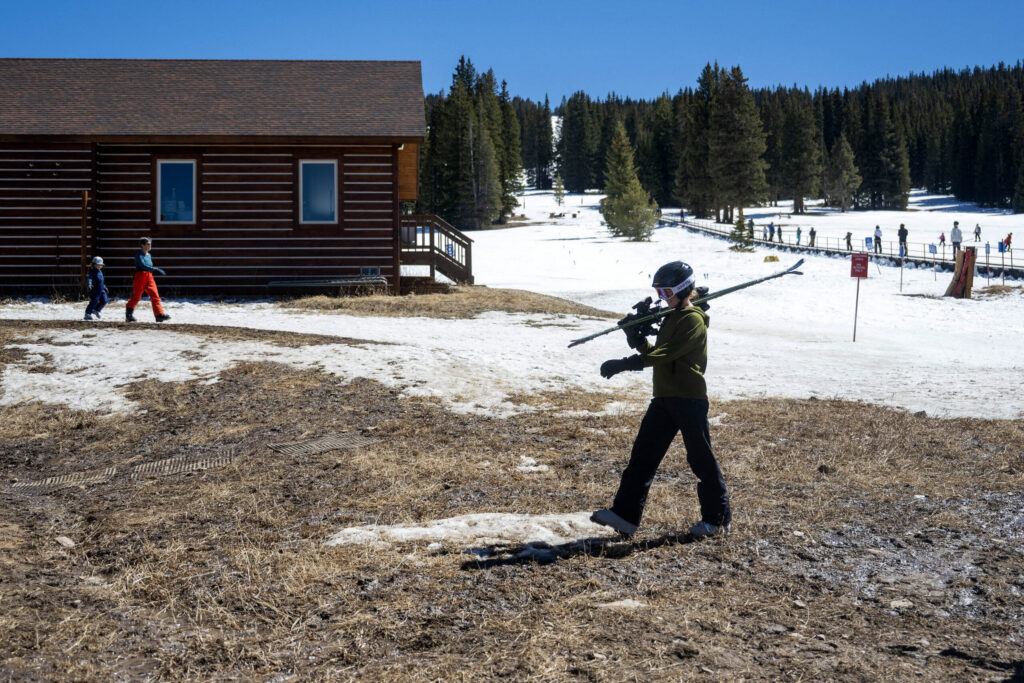
Colorado ski resorts announce early closures amid historic snowpack lows, high temperatures
Kyla Pearce
kyla.pearce@gazette.com
Updated 2 days ago
As Colorado’s historically low snowpack year comes to a close and spring conditions take over the mountains, the state’s major ski resorts are announcing closing dates — some of which are weeks before historic closing dates. Most of Colorado’s ski...

Longtime community leader Arlene Hirschfeld to be honored | NONPROFIT REGISTER
Joanne Davidson Special to Colorado Politics
joanne-davidson-special-to-colorado-politics@coloradopolitics.com
Updated 2 days ago
WOMEN UNITED, MILE HIGH UNITED WAY Denver News: Arlene Hirschfeld, a Denver native who has devoted her adult life to serving others, will receive the 2026 Frances Wisebart Jacobs Award when Mile High United Way hosts its Women United Luncheon on April 17. The award is named...

Major downtown Denver office conversion gets $63M from DDDA
Bernadette Berdychowski
bernadette.berdychowski@denvergazette.com
Updated 3 days ago
The Denver Downtown Development Authority approved $63 million on Wednesday for the ambitious plan from a developer to convert two office towers into what it calls a “vertical village.” The project, dubbed High Fidelity Plaza from The Luzzatto Co., would...
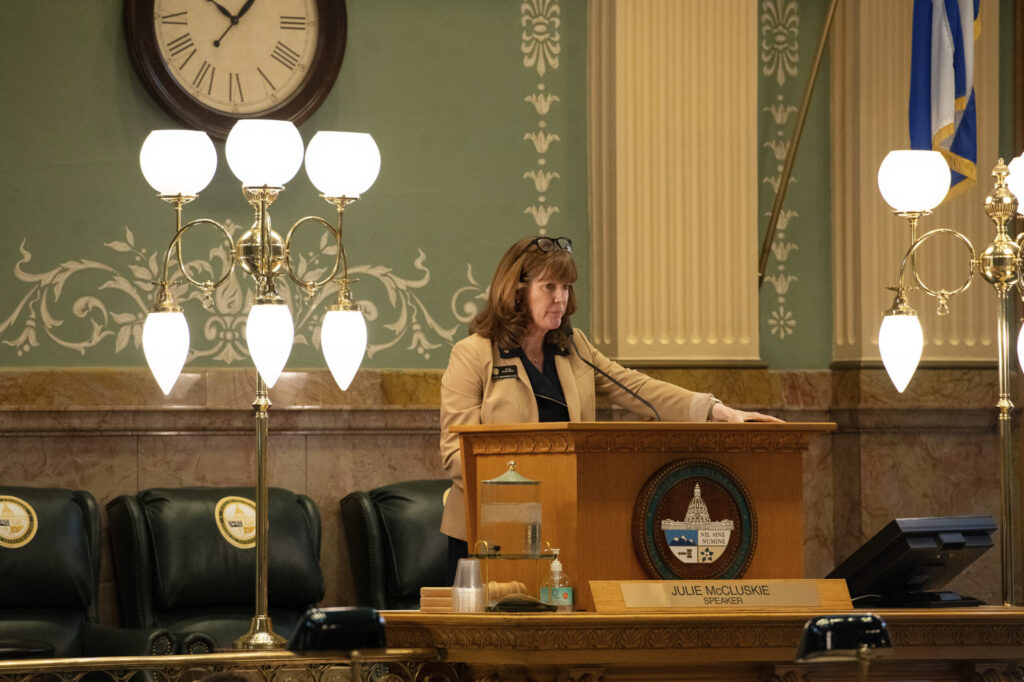
Pinnacol separation bill delayed as Colorado budget remains in flux due to $1.5B deficit
Marianne Goodland
marianne.goodland@coloradopolitics.com
Updated 3 days ago
A bill that would allow Pinnacol Assurance to formally sever its remaining ties with the state appears unlikely to emerge anytime soon, as House leaders juggle a massive budget shortfall, unresolved negotiations with key stakeholders, and growing doubts about whether...

Comedy showcase to feature new and established talent | NONPROFIT REGISTER
Joanne Davidson Special to Colorado Politics
joanne-davidson-special-to-colorado-politics@coloradopolitics.com
Updated 2 days ago
MIZEL ARTS AND CULTURE CENTER Denver News: A host of emerging comedians will perform along with Denver native and nationally recognized comic Noah Gardenswartz when the Mizel Arts and Culture Center hosts The Tight Five: Standup Comedy Showcase. The up-and-comers take the stage...
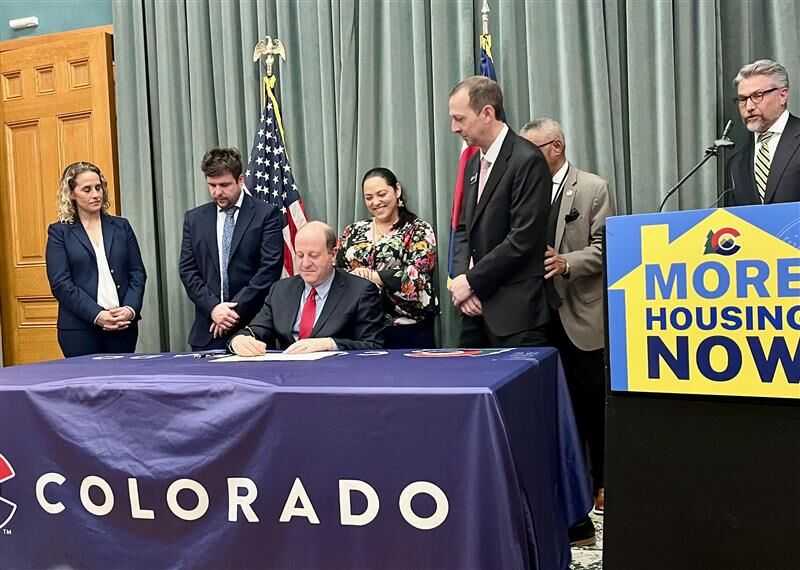
Gov. Jared Polis signs housing bills amid push for ‘affordability’
Marissa Ventrelli
marissa.ventrelli@coloradopolitics.com
Updated 1 day ago
Gov. Jared Polis held the first public bill signing of the 2026 legislative session on Wednesday on a pair of housing measures that, sponsors said, are aimed at affordability. Part of Democrats’ “affordable” housing package this year, the bills —...

Colorado farmers begin spring planting season with soaring fertilizer costs and price-gouging fears
Marianne Goodland
marianne.goodland@coloradopolitics.com
Updated 2 days ago
As Colorado farmers prepare their fields for spring planting, many are sounding the alarm over fertilizer prices that have surged far beyond what they say global supply disruptions can explain. With nitrogen costs up 30% in a matter of days,...
Colorado Democrats want large corporations to pay fee if employees are on Medicaid
Marianne Goodland
marianne.goodland@coloradopolitics.com
Updated 4 days ago
Democrats are seeking to require Colorado’s largest corporations to pay thousands of dollars for each employee that relies on the Medicaid program for health insurance. They don’t have to pay the fee if they can demonstrate offering an “affordable health...
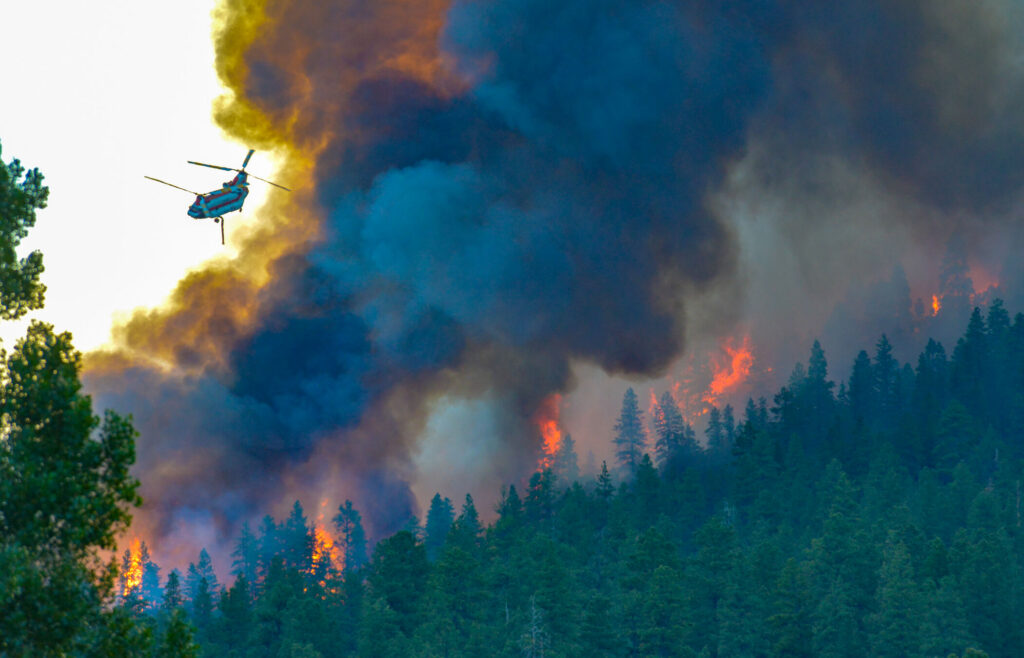
CDOT pivots from snowplowing to wildfire mitigation along highways
Scott Weiser
scott.weiser@gazette.com
Updated 3 days ago
Colorado Department of Transportation maintenance crews have launched an early push to clear dry vegetation along highways to reduce the chance that sparks or cigarette butts from passing vehicles might ignite fast-moving fires this summer. With CDOT meteorologists forecasting above-normal...

Farmworker overtime bill advances after lengthy debate in Colorado Senate
Marianne Goodland
marianne.goodland@coloradopolitics.com
Updated 6 days ago
The Colorado Senate on Tuesday narrowly advanced a bill to raise the overtime threshold for agricultural workers, defeating more than a dozen amendments from its leading opponent aimed at rewriting the measure. As introduced, Senate Bill 121 would raise the threshold for...
PREV
PREVIOUS

Colorado officials stall progressive income tax ballot initiative again by declaring it to have multiple subjects
In a saga offering more twists than a soap opera, Colorado Title Board members reversed course on Wednesday and determined an initiative to establish a progressive income tax doesn’t qualify for the 2026 ballot because it doesn’t have a single subject. The vote comes two weeks after the same board voted to let proponents — a coalition […]

Forecast shows slowing growth in Colorado
Missing federal data complicates state forecast Colorado’s economy is holding steady, though growing warnings, particularly in consumer demand and spending, are emerging, according to state economists’ latest forecast. The December forecast presented on Friday was not as complete, given the six-week federal government shutdown and the loss of weeks of data for two key indicators: […]