

Trump signs executive order to block state AI regulations

President Donald Trump signed an executive order Thursday aimed at blocking states from crafting their own regulations for artificial intelligence, saying the burgeoning industry is at risk of being stifled by a patchwork of onerous rules while in a battle with Chinese competitors for supremacy.
Members of Congress from both parties, as well as civil liberties and consumer rights groups, have pushed for more regulations on AI, saying there is not enough oversight for the powerful technology.
Business groups, including in Colorado, have argued against state-by-state regulations, arguing the federal government should tackle this topic and any law passed should apply nationwide, instead of a patchwork of regulations.
Last year, Colorado approved a law that imposes requirements on developers and “deployers” – including small businesses, hospitals, colleges, schools and banks – to ensure, supporters said, that they aren’t using AI to discriminate on a range of issues, such as employment, finance, healthcare, education, legal services, and housing.
Gov. Jared Polis signed the law, though he also signaled his misgivings with the legislation. The law drew criticism from the tech industry, as well as from public schools and colleges, which expressed worries about the costs of implementing the new regulations. Implementation of that law has been delayed to June 30, 2026.
A few months ago, Polis convened a working group and tasked it to “prioritize evidence-based policy solutions that mitigate bias, avoid ambiguity, facilitate innovation and economic growth, and are in alignment with national standards and best practices.”
“Colorado should not go it alone,” the governor wrote, a nod to his view that Congress should take up the issue.
Trump told reporters in the Oval Office that “there’s only going to be one winner” as nations race to dominate artificial intelligence, and China’s central government gives its companies a single place to go for government approvals.
“We have the big investment coming, but if they had to get 50 different approvals from 50 different states, you can forget it because it’s impossible to do,” Trump said.
The executive order directs the U.S. Attorney General to create a new task force to challenge state laws. It also directs the U.S. Commerce Department to draw up a list of problematic regulations.
It threatens to restrict funding from a broadband deployment program and other grant programs to states with AI laws.
David Sacks, a venture capitalist with extensive AI investments who is leading Trump’s policies on cryptocurrency and artificial intelligence, said the Trump administration would only push back on “the most onerous examples of state regulation” but would not oppose “kid safety” measures.
Four states — Colorado, California, Utah and Texas — have passed laws that set some rules for AI across the private sector, according to the International Association of Privacy Professionals.
The Associated Press and Colorado Politics contributed to this article.

Federal judge dismisses U.S. government lawsuit against Colorado, Denver’s ‘sanctuary’ laws
Michael Karlik
michael.karlik@coloradopolitics.com
Updated 7 hours ago
A federal judge dismissed the U.S. government’s lawsuit against Colorado and Denver on Tuesday, which alleged that various local policies impermissibly infringed on federal immigration enforcement. U.S. District Court Judge Gordon P. Gallagher followed the lead of judges in Illinois...

Colorado legislators drove up cost of Medicaid program
Marissa Ventrelli
marissa.ventrelli@coloradopolitics.com
Updated 14 hours ago
Some of Colorado’s spending woes in Medicaid can be traced to lawmakers who had approved new or expanded programs in the last few years, driving up state costs to the tune of tens of millions of dollars. Just three measures...
A perfect storm: Pine beetles thriving following warm, dry winter in Colorado
O'Dell Isaac
odell.isaac@gazette.com
Updated 16 hours ago
The warmest winter in Colorado history could lead to record-breaking proliferation of a tiny insect, about the size of a grain of rice, that has killed millions of acres of trees across the Centennial State and contributed to the rapid...
Newly formed PAC promises a stronger voice for southern Colorado businesses
Breeanna Jent
breeanna-jent@coloradopolitics.com
Updated 17 hours ago
A new political action committee has launched in southern Colorado, aiming to strengthen and elevate the voices of local businesses and their regional influence on state-level policy. Over the last two years, the Colorado Legislature has enacted more than 1,000...

Colorado auto thefts drop 56% from 2021 levels
Scott Weiser
scott.weiser@gazette.com
Updated 17 hours ago
Colorado once ranked as the worst state in the nation for motor vehicle thefts per capita in 2021. The state has since seen a dramatic improvement, with auto thefts dropping 56% from 2021 levels. The state reported 16,291 motor vehicle...

Colorado Gov. Polis signs social media warrant bill after last year’s veto
Marissa Ventrelli
marissa.ventrelli@coloradopolitics.com
Updated 1 day ago
Colorado law enforcement will soon have faster access to digital evidence after Gov. Jared Polis signed a pared‑down bill requiring social media companies to acknowledge and respond to search warrants on a tight timeline, a shift from a broader proposal...
Under fire from legislators and critics, Colorado’s top Medicaid official resigns
Marianne Goodland
marianne.goodland@coloradopolitics.com
Updated 1 day ago
Colorado’s top Medicaid official stepped down on Monday, just as a bipartisan bloc of state senators prepared to formally urge Gov. Jared Polis to remove her over what they called years of mismanagement, waste and costly errors inside the state’s...
Power grid shutdowns in Colorado bring protection — and problems
Scott Weiser
scott.weiser@gazette.com
Updated 1 day ago
A downed power line in Sunshine Canyon in the mountains west of Boulder in December posed an electrocution risk to firefighters and bystanders after Xcel Energy re-energized it without repairing it, despite being notified of the break the day before....
Aurora wildland fire contained at Buckley Space Force Base
Nicholas Fogleman
nicholas.fogleman@denvergazette.com
Updated 2 days ago
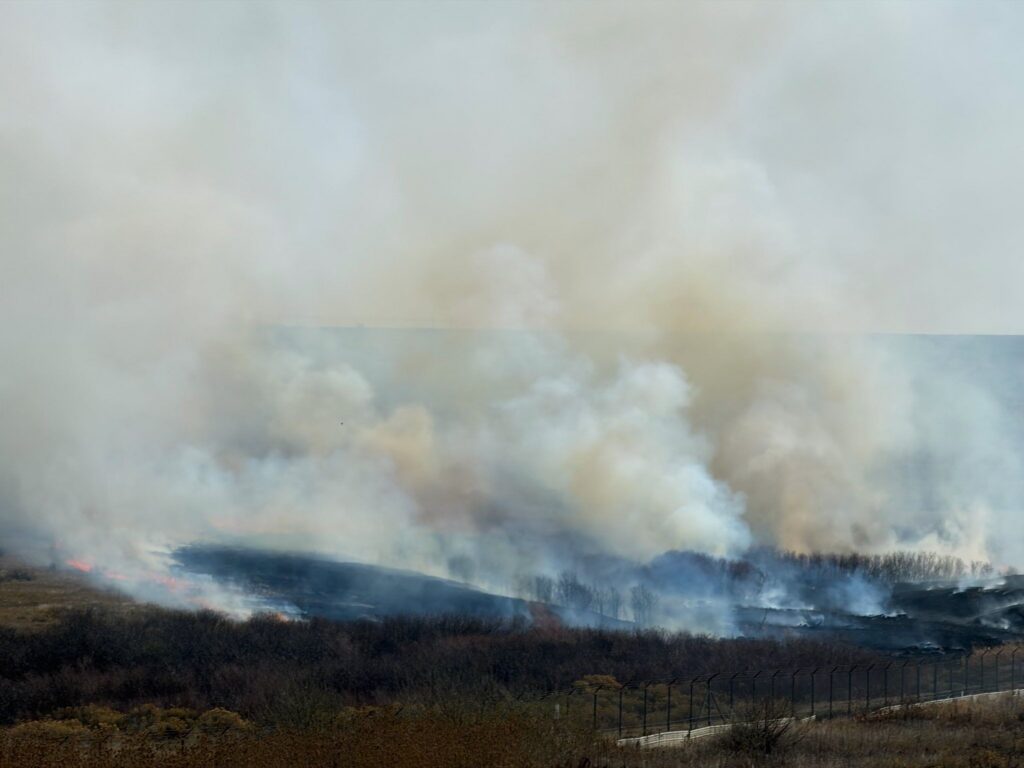
A wildland fire burned Sunday morning on the southwest end of Buckley Space Force Base in Aurora, authorities said. The fire no longer posed a threat and crews were clearing the scene as of 10:53 a.m., according to Aurora Fire...

Unsustainable: How Colorado’s Medicaid spending exploded
Nico Brambila
nico.brambila@denvergazette.com
Updated 14 hours ago
The state’s Medicaid program — which covers about one in four Coloradans — is poised for its largest single-year jump in at least two decades, with officials proposing a $2.3 billion increase, even as lawmakers face a $1.5 billion budget...
PREV
PREVIOUS
Trump says he has 'pardoned' Tina Peters
President Donald Trump on Thursday said he is “pardoning” Tina Peters, though that won’t free the former Colorado elections administrator as she was convicted under state laws of a security breach of her office’s voting equipment. Trump’s pardon power does not extend to state crimes like those for which Peters was convicted last year and […]
Colorado's snowpack to suffer as bone dry conditions, more wind forecast for high country; where's the snow?
Dry conditions will prevail for another six or seven days as Colorado’s high country continues to experience a dry fall heading into mid December. Colorado’s snowpack remains growing inconsistently, marking the third year in last five to start below median average. But snow is forecast to return about a week before Christmas, giving the possibility […]