

Plan to drill, frack under Aurora Reservoir postponed
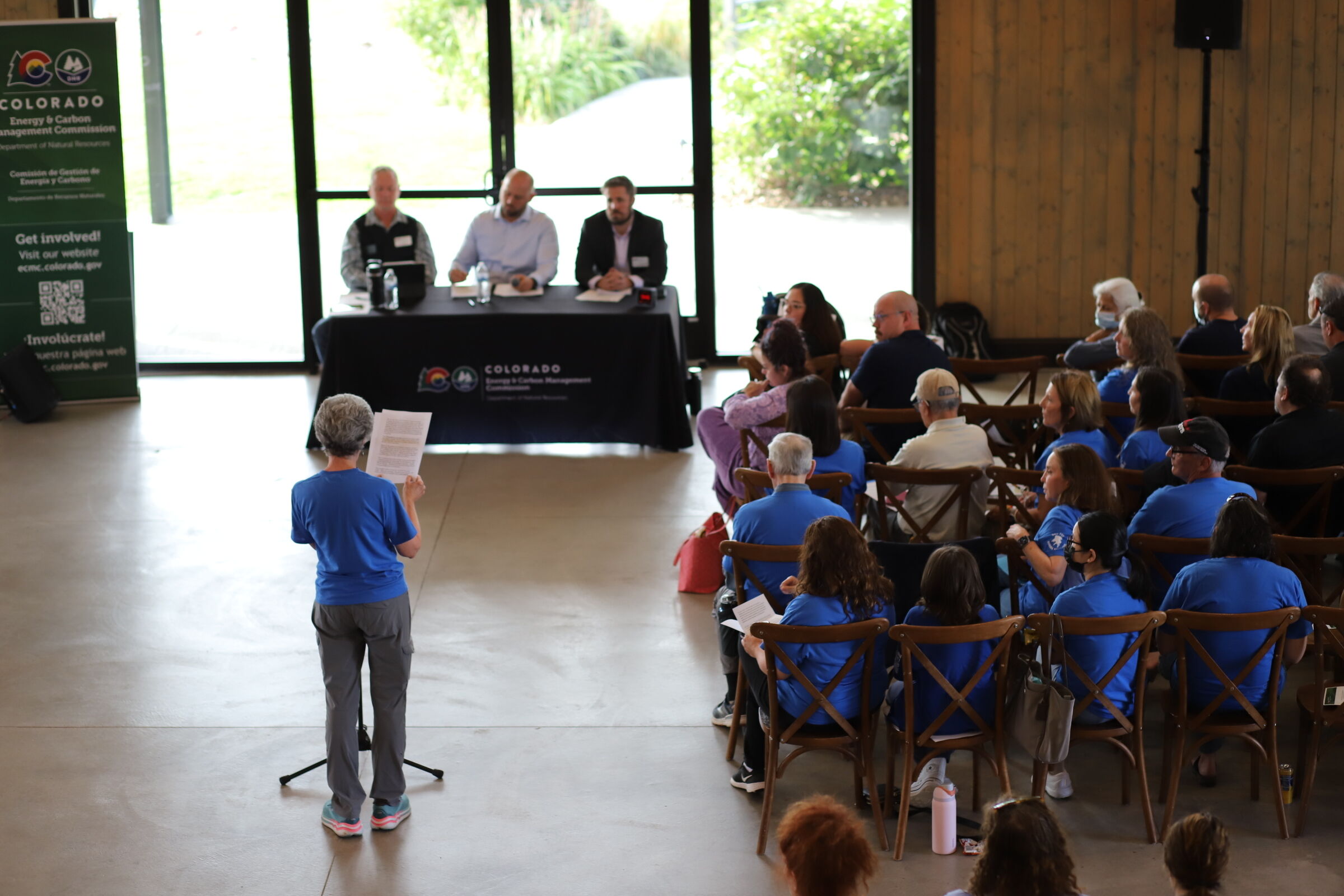
Following five days of public comment and deliberation, the Colorado Energy and Carbon Management Commission voted to postpone indefinitely the next well pad application in the Lowry Ranch oil and gas plan.
The vote to “stay” — or indefinitely postpone until a condition is met — passed 4-1 this week, suspending the application until Civitas’ Crestone Peak Resources submits an alternative location analysis, according to a news release from the ECMC on Wednesday.
The ECMC voted in August 2024 to green-light the Lowry Ranch fracking plan, which includes 32,000 acres of proposed subsurface mineral development with 10 locations and 166 new wells. The approval came after days of testimony and following years of push back from area residents over the proposed operation.
Part of the plan includes drilling about 7,000 feet under the Aurora Reservoir and on land surrounding the reservoir, which drew opposition from nearby residents and their allies.
The State Sunlight-Long well pad was proposed to be about 35 acres and sit about 1.5 miles north of County Line Road and 1.6 miles east of South Powhaton Road in unincorporated Arapahoe County, according to Arapahoe County’s website.
The pad would support the drilling and operation of up to 32 wells.
Arapahoe County Public Works and Development conditionally approved the well pad application in May, saying the proposal is “meeting and in many areas exceeds the county’s criteria or has qualified for a waiver.”
The applicant, Crestone Resources, which is owned by Civitas, had to get final approval for State Sunlight-Long from the ECMC.
In its current proposed form, stayed by the ECMC on Wednesday, State Sunlight-Long would be about a mile from two elementary schools, and within a 2-mile radius of more than 10,000 households, said Save The Aurora Reservoir (STAR), an organization created to oppose fracking in the area.
The group and its allies argued that the well pads in the Lowry Ranch CAP — in particular the State Sunlight-Long pad — are too close to homes, schools and water sources and expressed worries about air and water quality, as well as wildlife and health impacts to people. They also cited the financial implications of having homes near a well site.
Four of the five ECMC commissioners voted to stay the application pending receiving a more comprehensive alternative location analysis. Several of the members agreed that the ALA included with the current application was not sufficient, as the alternatively proposed locations were not permittable.
All of the commissioners agreed, however, that beyond the ALA lacking sufficient alternative location options, the State Sunlight-Long pad application was approvable.
Commissioner Brett Ackerman said he was “disappointed” with the application’s ALA, adding that the other proposed locations were even closer to the Aurora Reservoir than the preferred location.
“I think Crestone’s ALA approach was objectionable on its face,” he said. “I find their approach on this important issue to be obtuse at best, given the input we’ve heard from the impacted public and the direction we provided during the CAP hearing.”
An ALA wasn’t required for the Sunlight-Long well pad, but ECMC rules state that commissioners are allowed to require one if they deem it necessary, he said. Given the community concerns and lack of viable alternate options in the ALA Crestone submitted, Ackerman said he wants to see a more comprehensive ALA before moving forward.
“The selection of only patently un-permittable sites certainly makes it dubious in my mind whether or not other workable locations were actually earnestly sought, and whether the proposed location is objectively the best location,” Ackerman, who made the motion to stay, said.
Commissioner Michael Cross, the lone “no” vote on the question to stay, said he believes the application “is protective and appropriately mitigates adverse impacts.”
“Trying to say (the application) is not protective merely because a great number of people are opposed to it is inconsistent with what our legislative mandate is and what our rules require,” Cross said.
John Messner agreed with Ackerman, added that STAR has presented credible evidence to support their concerns, and a request for another ALA from Crestone would help commissioners ensure the well pad is in the best location for both oil and gas development and community health and safety.
Civitas spokesperson Rich Coolidge told The Denver Gazette the company plans to re-submit the application with the information requested by the ECMC.
“While the decision was postponed, we have direction on re-submitting clarifying information that will garner support from a majority of the ECMC commissioners, who largely agree the site is approvable under the state’s protective rules,” Coolidge said.
STAR is “very pleased” with the vote, co-founder Randy Willard said.
“Important work still lies ahead,” he added. “We look forward to collaborating on site locations that genuinely protect public health, safety, and welfare as per state rules.”
The organization is ready to partner with industry professionals and the ECMC to find a location that works for both parties, Willard said.
“We encourage the ECMC to continue incorporating community input and peer-reviewed research as they evaluate the real impacts of these developments on people and places,” he said.

Colorado policymakers scramble with prisons on track to exceed capacity
Marianne Goodland
marianne.goodland@coloradopolitics.com
Updated 11 hours ago
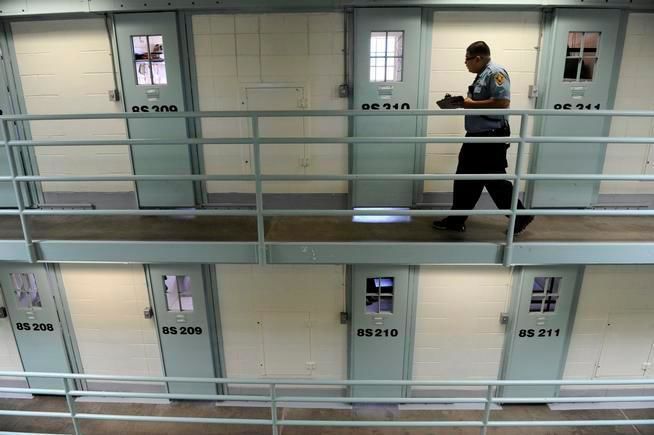
Colorado’s prison system is on track to exceed capacity within the next year, driven by a sharp slowdown in parole releases, staffing shortages and an aging inmate population — all as lawmakers grapple with an $800 million general fund shortfall...
Two front pages, one false choice for Colorado lawmakers | OPINION
Maya Wheeler
maya-wheeler@gazette.com
Updated 8 hours ago
Every day, the headlines remind us how fragile safety can be. Stories of violence, loss, and families searching for answers are becoming far too common — and they demand serious, thoughtful policymaking. Recent reporting on federal immigration enforcement has been...
Hardworking Coloradans deserve dignity, right to access wages they earned | OPINION
Colorado Politics
colorado-politics@coloradopolitics.com
Updated 8 hours ago
By Monica Duran and Sean Camacho Across Colorado, too many families are doing everything right, yet still cannot make ends meet every month. Inflation has driven up the cost of groceries, rent, childcare and gas, while wages remain unchanged. For...
Colorado justices skeptical that intimate messages relevant to assault case
Michael Karlik
michael.karlik@coloradopolitics.com
Updated 14 hours ago
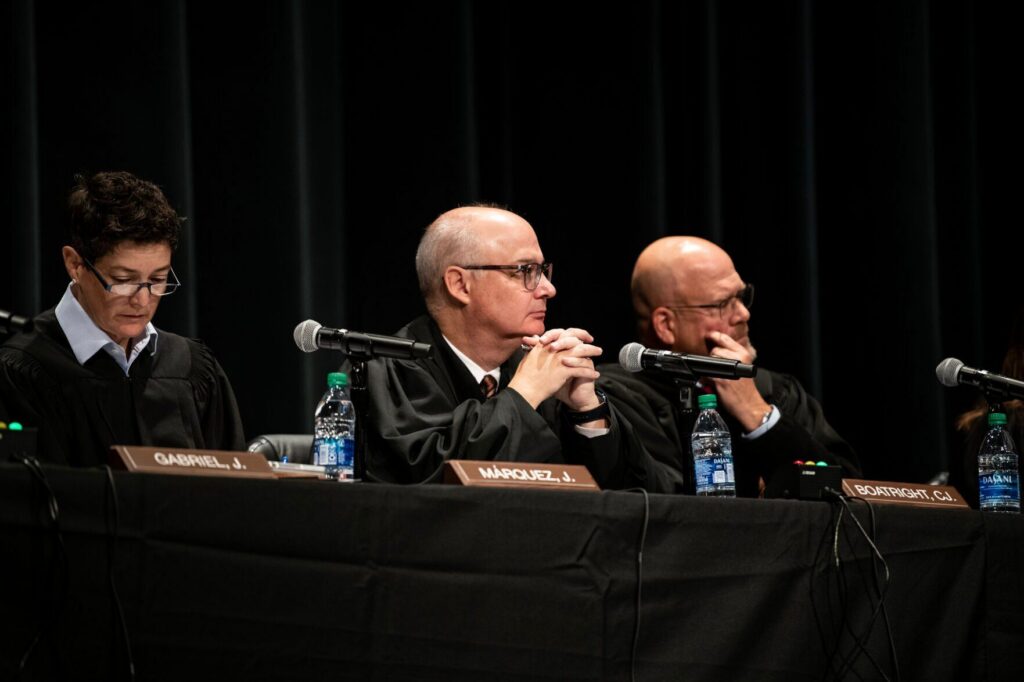
Members of the Colorado Supreme Court seemed to agree on Tuesday that a Douglas County judge acted reasonably by blocking evidence of a defendant’s BDSM-related conversations with the victim in his trial for assault and false imprisonment. Jurors found Donald Louis...

Restaurants take Girl Scout cookies to a new level | NONPROFIT REGISTER
Joanne Davidson Special to Colorado Politics
joanne-davidson-special-to-colorado-politics@coloradopolitics.com
Updated 16 hours ago
GIRL SCOUTS OF COLORADO Denver News: Girl Scout Cookie season is in full swing, and Girl Scouts of Colorado CEO Leanna Clark is once again pleased to announce that enjoyment of the sweet treats can be enhanced by dining at Denver’s...
James Boasberg orders Trump to return over 100 Venezuelans deported under Alien Enemies Act
Emily Hallas, Washington Examiner
emily.hallas.washington.examiner@gazetteedit.wpenginepowered.com
Updated 17 hours ago
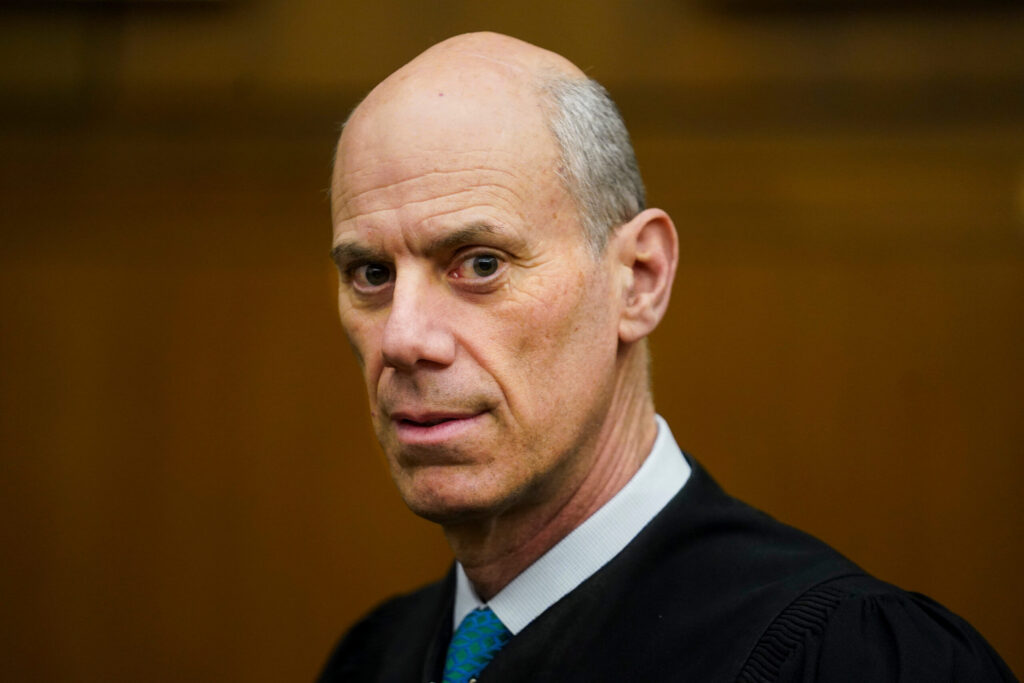
A federal judge ruled Thursday that President Donald Trump must return more than 100 Venezuelans deported to El Salvador under the Alien Enemies Act last spring. “The Court will now order the Government to facilitate the return from third countries of...
Senate Democrats weigh skipping Trump State of the Union address
David Sivak, Washington Examiner
david.sivak.washington.examiner@gazetteedit.wpenginepowered.com
Updated 17 hours ago
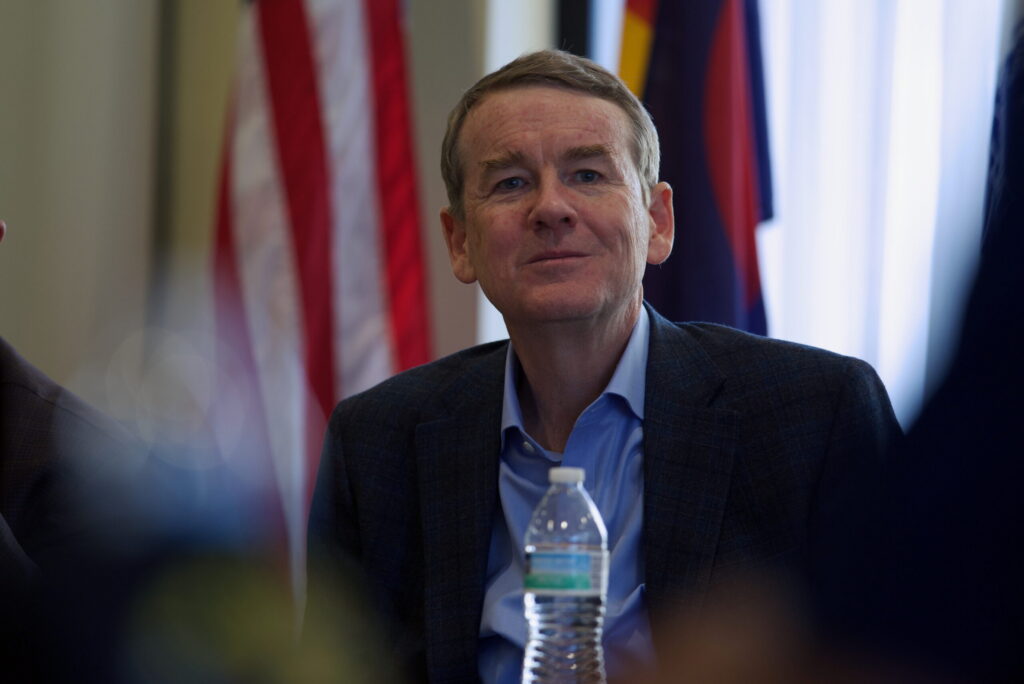
EXCLUSIVE — Senate Democrats are grappling with whether to leave their chairs empty later this month when President Donald Trump travels to the Capitol to deliver the first State of the Union address of his second term. Senior Democrats have...
Second appeals judge voices concerns about new ‘reasonable doubt’ instruction
Michael Karlik
michael.karlik@coloradopolitics.com
Updated 13 hours ago
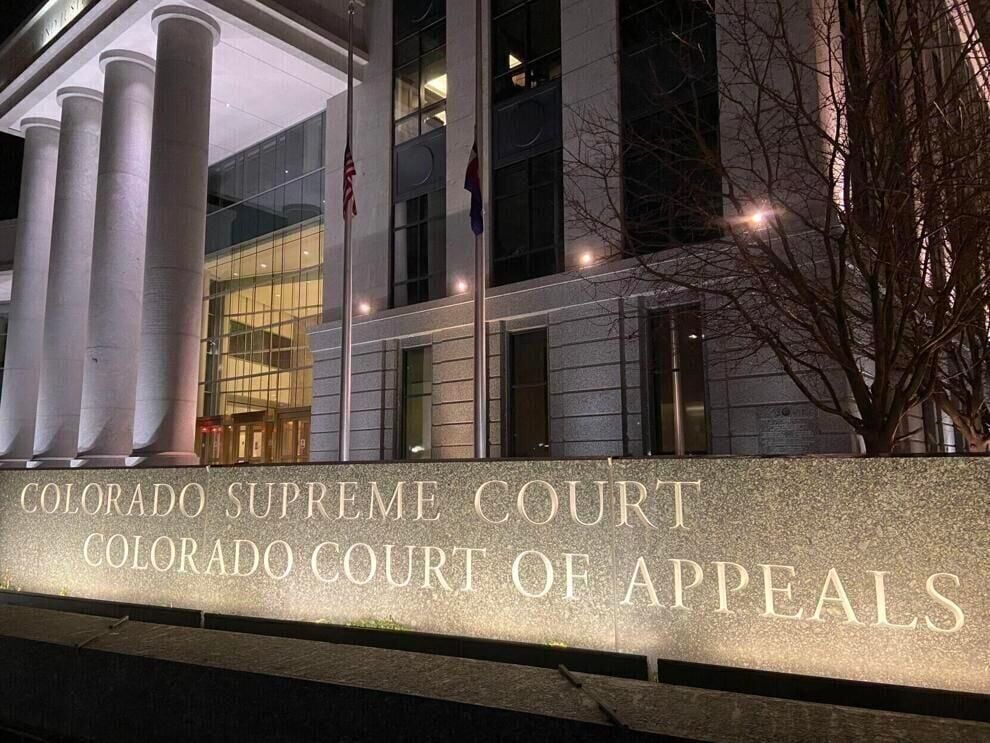
Another member of Colorado’s second-highest court registered his concern on Thursday that a portion of the recently revised “reasonable doubt” definition improperly lowers the prosecution’s burden to prove a defendant guilty. Judge Daniel M. Taubman wrote that the current instruction...

Colorado lawmakers target ‘ghost networks’ to expand access to mental health care
Marissa Ventrelli
marissa.ventrelli@coloradopolitics.com
Updated 14 hours ago
A few years ago, the U.S. Senate Committee on Finance conducted a “secret shopper” survey on health insurance plans across six states, including Colorado. Of the 120 providers called, one-third were either inaccurately listed in the carrier database, out of...

House passes voter ID bill with only one Democrat supporting GOP measure
Lauren Green, Washington Examiner
lauren.green.washington.examiner@gazetteedit.wpenginepowered.com
Updated 19 hours ago
By Lauren Green House Republicans passed a voter ID bill Wednesday, requiring proof of citizenship to vote with minimal Democratic support. Only one Democrat, Rep. Henry Cuellar, D-TX, supported the Safeguard American Voter Eligibility Act, also known as the SAVE...