

Federal judge declines to order Denver to let police critic apply for review board
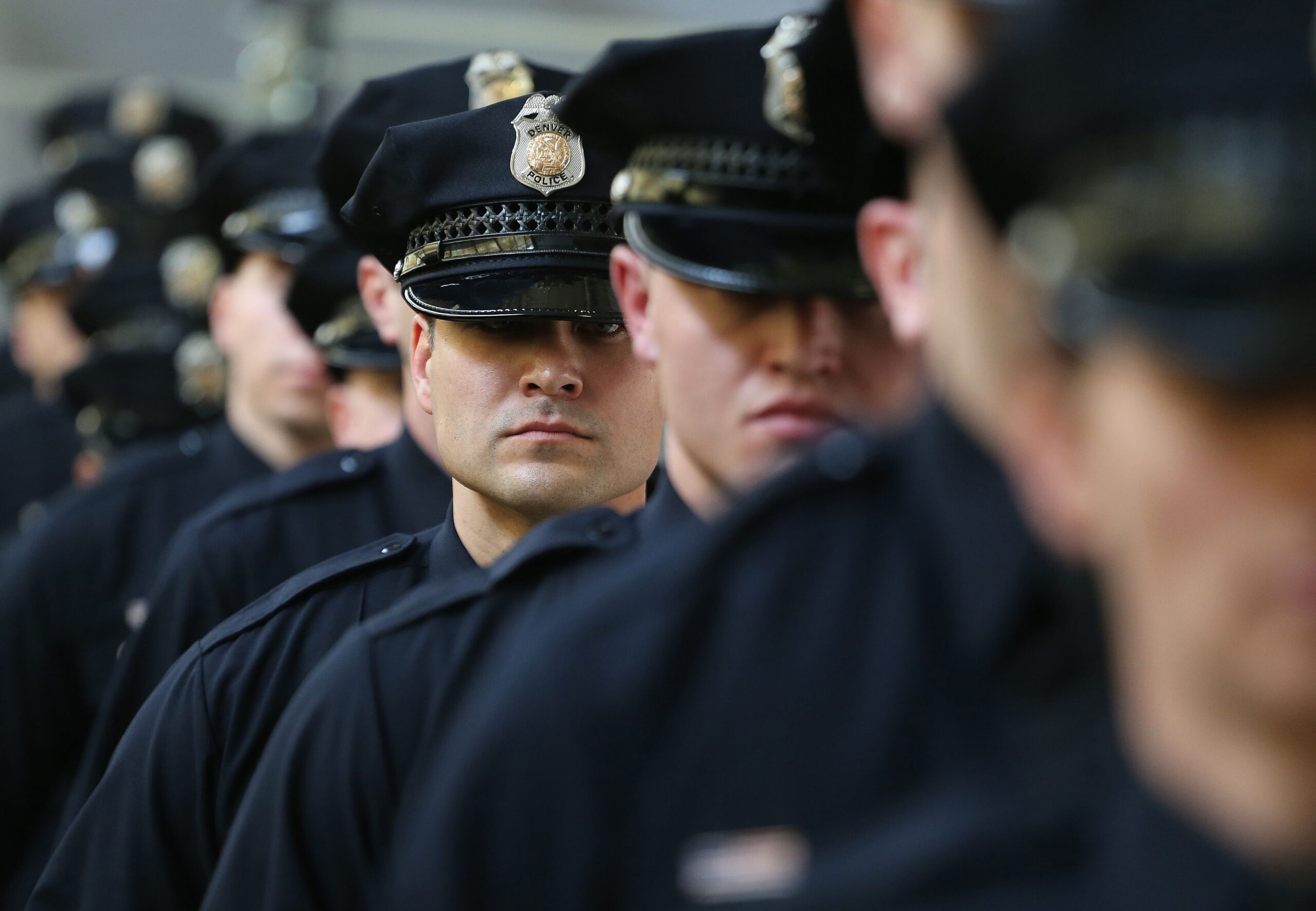
A federal judge declined on Friday to order that Denver permit a longtime police critic to apply to join the board tasked with reviewing officers’ use of force.
Regan Benson sought to become one of the two community members on the five-person Use of Force Review Board earlier this year. Command staff who were familiar with her antagonism toward officers refused to advance her candidacy, saying they were “looking for community members that were impartial.” Benson, in contrast, was “biased,” they said.
Benson filed suit, arguing the city is unconstitutionally retaliating against her for speech protected by the First Amendment and Colorado Constitution. But after hearing testimony and reviewing evidence, U.S. District Court Chief Judge Philip A. Brimmer rejected Benson’s request for an injunction allowing her application to proceed.
“She’s got a First Amendment right to express those particular opinions,” said Brimmer. “And their exclusion of her was not a façade for viewpoint-based discrimination. It wasn’t punishing her speech. It was rather a determination that she could not be impartial, which I found to be a valid criterion for membership.”

Under the Denver Police Department’s operations manual, the Use of Force Review Board examines incidents where an officer’s force results in serious bodily injury or death. The board also looks at intentional firearm discharges, in-custody deaths and anything else the police chief assigns. The board meets in closed session to investigate and make recommendations.
Its membership consists of one rotating Denver police commander, the commander of the Major Crimes Bureau, an employee of a different Colorado law enforcement agency and two community members “selected and trained by the department.”
Benson testified that she has been an activist in the public school system and is the executive director of Helping Hands for Dignity, a nonprofit aimed at assisting homeless residents. She saw a 9News report from 2024, in which the chair of the review board and Chief Ron Thomas were concerned about the lack of turnover in the two community member slots, partly due to low interest.
“I think the response we heard back was that this is an awful lot of work; what’s the compensation for that?” Thomas said at the time.
In January, Benson inquired about joining the board. The department told her that city councilmembers and department personnel nominate candidates who are “reliable, unbiased, and have a vested interest in serving the community.” Benson then wrote to Commander Hans Levens, with whom she was familiar, and he advised her to talk to the commander of her district, Joel Bell.
Benson emailed Bell to ask that he nominate her. Bell called Levens and the two of them concluded they would not nominate her. Levens wrote back to say she would not be considered “because of your history with DPD.”
“I’m referring to the fact that you are biased,” Levens added. “We are looking for community members that are impartial.”
After a deputy chief upheld the decision, Benson filed suit.
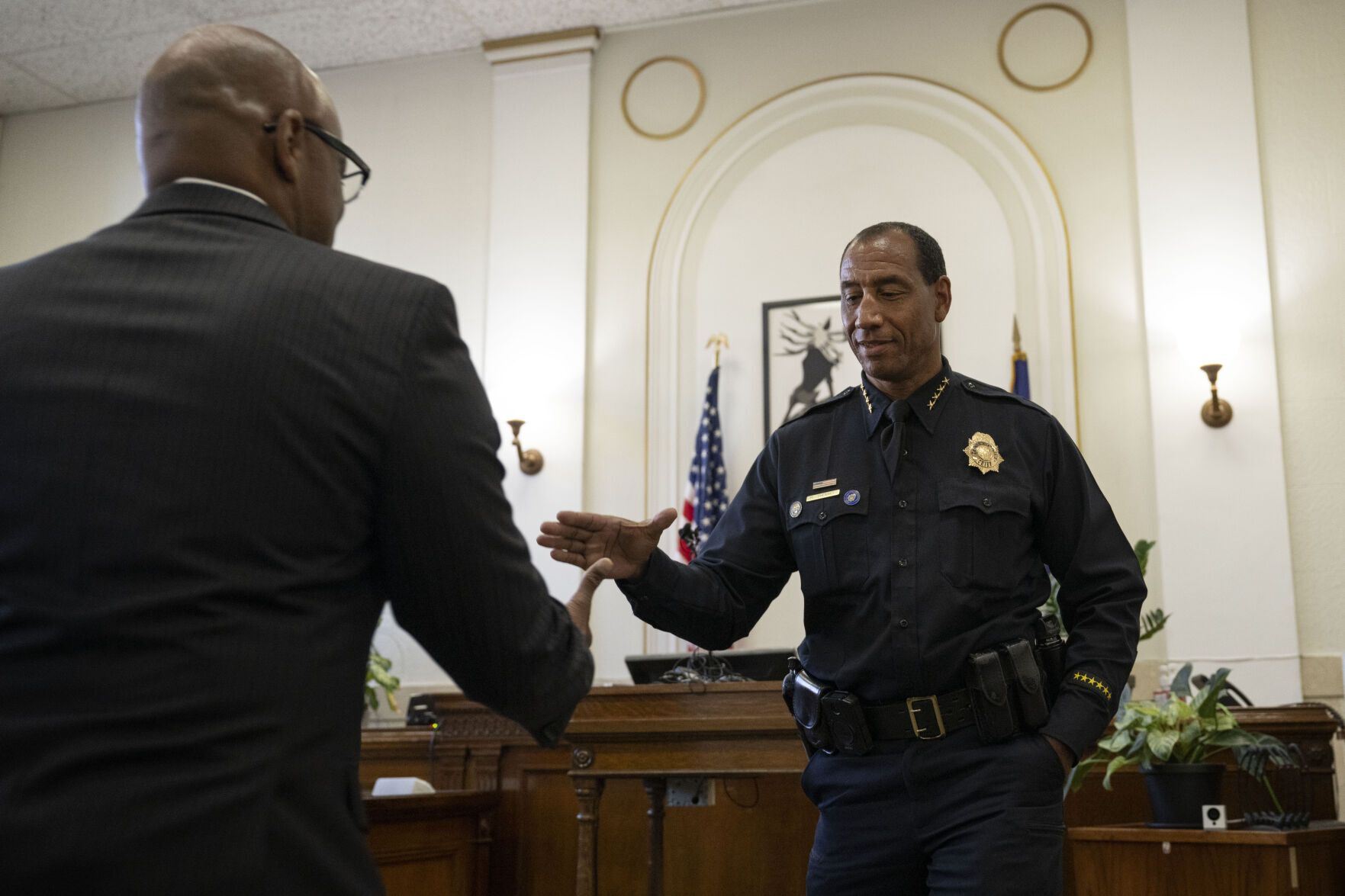
“I’m often vocal about how I feel their actions are affecting society as a whole and the inhumane responses to addressing homelessness. I’m very vocal about that on the streets,” Benson testified. But “my reasons for wanting to join that board were very genuine in ensuring proper process. Facts are facts. Opinions are opinions. And this is a board that discusses facts.”
During cross-examination, the city pointed out Benson’s YouTube channel, which has 24,000 subscribers, proclaims that the government “is malevolent. It destroys everything it touches. It seldom does anything right, except violate peoples rights on the daily.” The city’s lawyers also played videos of Benson speaking antagonistically toward officers. Bell, in his testimony, accused her of doxing him, which led to a criminal investigation.
Thomas also testified about a district advisory board meeting in 2021, when he was a division chief, in which Benson allegedly hijacked the conversation.
“She can be a handful,” Thomas wrote in an email at the time, while acknowledging on the witness stand that Benson’s behavior was not profane.
“She approaches situations with irrational conduct, with cursing,” argued Bernard Woessner, an attorney for Denver, in explaining why Benson was not an appropriate candidate for the review board. “It’s her conduct that’s disturbing.”
“Do you think Commander Levens and the Denver Police Department thought she was actually going to start the cursing routine in the board meeting when she’s never done that at a public meeting?” asked Brimmer.
Woessner responded that she might “impact the ability of people to step back, be reasoned and impartial.”
“I would say you’re on thin ice here. No. 1, that’s not what’s being claimed in the emails,” interjected Brimmer. “No. 2, there’s no connection, it seems to me, between conduct and partiality. You can conduct yourself a large number of different ways but not necessarily be” biased.
Ultimately, Brimmer found that the First Amendment did protect Benson’s speech. However, under U.S. Supreme Court precedent, the nature of the closed-door board meant the government is allowed to reasonably control access to the body, so long as it does not discriminate based on viewpoints.
Given the commanders’ understanding of Benson’s history, “I think the Denver Police Department reasonably inferred … that she was not impartial,” he said. “And that, therefore, they had a legitimate reason to believe that she would not be an appropriate member of the Use of Force Review Board because she would not be able to base a decision on facts that were presented on the individual officer, as opposed to having a preconceived opinion about the Denver Police Department or government.”
Therefore, Brimmer concluded, Benson’s rejection as a board candidate was not speech-based retaliation.
The case is Benson v. City and County of Denver et al.

Colorado Supreme Court blocks ballot initiative defining ‘fees’
Michael Karlik
michael.karlik@coloradopolitics.com
Updated 11 minutes ago
The Colorado Supreme Court blocked a proposed ballot initiative on Monday that would have required voter approval for new fees above a certain threshold, while also enshrining a definition of “fee” into the state constitution for the first time. Chief...
Colorado justices, by 5-2, say Longmont detective did not violate suspect’s Miranda rights
Michael Karlik
michael.karlik@coloradopolitics.com
Updated 2 hours ago
The Colorado Supreme Court’s majority ruled on Monday that a Longmont detective did not coerce a suspect into talking by making references to how a judge would look at his character, and by suggesting he may get out of prison...
Colorado justices find Fort Collins police lacked probable cause to arrest suspect in park
Michael Karlik
michael.karlik@coloradopolitics.com
Updated 4 hours ago
The Colorado Supreme Court agreed on Monday that Fort Collins police lacked probable cause to arrest a man for a child sex offense based on his presence in a public park around the time they intended to meet with their...

Supreme Court to hold oral arguments, discipline commission releases report | COURT CRAWL
Michael Karlik
michael.karlik@coloradopolitics.com
Updated 5 hours ago
Welcome to Court Crawl, Colorado Politics’ roundup of news from the third branch of government. The state Supreme Court is holding oral arguments this week, plus Colorado’s judicial discipline commission released its annual report. Colorado Supreme Court news • The Supreme...
Federal judge dismisses developer’s challenge to Denver affordable housing ordinances
Michael Karlik
michael.karlik@coloradopolitics.com
Updated 3 days ago
A federal judge dismissed a homebuilder’s constitutional challenge on Tuesday to a pair of Denver ordinances that impose obligations on developers related to the affordable housing demands created by new construction. Two related companies, redT Homes and redT Capital Partners,...
10th Circuit distances itself from prior decision making it easier to toss prisoner lawsuits
Michael Karlik
michael.karlik@coloradopolitics.com
Updated 3 days ago
The Denver-based federal appeals court distanced itself on Wednesday from its own recent decision that made it easier for prison officials to end civil lawsuits by transferring incarcerated plaintiffs between facilities. A three-judge panel of the U.S. Court of Appeals...

Appeals court overturns Douglas County vehicular homicide conviction due to faulty jury instructions
Michael Karlik
michael.karlik@coloradopolitics.com
Updated 1 day ago
Colorado’s second-highest court overturned a defendant’s vehicular homicide conviction and 12-year prison sentence on Thursday after determining a Douglas County judge omitted key language from the jury instructions that could have resulted in a different outcome. James Paul McDonald was...
Federal judge dismisses malicious prosecution claim against former Denver prosecutor
Michael Karlik
michael.karlik@coloradopolitics.com
Updated 3 days ago
A federal judge concluded on Monday that a former Denver prosecutor could not be sued for allegedly causing the arrests of two plaintiffs after they failed to appear for trial on the scheduled date, even though the trial had been...
Judicial discipline commission reports increased transparency, increased submissions
Michael Karlik
michael.karlik@coloradopolitics.com
Updated 2 days ago
The Colorado Commission on Judicial Discipline received 473 misconduct complaints about judges in 2025, which was nearly 29% higher than in 2024 and substantially greater than any time in the past decade. However, only 31 complaints were referred to the commission...
Colorado Gov. Jared Polis ignites fierce debate after raising clemency questions in Tina Peters case
Marianne Goodland
marianne.goodland@coloradopolitics.com
Updated 5 days ago
Gov. Jared Polis ignited a political firestorm Tuesday night after weighing in on the prison sentences of two former Colorado officials — a Democrat and a Republican — convicted of attempting to influence a public servant. The comments quickly fueled...
PREV
PREVIOUS
Flags lowered, colors raised: Colorado leaders and friends celebrate Sen. Faith Winter's life
It was the colors that stood out as hundreds braved the cold on Friday to celebrate the life of Sen. Faith Winter, who died in a two-car crash on Nov. 26. Flags at the state Capitol flew at half-staff at the order of Gov. Jared Polis. The colors — a tribute to Winter, 45, who […]

Calendar Dec. 8-14
CoPo’s weekly political calendar will help you find political and public-policy events throughout Colorado. It includes candidate and issue campaign events, public policy meetings, court hearings, state and local party conventions, assemblies, debates, rallies, parades, speaking engagements, traveling dignitary appearances, water meetings, book signings, county commission hearings, city council meetings and more. As a subscriber, […]