

Aurora seats new progressive council
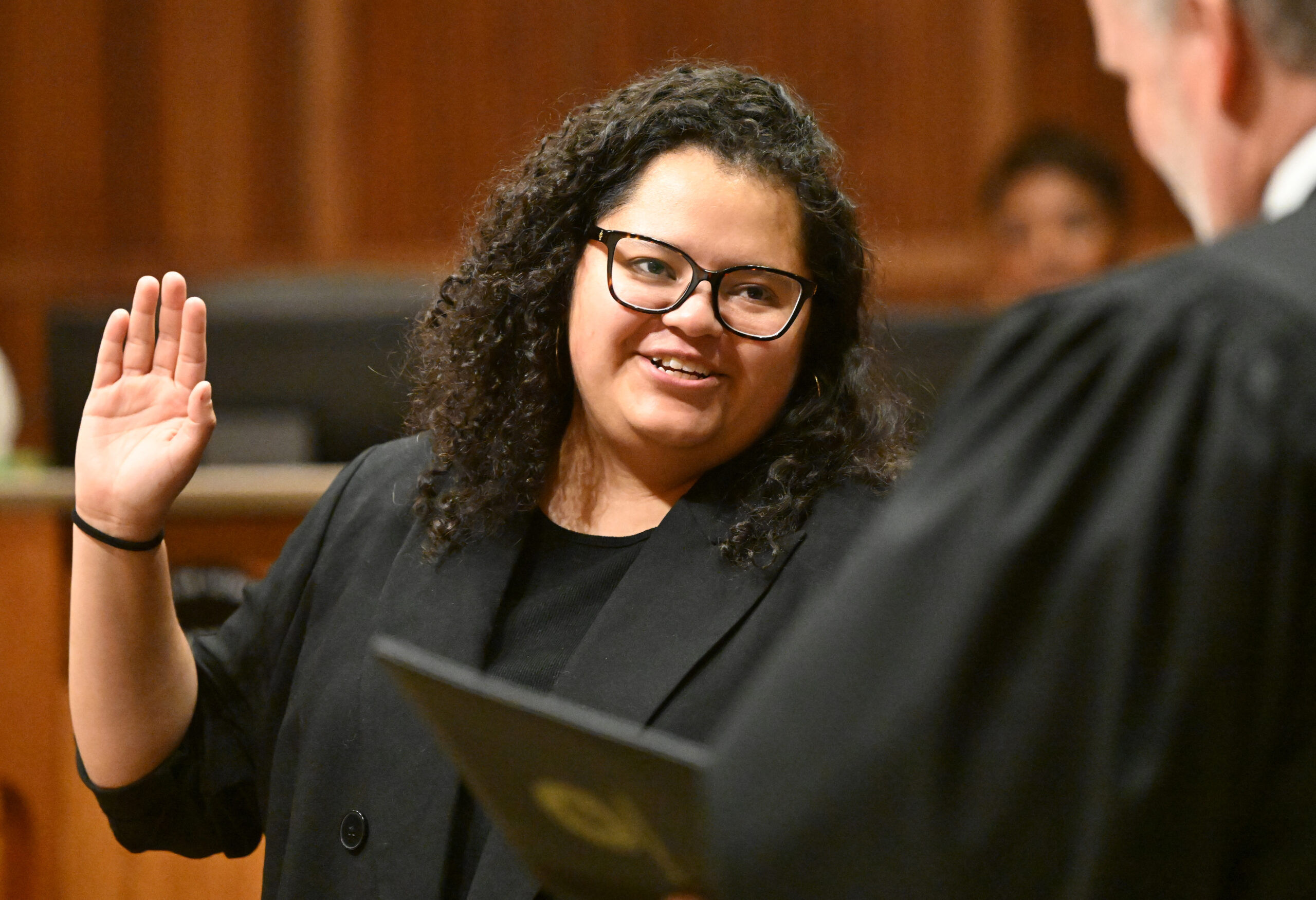
Aurora’s four new councilmembers and an incumbent were sworn in Monday night, marking the beginning of a progressive-majority council rule in the city that has been led by conservatives for years.
“This is what democracy looks like,” new at-large member Gianina Horton said, thanking the audience for showing up.
It remains to be seen if the new council would undo the direction adopted by the previous council in the areas of crime, homelessness and illegal immigration, among other hot-button subjects.
Already, the progressive majority has begun to flex their muscle in the area of public comments during the council’s meetings.
Returning member Ruben Medina and four new members — Horton, Rob Andrews, Alli Jackson and Amy Wiles — took their oath of office and sat on the dais in front of a packed council chamber.
In November’s election, Aurora voters chose progressive candidates over their conservative counterparts, who included several incumbents.
Conservative Councilmembers Danielle Jurinsky, Steve Sundberg and Amsalu Kassaw were all voted out in favor of progressive councilmembers Andrews, Wiles and Jackson.
Voters picked progressive councilmember Horton to replace outgoing progressive councilmember Crystal Murillo, who did not run for reelection.
Progressive incumbent Medina was reelected over conservative former councilmember Marsha Berzins.
After the swearing in, the new elected body’s first order of business was changing public comment rules, which had been altered multiple times over the last year and a half by the previous council. The new rules turn public comment into two hours — one at the beginning of the meeting and another at the end.
The council voted unanimously to adopt the rule changes after some discussion.
The council has been grappling with how to deal with activists protesting the shooting of Kilyn Lewis, who was killed by an Aurora police officer last year during an operation to arrest him on a warrant for attempted first-degree murder. Lewis was not armed.
The protesters have attended every council meeting for more than a year, often speaking over time limits and interrupting meetings.
The council has gone back and forth with in-person and video conference meetings following the Lewis protests. Most recently, the council created a separate public comment session that came before regular meetings and limited each speaker to two minutes, instead of three.
Progressive councilmembers Alison Coombs, Medina and Murillo have argued in previous meetings that the council’s responsibility is to listen to the public.
Conservative members said the protests were disruptive to important city business.
The resolution, pushed by Coombs, adds public comment back onto the regular meeting agenda, rather than holding a separate session for it. The resolution also adds a public comment period to the end of the meeting.
The resolution limits each public comment session to one hour and allow each speaker three minutes, instead of two.
Councilmember Francoise Bergan requested a change to 30 minutes, rather than an hour at the end of the meeting.
“We seldom used the full hour at the end of the meeting, but when we did it was for a reason,” Coombs countered, adding that the change brings the council back to “the status quo” when it comes to public comment rules.
The council also added a rule giving preference during the end-of-meeting comment session to people who have not yet spoken.
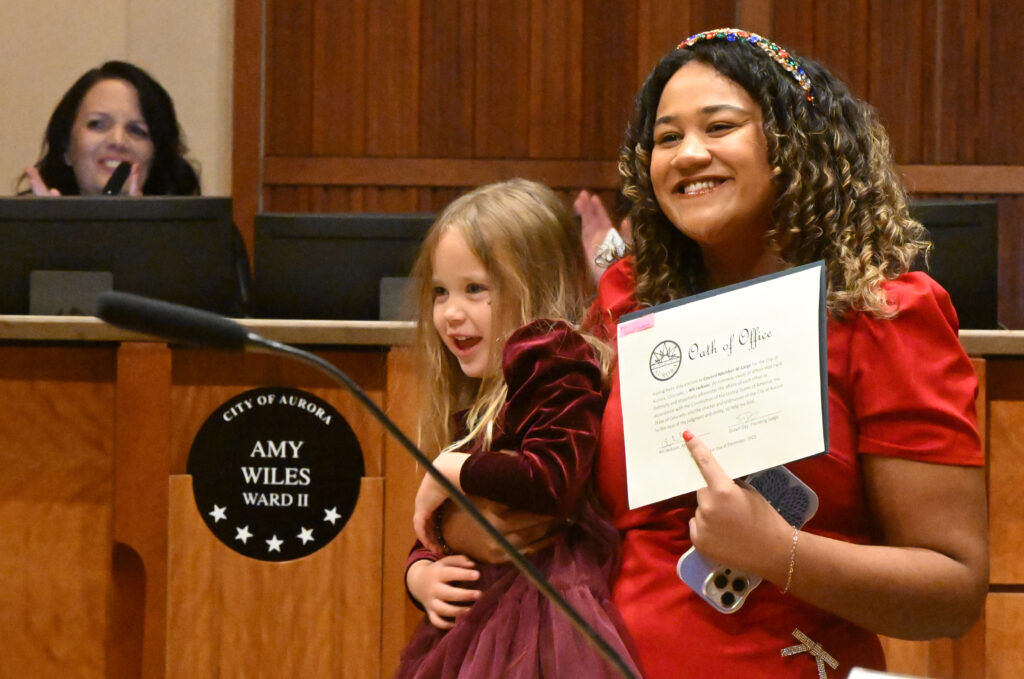
Coombs also got rid of rule allowing only councilmembers on the dais, permitting family members of the council there. The rule was added after Coombs brought her child onto the dais during a meeting in 2023.
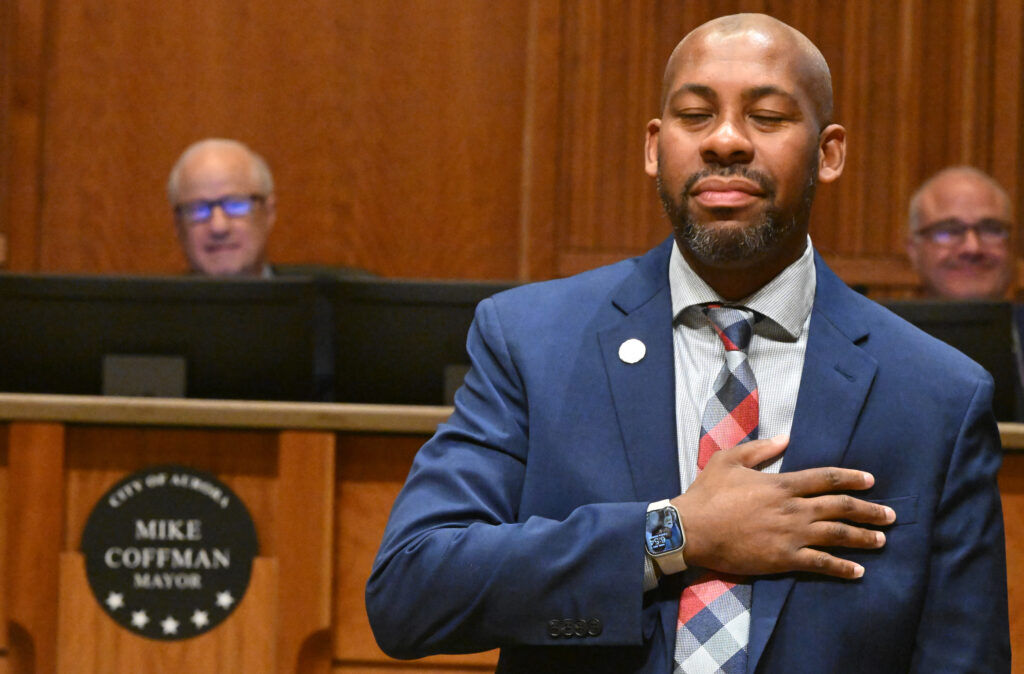
Also Monday night, the council unanimously voted Coombs to be the mayor pro tem. A mayor pro tem acts as mayor when Mayor Mike Coffman is absent.
Monday night’s meeting stood in stark contrast to previous ones, which were often dominated by passionate arguments between members. Coombs and Bergan discussed the new rule changes with one another politely, despite disagreeing.
Community members and councilmembers have discussed a need for decorum to return to the council between councilmembers and the public and between the councilmembers themselves.
Shortly after being reelected, Medina said decorum needed to be one of the council’s first priorities.
Having differences in opinion is OK, but, he said, councilmembers have been “nasty” to each other and that’s not a good way to lead.
“We’ve had people on council who’ve been divisive and don’t want to work with everyone,” Medina said shortly after his election. “I’m hopeful we can bring back some decorum and work together.”
The bigger question is whether the progressive council would roll back the policies adopted by the previous council.
Under the conservative council, Aurora has banned urban “camping,” adopted tougher laws on crime and sought to distance itself from Denver on several hot-button subjects, notably on illegal immigration.
This year, Aurora officials also celebrated the opening of the city’s highly anticipated Regional Navigation Campus, a former hotel that will act as a “one-stop-shop” for homeless services and shelter. Coffman, the mayor, has described it as a “people-focused, progress-driven approach to homelessness that empowers and prepares people to come through these doors to improve their circumstances.”
Aurora has prioritized personal responsibility in its approach to homelessness – what officials called “tough love.”
Notably, the city had gotten rid of requirements to provide shelter options and the 72-hour notice before sweeping homeless encampments.
Aurora officials also created a new court system meant to handle low-level offenses by homeless people, as the city enforces the camping ban. The idea is to give low-level offenders the option to either go on probation with a court order to participate in programs to restore them to self-sufficiency — including much-needed addiction rehabilitation and mental health treatment — or go to jail.
In the area of crime, the council gave the Aurora Police Department permission to use facial recognition technology. The previous council also adopted ordinances making the penalties for retail theft and “dine and dash” crimes harsher. Both ordinances added to an original law, passed in 2023, that set a three-day mandatory minimum jail sentence for retail theft of $300 or more.
Insofar as the issue of illegal immigration, Aurora, under the previous council, had repeatedly signaled that it is not a “sanctuary jurisdiction” and it would cooperate with federal authorities in enforcing immigration laws.


Colorado health equity funder’s redirection debated
DEBBIE KELLEY
debbie-kelley@coloradopolitics.com
Updated 16 hours ago
A redirection in grantmaking that began two years ago for The Colorado Trust, a 40-year-old Denver-headquartered funder, has led some employees to now voice concerns, which has reportedly put their jobs in jeopardy. The vice president of communications for the...

Can deliberation save democracy? | Vince Bzdek
Vince Bzdek
vince.bzdek@gazette.com
Updated 3 hours ago
By Vince Bzdek In September 2019, 523 Americans traveled to Dallas, Texas, for an experiment called “America in One Room.” The gathering was designed to test a theory: Could representative citizens deliberate productively even in an era of intense polarization?...

Is Trump a builder or just a latter-day headhunter? | SONDERMANN
By Eric Sondermann
by-eric-sondermann@coloradopolitics.com
Updated 2 days ago
It was well under 100 hours after President Donald Trump’s overly long, overly theatrical State of the Union speech that he unleashed American bombers across Iran. As I write, it is now less than 100 hours since those bombers started...

Democrats eye new taxes on alcohol, marijuana to fund Colorado mental health spending
Marissa Ventrelli
marissa.ventrelli@coloradopolitics.com
Updated 2 days ago
Facing a more than $1 billion budget shortfall, Colorado lawmakers are searching for ways to fund mental health services in a state that consistently ranks among the worst in the nation for mental health outcomes. Several proposals this session aim...

Colorado Politics Calendar Mar. 9-13
Rachael Wright, Special to Colorado Politics
rachael.wright@coloradopolitics.com
Updated 2 days ago
CoPo’s weekly political calendar will help you find political and public-policy events throughout Colorado. It includes candidate and issue campaign events, public policy meetings, court hearings, state and local party conventions, assemblies, debates, rallies, parades, speaking engagements, traveling dignitary appearances,...

LDS activist excommunicated from the church speaks out on women’s rights across Colorado | A LOOK BACK
Rachael Wright, Special to Colorado Politics
rachael.wright@coloradopolitics.com
Updated 2 days ago
Forty-Five Years Ago This Week: “Women must demand — now and if necessary at the peril of our lives — that we be granted civil rights in the same way rich white men in this country were granted them: constitutional...

Hopes and fears: Colorado Iranians speak out on widening war
Mark Samuelson Special to The Denver Gazette
mark.samuelson@denvergazette.com
Updated 2 hours ago
Group talks about young people protesting against the Islamic Republic, and Reza Pahlavi and the monarchy When Denver area real estate agent Fara Novin dined out for her birthday Friday night, Feb. 27, she blew out a candle on a...
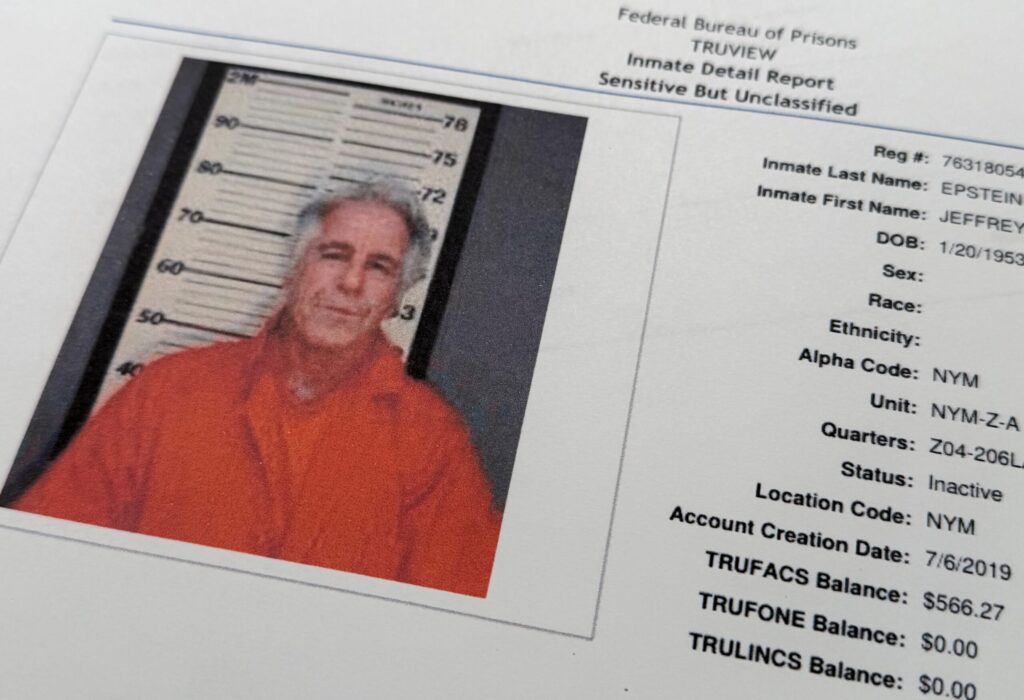
DOJ publishes more Epstein documents mentioning Trump after initial omission
Rena Rowe, Washington Examiner
rena.rowe.washington.examiner@gazetteedit.wpenginepowered.com
Updated 20 hours ago
The Justice Department released additional Epstein files on Thursday, including uncorroborated accusations from a woman claiming she was sexually assaulted by President Donald Trump. Last week, Rep. Robert Garcia (D-CA), the top Democrat on the House Oversight and Government Reform...
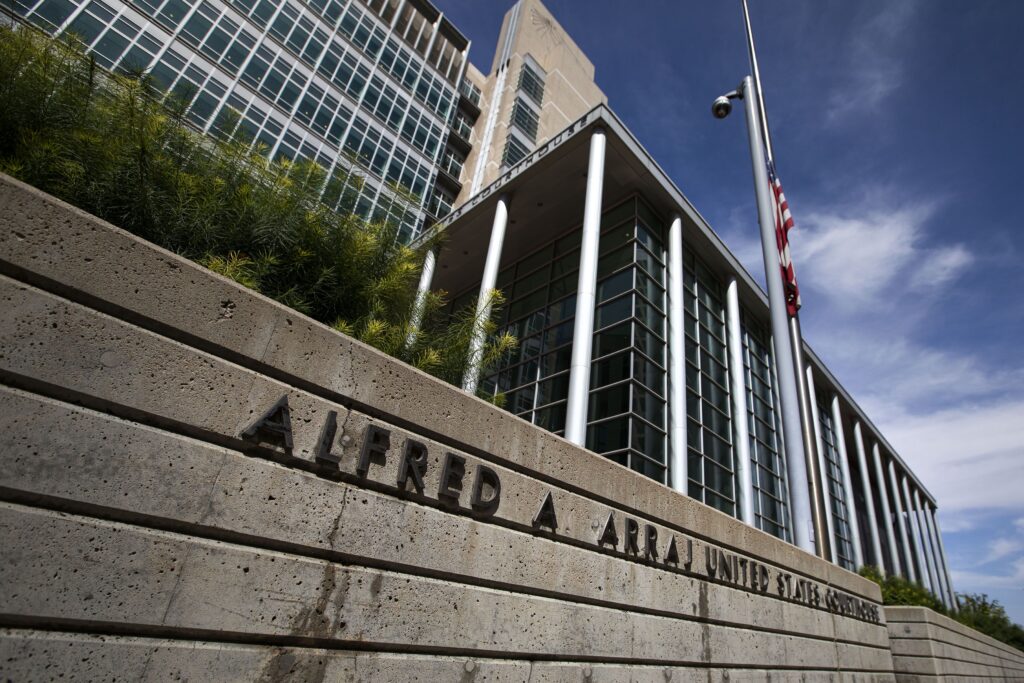
Federal judge dismisses developer’s challenge to Denver affordable housing ordinances
Michael Karlik
michael.karlik@coloradopolitics.com
Updated 15 hours ago
A federal judge dismissed a homebuilder’s constitutional challenge on Tuesday to a pair of Denver ordinances that impose obligations on developers related to the affordable housing demands created by new construction. Two related companies, redT Homes and redT Capital Partners,...

Another TABOR fight: Democrats plan to redirect residents’ refunds to K-12 spending
Marianne Goodland
marianne.goodland@coloradopolitics.com
Updated 6 minutes ago
Colorado voters could decide this fall whether billions of dollars that would otherwise be returned as refunds under the Taxpayer’s Bill of Rights should instead go to public schools under a ballot measure unveiled Thursday by Democrats. Supporters say the...