

Adult supervision still needed for Colorado GOP as consequential 2026 nears | HUDSON
Prior to the Reformation, the Catholic Church could safely franchise its Inquisition across Europe in pursuit of heretics with little worry there was anyplace non-believers could flee. Following several centuries of religious wars between Catholics and Protestants, it became evident attracting converts, rather than slaughtering theological rivals, was the better path for all concerned.
It is this blood-soaked history which prompted our Founding Fathers to place the separation of church and state in the First Amendment to the U.S. Constitution. Nevertheless, there resides an element within the evangelical Christian right that reads this prohibition and fails to discern its obvious intent to defend citizens against the depredations of religious zealotry.
Apparently, Colorado Republicans learned nothing in 2024 from their own fruitless pursuit of political heretics. As American politics have polarized, adherence to policy dogmas on both the right and left have transformed into ideological litmus tests in both major parties. Big-tent partisanship is a historical legend. The demand for purity of thought has proven stronger on the right than the left, despite spasmodic Democratic dalliances with the liberal vocabulary and subsequent vitriolic cancellation assaults, oft prematurely, against those who stray from the politically correct path.
It was Republicans who first dissed their internal dissidents as RINOs (Republicans In Name Only). Just 18 months ago, a schismatic blood-letting set Colorado’s centrist or elitist party leaders, depending upon one’s viewpoint, on a quest to defenestrate former state legislator and fire-breathing Republican party Chairman Dave Williams. They failed. Among the rebels was Brita Horn of Craig, now the duly elected replacement for Williams who chose not to seek re-election. She narrowly defeated Lori Saine, another former legislator rudely derided among her peers as Lori “Slightly Insane.” The vote was bitterly contested as MAGA delegates lost to an invigorated phalanx of traditional conservatives and allied moderates.
Suddenly, although not entirely unexpectedly, Raymond Garcia from El Paso County, a central committee member and chair of the Colorado Hispanic Republicans, has circulated a petition calling for a Dec. 13 meeting to presumably consider ousting Horn as state party chair. Garcia collected 137 signatures, a near dozen more than the 126 required (25%) in party bylaws, yet finds himself running up against the same procedural obstructions thrown up by Williams in 2024. Horn alleges petitioners failed to properly jump through process hoops and therefore claims their efforts should be adjudged “null and void.” It seems inevitable this dispute is also headed for a legal challenge in 2026. By the time this column appears, the Republican state executive committee will have met and is expected to endorse Horn’s rules interpretation.
Garcia, however, seems no more willing to accept this parliamentary maneuver than did the faction that hoped to dump Williams at a rump meeting in Brighton last year. His Dec. 13 meeting seems likely to proceed with or without the blessing of the executive committee. Former state Rep. Richard Holtorf of Sterling and current vice-chair of the party, who also chaired the 2024 rebellion, has agreed to serve in that capacity again if Horn ducks the meeting as expected. Presumably, Garcia’s supporters have studied the court decision that ruled in Williams’ favor. Quorum requirements and the number of votes needed to reject Horn and replace her will be hotly contested in court. None of this will prove helpful to the 25 declared candidates for the 2026 governor’s nomination in next spring’s Republican primary. It’s been nearly a decade since a Republican won statewide office in Colorado and a portion of the blame for this drought has to be assigned to feuding party leadership.
Colorado Republicans are in desperate need of adult supervision. Their intramural struggles undermine any confidence unaffiliated voters might entertain in their capacity to govern effectively. Approaching statewide races next year, fresh blood spilled on the floor will once again damage the party’s nominees. The primary ballot will be whittled down to a half-dozen aspirants before the primary but, rest assured, each faction will have a favorite and a bitter distaste for any candidate aligned with their opponents. Republicans are also allegedly facing desperate financial straits as well, unable to significantly assist its candidates. It’s too early to pronounce Colorado Republicans as swirling in a death spiral toward the drain — political parties have evidenced a remarkable capacity for dodging near fatal troubles — but current life signs remain weak.
Once upon a time, prior to the turn of the 21st century, competitive campaigns for the party’s chairmanship were rare for Colorado Democrats. Senior elected Democrats, usually led by the governor, conferred with down-ballot incumbents to identify a preferred leadership candidate. This was usually a proven fundraiser like Howard Gelt or a former officeholder such as Lt. Governor Mark Hogan who served unpaid. These nominees were usually elected by acclamation. Before 2000 Republicans demonstrated a similar pattern with chairs like Bo Callaway and campaign manager Dick Wadhams. After losing the governor’s seat in 1998 to Bill Owens, Democrats began to fracture between progressives and moderates. A similar schism occurred on the right among Republicans. Anointments are a thing of the past. Dave Williams went so far as to violate a prime law of party leadership by running for Congress while retaining his party office — a generally recognized protocol violation.
Democrats have proven far more effective at retaining their focus on utilizing party machinery to promote their candidates. In 2026, they will have retained a grip on the governor’s office together with legislative majorities for 20 years. Republicans, by contrast, have preferred to tar and feather RINOs in their ranks, mimicking the “cancel culture” they whine about on the left. There was hope following the acrimonious election of Ken Buck, a sitting member of Congress, as party chairman that he would restore a semblance of organizational maturity. That was not to be the case. Ken failed to recognize a party chair must also serve as referee for intra-party fights which got particularly nasty in crimson red districts where the primary winner is virtually assured of election in November. Calling balls and strikes from Washington didn’t work out for him and Ken departed after a single term with far fewer friends than he enjoyed previously.
The Republicans most at risk in the event of another year of Colorado court squabbling are the party’s four incumbent members of Congress. Gov. Polis has already done them a huge favor by opposing any redistricting of congressional seats which could readily be gerrymandered to drive at least two, possibly three of them into early retirement. Nonetheless, several will face tough challenges in 2026. My advice to this Congressional mini caucus is to huddle quickly and reach agreement on the person they all wish to see in their 2026 campaign’s driver’s seat. It’s time to show leadership. Their choice might be Brita Horn, even Richard Holtorf, or someone they draft from the bleachers. Take some advice from a Democrat, “Get your act together!” You very well may convince a majority of Republicans to do the same.
Miller Hudson is a public affairs consultant and a former Colorado legislator.

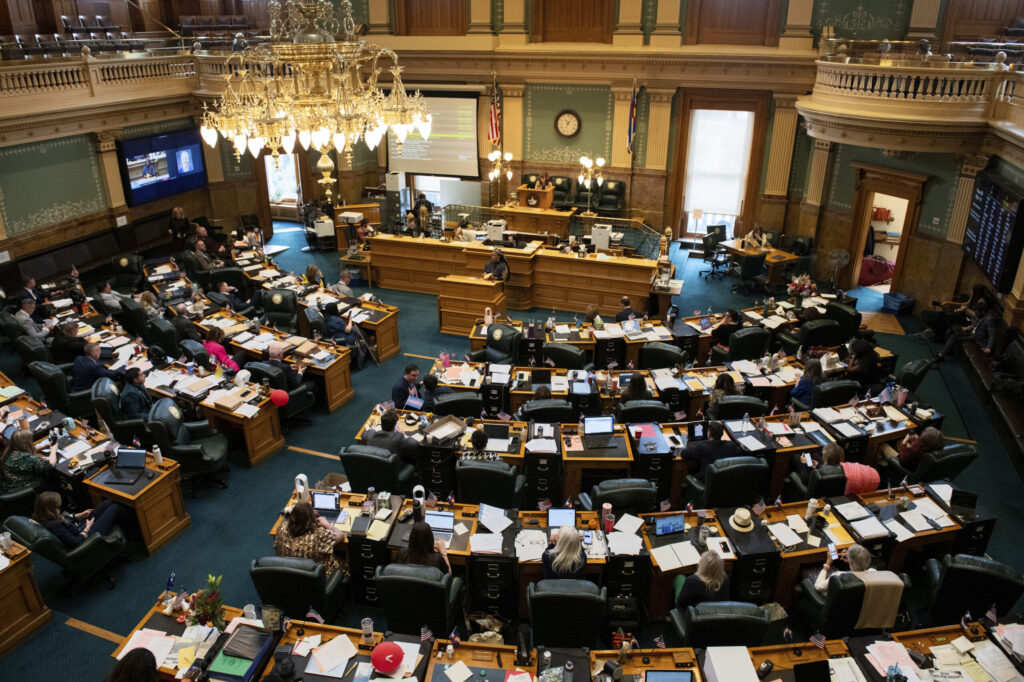
As lawmakers return, federal pressure and fiscal stress could shape Colorado’s 2026 session
Marissa Ventrelli
marissa.ventrelli@coloradopolitics.com
Updated 26 minutes ago
The eight months since lawmakers wrapped up the 2025 legislative session have been anything but quiet. Federal funding cuts, a flurry of presidential executive orders, an election year fast approaching, and a projected $1.2 billion budget shortfall are all converging...
Senate Democrats announce committee assignments for 2026 session
Marissa Ventrelli
marissa.ventrelli@coloradopolitics.com
Updated 1 hour ago
Democratic Senate Majority Leader Robert Rodriguez, D-Denver, announced committee assignments for the 2026 legislative session on Wednesday. “Committees are crucial to the legislative process – they’re where we deliberate, hear from the public, and fine-tune policies so that they can...
Lack of accountability in state standardized testing system | NOONAN
Paula Noonan
paula-noonan@coloradopolitics.com
Updated 12 hours ago
The General Assembly kicks up its heels this month along with the National Western Stock Show. Both should offer some exciting bull rides. Last General Assembly produced one interesting bill on K-12 public education. It’s HB25-1278 on the education accountability...
Don’t punish the stores playing by the rules | OPINION
Colorado Politics
colorado-politics@coloradopolitics.com
Updated 12 hours ago
By Mary Szarmach My family has been in business in this state for decades serving some of the hardest working Coloradans. And, yes, they buy tobacco products, and, yes, my staff and I card them every single time. We know the law, we...

Lawmakers, advocates seek reforms after cases expose gaps in Colorado’s competency system
Marissa Ventrelli
marissa.ventrelli@coloradopolitics.com
Updated 20 hours ago
After a series of high-profile crimes throughout the state last spring and summer exposed gaps in Colorado’s legal system for individuals declared incompetent to stand trial, lawmakers and an advocacy organization are pushing for reforms in 2026. Extensive media coverage...

Urban vs. rural, labor vs. business: Battles are brewing ahead of the 2026 Colorado legislative session
Marissa Ventrelli
marissa.ventrelli@coloradopolitics.com
Updated 21 hours ago
Grab your popcorn, it’s going to be an interesting 2026 legislative session in Colorado. There’s not much you can count on these days, but if you’ve been around the Capitol long enough, you’ve probably seen your fair share of disagreements,...
Colorado chose politics over public safety and now our communities pay the price | PODIUM
Colorado Politics
colorado-politics@coloradopolitics.com
Updated 2 days ago
By Chris Richardson and Max Brooks This week, federal authorities arrested Jose Barrera-Bolanos in Denver. He is an illegal immigrant who had already been convicted of sexually assaulting a child. That fact alone should stop every parent, grandparent and lawmaker...
Helping close Colorado school children’s literacy gaps | OPINION
Colorado Politics
colorado-politics@coloradopolitics.com
Updated 24 hours ago
By Ellen Gelman Imagine being a high school student sitting in a room where everyone around you seems to understand texts that to you feel like a foreign language. Imagine knowing you’re smart, knowing you have ideas worth sharing, but...

Former Colorado wildlife director heads to Wyoming
Marianne Goodland
marianne.goodland@coloradopolitics.com
Updated 2 days ago
Jeff Davis, the former director of Colorado Parks and Wildlife who oversaw the introduction of wolves in Colorado, is headed to Wyoming, where he will take on a new job as deputy director for that state’s game and fish agency....
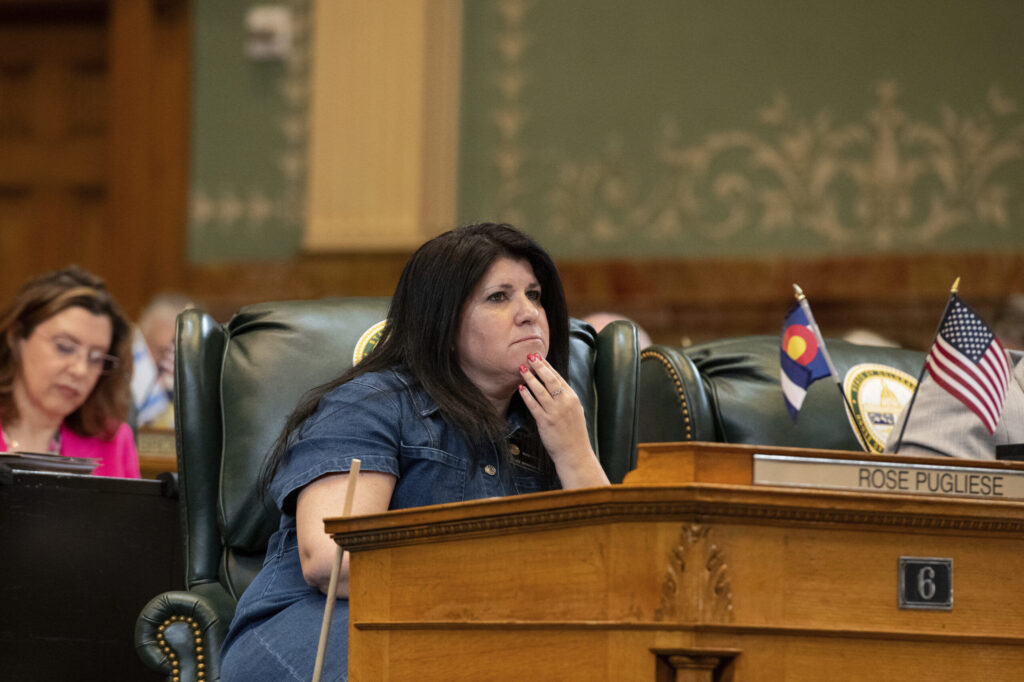
Former Rep. Rose Pugliese vies for Mesa County Treasurer
Marianne Goodland
marianne.goodland@coloradopolitics.com
Updated 1 day ago
Former Republican Leader Rose Pugliese has jumped into the 2026 primary for Mesa County Treasurer. Pugliese moved to Grand Junction after resigning from the Colorado House in September, citing a “collapse of integrity” within the Colorado House. She previously served...
PREV
PREVIOUS

Help grieving parents | CALDARA
Had my daughter lived she would’ve just celebrated her 25th birthday. She died of a vicious form of cancer just days before her first birthday. She was our only child at the time. Twenty-four years later, I still have no way to express what it is like to be a parent one day and then […]
Stock Show's Catch-a-Calf has cherished history | GABEL
Bill Waneka, who was raised in Lafayette, is one of the original National Western Catch-a-Calf volunteers who remains a committee member today. The program began in 1935 when boys who were exhibiting fat steers at Denver were drawn to try to catch a calf during the rodeo. They returned the next year to Denver to […]