

SCOTUS: 3, Weiser: 0 — Colorado: embarrassed | BRAUCHLER
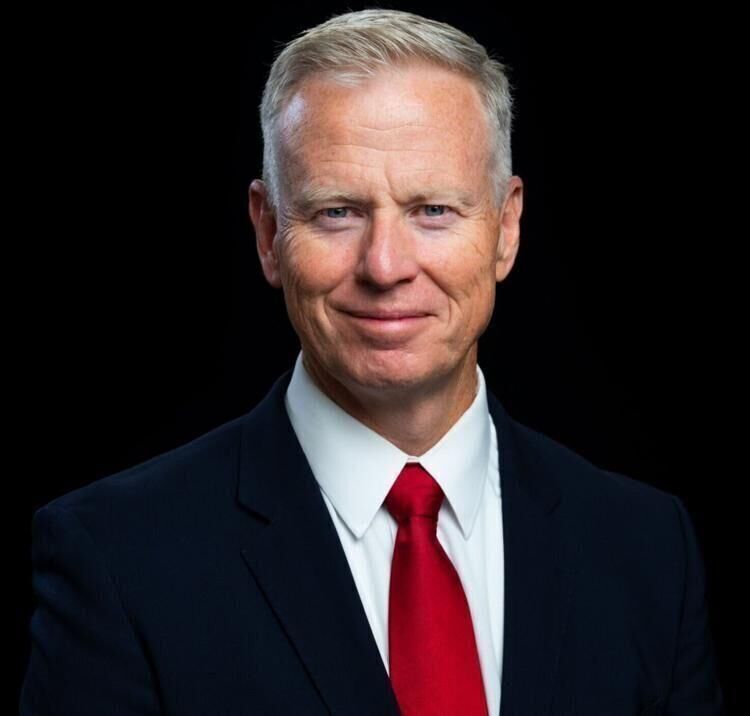
Recently, Attorney General and gubernatorial aspirant Phil Weiser took to social media to trumpet the news that he has become a part of 43 lawsuits against President Donald Trump (it could be up to 100 by the time of this printing).
The AG’s lawsuit announcements have picked up significant pace as he battles with his political opponent for earned media in the race for governor, U.S. Sen. Michael Bennet. Just last month, Weiser wrapped up his office’s eighth argument in front of the Supreme Court of the U.S. — the Super Bowl of appellate work — representing us. Based on the performance before SCOTUS, legal experts everywhere predict another loss for Colorado.
Coloradans are entitled to scrutinize the cases for which Weiser signs us up and asks us to fund. We also deserve to know what and how our AG’s office argues cases on the biggest stage, and how those cases turn out. Weiser’s consistent and failed approach has been to advocate for an expansive role in government dictating private citizens’ speech, and a narrow application of the First Amendment in defending it.
Masterpiece Cakeshop: The AG’s office (under Weiser’s predecessor) argued that cakemaker Jack Phillips was required by law to create wedding cake-borne messages contrary to his deeply held religious beliefs. By a vote of 6-3, SCOTUS rejected Colorado’s argument in a 2018 opinion acknowledging that government does not have such coercive power. It appears that Weiser learned little from that major loss.
303 Creative: In December 2022, Weiser and his publicly-funded posse (he never travels anywhere without a team around him) went to DC to ask SCOTUS if they were really serious about their Masterpiece Cake ruling, but this time, as applied to a wedding website designer who did not believe the government should demand she create content and messages contrary to her deeply held religious beliefs.
With Weiser’s approval, his solicitor general argued against the free speech clause of our First Amendment protections. Weiser’s office advocated for an expansive government role in regulating our communications, claiming that otherwise “all sorts of racist, sexist, and bigoted views” might be protected. Duh. That is how the First Amendment works — it protects the opinions and views we hate, as much as the ones we love. Weiser’s argument was rejected 6-3.
Counterman: On April 19, 2023, four months after their 303 Creative argument, Weiser himself argued in defense of a conviction under our state’s stalking statute. His argument spooked even the liberal justices, who grilled him on concerns of chilling speech with his argument that the subjective intent of the speaker of certain words is “irrelevant” to whether those words were actionable as “true threats.”
That argument was so unpersuasive, it turned all three liberal justices against him. The justices found that prosecutors must at least show recklessness as to whether their statements would be viewed as threats. The opinion overturning the conviction was written by Justice Kagan and joined by Justices Sotomayor and Jackson. Weiser lost 7-2.
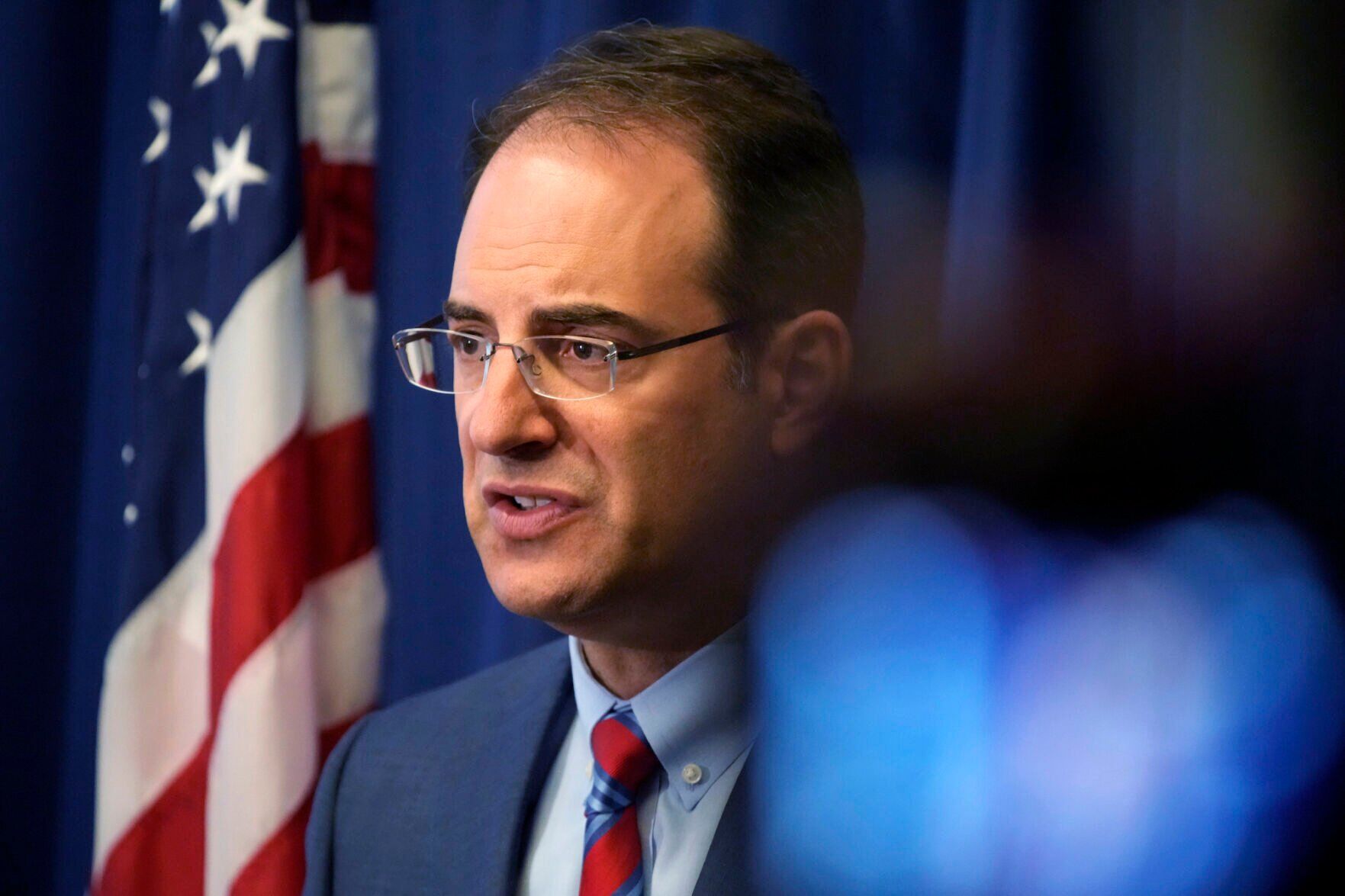
Trump v. Anderson: On Feb. 8, 2024, 14 months after 303 Creative and eight months after Counterman, Weiser’s office represented progressive Colorado Secretary of State Jena Griswold in her unprecedented attempt to deny Colorado voters the opportunity to vote for or against Donald Trump, by keeping him off the ballot. Weiser’s solicitor argued for broad discretion for Griswold to be able to determine on her own the definition of what a “qualified candidate” for the ballot means.
Justice Thomas asked, “Is there an express provision… that defines what a qualified candidate is?”
Weiser’s office answered: “No.”
Weiser’s agent went on to argue that allowing Griswold such unfettered and subjective discretion to determine who should be on the ballot would be Constitutional even if there were no way for a candidate to appeal such a decision.
Recognizing the countrywide chaos that could result from disparate rulings in different states and the nuttiness of that argument, the court asked Weiser’s solicitor, “Could a single judge in a state whose factual findings are deferred to — cause a cascading effect in the overall American election?”
Weiser’s office: “Yes.”
Yikes. That argument was so unpersuasive, it again alienated the three liberal members of SCOTUS. Weiser lost 9-0.
Chiles: Last month, Weiser and his posse again traveled to DC to step to the plate to face a SCOTUS that had struck him out three consecutive times and by increasingly lopsided votes. This time, Weiser was defending radical legislation passed by Colorado’s extremist progressive legislature and signed into law by Gov. Jared Polis.
The law was another obvious assault on the First Amendment, empowering government to dictate what words and messages could be spoken by talk therapists in consensual sessions with anyone seeking counseling for issues of sexual identity.
The justices’ questions revealed strong skepticism about our AG’s arguments defending such broad governmental power to regulate speech. Justice Gorsuch forced Weiser’s solicitor to admit that — under their argument — a state in the ‘70s could pass a law that forbid licensed therapists from affirming a patient’s homosexuality, because that was the prevailing view of the day. The AG went on to say that the state could regulate therapists’ speech even in areas of medical uncertainty on the issue. Wow.
Sometime in 2026, likely before the primary between Weiser and Bennet, SCOTUS will deliver a fourth consecutive loss to Weiser, and again, regarding our First Amendment. Whether Colorado is prepared to elevate the most hyper-partisan AG in Colorado’s history with a track record for unsuccessfully defending government encroachment on our Constitutional rights remains to be seen.
George Brauchler is the 23rd Judicial District attorney and former district attorney for the 18th Judicial District. He has served as an Owens Early Criminal Justice Fellow at the Common Sense Institute. Follow him on Twitter (X): @GeorgeBrauchler.


Comprehensive energy permitting reform benefits Colorado, the mountain west | PODIUM
Colorado Politics
colorado-politics@coloradopolitics.com
Updated 6 hours ago
By Ron Dickson Thank you, U.S. Reps. Gabe Evans and Jeff Hurd, for your participation in the Congressional Problem Solvers Caucus and your support of comprehensive energy permitting reform. We also appreciate U.S. Sen. John Hickenlooper’s continued efforts to enhance...

Colorado kids will die with CDC’s recent changes to vaccine schedule | OPINION
Colorado Politics
colorado-politics@coloradopolitics.com
Updated 6 hours ago
By Connie Ingram and Lesley Thompson No parent or grandparent should ever face the terror of watching a child fight for their life against a disease that could have been prevented. Yet more families could be put in exactly this...
Solutions right in front of us to solve political extremism crisis | OPINION
Colorado Politics
colorado-politics@coloradopolitics.com
Updated 6 hours ago
By Landon Mascareñaz Everywhere I went these past two weeks, the sentiment was the same: “What are we going to do about political extremism and the conflict in this country?” I heard it from folks on the left, right and...

Gov. Jared Polis touts Colorado’s ‘significant’ drop in crime in 2025
Marissa Ventrelli
marissa.ventrelli@coloradopolitics.com
Updated 9 hours ago
Gov. Jared Polis is touting a recent report saying Colorado’s overall crime rate decreased by double-digit margins over the past year. “I am thrilled to see our data-driven investments in law enforcement support and crime prevention are working,” Polis said...
Democrats Michael Bennet, Phil Weiser and their backers bank $9 million for Colorado gubernatorial race
Ernest Luning
ernest.luning@coloradopolitics.com
Updated 15 hours ago
Democratic gubernatorial candidates U.S. Sen. Michael Bennet and Attorney General Phil Weiser, and the campaign committees that support them, entered the election year with almost $9 million on hand, as the race to succeed term-limited Colorado Gov. Jared Polis heats...
Court rules against Colorado Rep. Jason Crow, other Democrats in ICE visitation policy challenge
Michael Kunzelman
michael.kunzelman@associatedpress.com
Updated 11 hours ago
WASHINGTON • A federal judge refused Monday to temporarily block the Trump administration from enforcing a new policy requiring a week’s notice before members of Congress can visit immigration detention facilities. U.S. District Judge Jia Cobb, who is based in Washington, D.C., concluded...
Pardon me? Nah, Gov. Polis — Tina Peters deserves her time | Hal Bidlack
Hal Bidlack
hal-bidlack@coloradopolitics.com
Updated 1 day ago
As my regular reader (Hi, Jeff!) will recall, I’ve oft praised Gov. Jared Polis for exercising great skill in balancing the outcomes of the many, many issues that cross his desk. As a moderate myself, I’ve stood by Mr. Polis...
Demand action to stop fentanyl deaths — No. 1 killer of Americans aged 18-45 | OPINION
Colorado Politics
colorado-politics@coloradopolitics.com
Updated 1 day ago
By Kim Haarberg It took me about an hour to write this. And in that time, 10 people in the United States died from fentanyl overdoses. That’s 10 sons, daughters, parents and friends gone because of a counterfeit tablet laced...

Polis’ removal of sex ed funding endangers LGBTQ+ youth | OPINION
Colorado Politics
colorado-politics@coloradopolitics.com
Updated 2 days ago
By Shara Smith At a time when the LGBTQ+ community is attacked by public policy driven by religious extremists, I am deeply concerned by the removal of funding in the governor’s budget for Colorado’s Comprehensive Human Sexuality Education (CCHSE) grant...
Is a pardon for Tina Peters coming? Colorado governor confirms he is weighing options
The Denver Gazette
the-denver-gazette@coloradopolitics.com
Updated 1 day ago
Gov. Jared Polis on Friday strongly indicated he is considering clemency for Tina Peters, the former county clerk convicted of a security breach at her election office. When pressed about the matter, Polis didn’t offer an explicit answer, but he...
PREV
PREVIOUS
Commerce City proves a harsh political fighting ground | NOONAN
It’s a common saying: money talks. Our campaign finance laws allow money to speak loud and clear. In recent municipal elections, the blandly named Metro Housing Coalition, an organization supporting homebuilders and related businesses, sent $146,000 in election campaign dollars to another blandly named entity, Housing for Colorado, an independent expenditure committee (IEC). Independent expenditure […]

Colorado lottery commission OKs credit card purchases, online sales despite legislative pushback
Colorado’s lottery commission voted on Wednesday to permit credit card purchases of lottery tickets and to begin selling tickets directly to consumers. The decision may trigger a conflict with at least 25 members of the Colorado General Assembly, including most of its leaders. In a strongly worded letter, those lawmakers questioned the commission’s authority to […]