

Washington state leaders rip Colorado over ‘failing’ wolf reintroduction program
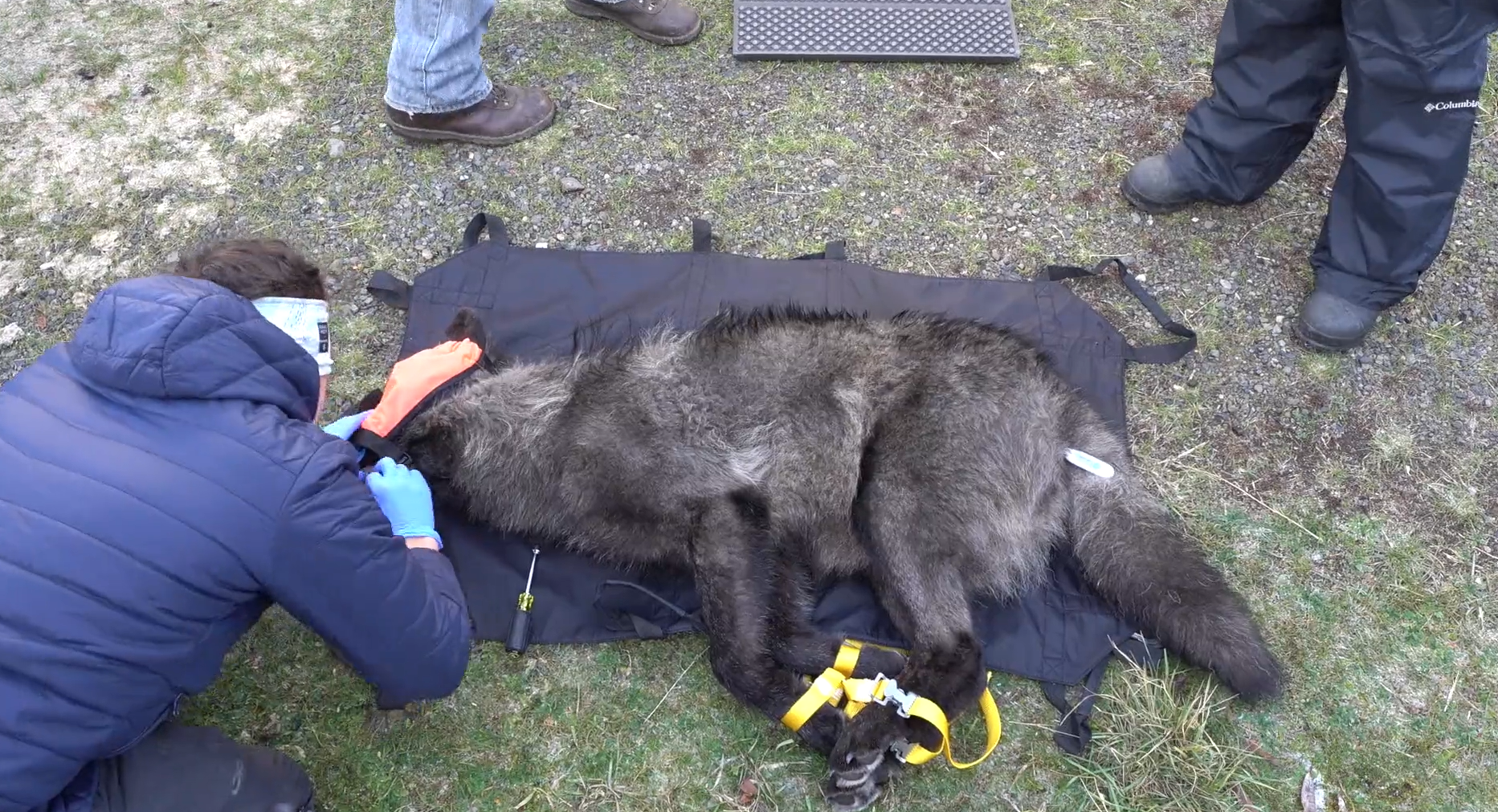
Washington’s Fish and Wildlife Commission on Saturday said “no, not now” to sending wolves to Colorado, after a hearing in which the state’s residents vigorously argued against it.
The commission voted, 8-1, to send a letter to Colorado stating that it would not approve the request while Washington wolves remain listed as endangered. Should that status change to be delisted, the commission would reconsider a future request.
The public comment period on Saturday showed Washington residents do not support sending wolves to Colorado. Commissioners noted they have been hearing a lot of opposition to the idea even before the meeting.
Francisco Santiago-Ávila of the pro-wolf Washington Wildlife First told the commission Washington’s wolves are still endangered.
“Last year, we had a 9% decline, a 25% drop in breeding pairs,” he said.
As for Colorado’s situation, Santiago-Ávila was strongly critical.
“Colorado’s ill-conceived reintroduction effort is failing on its own terms,” he said, citing the wolves that were shot by Colorado Parks and Wildlife and the U.S. Fish & Wildlife Service (USFWS).
Colorado is not caring for wolves, “yet have the audacity to ask for more” without exhausting all other alternatives, he said.
Citing the Oct. 10 letter from USFWS barring CPW from obtaining wolves from Canada, Santiago-Ávila said Colorado “simply accepted a legally flawed federal directive barring them from sourcing wolves from robust populations, instead of challenging it, passing the burden onto another state’s endangered wolves — a choice as convenient as it is questionable.”
The science is clear, he said. “Translocated wolves fare worse.”
One resident from Bothell said the state should “prioritize the welfare and recovery of our endangered species, especially wolves, before sending them elsewhere.”
The Colorado plan was the result of “ballot box biology” and through people who were ill-informed on the subject, according to Tim Lennox.
“It proved to be a disastrous implementation” because people weren’t informed about the ramifications, and he noted that the mountain lion vote in 2024 failed because of how poorly wolf management has gone in Colorado.
He also suggested that Washington should send Colorado some of its problem wolves.
That would violate the state wolf plan recommendations against bringing in problem wolves.
That’s precisely what happened in 2023, when Oregon wolves were relocated to Colorado despite having histories of livestock depredation.
Current Colorado GOP gubernatorial candidate Greg Lopez also spoke during the public comment period, telling the commission that the survival rate for gray wolves in Colorado is “alarmingly low. It’s not something anyone should be proud of.”
Based on the history of deaths for the wolves brought from Oregon and British Columbia, Lopez said if 15 wolves were brought to Colorado from Washington, five of them, at a minimum, would be expected to die.
“It is in effect a death sentence for wolves who have shown no misbehavior and committed no offense,” Lopez added.
He noted that he has asked CPW, as have many other groups, to pause the relocations until the state addresses the mortality rate. Wolves should stay where their odds of survival are far higher than anything Colorado can offer, Lopez said.
Two Colorado women who comment frequently on the wolf program at CPW meetings also spoke. Delia Malone, co-founder of the wolf advocacy group Colorado Wild, and whose partner is a newly-appointed CPW commissioner and Colorado Wild’s treasurer, said “most Coloradans want a restored population.”
“Washington wolves would find a good home in Colorado,” Malone said.
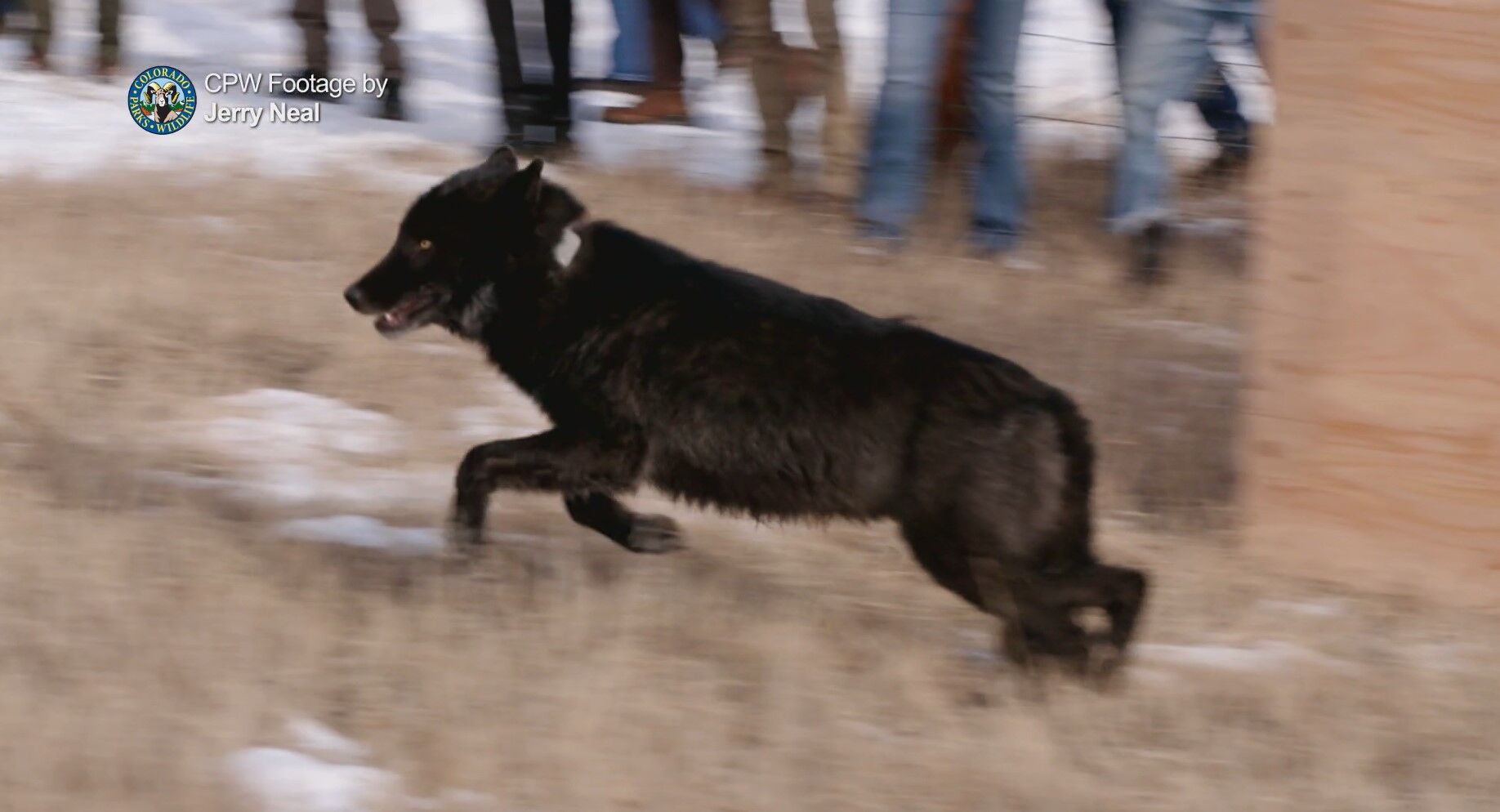
Rhonda Dern, who was charged in 2024 with illegal lobbying in favor of wolves at the state Capitol, told the commission that “the majority of Coloradans voted for wolf reintroduction in every county of Colorado.”
The 2020 ballot measure Proposition 114 passed with a 50.91% approval, almost entirely from Front Range voters. It failed to gain support in 51 out of 64 counties, including in all but four Western Slope counties.
The complaint against Dern was dismissed, although a colleague, Stephen Capra, was found to have violated the state’s lobbying laws.
Out of the 12 wolves that have died in Colorado, two were yearling wolves from the Copper Creek pack, and people have killed four. Colorado needs genetic diversity because “right now we have only a handful of wolves, and that is like mating with your brother or sister,” Dern said.
At least three ranchers from Gunnison County also signed up to testify, but the public comment period was closed before they had a chance. Gunnison County rancher and former state Rep. Kathleen Curry was next in line when they closed the public comment, she told Colorado Politics.
CPW Director Jeff Davis pleaded with the Washington commission to approve the request.
Colorado turned to Washington state after the Oct. 10 cease-and-desist letter from USFWS, which said the 10(j) rule meant Colorado could only source wolves from Idaho, Montana, Wyoming, and parts of Washington, Utah, and Oregon.
Washington’s Confederated Tribes of the Colville Nation had an agreement in 2024 to send wolves to Colorado. But they rescinded it due to concerns that Colorado Parks and Wildlife (CPW) had not done its due diligence with the Southern Ute tribe. The Southern Ute tribe favors the Mexican wolf and does not want to see the species intermingling on the reservation lands under the Brunot Treaty in Colorado.
CPW and the Southern Utes did sign a memorandum of understanding in December 2024, clarifying that the tribe would be eligible for compensation for any livestock killed by gray wolves.
A spokesman for the Colville Tribes told Colorado Politics last week they are still not willing to send wolves to Colorado from tribal lands anytime soon.
Davis spent more than 20 years in the Washington Department of Fish and Wildlife before coming to Colorado in May 2023.
Appearing remotely, he told the commission that gray wolves evoke strong emotions. When emotions are high, it can be difficult to see the unintended consequences, he said, adding, “States support each other on a regular basis in recovery efforts and source animals,” including the grouse, pronghorn and bison.
Political interventions, a nod to the U.S. Fish and Wildlife letter, “make it challenging” for agencies and commissions to support the wolf recovery, he said.
”You’ve heard the Colorado wolf program is failing. You’ve heard statements about how Colorado is shooting their wolves,” Davis told the commission “We have lethally removed one individual wolf over the first two years of the relocation efforts.”
CPW has killed two wolves, one in May in Pitkin County and another in September in Rio Blanco County, both yearlings from the Copper Creek pack. Three more died in Wyoming. Six of the 15 wolves from British Columbia have died since coming to Colorado in January; that includes one that died in southwestern Colorado last week.
Davis said the state is trying to relocate 30 to 50 wolves in three to five years, “critical to forming a solid foundational population and ensuring adequate genetics.”
Davis pointed to four breeding pairs and successful reproduction this year. He also said support for the wolf program has grown since the vote, though he did not cite any statistics.
Adding another year of relocations “will be critical to get us over the minimum number of wolves our plan calls for and increase the likelihood of breeding pairs to put us on the trajectory that our state law requires and support recovery in the Southern Rocky Mountains,” Davis said.
He also said the first two releases were in areas with abundant elk populations. He didn’t mention the dozens of livestock killed by the wolves in Grand, Jackson, Pitkin, Eagle and other counties on the Western Slope, or that the program has cost the state nearly five times the estimated cost in 2020.
Washington commissioners, however, appeared to take a dim view of the request.
Commissioner Lorna Smith said translocations are very hard on the animals. While she’d love to see wolves recovered across the Rocky Mountains, including Colorado, Washington cannot help, especially given that the wolf population in has gone down for the first time last year, she said.
“I certainly heard loud and clear” from both sides that this isn’t the time for Washington to support this, Smith said.
Commissioner Barbara Baker added it’s also not the right way to go. She noted the commission has had no input from the scientific community on the request and that the body needs more information before making a decision.
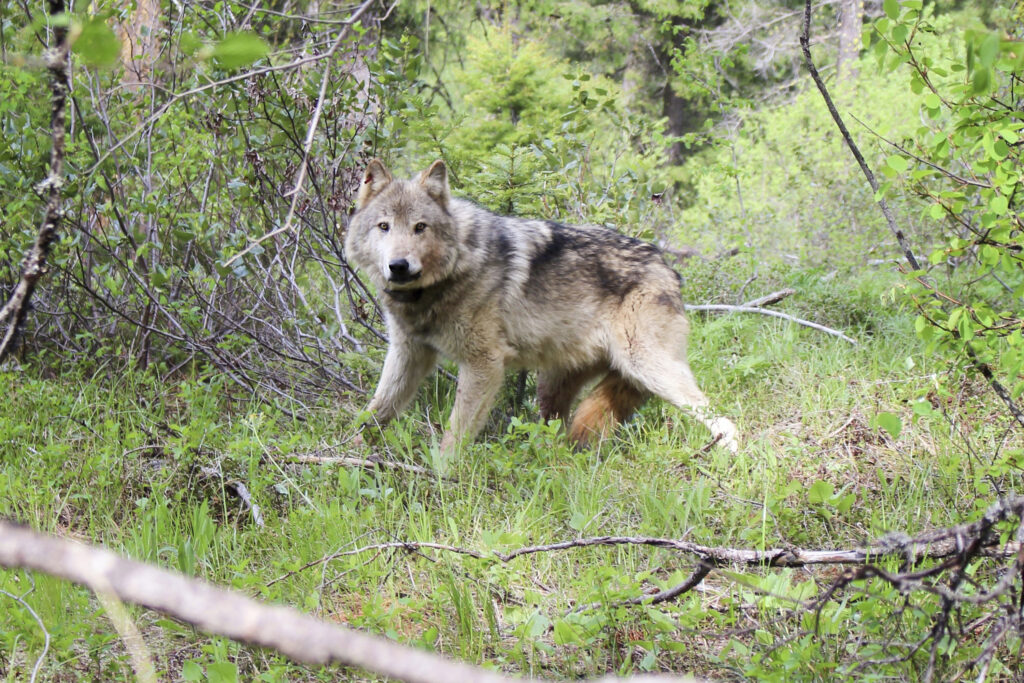
Commissioner Steve Parker cited a “beautiful level of consensus across the spectrum of our stakeholders, that there’s no support for translocating Washington wolves to Colorado.”
It isn’t good policy to remove 15 wolves from an endangered species population, added Commission Vice-Chair John Lehmkuhl. He said he did not believe the wolves should be listed as endangered, and that the state’s wolf population is robust enough that they could send wolves to Colorado.
But based on their endangered species status, he recommended the commission not pursue the request.
Commissioner Molly Linville added that she represents the wildlife in the state of Washington, “and I haven’t heard any support.” She also said the timeline for Colorado to obtain wolves is too short for any well-orchestrated project.
The timing issue also resonated with Commissioner Melanie Rowland, who added that she wanted to see the wolf program successful in Washington before moving the wolves to another state. She said she would vote “no, not now.”
Commission Chair James Anderson noted there is not a “critical mass consensus” to proceed, and said the request from Colorado, which Gov. Jared Polis sent at the end of October, didn’t give them much time to work on it.
After the vote, Curry told Colorado Politics that she, Mike Cerveny and Brad Day were in the queue when the public comments were cut off. Cerveny and Day have lost seven livestock to wolves in Pitkin County this year.
“We are very grateful that the commission did not agree to Colorado’s request. We understand they face their own challenges in Washington, and the commission put those first,” Curry said.
Gunnison County is likely the following location for wolves, although the wolves released in Pitkin County have not only already made their way to Gunnison County but also killed a calf in May, according to state officials.


JBS strike could trip up Greeley’s economic surge
Hap Fry, Special to The Gazette
hap-fry@gazette.com
Updated 3 weeks ago
GREELEY – The upward trajectory of Greeley has been hard to match by other Colorado communities in the here and now. The city is on the verge of experiencing dramatic growth and change. Greeley is in the midst of developing a...
A fight over seeds and bees: Colorado Democrats target neonicotinoid pesticides
Marianne Goodland
marianne.goodland@coloradopolitics.com
Updated 3 weeks ago
Colorado lawmakers are weighing new restrictions on a class of pesticides after Gov. Jared Polis signaled support for a Democratic-backed bill aimed at protecting pollinators — a proposal that has raised sharp worries from farmers who rely on treated seeds...

We tested vapes in Colorado for signs of hemp. This is what we found.
Christopher Osher
chris.osher@gazette.com
Updated 1 month ago
This article was produced for ProPublica’s Local Reporting Network in partnership with The Denver Gazette. Sign up for Dispatches to get our stories in your inbox every week. Leaders in the Colorado marijuana industry have complained in recent years that...

Colorado farmers warn U.S. Sen. John Hickenlooper tariffs and research cuts endanger agriculture
Marianne Goodland
marianne.goodland@coloradopolitics.com
Updated 1 month ago
Northern Colorado farmers told U.S. Sen. John Hickenlooper this week that tariffs and President Donald Trump’s decision to import $40 billion worth of beef from Argentina have hurt Colorado’s agricultural industry. But the administration’s cuts to scientific research are almost...

47th Citizen of the West: ‘Epitome of Western traditions and values’
Joanne Davidson Special to Colorado Politics
joanne-davidson-special-to-colorado-politics@coloradopolitics.com
Updated 2 months ago
The 47th Citizen of the West, George Eidsness, grew up on a farm in North Dakota where his appreciation for the Western way of life took shape as he rode horses, showed cattle in 4-H and shared in the often back-breaking chores necessary to maintain a farm. It was that hard work and a deep...

Boots ‘n Business Luncheon: ‘It’s something very special.’ | NONPROFIT REGISTER
Joanne Davidson Special to Colorado Politics
joanne-davidson-special-to-colorado-politics@coloradopolitics.com
Updated 2 months ago
DENVER METRO CHAMBER OF COMMERCE Denver News: With a capacity crowd of 1,400, a waiting list of 120 and an after-party attended by 600, it wasn’t a stretch for Denver Metro Chamber of Commerce President/CEO J.J. Ament to describe the 2026 Boots ‘n Business Luncheon as...
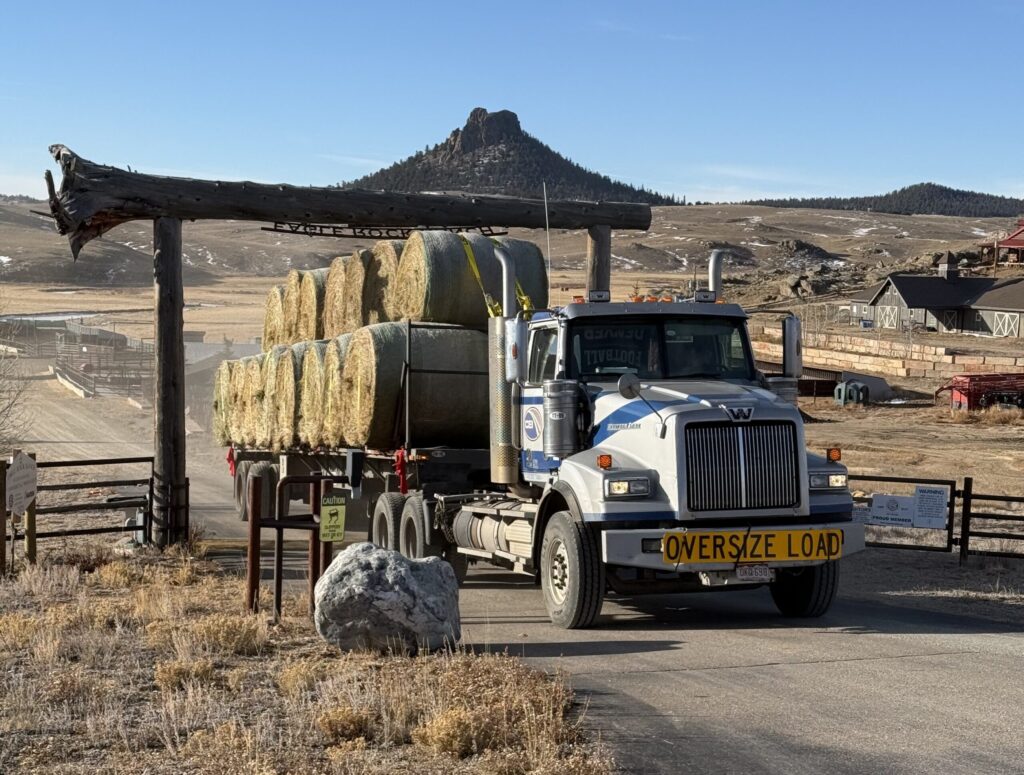
Colorado rancher donates 72,000 pounds of hay to ranchers affected by Lee fire
Jonathan Ingraham
jonathan.ingraham@denvergazette.com
Updated 3 months ago
“We’re grateful that we can be a part of it. It’s the Western way.” The Lee fire burned more than 138,000 acres of grassland used by ranchers and wildlife in northwestern Colorado in August and September, affecting the livelihoods of...

Trump administration announces $12 billion soybean aid package
RACHAEL WRIGHT Special to The Gazette
rachael-wright-special-to-the-gazette@coloradopolitics.com
Updated 3 months ago
President Donald Trump and Secretary of Agriculture Brooke Rollins announced Monday that the administration was planning to disburse a $12 billion dollar aid package as part of the Farmer Bridge Assistance (FBA) Program, to make targeted, one-time payments to crop...

Clash of the titans: Democratic race for governor pits two candidates similar in focus, but very different in style | Vince Bzdek
Vince Bzdek
vince.bzdek@gazette.com
Updated 3 months ago
By Vince Bzdek The race for governor is shaping up to be a clash of Democratic titans, U.S. Sen. Michael Bennet and Attorney General Phil Weiser. They are two of Colorado’s highest profile politicians with deep track records who...

Q&A: Colorado Chamber of Commerce CEO sees warning signs for state economy, despite strengths | FISCAL ROCKIES
Thelma Grimes
thelma.grimes@coloradopolitics.com
Updated 3 months ago
Editor’s Note: Once among the nation’s fastest-growing economies, Colorado today confronts mounting challenges that threaten its momentum. This series reveals how a state once defined by prosperity is navigating economic cliffs and ridges. We explore the impact that increased regulations, tariffs,...
PREV
PREVIOUS

Colorado Republicans call meeting to rein in chair Brita Horn, but state GOP says plans are ‘illegal’
They’re at it again. For the second time in as many years, a group of Colorado Republicans are planning to convene a meeting of the party’s state central committee despite the state GOP insisting that the proposed meeting would be “illegal” because its organizers haven’t complied with the party’s bylaws. Critics of state Republican Party […]

The significance of the State Land Board siding with the San Luis Valley | GABEL
Some members of the State Land Board don’t like the Trump administration and the decisions made about conservation, which they voiced in the monthly public meeting Nov. 13. The board could have made the mistake of making an exceptionally partisan statement, something that is certainly not in the best interest of conservation or kids. The […]