

Honor Kirk by keeping free speech free | SLOAN
I met Charlie Kirk twice, the second time over dinner, several years ago as he was still just starting out on what would become a spectacularly ascendent career in the polemical arena. I found him to be an especially bright, articulate, and ambitious young man, a deeply committed Christian with sharp instincts who left you, within moments of meeting him, with the distinct impression that he was bound for great deeds. I happened to be in Taiwan when I heard the awful news of his assassination, engaging with a people who are contending with an ever-present, looming existential threat from a Maoist regime –the threat of political violence on a mass scale, if you will. The juxtaposition struck me as poignant at the time.
We find ourselves saying, again, that political violence has no place in America, and that is true – and yet it happens. It could simply be that no political system, no matter how advanced or well-structured, is capable of fully inoculating the society it governs from the impulses towards evil that are inherent in a species corrupted by original sin. There may be some solace to be taken in the fact that in America political violence remains an anomaly, neither a regular anarchic occurrence nor the state-sponsored type which Kirk’s efforts sought to preempt. Even that realization is of little comfort to a grieving widow far too young to bear that somber title, and her newly fatherless children.
There have, of course, been other high-profile acts of political or politically-tinged violence take place recently, but this one feels different; unlike, say, the deeply mentally troubled individuals who killed Minnesota House Speaker Melissa Hortman and her husband, or attacked Nancy Pelosi’s husband, or sought to assassinate Donald Trump in Pennsylvania, this was not some madman with tenuous ties to reality whose dog instructed him to kill. This was a cold, calculated act of ideological vengeance, committed on a person simply for the sin of publicly holding a contrary opinion.
There are a number of ironies simmering in the coals of this tragedy. The first is that Kirk made his living from openly debating ideas, thriving on the cut-and-thrust of political discourse. Deeply informed, consistently well-prepared – with the added benefit of natural talent for the discursive arts – his intellectual quiver was always full: he was, quite simply, good at it. And that is precisely what got him killed. A bullet to put an end to the debate, in place of reasoned argument.
Then there is the fact that this took place on a university campus, an institution which once upon a time was intended to be a repository of ideas and an arena for arguing them. Kirk did not possess a college degree, a fact he was quite proud of, and yet was highly educated in any meaningful sense of the word. He was seemingly comfortable on college grounds – often considered hostile territory for conservatives – introducing contrary arguments into ideological echo-chambers, and thus fulfilling in a small way the role universities ought to have been fulfilling, before they reduced themselves to their current dulled state.
And finally, it does not go unnoticed that the murder took place on the eve of the anniversary of the 9-11 attacks, the largest single act of political violence in American history. That was also the last time the American people came together with a near universal sense of national purpose, united in grief, anger and resolve. Though born of tragedy, it was a beautiful twenty minutes.
The rhetorical noise peripheral to the assassination has spurred an examination of free speech. Reactions to Kirk’s murder have been mostly appropriate, but not universally so, prompting a variety of consequences. It is important those consequences remain within the realm and purview of private action, and not given official sanction backed by the force of law. Attorney General Pam Bondi has flirted with the concept of policing “hate speech”, a concept absolutely antithetical to that of freedom of speech. A reinvigoration of self-discipline and a revival of a societal moral code and attendant sense of decency – in place of government strictures – would seem to be in order, and long overdue.
There is, of course, the nagging threat persisting in the darker corners of a sort of eye-for-an-eye retaliatory action from the right. This risk cannot be discounted. Some elements of the American right have a disappointing history of taking the bait, as it were. Following the summer of political violence from the left in 2020, which left monuments desecrated, windows boarded up or smashed, and large swaths of some urban centers virtually unlivable, the right held a dominant position on the moral high ground. That was effectively squandered on January 6, 2021. A similar retributive act would be an aggravation of what is already a national tragedy, and serve only to delegitimize the legacy of Charlie Kirk, a legacy of informed, intelligent debate which this country is in desperate need of embracing.

Yet again, when rights are in conflict | Hal Bidlack
Hal Bidlack
hal-bidlack@coloradopolitics.com
Updated 9 hours ago
I admit, it is going to take quite a bit of self-control to not have this entire column end up being yet another screed about a certain president who continues to shock the world in his race to the bottom...
Turn blueprint into action with the Outdoors Opportunities Act | OPINION
Kent Thiry
kent-thiry@gazette.com
Updated 8 hours ago
Nearly a year has passed since Gov. Jared Polis, Colorado Parks and Wildlife, the Colorado Department of Natural Resources, Colorado’s Outdoor Recreation Industry Office and other key partners finalized the visionary Colorado Outdoor Strategy, establishing the framework to ensure Colorado’s...
Let Colorado’s communities govern their own neighborhoods | OPINION
Colorado Politics
colorado-politics@coloradopolitics.com
Updated 9 hours ago
By Jeff Bailey and Cindy Bailey Coloradans have always done things their own way. From how we manage our land to how we build our economies, the instinct to govern locally — to trust mayors, councils and commissioners over distant...
Colorado legislators propose $46.8 billion budget, driven by Medicaid costs
Marianne Goodland
marianne.goodland@coloradopolitics.com
Updated 15 hours ago
The six-member panel of legislators in charge of crafting the state budget has now turned over its plan to the Colorado legislature, proposing to spend $1.5 billion more for the Medicaid program. The increase is driven by Medicaid costs, which...

Governor signs bill expanding who can petition for weapons restrictions
Marissa Ventrelli
marissa.ventrelli@coloradopolitics.com
Updated 15 hours ago
Gov. Jared Polis on Monday signed a bill into law expanding who can ask a judge to temporarily restrict a person’s access to firearms. Established in 2019, 0Colorado’s extreme risk protection law (ERPO) initially allowed a family member or law...
As Colorado passes 6 million residents, housing initiatives take center stage
Marianne Goodland
marianne.goodland@coloradopolitics.com
Updated 16 hours ago
New Census data confirming Colorado’s population has topped six million is fueling renewed debate over Gov. Jared Polis’ housing agenda, as he tied the population increases to home construction. The governor said the counties experiencing the largest increases in new...
Bill to accelerate police access to online data clears Colorado committee
Marissa Ventrelli
marissa.ventrelli@coloradopolitics.com
Updated 14 hours ago
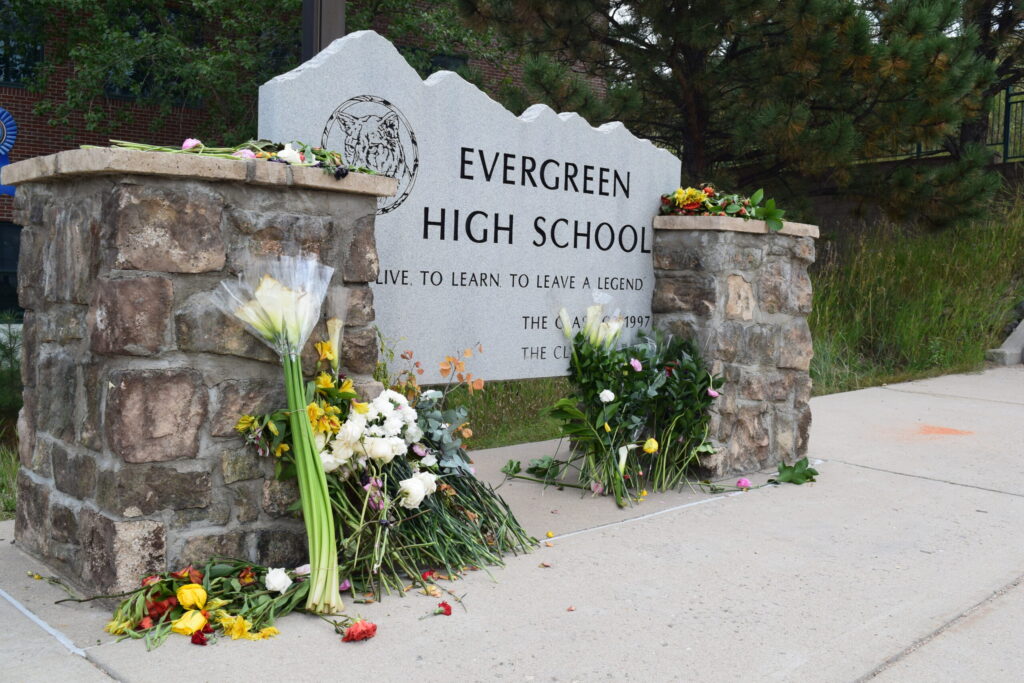
A proposal to speed up law enforcement’s access to social media data is advancing in the Colorado Legislature, drawing testimony from the residents of Evergreen, where a school shooting took place, and questions from opponents worried about privacy and constitutional...
Threats inside and out loom for Colorado’s Republicans | Dick Wadhams
Dick Wadhams
dick-wadhams@coloradopolitics.com
Updated 2 days ago
Colorado Republicans made strides in 2024 despite an insidious state chairman who tried to defeat successful Republican candidates. Newly elected U.S. Reps. Gabe Evans, Jeff Hurd and Jeff Crank fought off unethical opposition from their own state party chairman, making...

Is it time for both parties to bail on Colorado’s political nominating system? | Miller Hudson
Miller Hudson
miller-hudson@coloradopolitics.com
Updated 2 days ago
Cracks are beginning to appear in Colorado’s political nominating system. Recently, Mario Nicolais, a formerly Republican-leaning pundit, and Doug Friednash, former Democratic legislator, have opined regarding the imminent demise of the caucus/assembly framework which controls partisan candidate selection. There has...
Recognizing the value of generational work | Rachel Gabel
Rachel Gabel
rachel-gabel@coloradopolitics.com
Updated 2 days ago
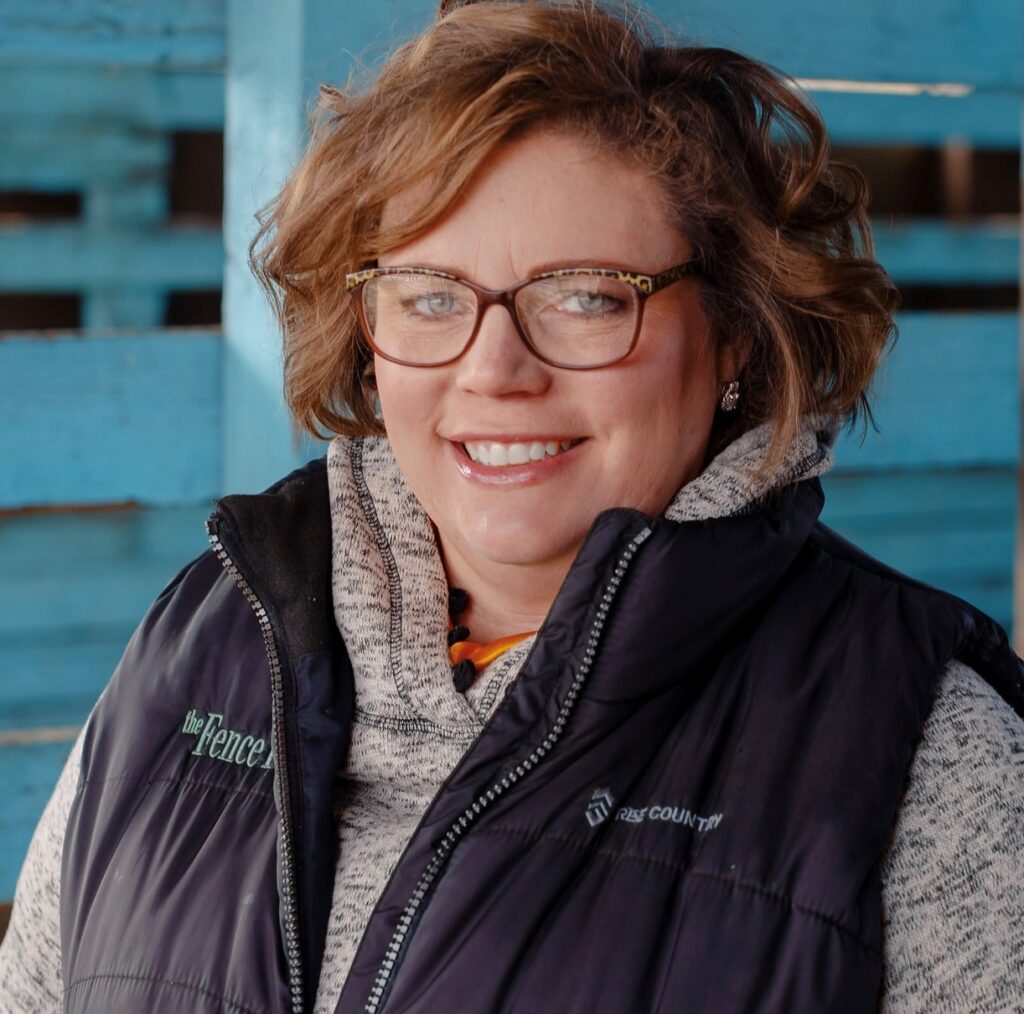
The Lesser Prairie Chicken habitat in southeastern Colorado is a swath of prairie that begins in Cheyenne and far-southeastern Lincoln counties and moves south and east into Kiowa, Prowers and Baca counties. This is cattle country where the short grass...
PREV
PREVIOUS
Adams 14 takes on tall odds to serve its kids | NOONAN
Adams County 14 School District has been the little dog in a fight with big dogs for over a decade. It has 5200 plus students in a district with Suncor Oil and Gas Refinery as its oversized neighbor. It’s in the middle of a school board election that may determine whether the district maintains its […]
Colorado House Republicans to choose new minority leader Saturday
On Saturday, the Colorado House Republican caucus will select a new minority leader to replace former Rep. Rose Pugliese of Colorado Springs, who resigned on Sept. 15. To date, two candidates have announced their intention to seek the top post. However, current House Assistant Minority Leader Ty Winter of Trinidad did not throw his hat […]