

Colorado Springs’ officials celebrate growth but downtown missing ‘holy grail’

Neighborhoodification. Yes, it’s a word.
At least in the dictionaries owned by the Downtown Partnership and those who have spurred other downtown revitalization projects.
And it is at the core of how downtown is evolving as various projects are completed, housing units opened and new residents moved in, speakers at the 28th Annual Downtown Partnership Breakfast said Friday. The event was held at Colorado College’s Ed Robson Arena on the Colorado College Campus.
But there’s more work to be done, and certain services like a grocery store are still needed for downtown to be a resilient neighborhood.
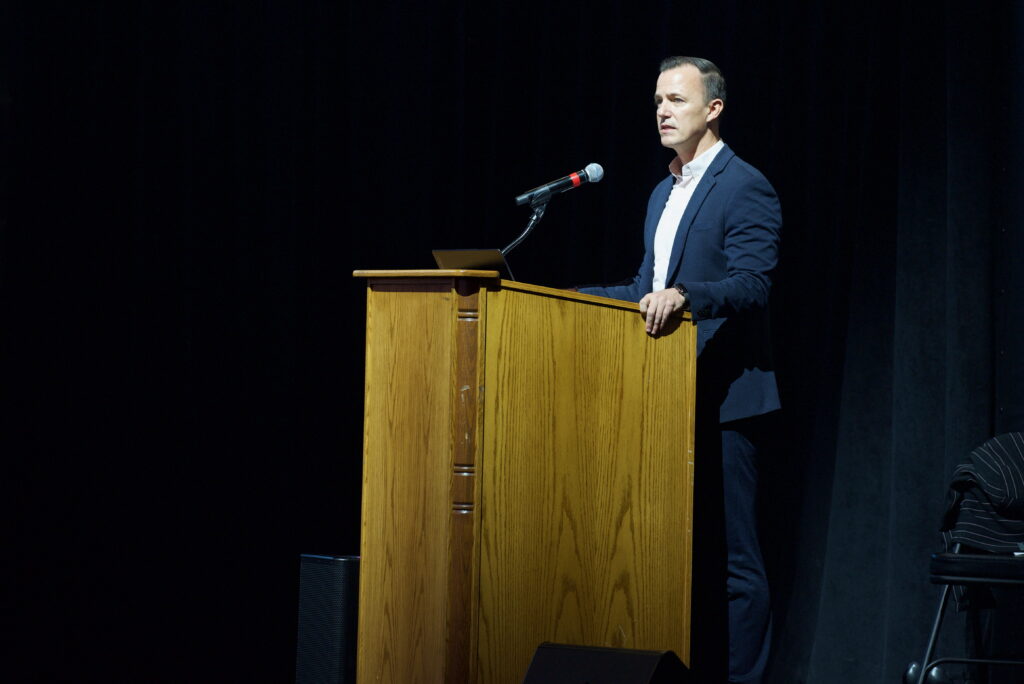
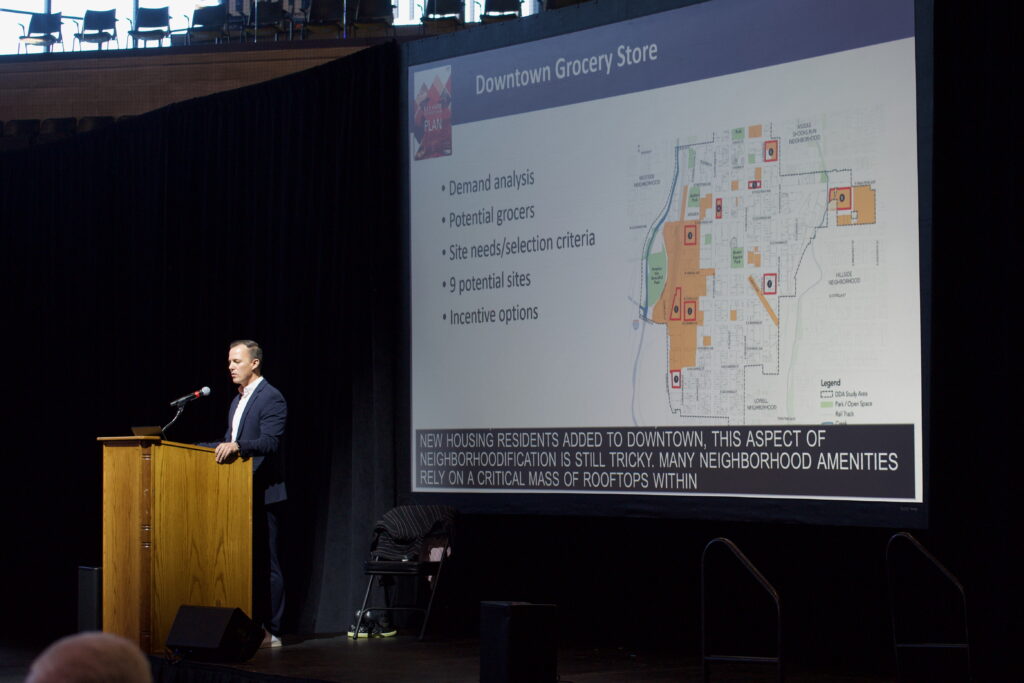
“We also need to think about where downtown residents will go to school, where they send their pups for doggy daycare, send a package or return a package, exercise, play sports, meet as a neighborhood and more,” said Jay Renkins, with the urban planning and consulting firm MIG Inc. “Even with all of the new housing and residents being added to downtown, this form or aspect of neighborhoodification is still tricky.”
Some progress has been made on those fronts, especially recently. A new early education center for preschoolers broke ground at 415 S. Sahwatch St., in August. And renovations at Palmer High School began in June.
But that progress has to be sustained, he said. City leadership cannot rest on its laurels if they want Colorado Springs to weather storms that will inevitably blow into town.
“A potential struggle is saying, ‘We’ve got 5,000 new housing units,’ and just stopping there,” he said after the event. “ I’m not suggesting Colorado Springs should only be residential… You need to diversify. That allows you to withstand economic downturns and swings.”
Downtown Colorado Springs was an interesting case in that it started with a strong commercial district and only a fledgling residential presence, he said. Residential development before 2014 mainly focused on rehabilitating buildings or converting spaces above businesses.
That largely changed when ground broke on Blue Dot Place in 2014. The 33-unit apartment building opened in 2016, kickstarting a veritable apartment building frenzy.
Since Blue Dot Place opened, more than 3,000 new units have opened in the downtown area.
“Today’s downtown residential population is sitting around 5,000 people. Once these new units are fully occupied, we anticipate nearly 8,000 residents,” said Downtown Partnership Chair Jenifer Furda. “This will be transformative for downtown, providing for the long-term economic success of locally owned restaurants, bars and retail shops.”
People need services. And one, which Renkens referred to as the “holy grail” of a neighborhood, is missing for much of downtown and some surrounding areas.
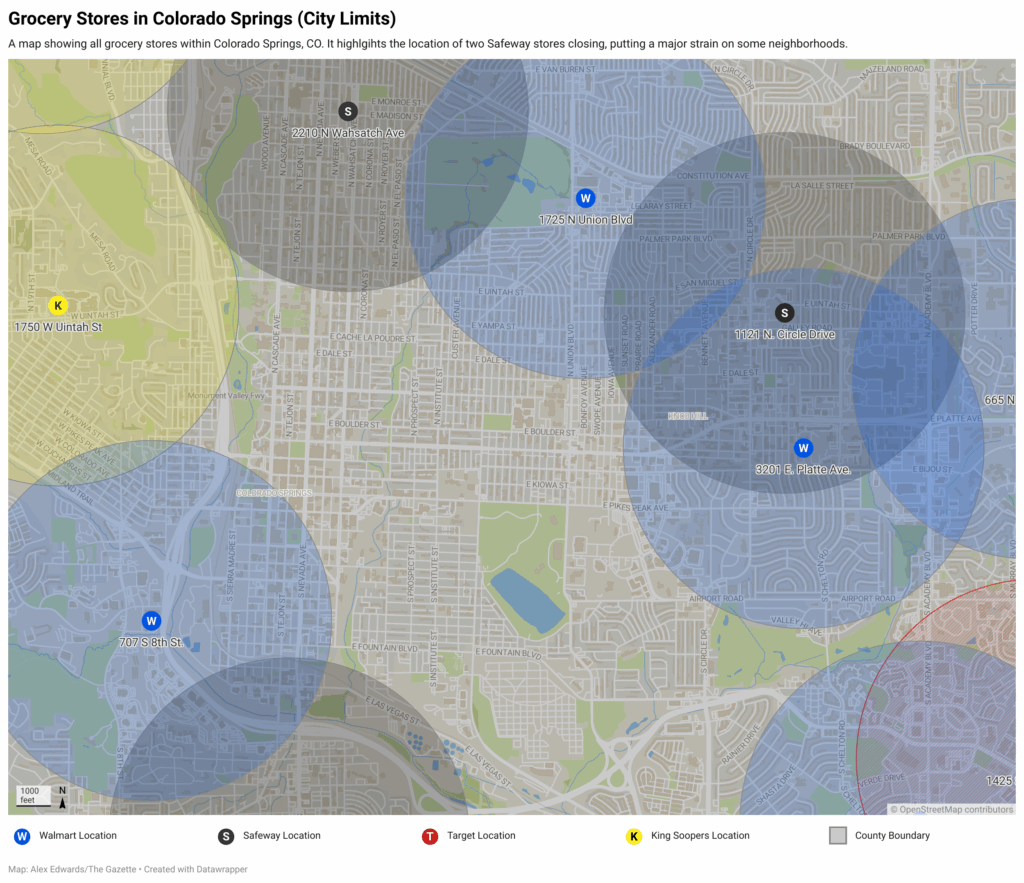
Easy access to a grocery store is hard to come by for most in downtown. Residents often find themselves more than one mile from the nearest location.
The Food and Drug Administration calls this a food desert.
The lack of a grocery store downtown has been a chief concern for Gazette readers, previous coverage shows. There is an option in Bread and Butter, which opened in 2020, but even then, a significant portion of the city core is more than one mile from the nearest option.
In addition to a grocery store, neighborhoodification requires thoughtful investments in all aspects of living, said Renkens.
But Colorado Springs appears willing and poised to continue navigating that tricky path. Since 2013, the city has completed just under $1.3 billion worth of investments in downtown, according to the latest state of downtown report. There’s more than $400 million in ongoing investments and almost $800 million in announced spending from public and private sources.
“The neighborhoodification of downtown requires more housing, more amenities and more people,” Renkens said. “By focusing on all of the ingredients of neighborhoodification, downtown Colorado Springs will be one of the most livable downtown neighborhoods in the country.”


As AI advances, are the accompanying AI advances for the better? | Miller Hudson
Miller Hudson
miller-hudson@coloradopolitics.com
Updated 4 hours ago
You may have noted Elon Musk was in court suing Sam Altman of OpenAI. If you were praying there was a way both of these greed bros could lose, you nearly got your wish. Emails exchanged between the parties reflect...

Department of Revenue issues draft guidance on semi-automatic firearms ahead of 2025 law’s implementation
Marissa Ventrelli
marissa.ventrelli@coloradopolitics.com
Updated 2 days ago
The Colorado Department of Revenue has issued a draft of its “specified semi-automatic firearms guidance,” as required by a 2025 law that goes into effect on August 1 of this year. Last legislative session, lawmakers passed Senate Bill 003, which...
Tapped: Douglas County looks to diversify water supply as population grows
Nicholas Fogleman
nicholas.fogleman@denvergazette.com
Updated 1 day ago
Tapped: The Denver metro region sits at the center of one of the American West’s most complex and consequential water challenges. This series examines the interconnected systems that determine how the region secures, stores, and conserves its water — while...
Tapped: Built to stand alone, Westminster’s water system confronts historic dryness
Sage Kelley
sage.kelley@denvergazette.com
Updated 21 hours ago
Editor’s note: The Denver metro region sits at the center of one of the American West’s most complex and consequential water challenges. This series examines the interconnected systems that determine how the region secures, stores, and conserves its water —...
Tapped: Built to stand alone, Westminster’s water system confronts historic dryness
Sage Kelley
sage.kelley@denvergazette.com
Updated 21 hours ago
Editor’s note: The Denver metro region sits at the center of one of the American West’s most complex and consequential water challenges. This series examines the interconnected systems that determine how the region secures, stores, and conserves its water —...
Tapped: Built to stand alone, Westminster’s water system confronts historic dryness
The Denver Gazette
the-denver-gazette@coloradopolitics.com
Updated 21 hours ago
Tapped: The Denver metro region sits at the center of one of the American West’s most complex and consequential water challenges. This series examines the interconnected systems that determine how the region secures, stores, and conserves its water — while...
Tapped: Built to stand alone, Westminster’s water system confronts historic dryness
The Denver Gazette
the-denver-gazette@coloradopolitics.com
Updated 21 hours ago
Tapped: The Denver metro region sits at the center of one of the American West’s most complex and consequential water challenges. This series examines the interconnected systems that determine how the region secures, stores, and conserves its water — while...
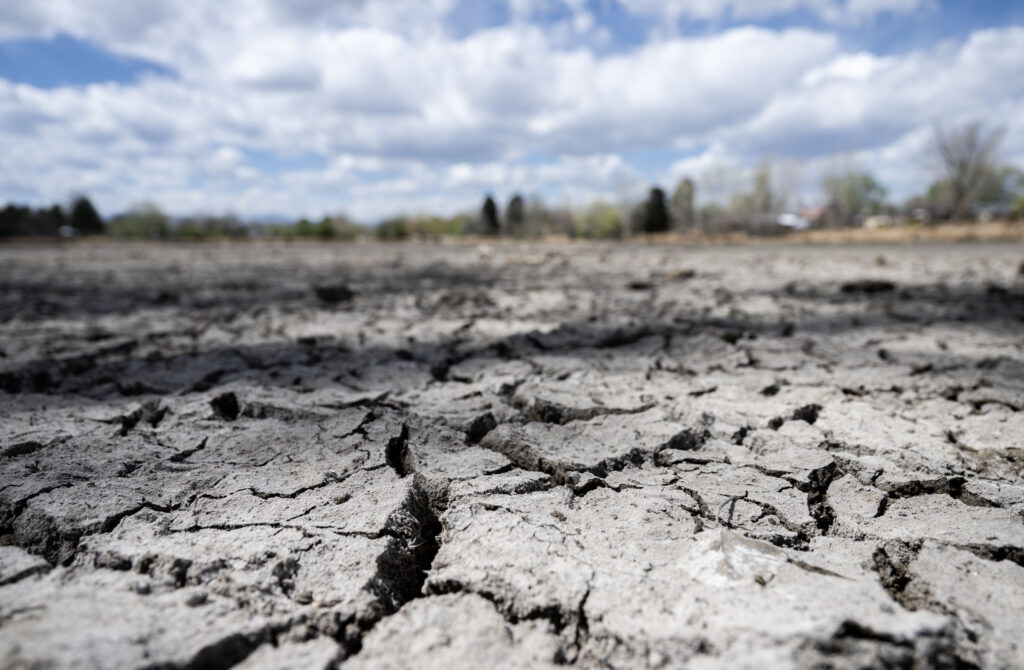
Tapped: Front Range residents face higher water rates, restrictions as rapid snowmelt threatens supplies
Kyla Pearce
kyla.pearce@gazette.com
Updated 11 hours ago
Editor’s Note: The Denver metro region sits at the center of one of the American West’s most complex and consequential water challenges. This series examines the interconnected systems that determine how the region secures, stores, and conserves its water while...
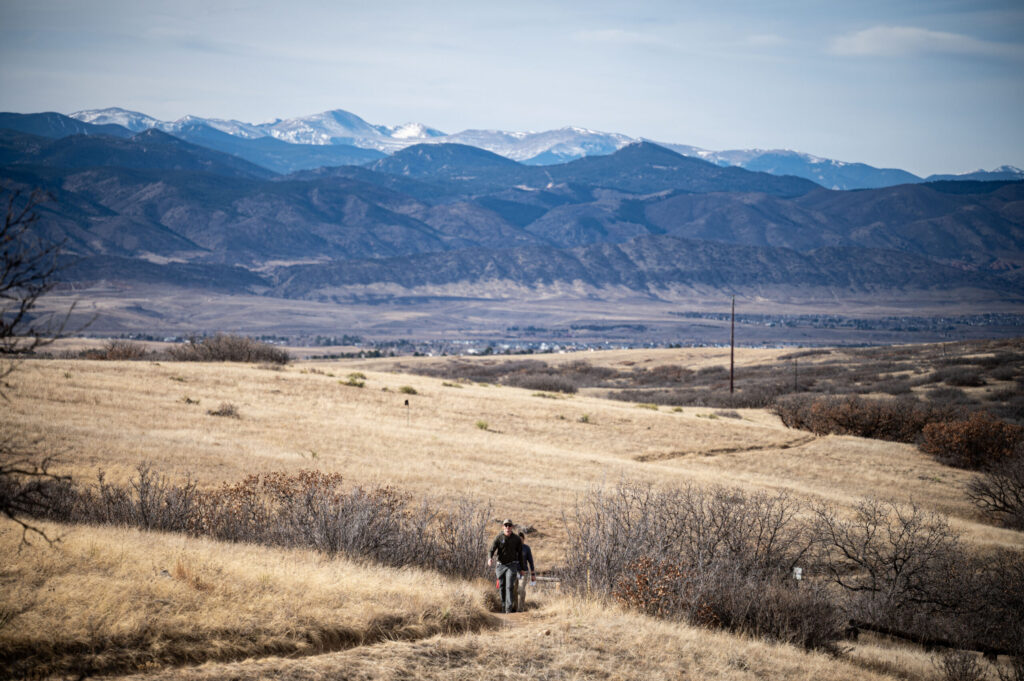
Tapped: With growth tapped out, Highlands Ranch turns to cutting demand
Nicholas Fogleman
nicholas.fogleman@denvergazette.com
Updated 1 day ago
Tapped: The Denver metro region sits at the center of one of the American West’s most complex and consequential water challenges. This series examines the interconnected systems that determine how the region secures, stores, and conserves its water while navigating...
Tapped: Castle Rock working to reduce per-capita water use
Nicholas Fogleman
nicholas.fogleman@denvergazette.com
Updated 1 day ago
Tapped: The Denver metro region sits at the center of one of the American West’s most complex and consequential water challenges. This series examines the interconnected systems that determine how the region secures, stores, and conserves its water while navigating...