

Tapped: With growth tapped out, Highlands Ranch turns to cutting demand
Editor’s Note: The Denver metro region sits at the center of one of the American West’s most complex and consequential water challenges. This series examines the interconnected systems that determine how the region secures, stores, and conserves its water while navigating the competing demands of fast‑growing urban communities and the increasingly unpredictable mountain snowpack that underpins the entire system.

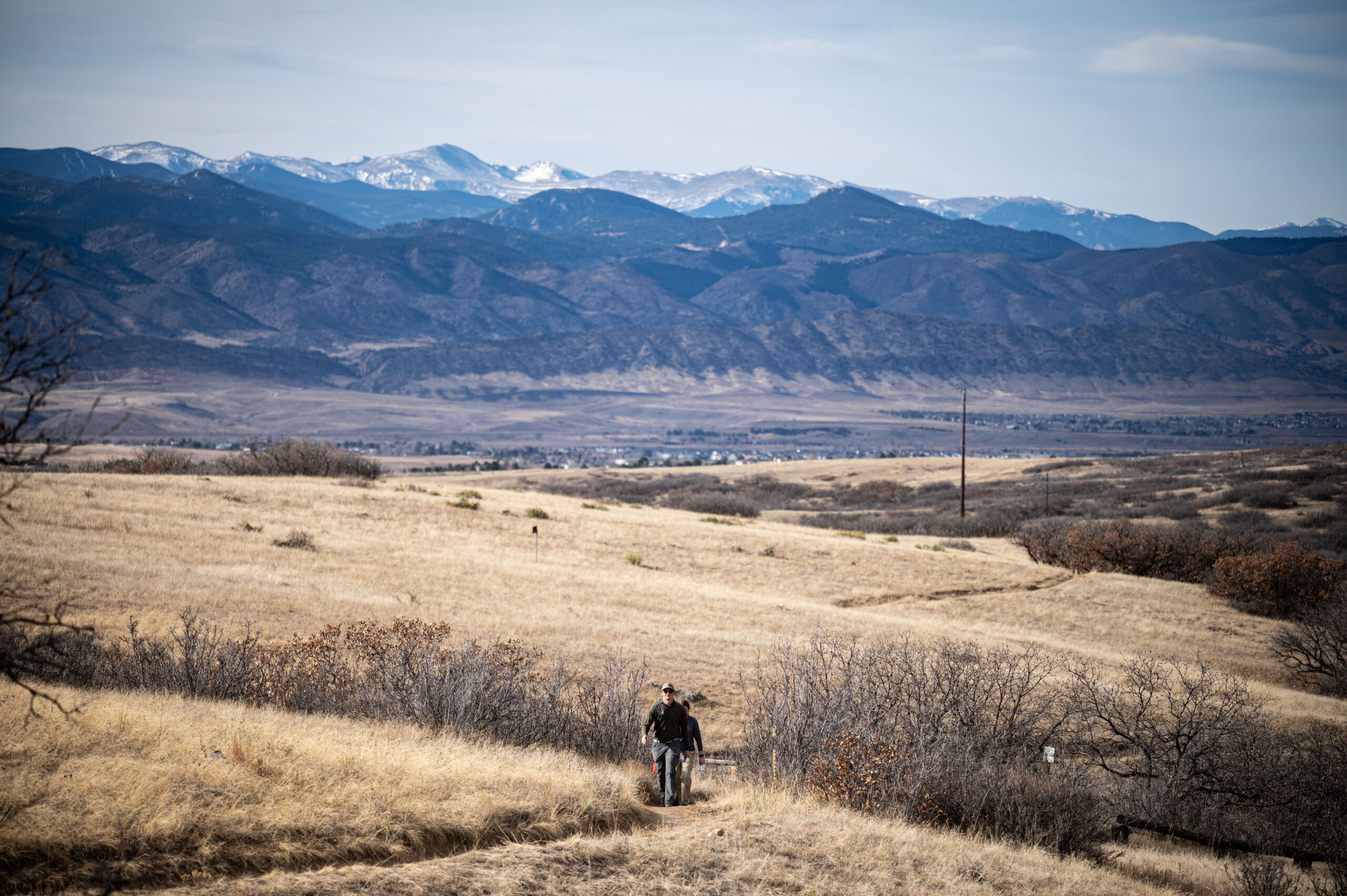
In a community that’s no longer growing outward but facing a hotter, drier future, Highlands Ranch Water is turning to deep conservation measures to stretch its supplies and steady a system shaped by population demand and warmer temperatures.
“Research shows that it’s going to get hotter and drier, and we’re going to continue to have conditions where the water supply is not great, and we have to be ready to deal with that,” said Sam Calkins, general manager for Highlands Ranch Water.
Calkins said drought planning and conservation have been long-standing priorities. Following the 2002 drought, the district implemented water budgets that cut usage by about 20%. Even as the population doubled, total water use increased by only about 50%.
“Over time, those water budgets allowed water use to increase by about 50% while our population doubled,” Calkins said.
Like other providers in Douglas County, Highlands Ranch Water relies on nonrenewable deep aquifers and renewable surface water from rivers.
On average, 85% of the community’s water comes from surface water, sourced from the South Platte River and the WISE partnership, annually, with groundwater used primarily as a backup supply. HRW captures approximately half of that surface water supply for reuse.
“When we release water into the South Platte River, we can either pull it out of the South Platte with our alluvial wells or exchange it in Chatfield Reservoir,” Calkins said. “That reuse is critical to us.”
In addition to seeking additional water rights, storage expansion and source diversity, HRW is pushing toward conservation as a means toward sustainability. In the largely residential development, outdoor irrigation accounts for about 49% of consumption, representing the largest opportunity for reductions.
“That’s people keeping their lawns green. We think that we can get a 20% reduction in outdoor watering just through conservation efforts relatively easily,” Calkins said.
To support those reductions, the district offers incentives, including turf replacement, smart irrigation controllers, high‑efficiency sprinkler nozzles, rain sensors, and rebates for water‑efficient fixtures
The water authority’s goal is to reduce the total water demand between 5% and 10%
“The current outlook is certainly driving us towards the need for more water supply and investments, but the bigger focus for us is on conservation,” Calkins said. “Through conservation, I’m confident we can really make the supplies we do have last a lot longer and meet our future needs.”
Highlands Ranch Water’s long-term plan focuses on increasing storage opportunities to capitalize on wetter years. During the summer, user demand can reach 35 million gallons a day. In conditions like those the region is currently facing, Calkins said the district will still be able to use groundwater from aquifers.
“You don’t want to have a system that’s forever reliant on groundwater because it’s a finite resource,” Calkins said. “But if you manage it strategically in years when there’s not a lot of natural stream flow, you can supplement your water supplies with groundwater, and use it sparingly as needed.”
The water authority is currently increasing the capacity of its surface water treatment plant, which will be able to meet HRW’s total demand when water is available by 2030.
“A huge part of being able to weather these dry years is having sufficient storage. You can fill it up in wet years and then use it slowly over time,” Calkins said.
Additionally, HRW is part of an aquifer storage and recovery program that involves injecting treated surface water into deep aquifers, thereby reducing net groundwater withdrawal. Highlands Ranch has, to date, injected more than 15,000 acre-feet of water into 25 wells, replacing a portion of the groundwater that has been withdrawn.
While the district is currently under drought stage one status, restricting outdoor irrigation, it has a plan for drought conditions, including potential special drought rates.
Calkins said that, even with the current water supply outlook, given current usage in Highlands Ranch, he expects the district can still meet future demand through conservation.
“In the worst case, we could exist on half the water that we have now if nobody watered any grass, at least in Highlands Ranch,” Calkins said. “If you look at the worst-case scenario, we survive without green grass.”
Read more from the Tapped series here:
Tapped: As fire risk climbs, Colorado faces threat to drinking water
Tapped: Denver residents face hotter, costlier summer under new drought rules
Tapped: Is water a problem for data centers in Colorado?
Tapped: Aurora cracks down on water use as reservoirs fall, runoff shrinks
Tapped: Douglas County looks to diversify water supply as population grows
Tapped: Colorado River overallocation collides with record drought conditions
Tapped: Golden tightens water rules as Clear Creek snowpack falters
Tapped: As snowpack levels shrink, Jefferson County cities take divergent paths on water
Tapped: Colorado River overallocation collides with record drought conditions
Tapped: Parker makes strides toward renewable supply


Healthcare Freefall: Longer drives, fewer options for maternity care in Colorado
Thelma Grimes
thelma.grimes@coloradopolitics.com
Updated 18 hours ago
Editor’s Note: Colorado’s healthcare system is entering a period of accelerating instability — a “tsunami,” as multiple leaders describe it — driven by collapsing hospital finances, shrinking Medicaid reimbursements, disappearing services and a political fight over who is responsible for...
Polis requests federal disaster declaration for Colorado wildfires and floods
9News
9news@coloradopolitics.com
Updated 12 hours ago
On Sunday, Gov. Jared Polis officially requested a Major Disaster Declaration from President Donald Trump and the Federal Emergency Management Agency to support recovery from two wildfires and the subsequent flooding and debris flows on both burn scars. Polis requested a declaration...

Operation Foster helps ensure troops can return home to their pets
Mary Shinn
mary-shinn@coloradopolitics.com
Updated 19 hours ago
As more troops have been sent overseas, more pets are in need of temporary care while they await their owner’s return home. Operation Foster, a nationwide nonprofit, helps provide some of that care by connecting service members with volunteers willing...
Operation Foster helps ensure troops can return home to their pets
Mary Shinn
mary-shinn@coloradopolitics.com
Updated 19 hours ago
As more troops have been sent overseas, more pets are in need of temporary care while they await their owner’s return home. Operation Foster, a nationwide nonprofit, helps provide some of that care by connecting service members with volunteers willing...
Castle Pines to hear annexation policy following moratorium on new requests
Nicholas Fogleman
nicholas.fogleman@denvergazette.com
Updated 19 hours ago
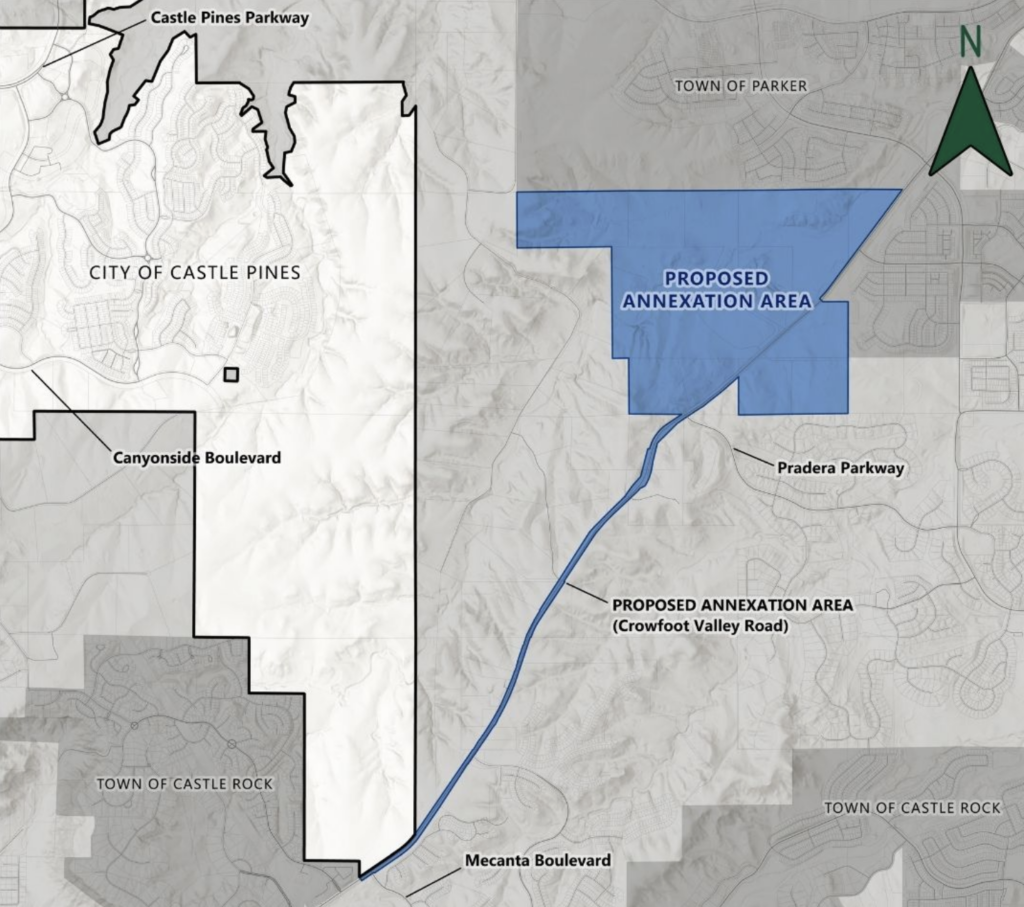
The Castle Pines City Council is set to consider a proposed annexation policy Tuesday that would establish the city’s first formal framework for reviewing future annexation requests. The policy emerged after the Crowsnest annexation proposal prompted significant public debate and...

Aurora lawmakers to discuss first of new data center regulations
Kyla Pearce
kyla.pearce@gazette.com
Updated 19 hours ago
Aurora’s lawmakers will discuss the specifics of data center regulations Monday night, specifically focusing on an evaporative cooling ban and zoning changes. At the last council meeting, council members approved a resolution directing city management to update data center development...

Why local police departments are left to grapple with electric vehicle trends
Nicholas Fogleman
nicholas.fogleman@denvergazette.com
Updated 19 hours ago
Littleton officials are weighing new regulations for electric bicycles as cities and counties across the metro Denver area increasingly grapple with safety concerns involving e-bikes, electric motorcycles and other motorized vehicles that often fall into gray areas of Colorado law....

Colorado schools reopen with measles vaccination rates below protective threshold
Nico Brambila
nico.brambila@denvergazette.com
Updated 19 hours ago
Colorado is entering the new school year without active measles transmission, but health officials remain concerned as kindergarten MMR coverage sits at just 87.8% and most counties fall below the 95% threshold considered protective against outbreaks. “These declining vaccination rates,...

Jeffco Public Schools board votes to put $133M mill levy override before voters
Matt Kyle
matt.kyle@denvergazette.com
Updated 19 hours ago
Voters in Jefferson County will decide this November whether or not to approve a $133 million mill-levy override that Jeffco Public Schools officials say is needed to cover funding shortfalls in the district. The Jeffco Public Schools Board of Education...

Democratic candidate in Colorado’s 4th CD urges long-term water planning
Marianne Goodland
marianne.goodland@coloradopolitics.com
Updated 2 days ago
The Democrat hoping to become the next representative of Colorado’s 4th Congressional District on Thursday made her case on the final day of Colorado Water Congress in Steamboat Springs. Eileen Laubacher, who spent 34 years in the U.S. Navy and...
PREV
PREVIOUS

Tapped: Castle Rock working to reduce per-capita water use
Editor’s Note: The Denver metro region sits at the center of one of the American West’s most complex and consequential water challenges. This series examines the interconnected systems that determine how the region secures, stores, and conserves its water while navigating the competing demands of fast‑growing urban communities and the increasingly unpredictable mountain snowpack that […]
Tapped: Front Range residents face higher water rates, restrictions as rapid snowmelt threatens supplies
Editor’s Note: The Denver metro region sits at the center of one of the American West’s most complex and consequential water challenges. This series examines the interconnected systems that determine how the region secures, stores, and conserves its water while navigating the competing demands of fast‑growing urban communities and the increasingly unpredictable mountain snowpack that […]