

Tri-State electric co-op seeks FERC approval for new heavy-load regulations
In a bid to tame the energy appetites of large power users, Tri-State Generation and Transmission Association filed a regulatory tariff proposal with the Federal Energy Regulatory Commission intended to manage massive power demands without sparking chaos on the grid or hiking bills for ratepayers.
The nonprofit wholesale power supplier, serving 42 member cooperatives across Colorado, Nebraska, New Mexico, and Wyoming, designed the High Impact Load Tariff and Agreement to create a streamlined process for onboarding large power users. It regulates load projected to exceed 45 megawatts within four years like server farms for AI and cloud operations.
“We’re in the business of providing electricity, and we are committed to doing it in a way that can meet the needs both of new loads and Tri-State members,” said Lisa Tiffin, Tri-State’s senior vice president of energy management in a news release. “This approach allows us to grow responsibly and limits the potential for stranded assets that could result in financial risk to Tri-State and our members.”
Energy use by server farms can be hard to predict and FERC has issued warnings that grid stability could be at risk if sufficient stable full-time generation capacity doesn’t remain available 24/7 during the expansion of large-scale electrical loads.
The filing with FERC, rather than the Colorado Public Utilities Commission, stems from Tri-State’s intentional change to its regulatory framework in 2020. Prior to 2020, the cooperative fell under partial oversight by four state regulators, including the Colorado Public Utilities Commission.
Tri-State’s board in 2019 voted to add non-utility members, a deliberate step to invoke exclusive FERC jurisdiction under the Federal Power Act. FERC confirmed the shift in regulatory authority in 2020, preempting state PUCs to enable uniform interstate regulation and avoid fragmented, multi-state compliance burdens.
The proposal requires security payments to shield against fiscal risks, enforces minimum contract commitments, and sets baseline monthly fees for demand and energy usage. The requirements are intend to avoid “stranded assets,” where expensive infrastructure gets built only to gather dust if big users bail early or don’t show up after transmission and other infrastructure have been built, leaving rural ratepayers footing the bill.
Tri-State engaged in months of workshops that included Tri-State’s board, staff, members, developers, and prospective clients in discussions on reliability, affordability for heartland communities, and sustainable growth in an era of state-imposed electrification mandates, according to the release.
Founded in 1952, Tri-State powers about 1 million end-users via coal, natural gas, renewables and market purchases, all while integrating environmental protection with emission cuts and clean energy goals.
Data centers could devour up to 9% of U.S. electricity by 2030, per industry forecasts, fueling similar policies in tech-hotspots like Virginia.
FERC’s review, which invites public feedback and may stretch months, could blueprint how cooperatives nationwide juggle industrial surges.


Colorado to get $75 million from opioid settlement with Purdue Pharma
Marissa Ventrelli
marissa.ventrelli@coloradopolitics.com
Updated 47 minutes ago
A $7.4 billion settlement reached with the pharmaceutical company Purdue Pharma and the Sackler family — its owners — is now legally effective a decade after attorneys general from multiple states launched an investigation and seven years after Colorado filed...

Committee approves reworked version of previously vetoed rideshare bill
Marissa Ventrelli
marissa.ventrelli@coloradopolitics.com
Updated 4 hours ago
Members of the Colorado House Business Affairs and Labor Committee voted across party lines to pass a modified version of a bill establishing regulations on rideshare companies. Last year, Reps. Jenny Willford, D-Northglenn, and Meg Froelich, D-Englewood, introduced House Bill...
Fight over credit card ‘swipe fees’ attracts nearly 200 lobbyists in Colorado
Marianne Goodland
marianne.goodland@coloradopolitics.com
Updated 60 minutes ago
One of the most expensive fights of the 2026 session got a little closer to being over on Friday, when the Colorado Senate took a second final vote on the proposal to eliminate “swipe fees” on sales taxes. It’s not...

Veto likely as union-backed bill heads to Colorado governor’s desk — again
Marissa Ventrelli
marissa.ventrelli@coloradopolitics.com
Updated 1 hour ago
For the second year in a row, a bill that would make it easier for labor organizations to impose fees on all workers, regardless of union membership, is headed for Gov. Jared Polis’ desk. The governor, who vetoed the legislation...

Aurora mental health nonprofit cuts 100-plus jobs after Colorado agency reduces reimbursement rate
Marianne Goodland
marianne.goodland@coloradopolitics.com
Updated 8 hours ago
A nonprofit that provides services through 11 mental health centers in Aurora announced Thursday that it is eliminating 111 jobs effective June 30, the result of federal and state budget reductions. Aurora Mental Health & Recovery said the positions being...
Denver law students create AI-powered tools in federal judge’s ‘design sprint’
Michael Karlik
michael.karlik@coloradopolitics.com
Updated 11 hours ago
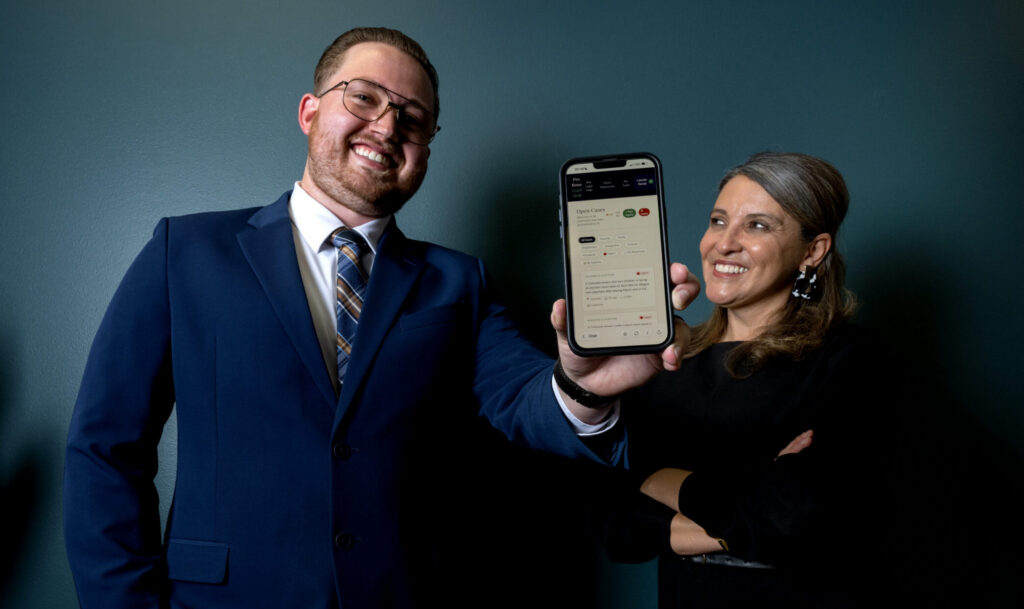
A tenant discovered a handwritten note on his door stating he had 48 hours to move out. The landlord changed the locks without notice or court proceedings. The tenant paid rent on time and had never received any complaints about...

Colorado space startup secures $650 million for expansion
alex-edwards
alex.edwards@gazette.com
Updated 1 day ago
The window to deliver space superiority for the U.S. is open but shrinking rapidly, according to defense startup True Anomaly. The Centennial-based company hit a milestone in its pursuit to help deliver that, announcing Tuesday that it raised $650 million...

Colorado bill prohibits credit card companies from charging ‘swipe fees’ on sales taxes
Marianne Goodland
marianne.goodland@coloradopolitics.com
Updated 1 day ago
Colorado senators on Wednesday voted to advance a proposal to eliminate credit card “swipe fees” on sales taxes. Proponents say the move would save businesses tens of thousands of dollars annually, while critics have countered those fees are needed to...

First ever disciplinary trial of a Colorado judge scheduled under new system
Michael Karlik
michael.karlik@coloradopolitics.com
Updated 1 day ago
A disciplinary panel on Thursday scheduled a mid-August hearing to adjudicate the alleged misconduct of Montezuma County Court Judge Ian J. MacLaren. Following voters’ passage of constitutional Amendment H in November 2024, adjudication of serious judicial misconduct allegations is open to public...
Colorado eyes licensure, new oversight body for autism therapy providers
Marissa Ventrelli
marissa.ventrelli@coloradopolitics.com
Updated 1 day ago
A panel of Colorado legislators on Wednesday approved a bill establishing a new regulatory body and licensure requirements for professionals who provide therapy for children on the autism spectrum, as well as for the facilities in which they work. House...
PREV
PREVIOUS

Denver school board shifts public comment to before agenda is posted
Marathon meetings with lengthy public testimony prompted the Denver school board to move community input to workshops held weeks before regular meetings — before even an agenda is published. Take the workshop meeting Thursday. The notice said, in part: “Public comment will now be divided into two sections — one limited to action items scheduled […]

10th Circuit confirms Colorado can be sued over EpiPen pricing law
The Denver-based federal appeals court confirmed on Friday that Colorado may be sued for an allegedly unconstitutional 2023 law aimed at capping the price of EpiPens for certain consumers. House Bill 1002 sought to counter the rising prices of epinephrine auto-injectors, which can save the lives of people undergoing a severe allergic reaction. During the 2023 legislative session, lawmakers […]